

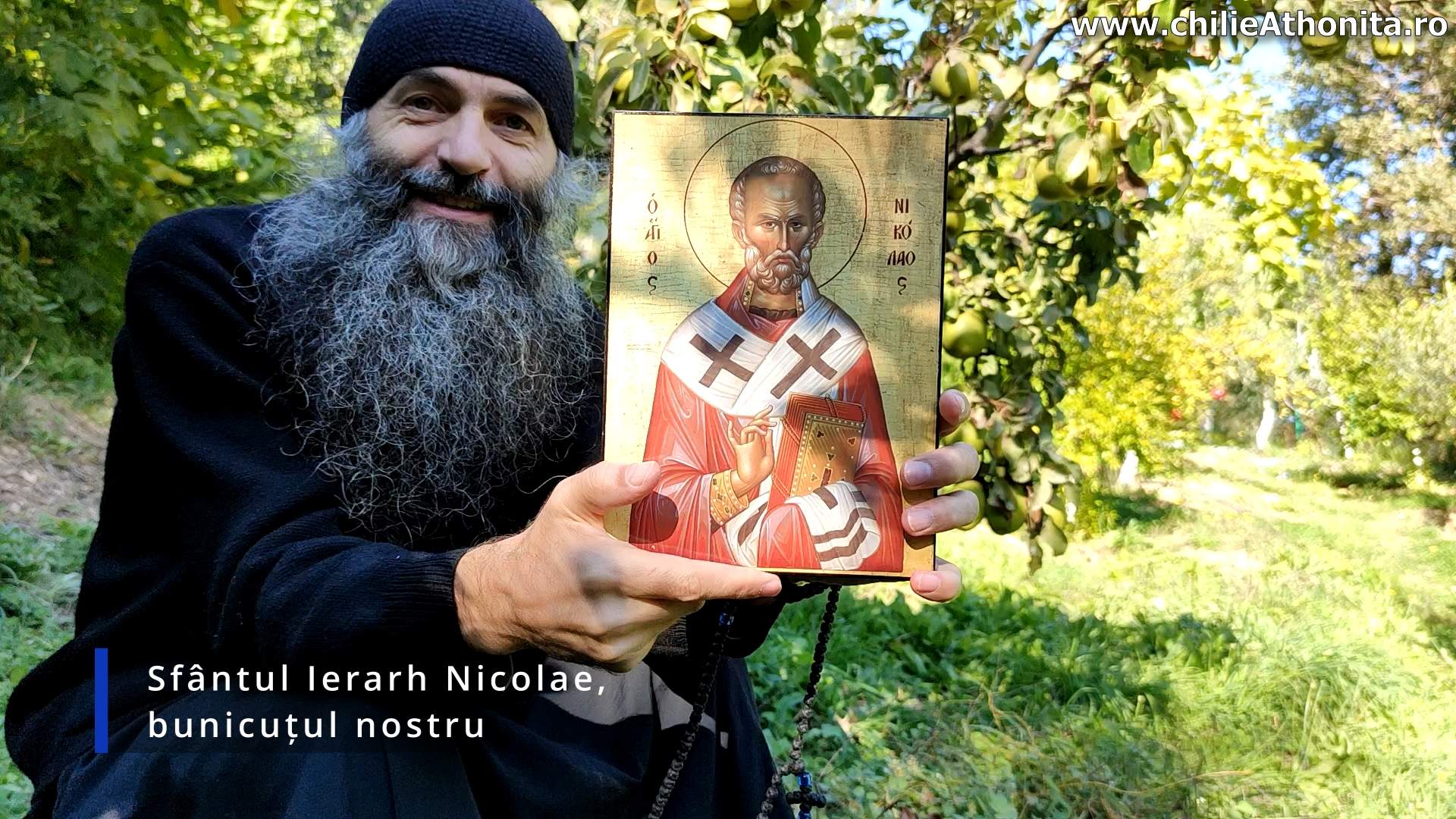
Saint Nicholas: Our Grandpa – Father Pimen Vlad
1 December 2022
Words Can Be a Form of Violence – Father Theologos
6 December 2022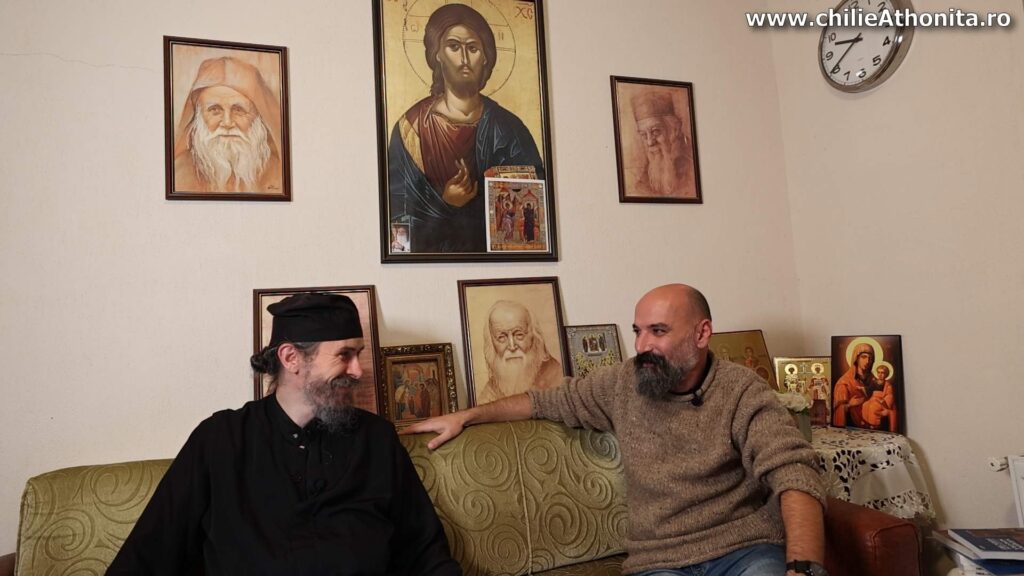
Watch a heartfelt conversation with Ionuț Gurgu, the director of Predania publishing, in which we try to convince you to read books—not only those from Predania, but any spiritual book that comes into your hands. What is happening today in the cultural sphere of our society is a great tragedy.
Perhaps it would be good to mention here that we do not have any material interest, no matter how small, because we are focused on the spiritual well-being of the people. If there are other directors of spiritual publishing houses in the country, we are interested in promoting them as well.
Ionuț recounts, with much grace, a multitude of extraordinary stories related to the books he has published and more.
Enjoy!
Fr. T: Glory to the Father, and to the Son, and to the Holy Spirit, now and forever and unto the ages of ages. Amen. Through the prayers of our Holy Fathers, Lord Jesus Christ, Son of God, have mercy on us! Amen.
Dear ones, we are here with Ionuț Gurgu, the director of the publishing house Predania. You can’t see that we have several books from the publishing house on the table, we will show them to you at the end. This podcast is very important to me. Why? Because I really want to promote, not so much Ionut…
I.G: Glory to God!
Fr. T: …of course Ionut, whom I love very much; but what he does; and books. Because today there is a big problem — folks, with all my love I tell you, you have stopped reading… Today, people aren’t reading anymore, everyone is on the Internet. One of my greatest sorrows is the fact that I have to do podcasts, I wish to write, and I wish that people would read, and that doesn’t happen. On the other hand, you should know, brethren, that this is very harmful to the human mind, and I will leave Ionut to comment on this topic. I also have some questions here. I am actually going to grab my tablet. Why? Because it is very important to ask these questions. But what impresses me is that these books that Ionut brought… how long ago?
I. G: Oh, I think two or three months…
Fr. T: Yes, something like that. They contain a book that is called “God is Love – The Life and Teaching of Abbot Dionysius of Colciu.” Saint Dionysius. And I do not know when this recording will be posted in our editorial program, in any case, brethren, just yesterday was the exhumation of St. Dionysius. So today when we looked over the package that Ionut had sent us 2-3 months ago, we were very impressed when we found exactly this book. So folks, I don’t know if you can see it, buy this book! It is very important to read the life of this great new Romanian saint.
Now, Ionut, how do things stand with books, with the publishing house…?
I. G: Thanks be to God! Thanks be to God for everything! What can I tell you?
Fr. T: The fact that people no longer read…
I. G: Yes, just the other day I was talking to some friends and they sent me some statistics and we are champions in Europe, we must be champions at something too, generally we are in last place, but in [watching] TV we are first place, and on the internet we are in first place, but of course when it comes to books…
Fr. T: On the last…
I. G: You will not believe it.
Fr. T: God forbid!
I. G: I read a long time ago about the book market in Romania and in Europe in general, the same, in the last place no contest, below Bulgaria, below Slovenia, which has 2 million inhabitants, if you can imagine.
F. T: Really? Yes, I know it’s a small country, but really, below them…?
I. G: Yes, we are underground.
Fr. T: I think Romania is a very progressive country, but not in the good sense of the word.
I. G: Yes, but thank God, the books somehow circulate, they could circulate better, they could reach… in fact – here is the sadness and somehow the pain – and this is how I got to your holiness… Because I kept complaining that I was sorry because there are some books that are good. Okay, there are books that are going very well, we don’t have to do absolutely anything about them, so I think that even if we wrote them from right to left people would still read — Abbot Thaddeus, so to speak. And there are books just as good or including volumes from Abbot Thaddeus that, I don’t know, had a less well-chosen title, let’s say. And then, in Serbia there is only one book of about 800 pages, but I said not to…
Fr. T: Oh, not to…
I. G: We decided to divide it into volumes. The first volume, “Our Thoughts Determine Our Lives,” carries the entire publishing house, thank God. The second volume, almost non-existent. And then we had to change its title and when the title changed, surprise! I didn’t set out on this idea of doing marketing, including here I am in a more than embarrassing situation…
Fr. T: Yes, I called Ionut, he did not come by himself.
I. G: Yes, and in a way, I wanted to sit somewhere in the back to see my work there and someone else should do these things as it is and normally, that is, translation is translation, editing is editing and promotion is promotion. I mean, to be the orchestra man, to do it all again… There are people who do this, but I don’t.
Fr. T: Yes, it’s not the case…
I. G: Exactly.
Fr. T: In Romania people don’t read, but spiritual books seem to do better…
I. G: I hope so, because, yes, in high society, they say, a best-seller in Romania means 5000 copies sold by Humanitas… that’s a festival. Spiritual books have much larger circulations.
Fr. T: Really? Glory to God!
I. G: Yes, for sure, but that’s another discussion — what goes into these statistics, that is, how are they done? Yes, because there are books and Abbot Paisios — there are hundreds of thousands of copies sold, if not millions. That is, there are people that want [them]. The problem is how the message gets to these people, here’s the problem and I don’t think it’s just mine.
Fr. T: Yes, yes, that’s right. In general, [a problem] of the Church. What’s the difference between reading and seeing an audio-video message and so on…?
I. G: I think that, on this topic, you need to make a separate podcast with Virgiliu Gheorghe.
Fr. T: Yes, of course.
I. G: I can’t wait to see him. Yes, he explains things much better and I would not want to go into it…
Fr. T: You can, you can go into it.
I. G: I don’t know how to explain, but for sure there is a…
Fr. T: A big problem…
I. G.: Yes, and it is scientifically documented that there is a difference from heaven to earth between reading a map on the screen and reading it physically.
Fr. T: It is precisely because of this that we want to promote [reading] because there are some very harmful influences when someone reads online or not only reads online, but hears a ready-made audio or video message and so on.
I. G: Yeah, I don’t know how to go into details, but it’s definitely better…
Fr. T: You can see the results.
I. G: On the other hand, we have put the books online since we started the publishing house. Although, in a different context, we had to fragment, to put only the beginning and the end, from trade policies dictated not by us. I think that people read a page, two, ten, twenty, [and] if he likes it, he’ll buy the book. He’ll never read it [online]… I have whole archives, entire online libraries, I don’t read them. So, when you want to read, you read like this [from a physical copy]. Okay, maybe there are exceptions, I don’t know.
Fr. T: Yes, but it’s usually much better for people to read physically, on paper. Did you say you put some books online for free, do you have websites?
I. G: Yes, there are a lot of sites, now, I probably spread to a thousand sites and it happened right during the pandemic that we came out with this site — Friends of Predania. Yes, and there I made a column, a button with a library and there the books are uploaded and ready to download for free.
Fr. T: Brethren, storm in!
I. G: Yes, come barging in…
Fr. T: We will put the site on the bottom row, because it is a pity [not to use it] after all the work Ionut is doing.
I. G: And my wife. Slajana…
Fr. T: Yes, and his wife. Please forgive me!
I. G: Yes, because without the wife the publishing house and the family would all fall apart. The pillar of society, after all.
Fr. T: It’s true. And very worthy, but before we get to the family, I wanted to say regarding… But in fact, alright, let’s talk about family! How do you see the family [in general]? How is the family?
I. G: Under attack.
Fr. T: Under attack?! Yes…
I. G: I was actually thinking about the difference between previous families and our families when we were growing up and this family. And I realize there’s a lot of pressure, because of what? We were out on the street until 10:00 at night and the parents wouldn’t feel [the burden] or there was an extended family, especially in the countryside and then, the pressure diffused. Well, now, I look at our children and you don’t find children on the street. Or, if you find them on the street, they just look at their phones.
Fr. T: In fact, they are not on the street, they are on the phone.
I. G: In the metaverse.
Fr. T: That’s right, yes.
I. G: Then, it’s very hard, even for our kids, because, yes, you can protect them, but how much can you protect them? I mean, it’s very, very complicated.
Fr. T: Very difficult, yes. How many children do you have?
I. G: Five.
Fr. T: Five children! Long may they live!
I. G: And with me, six. My wife…
Fr. T: Yes, that’s right, your dear… She’s taking care of you all. So, the wife, for who does not know, is of Serbian origin, so then you translate [Serbian] and here we have St. Nikolai Velimirovich and Abbot Thaddeus, yes, you see…
I. G: Abbot Thaddeus is translated by our godson, as it’s a nepotistic publishing house…
Fr. T: May the good God help! Very nice graphics. You have very great piety related to the Serbian saints!
I. G: Yes, somehow it was natural because I had many and still have many friends in Serbia and I had contact with these saints, with those books and I said, let’s bring them to Romania. And somehow that’s how I started — that is, I brought some books, they were translated and appeared at another publishing house, and after that I kept handing out books left and right. I told you the story of the Transylvanian man who arrives at the train station and misses the train and says, “That’s why it’s good for a man to have his own work.” So that’s also my story in a way with the publishing house I got my work own work…
Fr. T: Do you have a personal experience with Serbian saints somehow?
I. G: Let me think for a moment…
Fr. T: Yes. Something they helped you with?
I. G: I don’t know, there was an interesting thing with a book. I didn’t know Serbian very well then. It’s about a novel about a spiritual son of St. Nikolai Velimirovich, the monk Kallistos, you probably know [of him]. And I started to work on that, the text being Cyrillic you can tell [how hard it was]… The story captures you so well that I read almost half the book, I don’t know how much I understood, but it captures you a lot, yes. And, I don’t know, Saint Nikolai Velimirovich being a great book lover, probably that’s how things connected…
Fr. T: Yes, yes, he drew you in that direction. What books would you recommend?
I. G: That should also be a separate job. Like the pharmacy — we produce the drugs, but a pharmacist should know how to customize the recipe, exactly, because everyone needs a different book. Just now I was talking to a father from a skete here and he said to me, “When I read this book my walls start peeling [being immersed in the book and neglecting the home].” And I liked the book. On the other hand… for someone it is useful. We have not printed this book anymore because I said people do not read this book, we are not selling it at all. And Mihai Neșu, every time we meet with him he asks us “But why don’t you print that book anymore? The book is fabulous!”
Fr. T: Poor thing!
I. G: So everyone has different tastes, something else is useful to him, another medicine is useful to him.
Fr. T: And you how did you get started? Alright, to make your own train, you made your publishing house yes, ok, but…
I. G: That’s how I got to the Church — through books and then through people, because well, you read, but let’s see if something happens in reality. Yes, and after that, reading and reading, finally, I ended up in a monastery, they weren’t really doing what was written, and I finally reached in a certain way, Fr. Justin Pârvu.
Fr. T: Aha!
I. G: And then I said, “Wait, wait a minute, what is in the books is actually real.”
Fr. T: This is a different story… It’s a reality.
I. G: Yes, so these are not stories from the III, IV centuries. And then that’s how books and people connected, and I kind of felt it like a duty. And see how things happen! My grandfather would make wells and after the revolution he was unclogging wells at various monasteries. I don’t know what monastery… Pasărea near Bucharest. The nuns there gave him a box, they came with the box of books like how we did, and they gave him a box of books. And I looked at it myself. I think I was 14, 15 years old at the time, with a lot of questions. And among those books — [there were] theological studies, the Voice of the Church, I looked at them… And there was a book with Fr. Cleopas, a catechism, I don’t know what it was called anymore…
Fr. T: Oh, how beautiful!
I. G: Something about the Orthodox faith, anyway… And it was exactly a Q&A; I had questions and it had the answer. And that was a book and after that I don’t know anymore, going on the mountain, so, I also got to Lainici and I don’t want to tell you when I entered Lainici with long hair, with…
Fr. T: Yes, why?
I. G: Serious stuff. And a father pulled me aside and said we should talk for a bit. And we finally got into it and then at the end he gave me two books.
Ionut Gurgu: Two slaps…
I. G: Yes, that’s how it should have started… And one was Seraphim Rose — “Orthodoxy and the Religion of the Future” and another was “Lives of the Saints” I don’t know what volume anymore.
Fr. T: [Saints] of a month, yes.
I. G: Again reading Seraphim Rose, again…
Fr. T: Glory to the Lord! A slap, yes, he gave you a slap.
I. G: A kick in the butt gets you a few steps ahead… Seraphim Rose again was very close to me and, I don’t know anymore, a teacher gave me “The Pears of St. John Chrysostom.” If you know the ’90s edition that is written in bold and without paragraphs…
Fr. T: Yes, yes, a chunk…
I. G: Yes, you’d read them in one breath, you stopped breathing. Exceptional.
Fr. T: Glory to the Lord!
I. G: So those were the books and somehow that’s why I felt like I was somehow indebted — I got these things, come on, let’s sort of spread them.
Fr. T: Yes, you pass them on.
I. G: Yes, and, easily, one bit at a time, with the Serbs and then when things started to move, others come: “Look, I have a translation, I have a proposal…”
Fr. T: Yes, and things move…
I. G: Yes, they move, you don’t have to force things because they come on their own…
Fr. T: The Lord provides. How do you see Romanian culture in the future, the orientation of Romanian culture, of books? I understand… it’s difficult.
I. G: I’m not a prophet…
Fr. T: No, no, how should I put it…?
I. G: …in a personal capacity.
Fr. T: Personal capacity, yes, without liability.
I. G: I don’t know… I don’t know what to say because culture belongs to people and somehow depends on them. If they will change and they will understand the purpose of the books… And here’s one thing, again, when I was working at the Scara magazine, in one issue I had a manuscript of an abbot from Neamt, I think he was the one who followed Abbot Paisios. And he recounts that at some point, through a miracle of God, the evil ones shows himself to him. He is shocked, and there is a dialogue that takes place, he asks him,
“What are you doing here?”
“Well, in the days of Abbot Paisios there were dozens of legions here, but now they are getting smaller.”
“But what happened, what’s the explanation?”
“Well, it’s like this — after the death of St. Paisios you began to quarrel with the Cantors, with the Slavonic, with the Romanian in the service, and when the conflict began, 2 or 3 legions were sent away, and, after that, you began to take care of the metochions, vineyards, restorations and so on, then a few more legions were sent away.”
Fr. T: They left…
I. G: They left, to withdraw as there was work elsewhere and not to keep them busy because…
Fr. T: Yes, because they fought on their own, yes.
I. G: Yes, and after that he begins to say to him: “After that you began to receive families to stay here on holiday and make a seminary in the monastery, and then legions upon legions were sent away.” And then the abbot said: “Why are there some of you still here? Maybe you have something to do and we are holding you up….” And then he told him, “We are here for these books, because some monk picks up a book and learns how to pray, and burns the master’s heart.” So this is the last war, the last…
Fr. T: Yes, last is the teaching, and I truly think that today there is a fierce struggle on the subject of teaching, on the topic of education, on the theme of tradition.
I. G: Yes, and on the topic of sources because there are no more fathers and St. Ignatius Brancianinov used to say: “Spiritual fathers have grown scarce, the solution is that you get your hands on books and read!”
Fr. T: Read, yes… The experience…
I. G: Yes, and Abbot Thaddeus said this: “When God has no one to work through, He sends a book and comforts you, He helps you.”
Fr. T: Glory to the Lord! I actually saw that you published a new site now — Rânduiala. www.randuiala.ro
I. G: Yes, Rânduiala is older, it is a website… I happened to receive Ernest Bernea’s manuscripts and I needed volunteers to digitize it, because it is a lot, it was probably 10,000 pages. This man has written more than we will read…. and only good things, that is, he didn’t just write… And then I made a website so the world would understand somehow the context and the people who were his generation then. He and a few intellectuals of the time came out with a magazine, Rânduiala, we published it as such. Predania was also a magazine in the interwar period and I scanned it to be there. It is highly relevant, I tell you, if you read…
Fr. T: Really? Look at Predania. predania.ro?
I. G: Yes, predania.ro, under the “magazine” button.
Fr. T: Yes, go there, brethren.
I. G: Yes, and in the first number. You don’t even have to read [it all]… In the first article. You would say it was written 20 minutes ago.
Fr. T: Glory to the Lord! Do you think the generation of that time is much more… let’s not say relevant since you already answered that, but much more serious, or how do you compare the generation then with the generation today?
I. G: Do you know how? I’m not the one saying this, but I read an interview with Radu Ciuceanu and so, in the interview someone asks him: “Can you make a comparison between the generation then and the generation now?” And he simply said, “Yes, of course I can. It’s like comparing the Negoiu Peak (2535m elevation) to Magura Odobestilor (978 m elevation).”
Fr. T: Yes, I understand.
I. G: But that was then. Now I think it’s…
Fr. T: It’s below sea level, yes…
I. G: We’re slowly going down.
Fr. T: God forbid! Speaking of that and generations— if generations go down, it means that generations go down because they move away from God.
I. G: We are the ones going down, that is, the problem is ours, of each of us, and we have seen with the children. Basically, there are all kinds of parenting books, how to educate your children, and in fact, the problem is yours, not the children’s. The problem is strictly personal. If you solve your problems, you don’t have problems with children. In a way it’s a live confession, so you look at them and see all your passions.
Fr. T: So, there is no such thing as “I do not know from whom he learned.”
I. G: Yes, “I wonder from whom?” We also homeschool, so we have no one to blame.
Fr. T: Believe Ionut; as I said, he has five children, brethren.
I. G: Well, no… I don’t know, try it on your skin.
Fr. T: If generations go down and move away from God, do you think Romania will still be free?
I. G: Well, even now I don’t know… and how long have we not been free? I don’t even think we have a very serious definition of freedom. Me neither, if you ask me now – please don’t ask me what the definition of freedom is.
Fr. T: Yes, I think that freedom is freedom from passions, as the Savior said, know the truth and the truth will set you free. That’s it…
I. G: I think I have a book here too: “We wanted freedom and became slaves.” It’s a very interesting book by a living father, he eventually became a monk. In the Yugoslavia of the 80s, he was in an entourage of a rock band, famous in those years, Ekaterina Velika it was called, and all those who sang were accomplished artists, that is, very good people. Their entourage was practically a part of the social elite of communist Yugoslavia in the 80s. Unfortunately, all his friends die due to drugs…
Fr. T: They actually died?
I. G: Yes, and his best friend dies and then he writes these words as a confession for his friend and it is disturbing, absolutely disturbing. Unfortunately, look, another book that I feel extremely sorry for, we published two editions, we had to change the cover and the format and the title in the hope that [it will sell]…
Fr. T: Hoping it will reach… “We Wanted Freedom and Became Slaves – The Writings of Monk Arsenios” [published by] Predania, brethren. You have to buy it. Yes.
I. G: Especially for families who have young teenagers because it’s a harrowing life experience, that is, in general, children at that age are very reckless, and at least there’s a chance to see that there were other reckless ones before them and they didn’t end quite happily.
Fr. T: Yes, right, we know [about that].
I. G: I repeat, absolutely exceptional people, consummate artists and unfortunately…
Fr. T: Ekaterina Velika? What is it called?
I. G: Ekaterina Velika — Catherine the Great.
Fr. T: Yes, yes, Velika… Glory to God! What advice would you give to young families?
I. G: I would not give advice! Go to spiritual fathers and ask them for advice; that’s where the advice desk is.
Fr. T: Well, you are a father!
I. G: That’s what I’m saying: the advice is to see about their [own] holiness. I think Fr. Porphyrios says it best: see about your own holiness, about your life, be yourselves perfect. Or not perfect, but at least…
Fr. T: In that direction…
I. G: As Patriarch Pavle says: Be human!
Fr. T: Yes! Extraordinary!
I. G: Because we all speak of holiness, of great things… let’s start with: “Humanity and the foremost beauty.” Another book.
Fr. T: Where? Is it here?
I. G: Yes, this one by Racoveanu who is also the one who founded Predania magazine in the 1937.
Fr. T: What is it about?
I. G: Humanity and the foremost beauty.
Fr. T: So exactly about that.
I. G: Exactly what’s on the cover is also on the inside. And it’s a bouquet of virtues, it’s like an icon of the Romanian nation, what Romanians should be.
Fr. T: Glory to the Lord!
I. G: And you look into it and see how we are not. Look, here, there are titles with…
Fr. T: Yes, “Faith in God – the crown of all the virtues of mankind is faith in God.” Obviously.
I. G: Titles — honor, humility, love of strangers, many things that… You read such a small book and see how far we’ve gone the other way, where we shouldn’t.
Fr. T: Yes, where we are. Truly, Glory to God, because I see that there is a lot of experience, a lot of life, a lot of Holy Spirit in these books, but they do not reach people!
I. G: That’s the problem, and you know how it is — be careful what you wish for because it may happen to you.
Fr. T: Exactly.
I. G: I kept complaining about how to get the books out, a friend, you know, Horia came to you and said “Let’s help Ionut.” And see where we ended up now…
Fr. T: Yes, the Mother of God takes care of things. You talked about Patriarch Pavle.
I. G: Yes, I actually met him.
Fr. T: Really? You must tell us about that. How [did you meet him]?
I. G: Yes, look, because we were talking about Fr. Dionysius, and now his life was read, and there was a situation with a man who was always looking for advice, no one could unravel his problem and he came to Fr. Dionysius. When he got there… was totally transformed, he returns:
“That man is holy, that’s it, the thing is clear.”
“Tell us, what did he tell you, since he is a saint and so on?”
“I don’t know what he told me anymore, but this is what I’m telling you, what I felt…” This is my experience with…
Fr. T: With the patriarch?
I. G: No, With Fr. Dionysius. When I met him, he told me things, but I don’t know what he said to me, but you’re left with a picture of it… How it is in the Paterikon, you know, “It’s enough just to see you.”
Fr. T: Exactly.
I. G: So that’s it. I think that is also something we are missing somehow: to have some role models.
Fr. T: Of course. The Church is made of models in life, that is Orthodoxy.
I. G: Yes, the problem is that there are fewer and fewer of these models.
Fr. T: Unfortunately.
I. G: Likewise, I think this was a great chance from God, I don’t know how much I’m going to be asked at the Judgement, at the end, for the chances I had to know these spiritual fathers who are just as those in the Paterikon, and, in the books, that you’d say no longer exist…
Fr. T: From that time and that time passed, yes…
I. G: But no, Glory to God! That’s why I say, you meet them and then what do you do? How much will you be asked from you?
Fr. T: Yes, exactly.
I. G: Otherwise, you can say, I met someone who was not who knows what, [so] that’s all that could be done. But when you know the great ones, then it’s…
Fr. T: It’s very difficult…
I G: Yes, it’s good and bad, but it’s better [to meet them]!
Fr. T: Better, indeed! And that’s why we should honor them. Did you know Patriarch Pavle?
I. G: Yes, I was in one of those camps for the Orthodox youth in the Balkans. And we went to Belgrade, and he was there, he served there, and the same thing, when you look at him you say, well, he’s from another movie, from another galaxy, he has nothing to do with what’s around you.
Fr. T: Glory to God!
I. G: No connection, I’m telling you.
Fr. T: He is a heavenly man.
I. G: And you see, the Serbs are a nation that went through communism, and it came out of it terribly… God forbid! And a million people attended his funeral.
Fr. T: Really?
I. G: It was like no [other] public event in Belgrade, and I don’t know if half the people of Belgrade are baptized, so you can understand the impact…
Fr. T: Really? Yes!
I. G: Yes, and also on that trip I received a book about the churches destroyed in wars in Bosnia, in Herzegovina, in Croatia, and when I picked it up I said “Well, but who knows about these things?” I mean I didn’t know, I was a first year student in Theology, I had no idea that there were [churches] destroyed, I think… In Croatia, in Bosnia Herzegovina, I think 700 churches were destroyed, if you can imagine.
Fr. T: God forbid!
I. G: And I said, let me do something, I’ll start translating it. By the time I finished translating it, they started destroying in Kosovo, and they destroyed there I think about 300 to 400 churches, but even medieval monuments there. There, in Bosnia, let’s say that they were also newer, let’s say that they had no cultural value, because people are very sensitive to cultural value, but when they destroyed churches of the XII, XIII, XIV centuries, even then, they were not sensitive. That is, the subject did not exist.
That’s when the statue of Buddha was destroyed, if you remember…
Fr. T: No, I don’t know.
I. G: The Taliban came, Afghans or something, I don’t know what, and they destroyed a statue of Buddha. And on Euronews — Euronews, not CNN — they had this news, from 10 to 10 minutes, from 15 to 15 minutes. In Kosovo, in Europe, when churches of the XII, XIII, XIV centuries were destroyed: Silence.
Fr. T: God forbid! So, brethren, hypocrisy to the maximum, to be frank.
I. G: Yes, well, hypocrisy is everywhere, do not think that there is no hypocrisy elsewhere.
Fr. T: But, but I want to say… what great destruction there was in Serbia.
I. G: Practically, this is how I started with books. At that time I was at Scara magazine, if you remember back in the day. And I don’t know if it wasn’t the first book out at Scara. Because they had Scara magazine and they said if we have a magazine, why not have a book?
Fr. T: Oh, and you published this book…
I. G: “The Ruins of Orthodoxy” it was Fr. Justin who gave the title, because in the first volume the one about Bosnia and Croatia, it was called “Spiritual Genocide” and the one about Kosovo, “Kosovo Crucified.” And father [Justin took them, looked at them, [and said], “Alright, the ruins of Orthodoxy.” And so the name remained.
Fr. T: Yes, unfortunately, people, as I said, don’t know, this needs to be promoted. Let’s see what we can do.
I. G: And Father Justin had a great love of books. So that again brought us very close and somehow [to] this book – which was the first I translated with my wife.
Fr. T: Yes, yes, yes, God bless her, all our respect!
I. G: Respect and love.
Fr. T: Yes, and love, yes.
I. G: And I took the manuscript to Father [Justin], I sent it to him, and after a few years, some fathers told me how Father had the manuscript under the phone and, whenever a father or whoever came (I suspects lots would come), he took it out and read from it and that’s what he did…
Fr. T: Glory to the Lord!
I. G: I can continue with the publishing house, only on this testimony…
Fr. T: Yes, exactly.
I. G: I think he wrote the foreword as well.
Fr. T: Father Iustin Pârvu, seriously?
I. G: Yes, read it because it is…
Fr. T: Yes, so brethren, Fr. Justin Iustin Pârvu is the main supporter of…
I. G: The founder…
Fr. T: The founder, yes, of the publishing house Predania.
May the good Lord help you! We are very happy about this, tremendously. Yes, it’s terrible, Ionut because, as I said, people today look for some non-values and when I look on YouTube people ask me — “Aren’t you proud?” I say: “No.” And they say: “Why?” “Because we have I don’t know how many views and I see on YouTube some non-values, not even a melody line or anything that have hundreds of millions of views. And brethren, it is not envy, but it is a great pain because there are holy people in these books, there are people who really can solve the problems of humanity, but people do not read them, instead, all trap artists with their obscene language are listened to, and that fries people’s minds and push young people into depression and in our time I think that young people are very, very confused.
I. G: This is exactly what I was talking about with a friend, the one who helped us to make the publishing house, and he said to me: “Look, one of my children is at Tudor Vianu High School. They listen to… Adi Minune was something very valuable, what is now is… “God forbid” is an understatement. He was amazed…. speaking of melodic line, the melodic line, the lyrics, the words [terrible].
Fr. T: Terrible, terrible… I think the only solution is to return to spirituality, to books, to humanity. As the Holy Patriarch Pavle said, because I believe he is holy.
I. G: Me too…
Fr. T: Let’s be human!
I. G: Yes, yes, let’s be human! Let’s take it one step at a time so that we may even become saints. But at least let’s start with humanity…
Fr. T: With a beautiful life…
I. G: Communism was not as traumatic here as it was in Russia or Serbia or Bulgaria where it is terrible, it is desolation, but we did not come out of it very well either….
Fr. T: Yes, [not] with a clear conscience. And above all, what bothers me a lot is that we don’t have role models anywhere else but only in the past and two or three lights in the present. There are no more…
I. G: Yes, yes.
Fr. T: Eh, but I still have hope because Christ said that the Church will not be overcome by the gates of hell.
I. G: Well, if we have no hope, then it’s really bad.
Fr. T: That’s right. Eh, let’s be human, let’s be human. May the good Lord help us! Through the prayers of our Holy Fathers, Lord Jesus Christ, Son of God, have mercy on us! Amen. Thank you very much! May the good God bless you!
I. G: May God help us!
Fr. T: May God help us!
Online commemoration lists and donations
May the Lord help us!
Online Commemoration Lists and Donations
May the Lord help us!
If you have a bank card and wish to send commemoration lists and donations online using your card, and/or to support our philanthropic activity, including this site, please fill out the form below to make a small donation. The form is secure – we use Stripe for payment processing – a world leader in this field. We do not collect your personal data.
If you do not have a card, or do not wish to use it, visit the webpage for Online Donations and Commemoration Lists.
We will pray for your loved ones! (Please do not include inessential details like wishes, degree of kinship, introductions etc. JUST the name!)
Especially for recurring commemoration lists, we ask that you please keep them to under 20 names long. If you include a member of the family, we add “and for their families.”