

Saint Theophanó: How to Become a Saint, While Being an Empress – Father Pimen Vlad
15 December 2022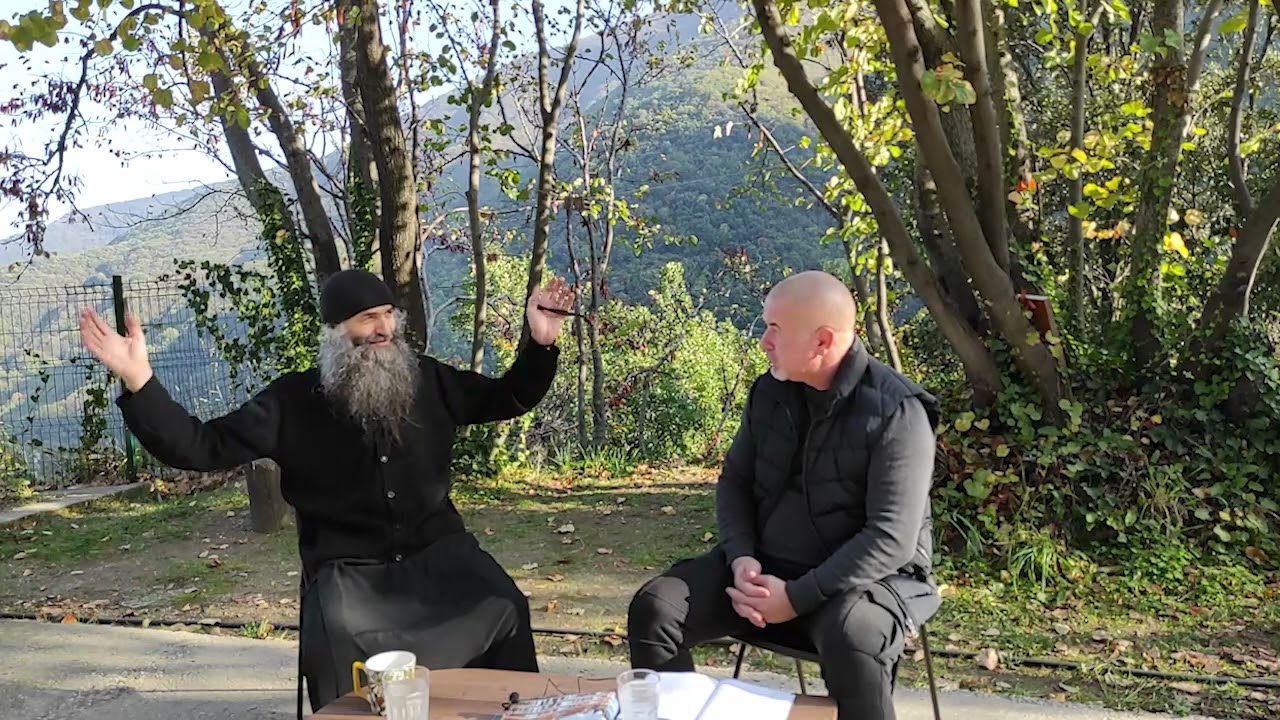
This Is How We Stop Evil!
18 December 2022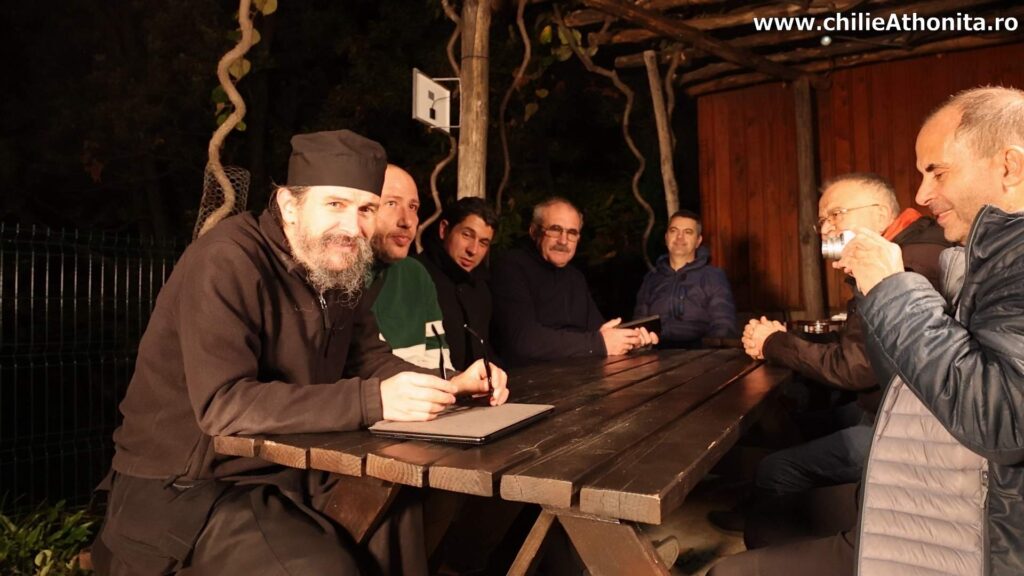
Watch a much-needed material about Holy Communion and the Divine Liturgy in which we try to clarify as much as we can certain misconceptions related to the most important service and mystery on this earth.
Enjoy!
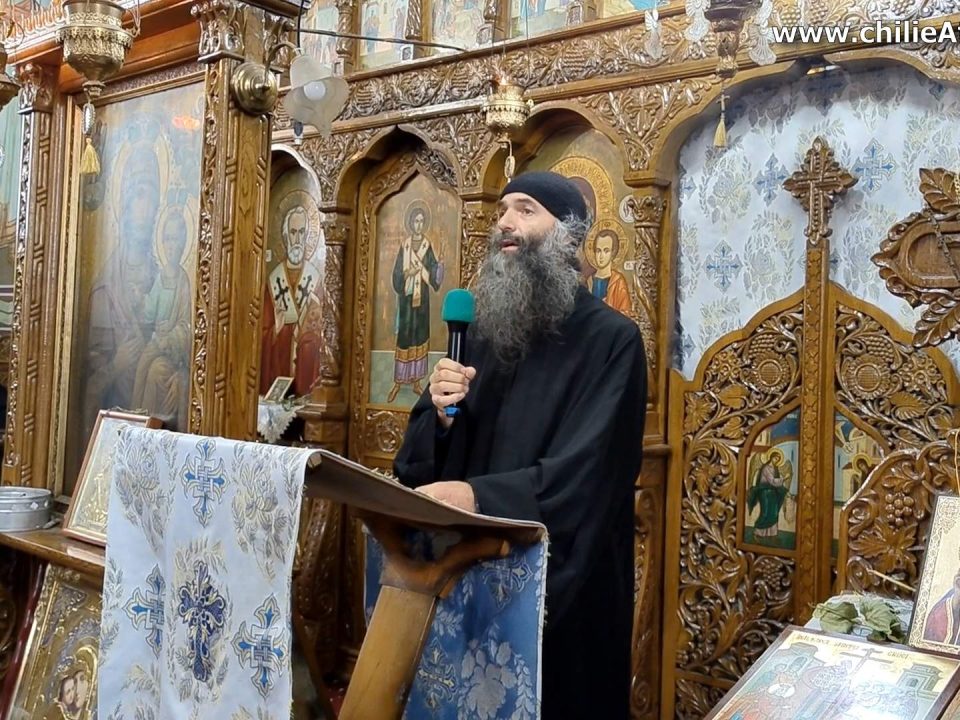
Fr. T: Glory to the Father, and to the Son, and to the Holy Spirit, now and forever and unto the ages of ages. Amen. Through the prayers of our Holy Fathers, Lord Jesus Christ, Son of God, have mercy on us! Amen.
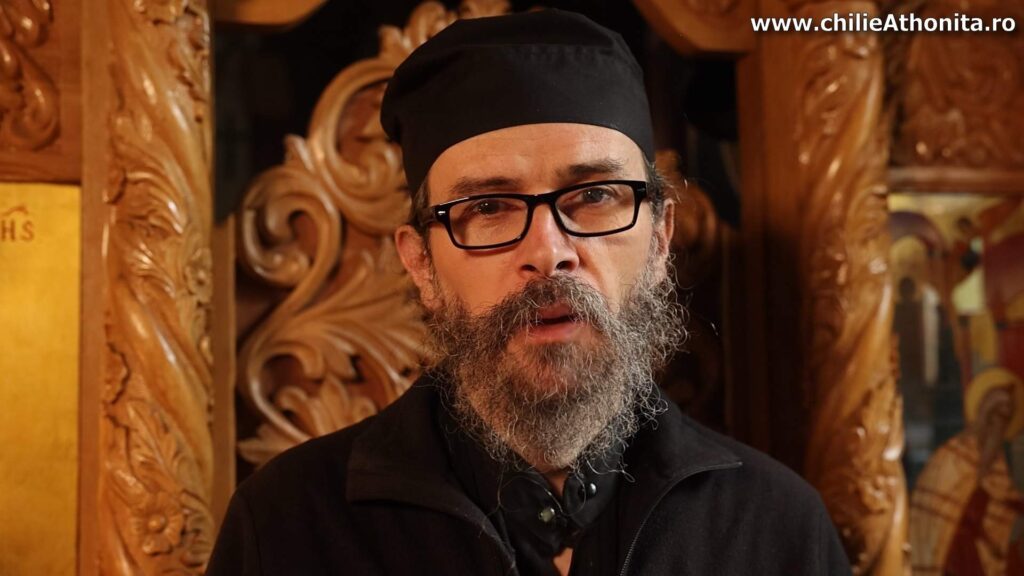
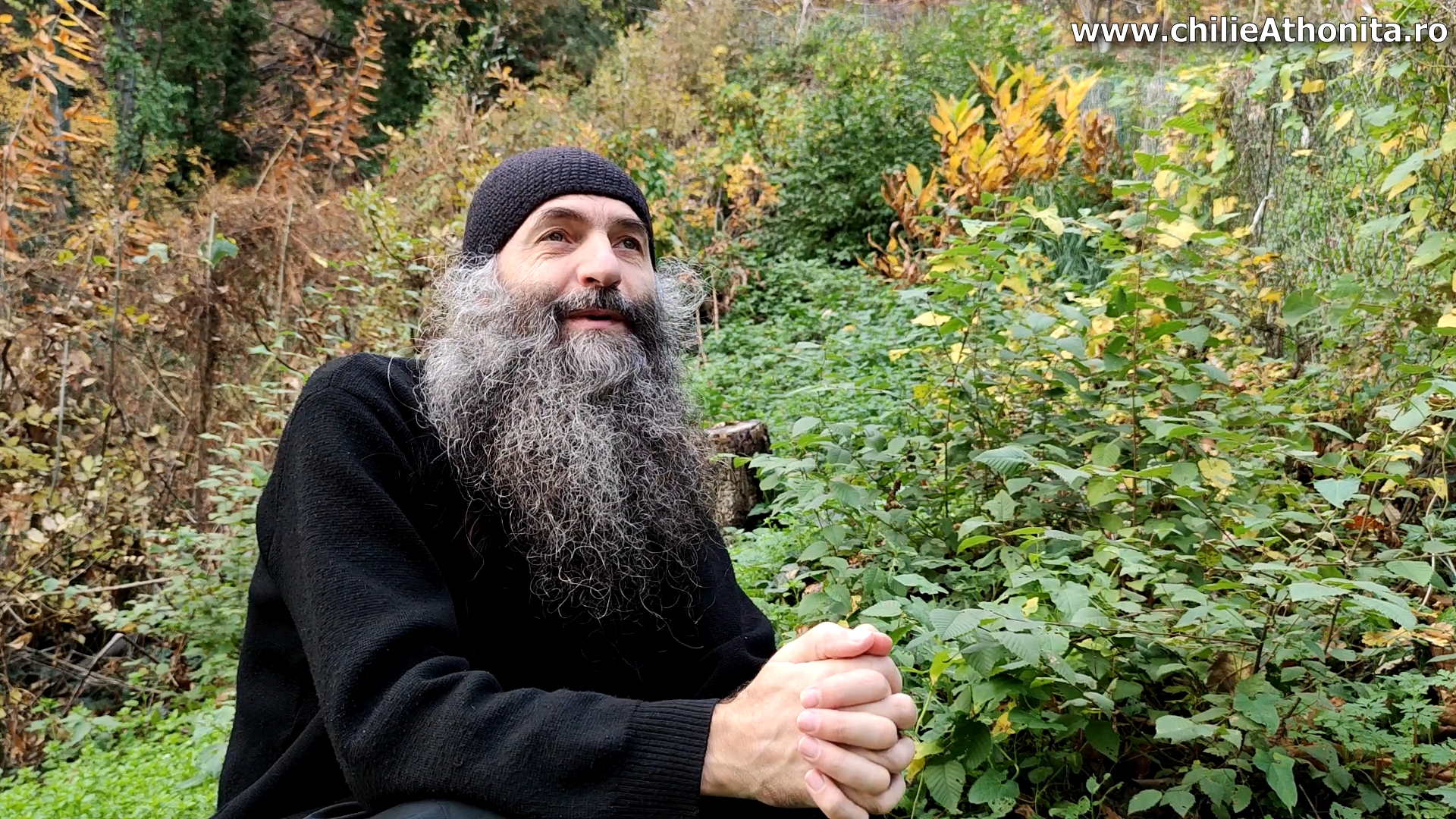
First of all, I would like to publicly apologize to Cezar who is filming me now, because many moons ago, when we were both young, he begged me to talk to him about the Divine Liturgy – what is the Divine Liturgy, its meaning, all this. And obviously, I wasn’t able to serve Cezar and now I finally said that I was going to do this and I said that we’re going to record, as you can see, so that it would be for everyone.
I will not speak now about the Liturgy in a scientific, spiritual sense, first of all because I am not at the necessary level. I will try to say a few words from a practical point of view, if you wish, of course, based on the Holy Fathers so that everyone can understand, hopefully, what the Divine Liturgy is, and practical matters so that we can benefit as much as possible from it.
I have in front of me, on my laptop, the parts of the Divine Liturgy listed with dash. Why? So that I don’t forget a part, and according to these parts I will develop this whole major subject of the Divine Liturgy and of course, at the end or during the discussion, the pilgrims, Cristi and the others, Cezar especially, will ask me questions and we will try to have a discussion on this matter.
Now first of all, before I go into the parts of the Divine Liturgy which I have from a great book by His Grace Petru Pruteanu (the book was written when he was a hieromonk), I want to say a little about the Divine Liturgy. First of all, brethren, you must know that Orthodoxy is the civilization, it is the way of being, based on the gift, based on self-offering, based on sacrifice. So, the main service in Orthodoxy is the service of the Gifts, the service of sacrifice.
So, brethren, if we do not give of ourselves, if we do not give to others, we are not Orthodox. Do you understand? So first and foremost, we have to give, we have to open ourselves to others and this is love, this is heaven. Heaven is the perfect openness, the full openness. You need to know that Liturgy in Greek means “functioning,” in fact. “Thia Liturghia,” which translates to the Divine Liturgy, is in fact the divine work, the divine functioning. It doesn’t sound very good. Based on this etymology, His Eminence Hierotheos of Nafpaktos speaks very well about the Liturgy and para-liturgy, that is, about functioning and wrong-functioning. Well, it’s difficult to translate in Romanian. In any case, His Eminence speaks and says that Adam cast himself out of heaven, through his own behavior because he no longer served the liturgy, that is, he no longer functioned correctly, meaning he no longer sacrificed himself, he was no longer open to God. Do you understand? This is our big problem: that we close ourselves off from God and from others.
So, the Liturgy, brethren, is not a stack of chants, an amalgam of chants and prayers and ecphoneses and whatever else they’re called there. The Liturgy is first and foremost the supreme act of self-offering and giving. Sacrifice par excellence. First of all, God sacrifices Himself, God gives everything to us because we give some insignificant things to God, meaning, we give a piece of bread, some wine, some insignificant gifts and God gives Himself entirely to us. God who is above anything and anyone. Let us not forget that God is above the space-time continuum that He Himself created. That is, God is above and beyond this entire universe of 93 billion light years that is observable at this time. So, we should humble ourselves a little bit and thank God that during the Divine Liturgy – which you should know this entire universe of 93 billion light years is waiting for – because through the Divine Liturgy to this day God enters our daily lives. God who is beyond anything, is totally transcendent, philosophically speaking. As I was saying, this whole universe awaits this and you should know that due to the fact that it is about the service of the Gifts, the Liturgy is eminently communal, that is, the Liturgy cannot be served by oneself. There must always be a priest and people. If there is a two-year-old child there, that is the people and the Divine Liturgy is served. Otherwise, the Divine Liturgy is not served. Do you understand? It is true that certain hermits with a very high spiritual life receive a blessing from the bishops and so on to serve the Liturgy alone, but this is a special case, it is an exception. At the Liturgy there must always be more people. So the Liturgy is always concelebrated regardless of whether it is made up of several priests and people or it is made up of one priest and the people. Because, pay close attention brethren, everyone is celebrating the Liturgy, everyone is functioning, everyone is serving at the Liturgy. Do you understand?
On the Holy Mountain even, sometimes they asked us – I remember one of my former spiritual fathers, Father Timothy, may God bless him, for whom I have boundless love and boundless respect and may the good God save me for his prayers, at one point he would ask me: “Where are you going to serve?” Of course, I am a simple monk, thank God, I am not a priest. I don’t want to offend, but as a monk we are saved much easier than as priests, as hieromonks. “Where are you going to serve?” Why? Because each of us, brethren, must serve at the Divine Liturgy, meaning, each of us must sacrifice himself at the Divine Liturgy. Understand? It is essential.
So, we should not go to Liturgy and [just] wait until it’s over or wait to take blessed bread or to Commune, if the good God wills. Because the Liturgy first of all, as I was saying, is sacrificing before others and before God and therefore it is par excellence communal and the service of Communion par excellence. So, brethren, the Divine Liturgy is not part of the services of praise, of glorification of God, even if through the Divine Liturgy, God is glorified like nowhere else. The Divine Liturgy is part of the category of services with a precise purpose, it is part of the same category as baptism, the category of the funeral, the category of the wedding, and the purpose of the Liturgy is the Communion of the faithful. This is why the Divine Liturgy is served – to Commune. So, if you don’t put the man in the grave at the funeral, the service has not achieved its purpose. The same goes for the Liturgy, if people do not receive Communion, the Liturgy does not achieve its purpose, you should to know. And you should know that the whole typicon of the Divine Liturgy shows this.
First of all, the priests certainly must Commune. Then, the Apostolic Canon number 8 of the Holy Apostles – so we are not playing around with such a thing – says that the priests who are present at the divine services and so on, and do not receive Communion should tell the cause. The clergy, the rasophores, must tell the cause and if it is blessed, to be forgiven, if not, to be excommunicated as those who have brought suspicion upon the one who serves. So, priests, clergy, in general, if they do not say the cause, they receive a canon. Why? Because in the past, it was not even conceivable that someone would not receive Communion – those part of the clergy especially – at the Divine Liturgy, unless the one who brought the sacrifice, that is, served the Divine Liturgy, didn’t bring it validly, that is, the man is a heretic or is suspended from serving. Do you understand? And that’s why to this day, on the Holy Mountain, if we don’t receive Communion – if it’s a day of Communion, and we don’t Commune – we have to tell the cause. I mean, what can I say: “I have a bleeding in my mouth, I’m going to have my teeth fixed.” Then you have to say, you confess, “Father Abbot, please forgive me, I will not receive Holy Communion because of so-and-so!” Do you understand?
Apostolic Canon number 9 also refers to the Communion of laymen, which also says that those who are present at the divine services and do not receive Communion are to be excommunicated as those who cause disorder in the Church. Do you understand? And where does this come from? From the words of the Savior that says… now it is very difficult to translate, I will say the original Greek text from the Gospel of St. John the Theologian, in the theological gospel, that is, the most authoritative text in the New Testament on which Holy Communion and the Divine Liturgy are based. The Savior says there: “ὁ τρώγων μου τὴν σάρκα καὶ πίνων μου τὸ αἷμα ἐν ἐμοὶ μένει, κἀγὼ ἐν αὐτῷ.” The translation is not correct in Romanian, but we are not fighting to change it and I will explain why. The translation is “The eater of My Body and the drinker of My Blood abides in Me, and I in him.” In the Romanian Bible it is “He who eats My body and drinks My blood abides in Me, and I in him.” Why do I emphasize so much the topic of the eater and drinker (even if it doesn’t sound good in Romanian, and that’s why we don’t say that it has to be translated that way)? The eater and the drinker, brethren, are the predicative forms of verbs that show an occupation, a repeated, constant action, done for this purpose, that is, a job. So, brothers, if God wills that I sweep the cell, I am not a sweeper. A sweeper is the one who does this job constantly, repeatedly and with this purpose. Or if God wills that I chop a piece of wood for a stove, I’m not a lumberjack. The lumberjack is the one who does this continuously. Do you understand?
So, when the Savior speaks of the eater of My body and the drinker of My blood, He says that Christians must do this continuously, until they were scandalized: “Wait a minute, He tells us to have Him as food!” The Savior says, “My flesh is food indeed, and My blood is drink indeed. ” And especially as He emphasizes the theme of bread and wine, meaning two indispensable foods, especially at that time and of course today. Do you understand? He does not say that it is about some spice or so on, or something special, rare, because He could say a very rare and expensive spice so as to give greater importance to Holy Communion. He says no, it’s bread and wine, which is something you need every day. On the basis of this and on the basis of the fact that at the Last Supper, the Savior says do this in remembrance of me; do this, not the prayers, not the chants which, if you pay attention to the Scripture, happened after receiving Communion (if you read at the Last Supper) – it is Communion that you should do “…in remembrance of Me.”
Because of this, in the early Church the faithful Communed every time the Divine Liturgy was served. Every time, understand? I forgot to tell you that you should know that they Communed after eating, so the agape meals were before, but due to the fact that Holy Apostle Paul notes and shows that some very ugly things were happening mainly from a social point of view, that is, people went drunk. They ate at the agape meals, they got very drunk, because man is still man, because I can’t say that man is a pig because we demean pigs. So, once they went, they got drunk, they were drunk at the Divine Liturgy, they went to receive Communion drunk. And beyond that there was also a social problem, meaning, the rich man came and set his table to show who he was and the poor or the servant had a piece of bread and because of this the Holy Apostle Paul told them to settle down, once, twice, three times. With all his genius and holiness, the Holy Apostle Paul does not manage to stop these completely and utterly regrettable phenomena and because of this the famous agape meals died out somewhere in the 3rd – 4th century and the Church said: alright you are not capable [of this], everyone eats at home afterwards.
You should know that this is the only canon regarding fasting as far as Holy Communion is concerned. That is, the person should Commune on an empty stomach. Now, an empty stomach means – it’s true, the Holy Fathers say six hours, brethren, but as I was saying, let’s not be pigs because we are not – brethren, so don’t be on the dot. Some say midnight, others say eight hours. So, brethren, still… and again on the Holy Mountain there is a spiritual tradition, an ascetic tradition, it is not a canon, that says that on the evening before the day on which we will receive Communion, that is, usually on Saturday evening, we should eat fasting foods. It’s good for our mind to prepare a little, for the body to prepare, so that we meet our Lord Jesus Christ in the next morning. But this is not a canon, because you know very well that priests Commune very often and do not fast in the evening of the day before receiving Communion.
Over time, though, what happened? Over time, Communion has become rare and you should know that this is due to the great decrease in spiritual interest, in spiritual measure, and you should know it was a matter of silence out of guilt. I mean, what happened? First of all, canons were given, that is, there are certain sins that are prohibitive of Communion. You see that there is no good deed worthy of Holy Communion. Why? Because on one hand no man is worthy, and on the other hand, the natural state of man is the state of Communion. Those canons prohibitive of Communion stopped man from receiving Communion and beyond the capital, obvious and essential effect – the spiritual effect, there is also a social effect. That is, you see the man receiving Communion at every Liturgy and at a certain point he stops receiving Communion and then the others around him begin to judge him. It’s not good, but it happens. I mean, he says: “What happened, why doesn’t he Commune? And the other one too.” And then because this one was sinning, the other was sinning, that other one was sinning, then people said to each other: “You know what, better not to go to confession anymore, nor humble ourselves and so on, we keep doing or sins, since you and I…. and let’s Commune much less often.” That’s where rare Communion came from, brethren. From the decrease of the spiritual level and, as I was saying, for it not to be seen, in you or I and this from certain historical-political factors and so on – the Turkish occupation, a whole story.
From here you should know, brethren, that the problem of fasting has also arisen, that is, the so-called three days before Communion. As I said, there is no canon regarding fasting before Holy Communion and there is even a contrary canon that says there is no fasting Saturday except for one – Holy Saturday. So, what’s happening? People received Communion very seldom and came four times a year to confess, if they came, and once at Pascha. And when they came for Pascha, especially if they were elderly, they did not have sins prohibitive of Communion, but the priest asked – he knew they came once a year – and the priest said: “Good, ok, you could Commune on Pascha.” Because the priest knew that if you didn’t Commune on Pascha, you wouldn’t Commune even once a year. Terrible. And the priest says: “Have you fasted during Great Lent?” And he says: “No.” Then the priest says: “Ok, you didn’t fast for Great Lent, then fast for three days so that you can feel something, do something, and then Commune.” Well, but this is a penance, this is a canon, this is a form of asceticism. And so then people knew: “Alright, I confess at Pascha and then I have to do three days of fasting to receive Communion.” No, you don’t have to do three days of fasting. If someone keeps the fasts of the year, the 4 fasts of the year, and the fasts of Wednesday and Friday, meaning, this is, he is within the ordinance of the Church, he doesn’t have to fast. I said that it’s a matter of the evening before the day of Communion, it is good to keep as an ascetic practice. But there is no way one has to fast three days beforehand. There is no patristic support anywhere for such thing.
For the frequent Communion, read [on it] as there is a whole book of St. Nicodemus the Hagiorite with testimonies and all the Greek-language Orthodoxy that I know very well – I have been in the Holy Mountain for decades – and the English-language Orthodoxy that I know very well too, since I have a lot of relationships, everyone receives Communion often. St. Basil the Great says – in his time they received Communion – he says – only four times a week. And especially since St. Basil the Great contradicts, he is aware that he comes into contradiction with the Savior. He says: It is good and beautiful to Commune with the Holy Body and Blood of our Lord Jesus Christ, for the Lord has said: the eater of My body and the drinker of My blood abides in me, and I in him. But I… (it’s an adversative there – “ego de” – but I – in a letter to someone, it doesn’t matter who) but I say to Commune only four times a week. He says on Tuesdays, Thursdays, Saturdays and Sundays and on the days when a saint is commemorated – that is, a feast, brethren. That is, he said Wednesday, Friday – my mistake – Saturday and Sunday. Today is Tuesday, Thursday, Saturday and Sunday. Why Tuesday and Thursday? Because they’re after fast days, that’s why. In the world it is very difficult to Commune four times a week or every day. Once a week, brethren, and if you Commune once a week, then it would be good to confess once a week, but you should know that you could confess a little less often too. Obviously, Communion is conditioned by Holy Confession, but if you receive Communion often and confess often, the ratio is not 1:1. Do you understand? Because sometimes you actually don’t have something to confess.
So, this is, very briefly, about Holy Communion and I said that I can mention details also from the Divine Liturgy which show that we need to receive Holy Communion often. What else could I speak on this topic? Regarding how we Commune, brethren. Very important! So, when we go to receive Communion, we open our mouth wide, our heads tilted back at the level of the Holy Chalice, we hold that napkin, called “maktro,” under the chin, so that a pearl does not fall, God forbid, on the floor! Do you understand? So, mouth wide open, head tilted back and at the level of the Holy Chalice and not very far from it. Understand? We don’t just stand like… because normally we open our mouths a little and have our head slightly tilted to the front. It’s very difficult. The head [should be] tilted back, and the mouth wide open so that the priest can insert the Lavida, the spoon. After which we wipe ourselves and go nicely to our place. Of course, out of piety we make a reverence and give thanks to the Lord.
Let’s get into the details from Father Petru Pruteanu. First of all, you should know that the first thing that is done, is that the Holy Gifts are prepared, it is called The Office of Oblation (Proskomide) this is what Father Petru Pruteanu notes here. Yes, the Proskomide. So, at the beginning you will see the priests “Take the Time,” that is, they prepare for the Divine Liturgy, they dress and do a small service, that is, they pray alone. The service is called “Kairos” it doesn’t matter where [the name] comes from, it has to do with the beginning of a psalm. Then the Proskomide, specifically, that the Gifts for God are prepared in secret – because I said that the Liturgy is the service of the Gifts.
After the Proskomide, the Liturgy of the Word or of the Catechumens follows, that is, the teaching part, the didactic part. I don’t like this term, but I want to emphasize the fact that back then, in the past, people gathered somewhere and went in procession, went together with the Gospel and entered the church and on the way, they chanted “Holy God, Holy Mighty” or chanted all sorts of other psalms. This has been preserved until today as the Small Entrance or Little Entrance as it is called. That is, you see that at a certain moment, while there is chanting, a door opens on the left side of the altar, it is called the deacon’s door on the left side and the priests enter in a semicircle and someone walks with a candle in front, it is called isodicon or candlestick. In Greek it is called isodicon. This Small Entrance which some say symbolizes – and, yes, we can say that it does symbolize – the work of our Lord Jesus Christ’s coming into the world.
As I said, in the beginning, this was the entrance into the church. And this entrance into the church is because people were getting ready somewhere, gathering in a square somewhere, and they would go and enter the church, chanting chants. The hymn “Holy God, Holy Mighty” – Trisagion – as it is called, from the word “agios” which means “holy” in Greek, it seems that it was a miracle that a young, pure child, of a very young age, was caught up to heaven and heard that in heaven the angels sing “Holy God, Holy Mighty, have mercy on us.” Since this miracle happened, the faithful have been chanting this hymn. In the current liturgy, this hymn is not at the beginning. In the beginning there are other chants, these chants come mainly from the monastic environment, you should know. It is a service that is called “Obednitsa” and Typika in Greek, and that is where these chants come from. It is mainly about the Beatitudes. I wouldn’t want to go into too many technical details, with antiphones and so on.
The Beatitudes are very important to us. Why? Because the Beatitudes show us – and that’s why they are called Beatitudes – they show us how to be happy. Blessed are the peacemakers – that is, we will be happy when we make peace. Blessed are the poor in heart, that is, blessed are the humble – so we will be happy when we are humble, and so on. And then we must pay attention to these Beatitudes so that we know, as I said, how to become happy!
We talked about the “Holy God,” we talked about this entry with the Gospel – because you see that the priests hold it and if there is a deacon, the deacon holds it. “Deacon” in Greek means “servant.” So the deacons were and are in fact the servants of the priests who serve. You must know that the priest is only our Lord Jesus Christ. So, today’s priests do not serve, they are no longer priests, but they are presbyters, that is, men of honor. Why? Because Christ serves through them. Now we enter a little into the theology of the Divine Liturgy. So today, Christ serves, the priest no longer serves through himself, but Christ through him. You should know that this is a very concrete thing. I know cases of unworthy priests whom the angel of the Lord has bound. So, it tied them in a corner of the altar and the angel came from heaven and served the Divine Liturgy. So speaking of worthiness and unworthiness and how important and how divine Holy Liturgy is. Such miracles happen, brethren, alright? Do you understand?
After that comes – and that’s why it’s called the Liturgy of the Word or the teaching, didactic part (well, it depends on where we read) – because the readings follow, in this case we read from the Apostle and the Gospel. That is, earlier, one used to enter the church with the Gospel and read from the Apostle, that is, from the writings, mainly, the epistles of the Holy Apostles – this is number 1, and number 2 – from the Gospel. You should know that in the past they also read from the Old Testament, but the readings from the Old Testament disappeared in a few centuries.
At the Apostle you sit down. At the Apostle we sit down to rest, of course, but above all, to show that we are equal to the apostles. Do you understand? We are equal to the apostles and that is why we sit down during the Apostle. Then there is censing, there is censing there. This censing was done in the past, in fact, as a sign of honor for the Holy Gospel, because the Gospel is about to be read. Now I am addressing the priests, because I know that many priests watch us, I address the priests, I ask that when they cense there – of course the old, Byzantine, true typicon and so on said to cense only in the altar and not outside – now, of course, we do not insist that the typicon be changed to make disturbance. He has to cense very, very gently. Why? So as not to draw man’s attention, since he should listen to the Apostle and not get up to bow to the priest who censes him and who intervenes with the bells of the censer. It is true that in the grander Liturgies, in the hierarchical Liturgies, for example or not only, an alleluia appears there and then there is censing during the alleluia so that those who listen to the Apostle are not disturbed. I am saying it’s very important to let the man pay attention to the Apostle.
Then, brethren, a great pain of mine, at the Gospel – at the Gospel what is said there? “Wisdom, arise, let us hear the Holy Gospel.” And when “arise” is said, everyone kneels. Brethren, do not kneel. We have to stand. Why? Because this is what we see in icons and in the entire history of the Church and even in the holiest moment of the Liturgy, that is, at Communion, man stands. Why? Because the standing position is the position in which the person is fulfilled. Not the kneeling position. On our knees we either sit to rest or it is a very tormenting, very ascetic position. You can’t stay on your knees. So, because of this, stand up.
There are very clear moments when we kneel at services. They are specified by the typicon. For example, at ordination where the deacon says “Again, on bended knees, let us pray to the Lord.” Do you understand? So, we kneel only at the Liturgy of the Presanctified Gifts, brethren. Nowhere in the typicons does it say that we kneel at this Liturgy that you know, specifically the Liturgy of St. John Chrysostom or of St. Basil the Great. At the Liturgy, we stand. Alright, now, if you see that everyone kneels, we don’t make a fuss, we kneel too, but there is no such thing in tradition. Then we listen to the Gospel with the greatest attention, brethren, and you will see that the devil will fight you fiercely there so that you have your mind scattered in all kinds of other things, he gives you all kinds of other worries. And after the Gospel, in the past, there was the word of teaching. I understood that today this is done in Romania, I don’t know exactly, it would be good, the word of teaching must be then. Some say it at kinonikon. It’s questionable, because during the kinonikon the person must concentrate on meeting our Lord Jesus Christ, on receiving Communion. On the Holy Mountain, you should know that there is no word of teaching at the Liturgy for hesychastic reasons because, 100% of the time, in the Holy Mountain the word of teaching is in the refectory, that is, at the meal, brethren.
After reading from the Apostle, from the Gospel, the dismissal, as they say, follows – today it is no longer done – the catechumens are sent out, that is, those who are being prepared for baptism, for entering Orthodoxy. Well, there are a lot of details here, in any case you should know that there is this part, there are those prayers and maybe you heard at some point, “Those who are catechumens, depart… Let none of the catechumens remain” and so on, “Again and again, in peace, let us pray to the Lord.” At that time, they were sent out because we enter into the mystical part, the mysterious part, into the Liturgy of the Faithful as it is called.
Here there are some very important prayers that prepare us, make us worthy – as much as possible of course – so that we can bring our Gifts. The Gifts are brought at the Cherubic Hymn and at the Great Entrance. You should know that this was developed a little later, that is, in the VI, VII centuries. And what happens? If the Gifts that the faithful brought were stored in a – in Greek it is called “schevofilakion,” I don’t know how to say it in Romanian, I don’t remember. That is, in a special room…. Anyway, there was and still is a special part, nowadays at the table of oblation where the gifts that the faithful brought, specifically, prosphora and wine, were placed. If these things were put there without much pomp just placed there, these were brought out with great pomp. In Hagia Sophia you should know that the emperor himself went before the Gifts to be brought to God. And because this room, the schevofilakion – I don’t know what it’s called in Romanian, please forgive me, maybe I could look in Father Peter’s book (His Grace’s book because he is now a bishop, Petru Pruteanu).
At that time, they would go outside the church, they went out from there and made a semicircle and entered the church in great pomp and with a very complex and very beautiful chant, which today is the Cherubic Hymn, with the emperor who carried a candle holder in front to illuminate and not only, but as a sign of honor, and they went with the Gifts to be brought to the altar. Today this is the Great Entrance, where you see the deacon coming – if there is one, if not, the priest – with the Holy Gifts. They come out of the diaconicon, from the proskomide, and make this semicircle and enter the altar again and all those for whom they have been brought and who bring the gifts are commemorated. Understand? This is the Great Entrance and, as I said, that is when the Cherubic Hymn, the famous chant, is sung.
Why is it called the Cherubic Hymn? Because the angels are commemorated and especially to emphasize the fact that we must finally cast off worries: “Let us set aside the cares of life.” So now, at this moment! It is true that we should have cast them off much earlier, but at least then. Understand? This is the capital importance of the Cherubic Hymn and of the Great Entrance – that the honorable Gifts are then brought to God. And then a lot of very important things happen – the priests are actually preparing for bringing our sacrifice to God, first of all ourselves and one another to bring as sacrifice and God to transform this sacrifice into His honorable Body and Blood.
Then, of course, there are more prayers there, we do not insist on it. Anyway, what is very important as a sign of our unity, therefore of our preparation for the sacrifice in unity, it is the symbol of faith that is preceded by the kiss of peace – meaning, everyone should, it is no longer practiced today – well, for many not very happy reasons. In the past, all Christians hugged and shook hands and kissed each other. Today this happens only in the altar between priests. And then the Creed is said.
The Creed, brethren, is said by the foremost person. It is good that not everyone recites the Creed because not all of us have a [nice] voice and disturbance can occur. Of course, now, each priest does at his parish as he sees fit. The priest, brethren, and not just anyone should put things in order in church. Especially, with all the love and all the love that I am capable of, I ask the honorable ladies not to intervene and not to put things in order because the church belongs to Christ and there are great Holy Fathers who have made this typicon, brethren, and blood has been shed on this subject and let’s not say [how things are] based on all sorts of contrivances and all kinds of local traditions that have appeared in Romania due to communism and due to all kinds of inventions. I am speaking here of the Holy Fathers.
After the Creed, after the kiss of peace, comes – it is called anaphora. Why? Because “anafero” means “I dedicate myself to God” – it is a prayer, an assembly of prayers, the so-called great Eucharistic prayer, great prayer of thanksgiving, if you like, which is made up of several parts, I will not go into details. Anyway, the central point here is the epiclesis, that is, the invocation of the Holy Spirit to transform the precious Gifts into the precious Body and Blood of our Lord Jesus Christ.
I just want to say one thing, that here we see, in an exemplary way, in a total way, we see the unity. That is, we do not tell our Lord Jesus Christ to transform the bread and wine into His precious Body and Blood – because He can do that, He is God – but tell the Father to send the Spirit to transform the bread and wine into the precious Body and Blood of the Son. Meaning, it is a question of a full unity in which all the Persons of the Holy Trinity act in such a way that the entire Holy Trinity dedicates itself to us, of course, it becomes the Body and Blood of the Son.
Then the axion is chanted in honor of the Mother of God – It is truly meet – because she is the greatest saint, obviously. Then there are a lot of requests, it is called litany and the Lord’s Prayer – Our Father – which again, brethren, must be said by the foremost person, it is best this way and not to cause disturbance, because very often everyone in the church says it and each one in his own voice and some are also aphonic, as I am too, and where do you add that especially at the Lord’s Prayer some say “…and deliver us from the evil one. and the other, “…the bad one.” Brethren, let’s avoid this thing because it’s not right. Then the Communion of the clergy and the faithful.
We necessarily must Commune, brethren, and again I remembered one thing at Communion, beyond the right position, as I said, it is a matter of the candle. Brethren, be very careful with candles, you must know that hair and handkerchiefs are very flammable materials and the maktro, that is, the napkin in question is flammable and that is why it is very important, it is much better not to have a candle at Holy Communion. You should know that on the Holy Mountain on Easter, everyone is with candles, all the service, all night. The moment we receive Communion, everyone blows out their candles and if someone is baptized and has the baptism candle, he must hold the candle somewhere on the side, behind him, so that he does not come and burn the father’s beard with the candle, because it happens, good God forbid! Some great tragedies happen. Do you understand? Or he can light the hair of the lady in front if she goes to Communion.
Then at the end the antidoron is given and for the antidoron the hands are held like this, so not like this or I don’t know how. Do you understand? And at the end, of course, prayers of thanksgiving are read for those of us who Communed. This is very brief, I tried to be as condensed as possible regarding the Divine Liturgy… Of course, as I said, Father Peter’s book has 378 pages. It is impossible to finish the subject of the Divine Liturgy in how many minutes we have available, and I try to be very concentrated. Why? Because unfortunately today people – we all – are very superficial and we want to understand everything in five minutes.
Questions, if you have any!
Pilgrim: Father, if you can tell us about those who leave before the end of the Divine Liturgy. For example, some leave immediately after the Lord’s Prayer.
Fr. T: Yes, it’s bad, they leave like Judas. Brethren, we don’t go to the Liturgy out of obligation. First of all, as I was saying, at the Liturgy we go to Commune and to have a foretaste of Heaven, because in Heaven, as I said, Adam was evicted because he no longer served the Liturgy, meaning, he was no longer open to God. In the same way, in the Liturgy, in fact, we learn to liturgize. I said that we also liturgize like the priest. Of course, each from his own existential level. So if we leave from there, in fact we no longer celebrate the Liturgy and in fact we leave Heaven and therefore hell awaits us. Do you understand? So, it is very, very important to stay at Liturgy until the end, brethren.
It is true that the devil fights severely for us to leave, he fights fiercely and of course, you will see that the thoughts you have during the Liturgy you have nowhere else and because of this, brethren, we must exert ourselves to stay there, to stay and be patient, brethren. Do you understand? Especially, as I said, be very careful, it comes to my mind with the ladies, please don’t make observations! Leave it to the priest! Tell the priest or someone you trust to make an observation, because great dramas are born, I know many cases of young people who are scandalized and they no longer come to church forever and ever. And who pays for these souls? Do you understand? A great drama.
Pilgrim: There are also those who enter, well, they don’t come from the beginning of the Divine Liturgy and go and venerate the icons during the service.
Fr. T: Yes, terrible. Ok, good thing you reminded me. Brethren, the Liturgy mainly and in general, the services, but mainly the Liturgy, is an eminently hesychastic event, that is, we do not go there to a show, the Liturgy is not a show, the Liturgy and the services are a praying event. Man is prayerful, there is a prayerful presence, not a spectator presence. And as I said, because of this, clearly no observations are to be made and two, we do not disturb! We do not disturb.
So, if we come, we venerate at the beginning and then we sit in our place. You can venerate, the typicon is for people to venerate at the koinonikon, brethren. We venerate at the koinonikon because then there is a slower period of prayer and we wait to Commune and then we can venerate. Speaking of veneration, brethren, we don’t bow down to the ground and we don’t make three crosses before and three crosses after. Let’s not forget that if we bow to the ground, especially if women have tight pants, you know what I mean, then temptations emerge and beyond that, if we do three bows before, three bows after, we pray for I don’t know how long in front of the icons, we have behind us I don’t know how many people and turmoil arises, brethren. Do you understand?
Because of this, especially on the Holy Mountain, we venerate humbly and go on, we do not stand out. Understand? We are not at home. Please forgive me for saying this! Because at some point, the man in the back wants to venerate, the bell rings or the curtain opens for us to Commune and the one in the back doesn’t get to venerate. So, let’s always think a little about the other, let’s think about the one behind us. At home we can do whatever we want, we can do squats, we can do anything. Do you understand? We bow slowly and not to stand out. St. Barsanuphius says that humility is to be silent and not to stand out. This is very important. Do you understand?
Pilgrim: About the appropriate outfit. For example, during the summer some come in flip-flops, in shorts to the Divine Liturgy…
Fr. T: Yes, exactly. Oh God, brethren, so we come to meet God at the Liturgy. At home you can wear flip-flops. When you come to sacrifice to God, you sacrifice the best and put on your best clothes. Now let’s not go to the other extreme, that is, to make of the Divine Liturgy as they say, Dolce and Gabbana or Balenciaga or all these who are known. Do you understand? So, we have to come dressed decently, not to generate temptations, that is, to attract attention by the way we dress. On the other hand, we should not judge people who dress differently, as I said, especially young people. Of course, we don’t have to come dressed extravagantly, but if a young man is dressed extravagantly or a young woman is inappropriately dressed, do not comment! Let the priest do this because you hurt them.
I know a case: a young man came, a rocker, a metalhead, and he was wearing a Nightwish t-shirt and [after] what the women did to him in church… He went to the bar again. He was scandalized and went back to the bar and got drunk there, and when the people in the bar saw him, they took him nicely on their shoulders (he had even vomited, they wiped the vomit off the floor and gave him another glass on the house) and took him home for free. And then the man says: “Father, where should I go now? To church where the old ladies – not to call them old biddies – (please forgive me) caught me in a crossfire and tore me to pieces or do I go to the bar where they even washed my vomit off the floor?”
I mean, brethren, a little more… Understand? So, there are the two extremes. So, really, if someone hears me, we must be dressed decently, so as not to create temptations for others. On the other hand, if someone does come like this, let’s not call them out on it.
Yes, other questions.
Pilgrim: When they come out with the Holy Gifts, do we kneel?
Fr. T: No, we don’t kneel. I said that at the Liturgy and in general at all the services – good thing you reminded me, good…
Pilgrim: And at the Creed?
Fr. T: You never kneel at the Divine Liturgy.
Pilgrim: For Our Father?
Fr. T: No. Nowhere, because the deacon must say it. So, you will hear the deacon say at the Unction, at the vespers of the descent of the Holy Spirit, at the ordination, at the Liturgy of the Presanctified Gifts, so there are some very special services when the deacon says, “Again, on bended knees, let us pray to the Lord.” He says this formula. Only then does one kneel. At the Liturgy we always stand as much as possible. As I said, at the Apostle we sit down and rest a little, but also because of the fact that we show that we are equal to the apostles, well, we are not equal, but they were also human, yes, you understand, because of that, so we never kneel.
Especially, speaking of the Holy Gifts, brethren, don’t touch the priests because there is also this custom when the priests come out with the Holy Gifts to touch them, to I don’t know what, and you could push them and so on… Brethren, great temptations are born, the Holy Gifts are poured out, and so on. Leave them, don’t touch them because it’s not right! Understand? This is very important and especially as I know someone, a lady who – the temptation was that she sneezed and when she sneezed, she pulled the priest’s phelonion once – the phelonion is that garment that the priest has on him – and the priest spilled the Holy Gifts and who is to blame? Do you understand? So may the good Lord forbid!
Pilgrim: Maybe people should know that when they have symptoms of illness (well, there was also this pandemic now), they should stay at home.
Fr. T: Obviously.
Pilgrim: Some may go to church in the hope of being cured, but they inadvertently become carriers of germs.
Fr. T: Yes, hotspot of infection.
Pilgrim: Many times, you attend the Divine Liturgy, but you don’t know where to go because someone next to you coughs, doesn’t even put his hand to his mouth and then you get a possible…
Fr. T: So people, indeed the Liturgy is salvific, but you must know that God does not perform miracles on command. That is, we do not force God. We must be humble! We pray, “Lord, make me well!” Or, not even that. You should know that the saints did not even pray to get well, the saints prayed, “Lord help me!” Do you understand? So, if you’re sick, stay home. It is true that no disease is transmitted through Holy Communion, but you transmit the disease the moment you sit next to the other person in church. Yes, they are two very different things. Do you understand? You never get sick from Holy Communion. Understand? So, there is no need to administer Communion with a disposable lavida [spoon]. Nothing of that sort! On the other hand, you don’t go there and through the virus you have – if you have a contagious disease – contaminate everyone else, let’s be serious. So there are two very different things here.
Pilgrim: Yes, and in relation to confession, right here on the Holy Mountain I was told that we must have a spiritual father.
Fr. T: Obviously.
Pilgrim: The priest is not good [to have]?
Fr. T: Yes, the priest is good! The priest at the parish is good. That’s another big theme. There are three levels, so to speak, so as not to get into… There is the level without a spiritual father – this is destructive. There is the level with a spiritual father, and there is the level with a good spiritual father. If you have a spiritual father… I won’t say “No matter what he is like,” but 95% of spiritual fathers are ok.
So go and confess because having a spiritual father versus not having a spiritual father is very, very, very good. So, it’s good to have a constant spiritual father, a family spiritual father whom you can choose, you can see often! From there, if you have a big problem, a serious spiritual problem, then you can go to an Abba, and ask him, without giving up the family spiritual father. Fr. Cleopas, for example [an Abba]. I did not have the honor, the blessing of knowing St. Cleopas. Yes, you have the family spiritual father and you confess to him constantly, but when you have a big problem, you can go and ask so-and-so… in the Holy Mountain, for example. The parish spiritual father, the parish priest is very good. Other questions.
That’s about it, right?
May the good Lord help us!
So that’s it, brethren, with the Divine Liturgy. Another thing about… Brethren, let’s be careful not to have exaggerations, not to exaggerate. So, the music that is chanted in the church, I have to say this – it is spiritual music, it is psaltic music, you should know. Now it is very difficult in Romania to… if psaltic music can be introduced, it’s very good. Choral music induces sentimentality and so it’s a problem, but whatever each can do. It is clear, however, that we do not perform theater, we do not put on a show and so on. Man must pray at the service and not listen to us and our voices. Let’s not be strident – that’s very important. First and foremost, and above all, as I said, the Liturgy is an eminently hesychastic, spiritual moment, in which man must pray to the maximum so that he can Commune.
Yes. May the good Lord help us!
Pilgrims: Thank you!
Fr. T: Through the prayers of our Holy Fathers, Lord Jesus Christ, Son of God, have mercy on us! Amen.
Online commemoration lists and donations
May the Lord help us!
Online Commemoration Lists and Donations
May the Lord help us!
If you have a bank card and wish to send commemoration lists and donations online using your card, and/or to support our philanthropic activity, including this site, please fill out the form below to make a small donation. The form is secure – we use Stripe for payment processing – a world leader in this field. We do not collect your personal data.
If you do not have a card, or do not wish to use it, visit the webpage for Online Donations and Commemoration Lists.
We will pray for your loved ones! (Please do not include inessential details like wishes, degree of kinship, introductions etc. JUST the name!)
Especially for recurring commemoration lists, we ask that you please keep them to under 20 names long. If you include a member of the family, we add “and for their families.”