


Relationships Between Young People – Father Pimen Vlad
4 February 2023
The Passions of the Flesh – Father Theologos
7 February 2023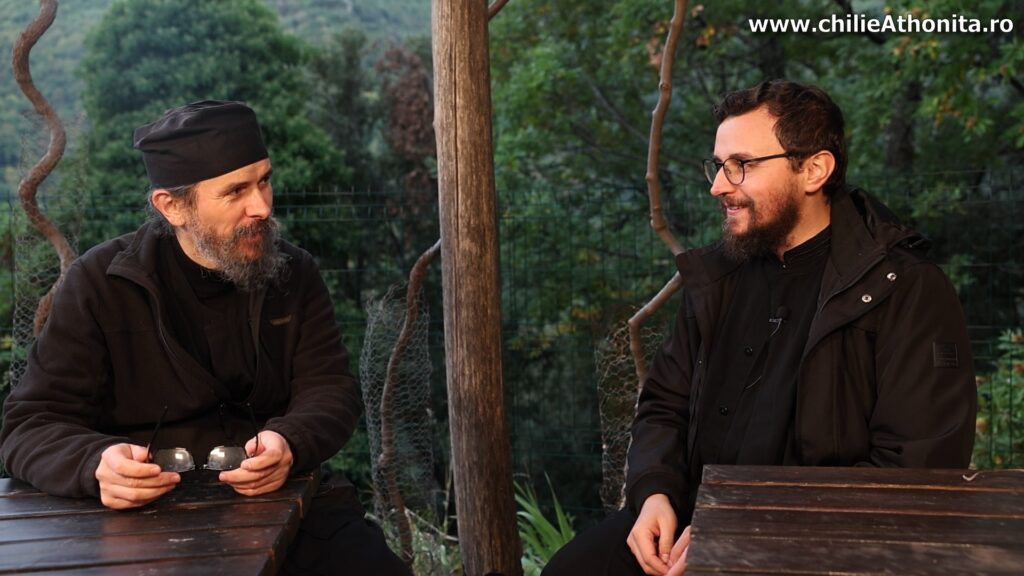
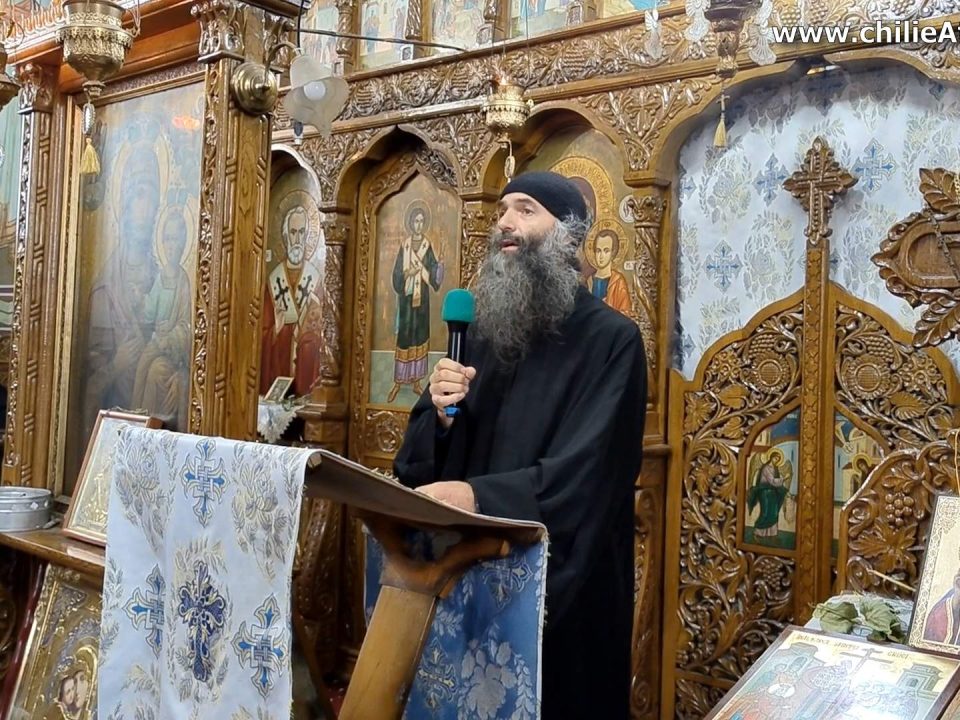
What are emotions, fear, and shame? How did they appear and how do they appear in our lives, and how can we manage them? What happens if we fail to control them? How do manipulations arise? The answer to these questions, as well as to others, can be found in this material, through the kindness of Father Athanasie Ulea.
Enjoy!
Fr. T: Glory to the Father, and to the Son, and to the Holy Spirit, now and ever and unto ages of ages. Amen. Through the prayers of our Holy Fathers, Lord Jesus Christ, Son of God, have mercy on us! Amen. Father, say a prayer!
Fr. A: God is with us, with His grace and love for mankind, now and ever, and unto the ages of ages. Amen.
Fr. T: Amen. We are once again with Fr. Athanasie, whom we love dearly and we would like to talk a bit about emotions, about pietism in the Church, about sentimentality in the Church – all these things and, as we go along, we’ll see what questions arise. What are emotions, father?
Fr. A: Yes, emotions are something that sets us “in motion”…
Fr. T: Is that where [the term] comes from? I didn’t know that…
Fr. A: Yes, it relates to movement and emotions are actually a conglomerate, a system of thoughts that we receive simultaneously. Just as a painting or an icon express many visible and invisible meanings at the same time, likewise emotion places us in a situation or a complex of thoughts. I’ve had a personal discussion about this before, and afterwards I saw that St. Maximus the Confessor mentioned in his responses to Tarasius—I think in the first question—that, actually, emotions emerge after the fall. They appeared as… I can’t recall his exact words, but I will focus more on the psychological aspect: Emotions are learned and represent the way an organism needs to react faster. Here we see it in felines – cats at play.
When we perceive an object that poses a threat, the information travels from the retina to the brain in several stops, taking a few milliseconds. By the time we process the visual input to recognize a lion or a snake threatening our lives, too much time could pass, and we may not react in time. Those milliseconds could be fatal. Therefore, there is a faster mechanism. The information I see is transmitted immediately to certain areas in the brain, particularly the amygdala, which serves as the center of fear, so to speak. This area processes information in relation to the hippocampus, which is our memory center, or with certain information -implicit fears we have – encoded somehow genetically in our human nature, and then this circuit operates much more quickly. And when there is a danger – consider the popular TikTok videos featuring cats and cucumbers: If you place a cucumber near a cat without its knowledge, it will immediately jump at the sight of it.
Fr. T: Why?
Fr. A: It’s not really known, it is believed to be an ancestral fear linked to snakes or other unusual objects. So the cat jumps instinctively, without deliberation. Sometimes it may return to smell it, but automatically the first instinct, I would call it reflex, is to jump. So then, for us, emotion is a reflex rather than a reflective, cognitive way of acting.
Fr. T: Reflective actually means to think.
Fr. A: Yes, exactly. So [emotion] is like touching a hot stove; you immediately pull your hand away, it’s a reflex that’s rooted in the spine—we don’t condition it or think about it; we simply act. Similarly, emotion arises subconsciously, involuntarily and I would say again, paraphrasing St. Maximus a little, in an animalistic way. Just like an animal that doesn’t think yet but [the reaction] can save him in crisis situations.
Fr. T: Yes, I think there are some very interesting points. I really want to discuss sentimentality in the Church, but you’ve already touched on some very significant issues. So, first, how one can learn emotions, and secondly, when one acts emotionally one no longer acts rationally.
Fr. A: Precisely.
Fr. T: So that means that there are manipulation techniques by which people are taught certain emotions and afterwards they can be manipulated, i.e. they can be given some very emotional facts and based on these emotions they can be made to act without thinking. Does this exist?
Fr. A: Yes, usually if we’re talking about manipulation, I don’t necessarily know too much about it, but what I sense is that manipulation techniques rely on certain fundamental fears. Fear is one of our strongest emotions, therefore, when we are stirred into a state of fear, we do not act rationally anymore. The Germans have a saying: fear is not a good advisor. In a fearful state, you can’t act rationally, in fact, you can’t reflect on your situation and then, because everyone now is capitalizing on the fear of war, fear of prices, fear of social instability, by inducing this this fear, people become very easily manipulable.
Fr. T: Why did I ask that? Because I remember what happened in Greece. How did the government fall in Greece? It was a very sad action with a very strong emotional charge in which a police officer shot a child in a notorious neighborhood. Suddenly, all of Greece rose up, demanding the government’s resignation. They discovered, through social media platforms like hi5 at the time and so on, that young people were organizing, influenced by foreign structures alien to Orthodoxy and nation, and they were told to wait for a moment with a very high emotional charge to act. The same occurred in Romania with the Colectiv Club.
Fr. A: Exactly.
Fr. T: The Colectiv Club incident was indeed a great tragedy, but what connection did the leadership structure have, what connection did the Patriarch have – who was called to resign – with this very unfortunate event? So I think there exist such kinds of hybrid wars based on emotion, right?
Fr. A: Exactly. Fear would have been the initial feeling, afterwards, it was manipulated and turned into anger, which was then used. Anger is a powerful force, I would even say deadly. It’s like a knife—which I can use to feed myself or defend against someone, but I can also harm others or even myself if I don’t know how to use it, to wield it properly.
Fr. T: And fear takes the lead; I no longer do.
Fr. A: Precisely, and anger.
Fr. T: Yes, anger.
Fr. A: As the Holy Fathers say, anger is akin to madness. At the same time, however, every feeling, these powers of the soul have been given or allowed by God to be used in a positive way. Paul Ekman, a psychologist, saw that in this whole world, regardless of culture, of faith, there are about six fundamental emotions. He deduced this somehow anthropologically through physiognomy, and it was shown that they’re fundamental, they are everywhere. I often use these in my practice, for the person to recognize these emotions within himself and in others, thus enabling him to work with them and understand what each one is. When you name the animal, you have it under control. So, we are better able handle ourselves and act better in our relationships with others.
Fr. T: What are [the 6 emotions]? A definition that’s very….
Fr. A: The 5 emotions that are most important that I use are joy, sadness, fear, anger, disgust, along with curiosity. There are combinations of these feelings of course… It’s like the palette of colors, there are three fundamental colors, but from those, billions of shades are formed. And from these somehow fundamental feelings all the other palettes of feelings and experiences can be created. And sometimes it’s important to reduce them. This isn’t reductionism but it enables us to work more effectively.
Fr. T: Exactly, yes.
Fr. A: And two other feelings that, let’s say, would be social and are particularly significant in the Church and in our relationship with our neighbor – are the feelings of shame and guilt. And what I usually tell people and what I also find very important for me: on the one hand, to feel these emotions within us in certain situations, to be aware of them; the fact that they are always in combinations, often involving at least two fundamental emotions, and we should be aware of the thoughts behind them. I mean if I feel fear in a situation—whether it’s from being honked at or it’s something deeper—and it awakens a fear from my childhood or from an accident I had or something else, which is not actually related to the situation at hand and it transposes me, it somehow teleports me into another state, into a childish state in which I was powerless, I didn’t know how to react, and since this past state wasn’t resolved, I bring it to the present, making me unable to act in the present.
Fr. T: What happens, forgive me for interrupting, what happens when the enemy projects us into the future? I mean, [saying,] “What am I going to do in the future? I’ll end up alone….” the latter especially in the case of… [a woman].
Fr. A: The issue is that, psychologically, there is no time. Everything we’ve experienced in the past or what we think about the future is in the present. This fear of the future is also projected based on a past experience, so I must identify the situation that weakened me, making me more sensitive and vulnerable in that area, precisely in order to heal. I’ll give an example. I had a patient – and the Germans always shake hands, at least before COVID, they used to shake hands like men do – and this lady was a little older, but very nice and she came and she told me every time, “Forgive me, I only shake hands like this [shows clenched hand] because I have rheumatoid arthritis and everything is inflamed here and it hurts terribly, don’t think that I have something against you.” And she explained herself every time, reassuring the other person that her condition was not a reflection of her feelings toward them, and also to defended herself against the discomfort of her body. Likewise, if we know our problems or when…
Fr. T: We accept them, we humble ourselves, and with faith in God, I believe they can be resolved.
Fr. A: Yes, the idea is that we have to recognize the past situations. Or how do we figure them out? Because many of them we have forgotten. Many of them may have been in our childhood, we may not remember them, and that’s not necessarily the most important thing. It’s important to realize: is it related to the present situation or is it my problem from before? And then I can dissociate a little to figure it out. If it’s not connected to the current situation, then it’s my issue—my paranoia—and it doesn’t affect me now. I can dissociate. And moreover, what I tell people is to distinguish between a person—the human being towards whom we should only have the feeling of love—you see love has not been included in the fundamental feelings because it is far too complex! It should be just a relationship of love, and all the other feelings, in fact, fear, anger, disgust – and the feeling of disgust is very strong, we use it a lot in the Church especially in relation to impurity – but let’s use all the other feelings against a thought, a deed, an idea of the other person or even my own. My only obligation toward individuals, whether myself or another, is to have love and when I feel fear, anger, disgust, or sadness, it stems from what the other person says or does. Anger, in particular, should be directed only at that negative object.
Fr. T: Toward the action.
Fr. A: Exactly. Lest we hurt the person we are meant to love.
Fr. T: Yes, indeed, this is very important. Regarding the feeling of guilt that weighs heavily on many within the Church today, the devil amplifies this guilt. People know they need to repent; they know that they are guilty before God. Yet, often, this guilt, rather than leading to true repentance, brings about harmful effects. I think you know what I mean.
Fr. A: Yes. The feeling of guilt serves to protect us from making the same mistake and the feeling of shame—they usually get confused. The guilt is towards the exterior, towards an external law, so to speak. Shame is more towards myself, towards my person. But they are somewhat similar. And then, these feelings protect us from repeating an action that has brought us in that situation. And if I have a feeling of… The Church does not emphasize guilt.
Fr. T: Exactly!
Fr. A: In fact, it seeks to resolve guilt through confession, and that’s why you no longer feel burdened by sins. Sin has no value before God. If I now feel guilt or shame about a past sin, it doesn’t mean that sin has not been forgiven, but that it is still present in another form. And I know, I recall someone who actually wanted to be a monk here in the Holy Mountain and we discussed it a few times and he said he can’t… He had a problem with Turkish delights, he liked it very much and he couldn’t stop (eating) and I tried to tell him that this is simply debauchery which in the world manifests itself one way, but here it takes on another guise – through this passion which seems innocent yet conceals something deeper.
Because the passions (…) after all, there is but one sin which is man’s opposition to God’s will, towards God’s love. So, when we feel guilt, a passion can shift and disguise itself in seemingly harmless forms, easier to digest. The devil’s only aim is to deceive us, to make us cease our struggle. But we need to see if there is a sense of guilt over a past sin, perhaps greater or lesser, but which is somehow bothering us, then we should rather not dwell on the past – the depressive one remains in the past, the anxious one lives in the future – instead we shall bring it into the present and see how this passion is currently camouflaged and how I still can’t let go of it.
Fr. T: So, if my conscience rebukes me, it means that even if the actual sin has been forgiven, the problem still exists.
Fr. A: Exactly. In another form.
Fr. T: This is crucial and, in fact, we shouldn’t focus so much on guilt, but rather on solving the problem.
Fr. A: Exactly.
Fr. T: And I think it’s vital to mention that the devil seeks to steal our present, does he not?
Fr. A: Exactly. And then if we feel guilt, we should not bury our heads in the sand or avoid the people or those who remind us of the deed, but rather face these situations with courage and strive to avoid the action that led us here. Often, we tend to isolate ourselves, we tend to avoid others, or to remain at [the level of]: “Lord, what have I done?” or “Will I be forgiven?” or “Even if I’ll be forgiven, it’s so ugly” and so on. That does not help, it’s actually something devilish. This is a pathological guilt which rather drains our strength. Because emotions set us in motion, we can use them as weapons against the devil and against sin.
Fr. T: For salvation.
Fr. A: Evagrius also says, “Use anger against wickedness, against injustice.”
Fr. T: Of course. Regarding sentimentalism in the Church…
Fr. A: Yes, well, I think that what you said at the beginning and the fact that when man remains at the level of feelings, he remains in an animalistic, inferior phase, meaning he’s unable to reason, he cannot come to the knowledge of God. Pure reason alone isn’t sufficient, but it is a step above irrationality. Yes, and then many claim, “This is what I do, what I feel,” and we know the grave sins committed nowadays because that’s how the person “feels” even when those feelings oppose [truth], so to speak. Thus, feelings can mislead us if they are not understood, if they are not rationalized…
Fr. T: Managed by the mind.
Fr. A: Exactly, yes, and when understood and purified through struggle, feelings can lead us to God and propel us toward Him, but we must make use of their power properly.
Fr. T: Precisely, so the mind must manage and control them, not in a purely rational sense, not in a legalistic sense, but in a spiritual sense.
Fr. A: Exactly.
Fr. T: And so, I think that art in the Church that enhances sentimentality does harm, I mean it can do harm.
Fr. A: Sentimental art can indeed stir certain passions and sinful states that actually lead us away from God. Byzantine art is a stylized art that wants to make the uncreated present, to reveal what cannot be seen or felt by our senses, what is beyond the senses, and that is why it often arouses no emotion, but simply a peace.
Fr. T: Yes.
Fr. A: Because our perfection – like for the Stoics – is apathy – without pathos, without passions and, in fact, without feelings.
Fr. T: Yes, yes. “Pathos” in Greek means illness, suffering. So, we must get rid of such things, but the difference between us and the Stoics is that for us, apathy, meaning lack of passions, is full of love, full of life. Whereas for Stoics and Buddhists, for Asians, it’s actually a disintegration of the personality, stillness, death. Yes.
Another question regarding this, because you mentioned shame. What is shame? I mean, you said it’s a state, an internal reaction to an action we deem wrong or that should not be repeated.
Fr. A: Shame, in its simplest form, is like standing naked before a crowd, that’s the easiest way to explain it. It comes rather when we try to identify our wrongful action with ourselves and when we don’t want to separate ourselves from the sin. Shame should help us, not to hide, but rather to reveal ourselves before our spiritual father, so he can excise the cancer – the wrongdoing – and we will remain pure. And then a pure man will be like Adam in paradise – naked but innocent, not ashamed.
Fr. T: Why did I ask that? Because today people are really not ashamed anymore, but not in the sense of overcoming their passions; rather, in the sense of a total intertwining with the passion.
Fr. A: Yes, often it is a wrongful understanding, much like that of Freud, that we must give free rein to our impulses. However, when a feeling is dissociated from the reality that caused it, then it is covered up, but it’s like holding a ball underwater; eventually, it will spring up, but it will spring up in something else: in the subconscious. And I can give you an example: there was a girl in the Church, very intelligent, a pharmacist, and because she was in the Church, and receiving Communion, but at the same time she was also living together with someone – because “That’s what everybody does; other’s do it and there is no issue” – she then developed an obsessive-compulsive disorder. In church, she began to see all the holy icons and the priests and so on, naked, or in sexual positions. Yes, and then that passion, or the feeling of shame, which normally, initially, should have protected her, for her to dissociate from sin and leave it – because she, in her way of thinking, didn’t accept this and did not do it at first – the shame showed itself in a pathological way that was much more difficult to resolve in this pathology.
Fr. T: Shame is, in fact, the foundation of turning away from sin—it’s the basis of repentance.
Fr. A: Of course. It is a fire we must use to repent.
Fr. T: Yes, glory to God! And I think people today do not repent because they lack shame.
Fr. A: Yes, yes. And because of this they develop mental illnesses, because everything is turned upside down.
Fr. T: Yes, yes. And I believe that today, more than ever before, there are so many mental illnesses, unlike anywhere else, because people don’t repent, sin passes as virtue.
Fr. A: Exactly.
Fr. T: And in fact, I believe that the only way forward for our society is through a return to repentance and to shame. Yes… and then I think it gives weight to what Parmenides said in the 4th century B. C. He said that the absence of shame leads to the collapse of civilization.
Fr. A: Yes, exactly.
Fr. T: Many thanks to Fr. Athanasie. I would like us to continue the podcast, but I know you won’t watch it [if] it’s long, but when Fr. Athanasie returns, we will continue because there are some truly beautiful and very useful topics, brethren. But unfortunately, because we are far from God, we do not have the attention span needed to be able to follow along.
Online commemoration lists and donations
May the Lord help us!
Online Commemoration Lists and Donations
May the Lord help us!
If you have a bank card and wish to send commemoration lists and donations online using your card, and/or to support our philanthropic activity, including this site, please fill out the form below to make a small donation. The form is secure – we use Stripe for payment processing – a world leader in this field. We do not collect your personal data.
If you do not have a card, or do not wish to use it, visit the webpage for Online Donations and Commemoration Lists.
We will pray for your loved ones! (Please do not include inessential details like wishes, degree of kinship, introductions etc. JUST the name!)
Especially for recurring commemoration lists, we ask that you please keep them to under 20 names long. If you include a member of the family, we add “and for their families.”