


The Anxieties of People Today – Father Pimen Vlad
16 March 2023
Anxiety – Fr. Athanasie Ulea, Fr. Theologos
19 March 2023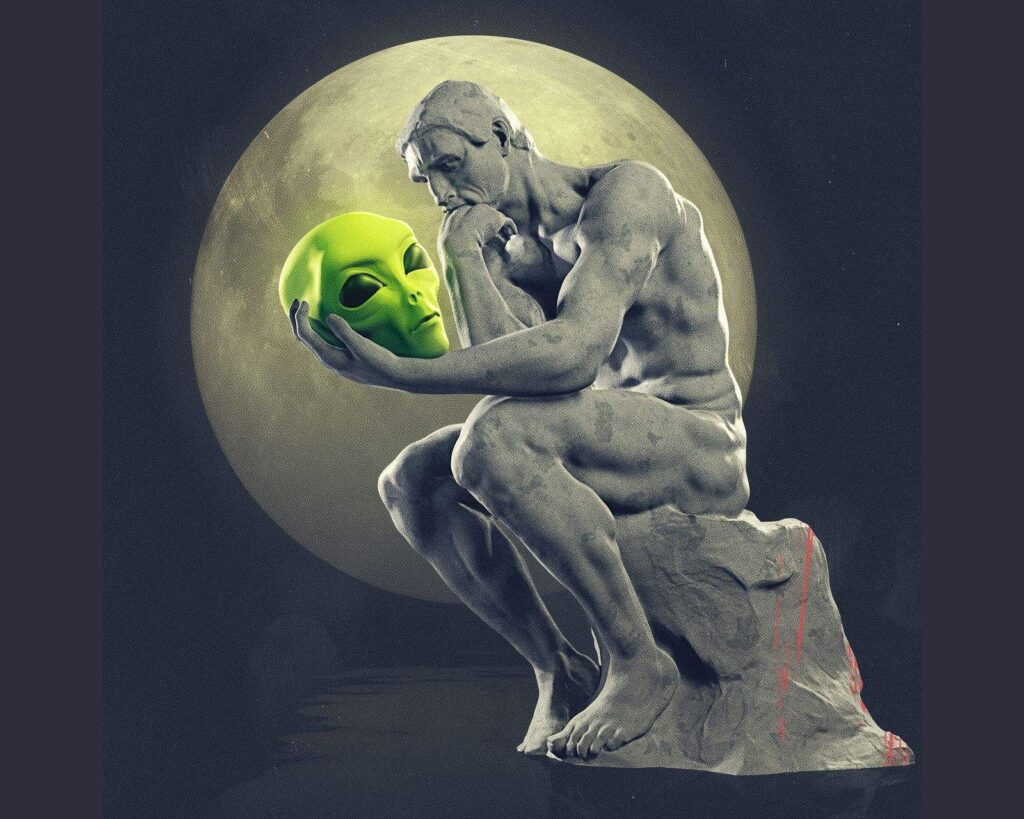
We dismantle an artificially created myth: humans have no connection with aliens. The Athonite monk Theologos Cadar presents theological and scientific arguments that expose the deception woven around this subject.
Enjoy!
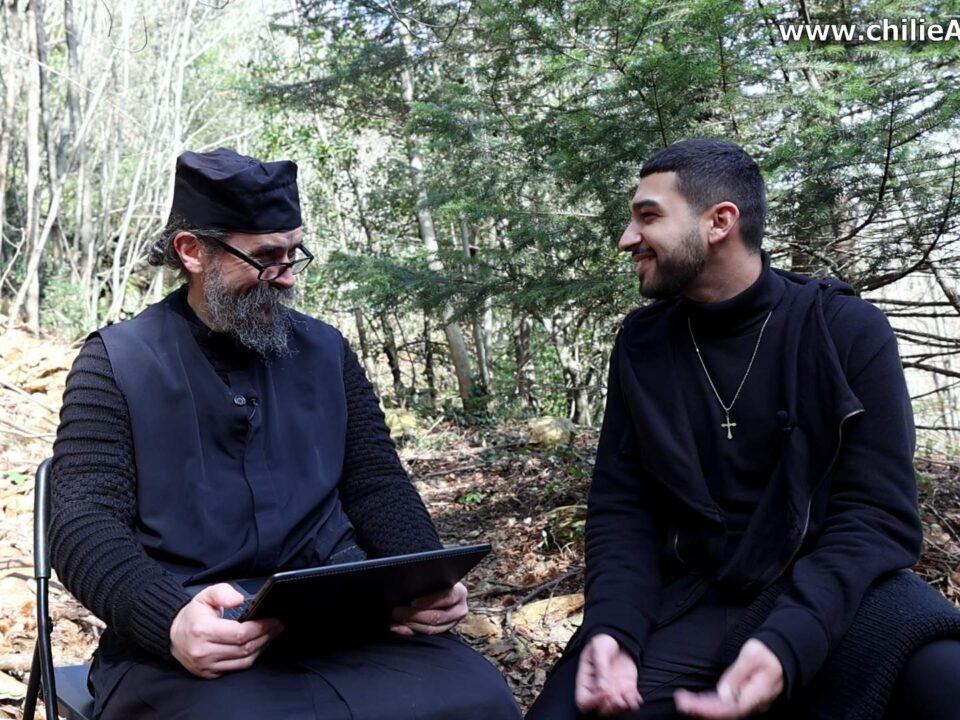
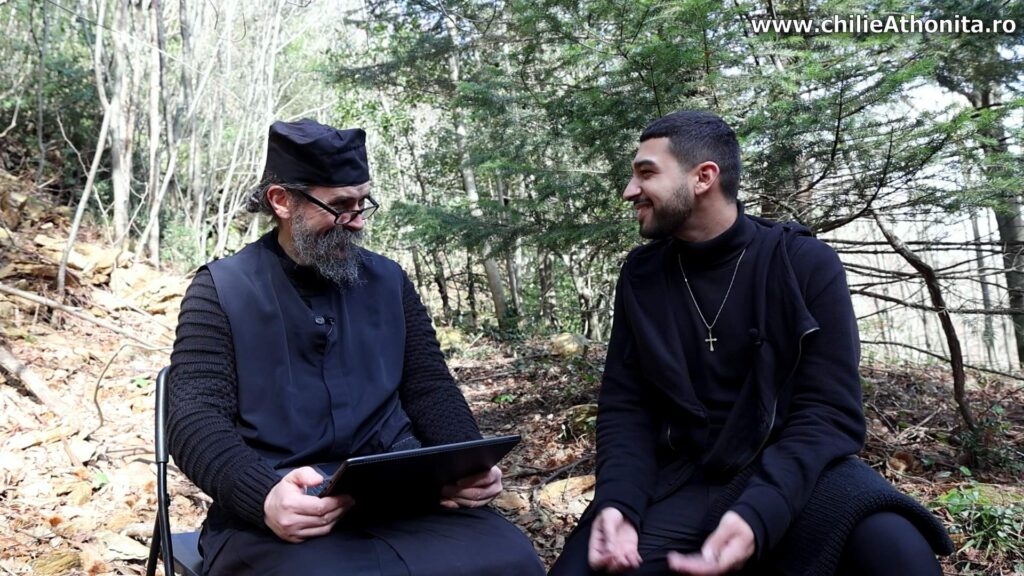
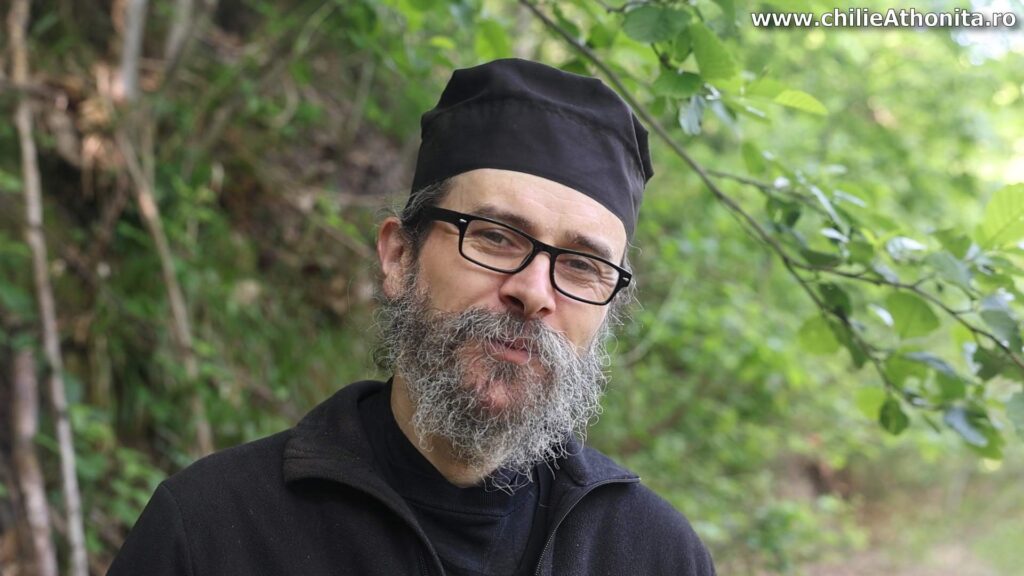
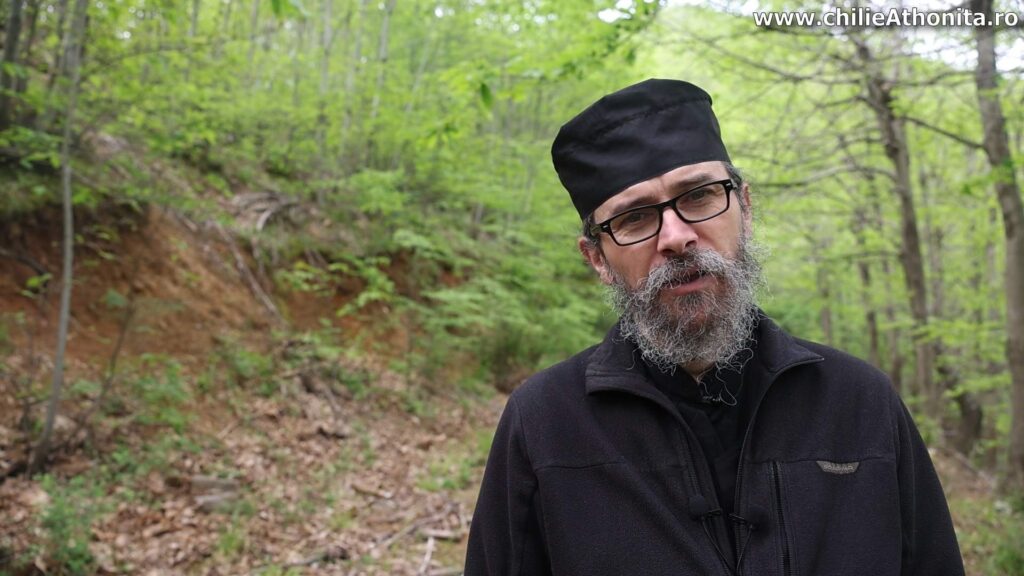
Cristi Bumbenici: Dear friends, we are once again with Fr. Theologos, in the Holy Mount Athos, at the Cell of the Entrance of the Theotokos into the Temple, and today we will discuss a subject that is somewhat on the borderline between knowledge, science, fantasy, and demonic deception. There are several characters, so to speak, several directions along this very fine frontier line. First of all, father, thank you for agreeing to continue…
Fr. T.: May the good Lord help us!
C. B.: …This series of dialogues which are very useful for those who follow you and follow us. I propose that we start today’s discussion from the following point: on the one hand, we have science, which also tries to demonstrate, as much as it can understand, about the origin of life; on the other hand, we have a theme that has evolved in a fluctuating manner. And I am referring here to the classic, slightly wacky fact— and I will not be the one to unravel this wackiness—that there is the attempt to give credit to the idea that we are the result of an extraterrestrial experiment—someone, at an unknown time, passed through here, found a planet that probably met the conditions for organic life, planted some seeds, several seeds, from which this biosphere emerged, and man developed in all his fullness, and somehow, at some point, that civilization will come to see what their creation has done.
I was saying that it has been somewhat put on standby because in recent years we have noticed that it has not been much debated in the media – especially in America, in Europe, even in our country, but we live with the feeling that at some point it will be reactivated and this might happen in a very harsh form, but we will discuss that towards the end. Now, father, I ask you— can we talk about ancient sources that attest to the presence of an extraterrestrial civilization that was engaged in precisely what I was saying earlier?
Fr. T.: Yes, of course. The Holy Scripture, for example, speaks of angels; the Holy Fathers speak about the nine angelic orders. So, there are forms of extraterrestrial life, but not in the sense that they are presented to us by science fiction films.
C.B.: Not in the sense of the little green man.
Fr. T.: Yes, or… well, there are a lot of other things that are presented by the mainstream media. So, there are these angels (angels being rational beings). We know that there are nine species—nine angelic hosts. We know that being rational beings, they are free, and so some of them are malicious, others are well-intentioned. Evil angels are also called devils, which is a description of their behavior. And well-intentioned angels are called just that—angels, which is an umbrella term covering all nine angelic orders, one of which is called just that—angels—and which gives its name to the whole group, if you will.
From then on, scientists… not them… well, them too, but mainly people who are eager for such things find everywhere… but not quite everywhere… there was a time when the UFO frenzy was around, which has now more or less disappeared, it has almost vanished, who interpreted all kinds of hieroglyphs, all kinds of things from Antiquity—paintings, artifacts in general, pyramids, and so on—as being the results of an extraterrestrial civilization—which is not very true.
So, they exist, but as I said, not in the sense that… And the Church knows this very well, but they do not exist in the sense, as I said, of what we know from ufology books and so on. Although even there, of course, certain experiences, not all, but certain UFO experiences are angelic experiences, mainly, of course, demonic ones.
C. B.: You began our presentation almost with a conclusion, but I will continue to challenge you by bringing to your attention a constant element in terms of directing our attention (in this context obviously) towards something. And we will take science fiction films and literature as our topic of discussion. Now, without mentioning the names of some highly successful productions, which have enjoyed a fantastic global audience and, obviously, box office takings to match, they have created a real psychosis over the last 30 years and it seems that they want to establish a certainty that yes, that’s right, there are extraterrestrial beings, there are a multitude of other beings just waiting to meet us, but apparently we are not yet technologically or socially ready to share our knowledge with them.
People today seem to be more willing to accept such a theory, such an idea that essentially has no foundation, than to turn to Holy Scripture, where all things are laid out from the very beginning—you have already mentioned them, so there is no point in me repeating them. So, I’ll try to summarize one of the questions that someone who has watched various science fiction productions and read science fiction might ask—I know that you too had a period when you read literature and consumed productions of this genre; how can we explain to everyone that it would not even help us to know that such beings exist—if they do exist—in the context that we are the direct creation of the One Who, probably, if He wanted to create other civilizations, created them too? And we do not need to believe that someone came and sowed us as we sow wheat in the ground.
Fr. T.: Just a moment, let us be clear: first of all, the assumption that there is an attempt to induce acceptance of the fact that there are extraterrestrials and that they will come to Earth and so on, is something that has been overcome because today, for better or worse, beyond other problems of today’s society, there is also a certain good thing— namely that science, especially astrophysics, has become quite well accepted among people. I mainly refer to the so-called Western world, and people know that from an astrophysical point of view it is impossible for a ship or something like that, as presented in science fiction films, in Star Wars and so on, to reach Earth, and that requires very, very advanced technologies that we cannot even access. It’s about the speed of light as the maximum speed in space and a lot of other things—the cyclopean distance from us to the first star and what happens there and all that. So, they have eased up on that matter, and that’s why in movies, but also in science fiction books, in science fiction art, so to speak…—because there’s a whole discussion about what science fiction actually means. Do you understand? Because, first of all, the term science fiction should be defined, especially today, when it encompasses very occult, very spiritual things in the negative sense of the word.
C. B.: And in terms of concrete effects.
Fr. T.: Obviously. So today it’s no longer a question of convincing people that yes, okay, aliens are coming tomorrow. Science fiction is used to promote… it’s a very easy way to promote certain ideas, mainly spiritual ideas, not in the way Romanians think of spirituality because indeed, for the Romanian people, spirituality has a positive meaning, and that’s a good thing. [In this context I am referring to] spiritual ideas that are highly questionable from a spiritual point of view, an amalgam of all kinds of religions, ranging from dangerous to very, very dangerous. And in fact, pretty much all the big… we see this with Star Wars, for example, which I mentioned a little earlier, the main theme of Star Wars is not the battle between certain ships, but the force – the positive and negative sides of the force, and it leads to all kinds of clearly magical things: “Call on the force,” “Use the force,” and so on.
So, they know that the primary level is the spiritual level, and here they get to the other aliens, meaning angels – the good angels and especially, the bad angels. And this is very clear in these productions—books and films— that even the good guys don’t use gentleness and humility—as our Lord Jesus Christ teaches us. It was through this that He performed miracles and through this that He rose. And our Lord Jesus Christ is not fiction, He is not a fictional character, He really did this, so He is a Man who conquered death.
No film or book talks practically of overcoming death, especially through gentleness. No one can conceive of such a thing. Returning to movies and books, mainly movies—because people watch a lot of movies—even the good characters use force there, with the strongest laser, the strongest weapon, shooting and so on, and supposedly manage to win. That’s not true! Well, but this isn’t just in science fiction, it’s everywhere: so, all the time, movies with fights, as they used to say, cowboy movies and so on, war movies—had a certain appeal to people… why? Because man is fallen and man has this appetite for violence.
That’s very briefly it, related to movies, and the ideology is the sinful one that… But not always, you know, it’s the ideology of the creator of the work, who may be a very capable person, but that doesn’t mean he also has an illuminated mind. There are even certain film adaptations of the Holy Scripture set in a science fiction context, or certain science fiction movies that are very… let’s say, with a spiritual theme, but the vast majority clearly feature guns, violence and so on. And we can never judge. That’s why I said that there are films that are very useful for the soul, but these are very rare and relatively exceptional.
C. B.: So, it is probably a consequence of this direction in which some screenwriters find themselves and use their imagination to the fullest. At present, we have reached the point where the planet is no longer saved by the military or government institutions, but by heroes who are themselves fictional, obviously, and these fictional characters protect us from an alien invasion, which is an increasingly present theme in productions, at least in the last ten years, effectively creating a level of expectation. Because I refuse to believe that this whole direction that science fiction productions have taken has no additional purpose, namely, at least, to divert attention and, secondly, to somehow set a level of expectations.
Fr. T.: No, no… It’s about dopamine, Cristi, it’s about shock…
C. B.: Just that?
Fr. T.: It’s about sensations. Yes, because if I’m going to pay to see the movie, it has to give me a greater sensation than the old movie, the previous one. And now I keep thinking about Star Wars…
C. B.: It’s a classic…
Fr. T.: Yes, especially since I saw it when I was a layman.
C. B.: Me too.
Fr. T.: And we can use it as a model…
C. B.: And many of our viewers have surely watched it at least once.
Fr. T.: Yes, so we can discuss the original trilogy, because I understand that other franchises have now appeared. So, of course, a certain agenda is being pushed, but first and foremost, above the agenda, above all that, is money, shock, pleasure, subjugation through pleasure. So, if, until Star Wars, there were, for example, small ships shooting at each other, firing… okay, fine. If I remember correctly, the first Star Wars movie, now called A New Hope, if I’m not mistaken, it’s the fourth one, as there were three before…
C. B.: They started with the fourth part, yes.
Fr. T.: So, at the beginning of this film, there is a ship with Princess Leia on it, as I recall, and this ship was small, like the ships in other science fiction films at the time. And then, there was some laser shooting, and you were like, yeah, okay, cool, beyond John Williams’ phenomenal music (the soundtrack), and behind this ship, we see who is chasing them, a triangular-shaped ship.
C. B.: A disproportionate behemoth…
Fr. T.: So that’s what I mean. George Lucas knew what he was doing to provoke shock, to provoke pleasure, to give them that drug, that huge dopamine rush. Because that ship, the stellar-destroyer behemoth, that brutal destroyer appears just like in other science fiction movies. First, a small ship appears, and as it gets closer, it becomes increasingly gigantic, yes, it fills the screen and everyone starts screaming, yelling. Why is that? Because it was a dopamine rush. Do you understand?
And then, the famous Darth Vader appears. So, all these mechanisms of passion, of drugging people, if you will, through which some superheroes are presented, and today things have reached extreme levels. I haven’t seen, but I understand that this Marvel Comics series and so on—without any particular fluency or depth in the script— it’s a whole story with fights and guns. I saw some trailers, but I turned them off immediately… So that’s the theme they are going on, Cristi.
In order for people to spend money, they need excitement, they need deification, but in the wrong direction, in the direction of technology. Omnipotence, right? Because, speaking of Star Wars, they were destroying planets, destroying whatever. Do you understand? More and more omnipotent, that is a form of god, but in the wrong sense, meaning not in the sense of good.
C. B.: Since 1977, if I’m not mistaken, when the first production appeared, and until today, the Star Wars Academy was created, various European and global gatherings have been organized, attended by tens of thousands, hundreds of thousands, depending on the size of the event, of people who simply dress up as characters from the film…
Fr. T: Cosplay, yes.
C. B.: …which I think is a bit of a social distortion, to say the least. You can’t identify with a robot or a creation… something you don’t see in reality.
Fr. T.: Yes, because it caused this hysteria. Do you understand? It’s something demonic. And here I want to say two things, so that you see that we can’t judge people…
C. B.: We’re not judging! We are presenting.
Fr. T.: Yes, exactly. First of all, I would like to very much praise Sir Alec Guinness, who played Obi-Wan Kenobi. Although it was a small role, thanks to his appearance and the role he played in the entire film and in the other two—The Empire Strikes Back and the last one, I don’t remember what it was called, it doesn’t matter… in the three… Obi-Wan Kenobi was highly respected, a very respected character.
C. B.: The Return of the Jedi.
Fr. T.: Yes, indeed, the Return of the Jedi. The Last Jedi, I think it came out recently, I don’t know, I haven’t watched it.
C. B.: Yes, it was a kind of a reheated soup.
Fr. T.: Yes? I understand. No way…
C. B.: It was not done well even in this area, I mean they totally hijacked it…
Fr. T.: Oh, yes? I haven’t seen it. So, Obi-Wan Kenobi was a very important character, all the others were virtually unknown actors, except of course for Sir Alec Guinness, who earned his knighthood precisely because of his acting talent, not in Star Wars, but in Shakespeare, so we’re talking about very serious stuff here. And the other actor was Harrison Ford, the two of them.
In Sir Alec Guinness’s case, at one point, a child approaches him, and when he sees him, he starts screaming, because he has seen his idol, and quickly pulls something out of his pocket, because he was a Star Wars fan, he pulls something out of his pocket… He had a lot of pictures, and took one out with Mr. Guinness dressed as Obi-Wan Kenobi, saying, “Please sign an autograph, I really want one, please!” And Mr. Guinness says, “I’ll sign if you do something for me!” And the kid says, “Anything!” “Well,” Sir Guinness says, “please don’t ever watch Star Wars again!”
C. B.: I didn’t expect that, honestly…
Fr. T.: Yes, the young one was blown to pieces, and the youth realized that indeed there was a problem somewhere. I mean, all respect to Sir Guinness, he’s great…
C. B.: He did have the decency to tell the truth…
Fr. T.: Yes, yes, you understand? Harrison Ford reacted the same way.
C. B.: At one point, he didn’t want to do it anymore. He was invited, he was offered the role, but he didn’t want to continue…
Fr. T.: Yes, he said it’s crazy. And in The Empire Strikes Back, at one point, when they freeze him in carbonite… why did that happen? There was a whole twist there. Why? Because he had lobbied to have his character killed off.
C. B.: Yes.
Fr. T: He said, “This is crazy.” He said, I’m giving up the money, I’m not getting involved, because this isn’t normal, it’s not from God. And you see these people, if we’re speaking from a dogmatic perspective, they’re heretics. Yes, but you see, these people have a conscience, I mean, it speaks… brothers, it’s not like everyone goes to hell, and we are the only better ones.
C. B.: It’s not okay.
Fr. T.: It’s not okay. It’s the other extreme, you know. And these people said “Okay, stop.” And of course they did all these pirouettes, and in the end, they convinced Ford to continue acting. And in the end, in The Force Awakens, or I don’t know which one…
C. B.: Yes, they kill his character.
Fr. T.: Yes, they killed off his character because he had lobbied and said “Yes, okay, but this is the last one,” and so they did this, even though he was one of the most beloved characters and also an anchor…
C. B.: A large part of the story was built around this character.
Fr. T.: You see what that demonic energy means, that others can feel. That is, the person – even if he has problems – their conscience tells them that it’s not right. Even if they have earned a lot of money.
C. B.: Okay, dear friends, we have conducted a case study on a well-known topic or production, and I believe it has been very useful because, at least from Fr. Theologos’ presentation, things are very clear. Now, let’s return to the realm of “concrete” evidence, this time with quotation marks. Until relatively recently, there was a very “serious” topic—again, with quotation marks— called “the ancient astronaut.” You know what I mean. For viewers who may not have heard yet, we are talking about those cave paintings dated back tens, hundreds of thousands of years, in which something resembling an astronaut was engraved in a cave. It appeared at various times, as well as later, from Indian culture. Erich von Däniken, [is] the famous writer in this field and supporter of evidence which points to the ancient astronaut. What can we say this time in the realm of realism about this story, this narrative?
Fr. T: Yes, Däniken too, and in Romania there was someone who had written a book called “Deocamdată Enigme” (Enigmas…for now)
C. B.: …Which I also read at the time.
Fr. T.: The famous book, written by Dan Apostol, the author who nevertheless has the decency to say “enigmas… for now,” meaning, not to make a definitive statement.
C. B.: He is not categorial.
Fr. T.: He is not categorical, even though he clearly had a tendency towards this. Of course. What can we say? When you want to see something, you will most likely see it. Däniken was very enthusiastic, why? [Dan] Apostol was too, because the topic of the universe, telescopes, and so on had just exploded, and he said it was impossible. Of course, they did not have the Orthodox awareness that angels, both good and evil, truly exist, and with great enthusiasm, they were looking for all kinds of such things. Not to mention that some UFOs are real and here I mean, not only that there are indeed demonic things, but beyond that, UFOs, flying saucers were military projects.
C. B.: Both during the Second World War and especially after.
Fr. T.: Afterwards, right. And we are talking about a Romanian – Henri Coandă…
C. B.: Who was not an extraterrestrial.
Fr. T.: He wasn’t an alien, but rather a highly gifted Romanian who emigrated to Canada and so on, and invented…. actually discovered, he didn’t invent it, he discovered a famous effect— the Coandă effect—on the basis of which the so-called lenticular aerodynes, as he calls them, were made, in this case, flying saucers, which today have morphed into drones.
C. B.: Exactly what we see now.
Fr. T.: Yes, so those are the drones. But of course, those drones had much more aerodynamic shapes, because it’s more aerodynamic to have something like a saucer, that is… like a very flattened spinning top, because it really moves much better through the air. So, the drones you see now are [not] made this way for reasons of cost, meaning they don’t have a very aerodynamic shape. The aerodynamic shape is that of a flattened spinning top.
C. B.: Like a biconvex lens.
Fr. T.: Yes, like a lens, that’s it. The military was very interested in this topic, mainly the US military, but also the Canadian military, and they were making prototypes and conducting experiments with it. Of course, it’s impossible to hide them, and people saw them and said it’s an “UFO,” meaning an unidentified flying object. And then, the military wouldn’t say that they were secret military projects.
C. B.: They sent us straight to the extraterrestrials.
Fr. T: Yes. Plus, Däniken and Carl Sagan, and all these guys came along, plus there was H.G. Wells with The War of the Worlds— he had written it before. Plus, Isaac Asimov, also in that era, with Robots and Foundation and so on…
C. B.: The perfect cover was created.
Fr. T.: Here is the perfect cover. Today, most of these projects are unclassified, and it is known that they did indeed exist and were abandoned due to fuel issues, lack of horizontal speed, and a host of other problems that today’s drones also suffer from.
C. B.: And they make them better than was assumed 50 years ago.
Fr. T.: Yes, obviously.
C. B.: Now there is an author that we highly recommend, Father Seraphim Rose, a man who first knew everything there was to know about science in general in his time and wrote a book discussing this deception of the idea of UFOs and a civilization…
Fr. T.: Forgive me for a moment! I would also like to mention here Father Spiridon Bailey, whom we feature on our website, who wrote a similar book, The UFO Deception, based on Father Serafim Rose’s book, but brought up to date with current information and so on. Please forgive me, continue!
C. B.: …In which the author says another very interesting thing, namely, that some of the “very old evidence” is actually planted evidence, and even explains the demonic intervention that made it appear so that people could really see with their own eyes what was there, but things were not…
Fr. T.: Yes, I’m telling you, that can happen too, obviously, but generally it’s about seeing what you want to see, and that is also something the devil puts in your head. I remember some instances—there was a hieroglyph that clearly showed a light bulb, a lamp, and in fact, if anyone read the hieroglyphs below, it was about a lily that really looks like a light bulb, the lily of life, which is the symbol of life for the ancient Egyptians.
C. B.: For the most part, you have very quickly pretty much covered everything I was thinking of asking you in order to help us understand better. There is one more idea, one more topic that you should at least touch on—namely, this relationship… it is already easy to make this connection between the ancient gods, aliens, and real demons.
Fr. T.: The ancient gods and the modern gods, in fact, all gods are personifications of the inner gods, that is, of the passions.
C. B.: Meaning of the demons.
Fr. T.: Of the demons, yes.
C. B.: To skip over the aliens…
Fr. T.: Yes, yes. Demons generate passions, and that is why we say the demon of anger, meaning the devil incites it, but it’s my passion, I’m the one that sustains him. In ancient times it was Mars or whoever, today it’s Darth Vader—speaking of him—or God knows what monster from who knows what movies. Because people want this stuff… if people didn’t want anger and brutality in books, movies, and so on, such things wouldn’t appear. Do you understand? For example, people don’t want gentleness, or they want a hidden gentleness…. not a hidden gentleness—my mistake—[they want] a gentleness that hides a harshness this is what I want to say, and that’s when you see the humble one comes in— like the Jedi knight who kills and slices.
C. B.: Everything he get’s his hands on…
Fr. T: Yes. There is this aspect also; there are very few movies that are truly gentle, and this is evident in the Orthodox space. For example, Harap-Alb is also science fiction, right?
C. B.: Yes, we can say it’s a science fiction production. It’s a fairy tale, we consider it a fairy tale, but it contains…
Fr. T.: Yes, [the characters] Hungry, Birdy, Broad, Stretchy, Thirsty – all of these, you understand. But you see, since there was an Orthodox spirit among the people, a gentle spirit, a joy-giving spirit, we cannot identify it with the sci-fi genre, which mainly has technology, science as a savior, with all these demonic phenomena and so on. Understand? Or “Capra cu trei iezi” (The Goat and Her Three Kids) – the animals are speaking there too, right?
C. B.: Of course.
Fr. T.: Can you say it’s sci-fi? It is indeed fiction, as this didn’t actually happen, yes. But let’s bring the story of “The Goat and Her Three Kids” to the present day—you see someone talking through the intercom, holographically, and then they press a button on their cell phone and the wolf appears. They shoot lasers… So, you see that a classic and very beautiful, very instructive story by Ion Creangă can be translated into the current Western register, far from Orthodoxy, into a brutal register.
So, it’s about the gods we have inside us, that is, our value system, the passions we have inside us, which we propel outward.
C. B.: In this context, and this is the final question of this discussion, there are quite authoritative voices warning that we may be faced with a very real scenario, precisely through the use of existing technology, and here I am referring to holographic projections, to mask a very large-scale event that actually stimulates an alien invasion. Some targets are destroyed and, obviously, someone intervenes, annihilates this whole story, but the damage has been done. We are in speculative territory, but the idea comes from a somewhat concrete area, because these people have put some things together and come to the conclusion that if someone wants to do this, with the current technology, they can do it very easily, because we—the population of the planet—are already prepared for a sort of acceptance since for 20 or 30 years we have been seeing, in movies, that someone from outer space wants to harm us and is attacking us.
Fr. T.: Yes, I’ve told you. So, the technology… I’ve seen demos on this topic, but at one point you can see it’s a hologram and beyond that, it has no substance. A hologram has no substance. So, when you pick up a rifle—in the United States, everyone has rifles and pistols; I’m not saying it’s good, but everyone has them—you take out the rifle and the pistol and shoot, and you see that it goes through it. And beyond that, in order to see that it destroys a target on the ground, the laser or whatever weapon it is must come from it—from the hologram—which is impossible. Well, it can be done, but I think this is already too conspiratorial, I mean, it’s not… As you can see, the wars in Ukraine are very terrestrial, on the ground, it’s too… What was talked about was the fact that the second coming of the Savior would be something like this—a simulacrum.
C. B.: Yes, yes…
Fr. T.: Do you understand? And then things are a little more perverse for people who really want to believe anything. As I was saying, due to the fact that the impossibility of extraterrestrials coming from an astrophysical point of view is already quite well known, due to the speed of light, distance, and so on, people have calmed down a bit on this topic and they don’t really… And today, this is seen both in science fiction movies and games – the occult appears, much more of the occult side emerges. Since we tore Star Wars to pieces, you see that those with weapons, ships, the Death Star and so on are the ones below. The ones above are the ones with the occult, meaning, the wizards, more openly.
C. B.: Yes.
Fr. T.: And this is in all the movies, take Frank Herbert’s Dune. The greater and stronger ones are the witches, meaning a sisterhood of women who are in charge. Those below are the fighters, the ones with the battles.
C. B.: So, coincidentally, the theme of witchcraft is also introduced, but in a seemingly fantastical form.
Fr. T: Yes, modern, you see. So that’s where we’re headed, so that’s the main danger today: the acceptance of witchcraft and the acceptance of aliens as spirits, not so much as a “star destroyer” coming from the intersection on the right. No. Rather the occult, magic, all these things, “the force,” all that…
C. B.: In conclusion…
Fr. T: And artificial intelligence, let’s not forget that.
C. B: …even if we repeat ourselves, who are the aliens really?
Fr. T: As I said, there are several actors. First, there is “It seemed to me, it’s not true” and so on (confusions). Then there are military projects, plus or minus, or other scientific projects, and of course, there may also be angelic phenomena—99% of them being demonic.
C. B.: That’s about it, dear friends, the only Hero we recognize and Who exists, and Whom we will meet at some point—it is very important from what position we will meet Him— [is] our Savior Jesus Christ, and He invites us to join Him at some point in a project greater than the galactic, greater than any federation, republic, or anything else we can imagine.
Father, thank you very much, and may God illuminate you and keep up your energy because, although we discussed a seemingly worldly topic, it was necessary for you to clarify some things since, as I said earlier, and as you said even better, many of us have adopted ideas that are based on nothing.
Fr. T.: May the good Lord help us!
C. B.: May the Lord help us!
Online commemoration lists and donations
May the Lord help us!
Online Commemoration Lists and Donations
May the Lord help us!
If you have a bank card and wish to send commemoration lists and donations online using your card, and/or to support our philanthropic activity, including this site, please fill out the form below to make a small donation. The form is secure – we use Stripe for payment processing – a world leader in this field. We do not collect your personal data.
If you do not have a card, or do not wish to use it, visit the webpage for Online Donations and Commemoration Lists.
We will pray for your loved ones! (Please do not include inessential details like wishes, degree of kinship, introductions etc. JUST the name!)
Especially for recurring commemoration lists, we ask that you please keep them to under 20 names long. If you include a member of the family, we add “and for their families.”

Pomelnice online și donații
Doamne ajută!
Dacă aveți un card și doriți să trimiteți pomelnice online și donații folosind cardul dumneavoastră, sau/și să susțineți activitatea noastră filantropică, inclusiv acest site, vă rugăm să introduceți datele necesare mai jos pentru a face o mică donație. Forma este sigură – procesatorul de carduri este Stripe – leader mondial în acest domeniu. Nu colectăm datele dvs. personale.
Dacă nu aveți card sau nu doriți să-l folosiți, accesați Pagina de donații și Pomelnice online .
Ne rugăm pentru cei dragi ai dumneavoastră! (vă rugăm nu introduceți detalii neesențiale precum dorințe, grade de rudenie, introduceri etc. Treceți DOAR numele!). Stripe limitează lungimea textelor și din cauza asta vă rugăm să fiți scurți. Dacă puneți un membru al familiei, noi adăugăm „și familiile lor”.
Dumnezeu să vă răsplătească dragostea!