

What young people should we promote? – Fr. Theologos, Lucian Apopei
22 July 2026
Where Is Home? – Fr. Pimen Vlad
13 August 2026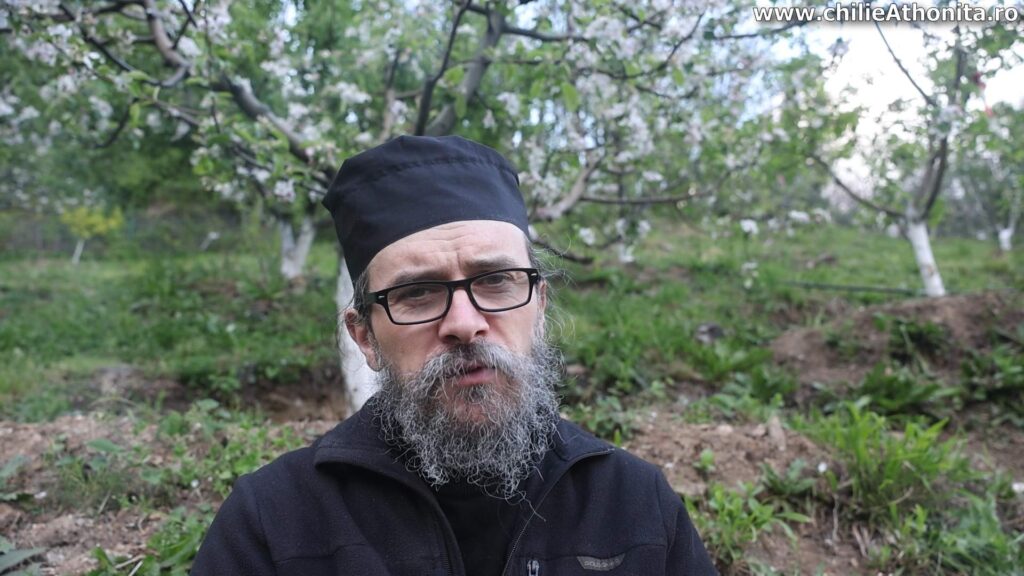
Is there a science that, instead of enlightening us, darkens our minds? Is there such a thing as Luciferic knowledge? Ultimately, who is truly blind?
A brief examination of these questions is presented in this video.
Enjoy!
Glory to the Father, and to the Son, and to the Holy Spirit, and now and ever and unto the ages and ages. Amen. Through the prayers of our Holy Fathers, O Lord Jesus Christ, Son of God, have mercy on us! Amen. Christ is Risen! I am now thinking about the Sunday of the Blind Man, which continues and intensifies both the cycle of water and the nature of the Lord’s deeds— a nature that is unsettling in the best sense of the word, as I have observed in the case of the other miracles from the previous Sundays of the Pentecostarion.
What is it about? Things begin quite naturally when Jesus and his apostles pass by a man who has been blind from birth. The apostles ask in puzzlement why he was born blind, because at first glance any trouble is the result of sin. However, this is a simplistic approach that cannot account for all situations, such as the one at hand. The apostles say something illogical: “Who has sinned, this man or his parents, that he was born blind?” they ask. He could not have sinned—this is why it is illogical—because he was born blind. In other words, he could not have sinned before he was born.
His parents? Theoretically, it might have been possible—but there is one very important thing you need to know: children are not to blame for their parents’ sins, but they can suffer the consequences. For example, if a child is conceived while the man is drunk or the woman drinks alcohol during pregnancy, the child is very likely to have problems, will be prone to illness—especially with the nervous system—and will suffer from these issues throughout their life. Of course, they are not to blame for this, and they can be saved through this Cross, which brings them even more crowns, however, their parents will have to answer for it. Do you understand?
In this case, however, as the Savior Himself says, the trial is not because of anyone’s sins, but for the glory of God. You see that there are several causes of temptation that we’ve discussed many times in our videos, such as the one about the Holy Cross or the one titled “Why So Much Pain?” We will briefly outline here the causes of troubles and trials. Temptations due to sin, temptations that act as barriers to keep us from straying onto the wrong path, temptations that serve as a catalyst to propel us forward in our spiritual life, and temptations that serve as examples through which God guides us in the Church as He sees fit. In this case, it is a matter of an example, because that blind man— for the glory of God and by the grace of God—was a great example to us. Do you understand?
You see, the Lord says there that He must do the work of the One who sent Him while it is day, because the night is coming, when no one can work. First of all, we see that the Lord, Who calls Himself the Light of the world, shows that this Light comes from His obedience to the Father. Of course, Christ is Almighty God and does not need to obey anyone, but He speaks and acts this way because He must teach us the right way to live. Do you understand?
Now, there is something very interesting and important here: the fact that Christ God, Who is the Light of the world, cannot work when darkness falls. Why is that? We know that God deliberately limits His omnipotence to the bounds of human freedom, to the limits of human will. So, brethren, darkness is man’s stubborn clinging to his selfish will, caused either by physical death or by existential extremes: pride, despondency, sinful indifference. Brethren, the insensitive man remains in darkness. Do you understand?
In this context, we can say that the man born blind is, from a spiritual point of view, the representative of all humanity—blinded by sin, blinded by selfishness, that is, by a distorted focus on the self and thus a separation from the Light of the world, from God— who waits, begging for the Light of God. This is the blind man, brethren.
Now, to be fair, if I think about it more carefully, this blind man was an example of patience, humility, and courage. Brethren, if you notice that he does not rebel against God and accepts his fate, begging to earn his living, without leading a passionate life—for example, drowning his sorrows in drink or something similar—but on the contrary, making use of the fact that he was cut off from the material light of this world, in other words, cut off from many alluring centers of attention in this world, the man born blind practiced virtue, that is, the enlightenment of the mind and the search for God, as we will see a little later. I do not know if everyone who is in darkness does the same, even though I have given the blind man as a representative example for this fallen world. Do you understand?
Of course, no one prays for someone to be blind because of the advantages I have mentioned; however, if someone happens to be blind, they certainly have the advantage of having a clear mind, being able to focus on themselves, praying much more effectively, and discovering God more easily in their heart. The problem, of course, is finding Him. As I was saying, we do not pray for someone to be blind—God forbid!— because that would show a great lack of love on our part, and besides, we do not know who could bear such a cross without revolting against God.
However, more to be pitied than the blind are those who can see yet do not realize they are blind. As the Savior said, blind in mind, spiritually blind. Those who think they see but do not. You see, the people who were far from Christ— among whom the blind man lived—were actually proud of themselves, convinced that they could see, and it was precisely for this reason that they strayed even further from God. In fact, this phenomenon continues to this day: people who are proud of their knowledge, who believe themselves to be little gods based on this knowledge, and who distance themselves through their self-deification from the true God Who is the source of existence and the source of love.
So, that is why, brethren, those whose knowledge is distorted by the lens of pride, luciferic knowledge, diabolical knowledge, do not exist as they should— they are distorted, they never have peace nor love. They try to dominate, to control, to pressure and to monitor others, thus trying to gain validation and security from the many. Brethren, this cannot be! Validation and security come only through union with the loving and almighty God. Do you understand? It comes only from above. Knowledge used for selfish purposes, is necessarily aggressive and becomes a weapon against the other from whom one has separated through the prideful egoism of believing he knows. He knows nothing, brethren, because true knowledge comes from the light of Christ’s love. Outside of this light, we are all blind— it all depends on whether or not we long for the true, spiritual light. Let us not forget our condition as beggars and let us assume it, brethren.
You see, the blind man had accepted his condition by praying and begging, and then Christ came and spat on the ground—a gesture that might at first glance be interpreted as humiliating—but the Lord spat on the ground to make mud from the dust, which he then put in the empty eye sockets of the man born blind. The man, being blind from birth, had no eyes, brethren, and the Lord made him eyes. That was a little recap of the Book of Genesis, brethren! The Lord made him eyes, but you see that He respected his freedom of choice; that is, He gave him an obedience, a commandment, a mission, and if he fulfilled it, he would regain his sight. Every good deed is the result of the cooperation between God and man. Brethren, if a person does not pray and beg, God passes by but does not intervene. It is necessary for man to do his part as well.
That is why Christ sent the blind man to the Pool of Siloam— which means “sent,” as the evangelist is careful to note. Brethren, don’t think this was a simple act of obedience. Let’s not forget that the man was blind, and the Pool of Siloam—that is, the pool of purification—was quite a distance from the city, and one had to go down a relatively steep slope to reach it. Of course, the blind man probably knew where it was, but even so, it was quite an achievement for a blind person to get there, as far as I can think.
Of course, the Pool of Siloam, at that time being the pool in which the Jews purified themselves, is also a symbol of grace and baptism. As we were discussing water as a symbol. In fact, I spoke at length in previous videos about water as a symbol of the grace of the Holy Spirit. In any case, the blind man obeys; he goes, washes off the mud of matter that covers his newly formed eyes, and comes back seeing. You see that obedience opens the eyes of the mind by cleansing it of passions, and the one who sees returns to his natural state. Brethren, without obedience and spiritual struggle, the eyes of the mind do not open.
That it is also about the opening of the eyes of the mind is abundantly clear from the fact that the blind man has the courage to confess and the illumination of wisdom. At first, he testifies about Jesus with gentleness and determination before the members of his community, before his neighbors and acquaintances, who could hardly recognize him, whether he was formerly blind or not. You see, after he told them everything he knew—how the Lord had anointed his eyes with mud and sent him to the pool—they were shocked by what had happened and somewhat dissatisfied that they did not know where Jesus was, so they took him to the Pharisees to recount the story there as well.
That is where division arises among them because—as I have said before— Christ seeks to bring about a positive upheaval; he is disruptive in the best sense of the word; he tries to free people from the very narrow confines of their own selfishness, of their own vision. Do you understand? In this case, what the Jews found unacceptable was that he had performed a great miracle—that he had healed the blind man on the Sabbath day. The carnal spirit in which they thought prevented them from breaking out of the mental box they were trapped in, and the contradictory events they were subjected to by this good disturbance brought about by Christ presented them with a mystery, a crisis that demanded a solution, especially since the formerly blind man testified that his healer was a prophet—the highest human knowledge a person can have about someone, about Jesus in this case. For anyone to confess Jesus as God, the grace of the Holy Spirit is needed.
The Jews, in their turmoil, called the parents of the blind man to make sure that it was indeed their child who was born blind and not someone else. They did this in a desperate attempt to solve this crisis through luciferian knowledge, that is, through earthly logic. Brethren, this is what happens even today: logical people who are truly well-versed in the various laws governing different fields—theological, political, social, scientific, and—let’s say—artistic— come to believe that through their knowledge they can master everything, that is, any situation and even any person, but the time appointed by God comes when the Lord proves to them that they cannot even master themselves. Do you understand?
In the case of the Pharisees of that time, their hostility was evident, and for this reason the blind man’s parents were very cautious in their answers, confirming only that he was their son and that he had been born blind; but then they went further, disowning him—out of fear, of course— and renouncing their protection of their child, saying to the Jews, “He is of age. Ask him! He will speak for himself.” “We don’t know! Ask him!” Do you understand? There was great pressure there, brethren… and why? Because the Jews had agreed that whoever confessed Jesus as Christ would be expelled from the synagogue—which, for that time, was one of the harshest punishments a Jew could face. Well, why? Well, because if they recognized Him as Christ—or, let’s say, as a prophet—that would mean they were also validating His teaching.
And here arises the problem. The problem is that the teaching and behavior of Christ exposes our sin, is showing us that we are sinners. In the light of Christ, we see how sinful we are, and here lies the critical point: do we accept seeing the misery within us and, with God’s help, begin to clean up, or do we close the door to the light? Or—even worse—do we try to drive God’s light away, to extinguish God’s light? Unfortunately, the Pharisees chose the latter path, and in fact, each of us chooses this path the moment we consider ourselves, to a greater or lesser extent, gods—and this stems from the confidence we have in ourselves and in our knowledge, which in turn gives rise to self-love and the status we hold or aspire to.
You see, after the Pharisees made their decision, they no longer questioned the blind man with the interest of a disciple but, on the contrary, spoke to him with the aggressiveness of a master: “Give glory to God! We know that this man— Jesus, that is—is a sinner!” In other words, they were urging him to tell the truth—I don’t know if you’re aware, but back then the expression “Give glory to God!” was a way of pressuring someone to tell the truth, and the truth in this case was the version they were pushing— it was the verdict they had reached: “We know that this man is a sinner!”— a classic form of outright tyranny and the imposition of a narrative that tramples on people’s consciences and, even more so, tramples on the personal experiences of the many. Do you understand?
To this outburst of hatred, the blind man, enlightened by God, responds with justice and with the certainty of the grace in his heart, even as he humbles himself so as not to fuel the hatred. Brethren, we must not be aggressive and fuel the hatred, but we must bear witness. Do you understand? The blind man says that if Jesus is a sinner, he doesn’t know. He only knows that he was blind and now he sees. You see, the truth is all-powerful, and we must always accept it, even if it goes against our knowledge or beyond our logic. However, if we oppose the truth head-on, relying on our own minds, we will be struck head-on like the Pharisees who burst out again saying, “What did He do to you? How did He open your eyes?” Why? Because they were unable to resolve the crisis they were facing due to the lack of the flexibility of humility, stemming from the extensive knowledge they believed they possessed.
The blind man, enlightened by God, responds bluntly and with a certain stubbornness in order to relieve the pressure on him: “I told you already, and you did not listen. Why do you want to hear it again? You do not also want to become His disciples, do you?” Do you see how normal, true, and at the same time unacceptable for a fallen, antichristic mind, hardened in its own selfishness, is this common-sense comment of the blind man? Of course, the Pharisees, insulted him, but not in a normal and truthful way, rather in a totally distorted and somewhat ridiculous manner—that is, brethren, they insulted him by saying that the blind man was a disciple of Christ, which is not an insult, but the greatest praise, while on the other hand they claimed to be disciples of Moses—when, in fact, Moses prophesied about Christ. You see, the insult lies not so much in the content of the words as in the spirit of hatred and hostility that someone harbors.
This was an attack of hatred from the Pharisees who, in the darkness of their minds, wanted to extinguish the light that came through Christ. You see, the darkness of hatred is also evident in the fact that they hated Christ, who had done such a good deed, even though they said about Him that they “do not know where He comes from.” They hated Him without knowing where He comes from. Well, man, if you say you don’t know where He comes from, then why do you hate Him? Because He performs such a miracle on the Sabbath day, when even modern medicine cannot do it on any day of the week? It is the darkness of the mind caused by hatred combined with anger—do you understand?
The former blind man, who is now enlightened—that is, free—for you must know that whoever is united with Christ, the loving Truth, is free—answers them: Well, people, this is where the greater miracle lies, somewhat more than the opening of my eyes: that you, the enlighteners of the people, “do not know where He comes from, yet He opened my eyes. We know that God does not listen to sinners; God will listen to anyone who is God-fearing and who does His will.” That’s whom He listens to. “Since the world began, it has never been heard of that anyone opened the eyes of someone born blind.” That has never happened. “If this Man were not from God, he could do nothing.” That is, it is phenomenal that you, who should be the specialists in this matter of knowing God – have no idea! Do you understand?
When they heard this unyielding logic that proved them wrong, the Pharisees, in an emotional, prideful outburst—an uncontrolled fit of rage sparked by their wounded pride— actually shouted at him, without much sense: “You were born completely in sins, and do you teach us?” As if they themselves were not born in sins or were born only partially in them… Brethren, you might be surprised by the text because it does not sound good in terms of expression, and that’s true – but you should know it’s not a translation error. And in the original it reads “ἐν ἁμαρτίαις σὺ ἐγεννήθης ὅλος”— translated using the same syntax, it becomes “in sins you were born completely”—which is very harsh and somewhat illogical. Yes, but these people were angry, darkened in mind, they could not even speak properly anymore. Brethren, just as an aside, when we’re angry, we shouldn’t say a word—I’ve said this many times— and especially we shouldn’t act the way the Pharisees did, that is, they cast him out both literally and figuratively, even though—I don’t know if you noticed—the blind man never made any personal attacks.
But notice that the moment they crucified the blind man—that is, the moment they cast him out—they set him completely free. In this state of crucifixion and freedom in the Truth—as an outcast, a dissident for Christ—Christ the Truth finds him and asks, “Do you believe in the Son of God?” Brethren, this is fantastic! Why? Whereas before his testimony the blind man did not know where the Man Who had healed him was and referred to Him merely as a prophet, he is now asked if he believes in the Son of God! Let’s not forget that for the Jews this was inconceivable—it was something truly profound because the Jews had no understanding of a Trinitarian God, consisting of Three Persons—that is, the Holy Trinity. On the contrary, the old law placed great emphasis on the oneness of God to protect them from the danger of polytheism; even though the idea of the Son of God or the sons of God is hinted at, it was not explicit in the strictly ontological sense in which Christ now asks the blind man. You see, brethren, this is an extraordinary good disturbance, an even more disruptive behavior from Christ, especially for a Jewish beggar of that time, brethren.
But see what the virtue of this man, detached from the world, means in the bliss of spiritual light beyond material light? You see that the man does not assault the Lord by saying, “Hey, man, you have lost your mind! What are you talking about? There’s no such thing—a Son of God!” Or, on the other hand, he doesn’t fall before his benefactor in a timid, subrational prostration, as if to avoid contradicting Him or disturbing Him in any way—you know, almost like an animal. On the contrary, he asks the Lord with wisdom but also with the illumination of humility: “Who is he, Lord, that I may believe in Him?” Do you understand?
And then the Lord, in a wonderful exchange on equal terms with the humble, wise, and enlightened man, said full of love and humility: “You have seen him, and it is He Who is speaking with you.” Phenomenal, brethren! Notice that He does not say “I am”—He could have said it, but out of humility He does not present Himself in an egotistical sense, but as “it is He Who is speaking with you.” On the other hand, brethren, beyond this extraordinary thing, I really like the very joyful introduction of the Lord: “You have already seen Him!” – meaning, you, being blind, have not seen many things in your life, but you have already seen the Son of God himself, brethren! Of course, the Lord said this in a spiritual sense as well; that is, he had already seen Christ in his heart— Christ, Who gave him the strength to bear witness to the Truth. Do you understand?
The proof that he has God’s grace in his heart is the final confession made by the blind man—long before Saint Peter— that Jesus is the Son of God and that he believes in the Lord and worships Him. You see, the verb used for “to worship” – “προσκυνώ” – refers to the worship of deities and saints. It’s not just a matter of bowing to a respectable person, for example. You see, brethren, that humility, the awareness of our blindness leads us to the light of Christ. The awareness of our condition as beggars – this is what saves us. In fact, the Lord Himself, commenting afterwards, says that He came into this world so that those who do not see may see, and those who see may become blind. Some of the Pharisees who were with Him, realizing that the Lord was speaking on a spiritual level and feeling affected by this, replied to Him: “Are we also blind?” to whom the Lord answers that self-confidence, pride, is the cause of blindness: “If you were blind, you would have no sin; but now you say, ‘We see!’ and therefore, your sin remains.” Do you understand?
Brethren, this brutality and darkness of people who think they are someone can still be seen today – at a personal level, at a community level, and at an international level. Technological or other types of knowledge that lead to pride are not good, even if they may be somewhat accurate from a, let’s say, scientific point of view. Anyone who knows something, takes pride in that knowledge, and is certain of it hasn’t yet learned to know properly, brethren. That is not enlightenment, that is arrogance. A self-confident person will always run into trouble and will feel great disappointment the moment they find themselves humbled by life. Clearly, they will be humbled by hardships, clearly, they will be troubled because pride is an existential distortion. They cannot withstand it.
Also, brethren, do not say that science is factual, that there are just facts and nothing more. Yes, okay, that’s true, but only at our own, very limited level. Beyond the facts and assumptions we hold, there are other dimensions we are unaware of. Let me give you a very simple example: gravity. While in ancient times it was simply a given, a fact, a natural phenomenon of every object— that heavy objects fall and light objects float toward their natural place— once Isaac Newton came along, science changed and gravity became a force with a relatively simple formula: F = k(m1m2)/e^2.
When people began to be perfectly convinced that this was the case, God humbled people and revealed to them through Albert Einstein that gravity is, more precisely, the possibility of the matter-energy duality to curve the space-time continuum. And if we still do not humble ourselves, then we can talk about gravitational waves, the speed of gravity, and especially about the fact that in quantum mechanics, what we currently know about gravity does not apply. I say this for those who believe they are certain of what they know. Brethren – since we are talking about Einstein – let us be aware of our own relativity from all points of view.
Brethren, it is much better to be simple, not to know so much, not to watch too many news reports because these generate anxiety and disturbance, even quarrels, especially today. Brethren, it’s better to live a simpler, more natural life—close to nature, close to the natural resources we need to survive, close to God—we need these, brethren, if we too are cast out because of our confession. We need to have a garden and a simpler life because, as you can see, there is a massive battle being waged today to separate man from simplicity and from having direct access to food.
Direct contact with nature, with creation, gives man a very great power, and this is not only because he has something to eat in the event of a more or less obvious persecution, but especially because it keeps him humble and enlightened in contact with his Creator. We escape blindness through humility and the awareness of our limitations. Pride leads us to arrogance and from there into darkness. Saint Kosmas of Aetolia said that disaster will come from the proud and learned who do not know Christ from experience. Let us be learned, brethren, let us be educated, but let us also have the humility to admit that there is much we do not know. Let us seek the personal experience of Christ the Light-Giver, for without it we will not endure. We need prayer and confession to open ourselves to Christ, the Giver of Light, and in this way we will be happy and strong in our humble freedom, submitted to Christ. May Good God help us! Thank you for staying with me in my attempt to enlighten you a little!
Christ is Risen! Through the prayers of our Holy Fathers, O Lord Jesus Christ, Son of God, have mercy on us! Amen.
Online commemoration lists and donations
May the Lord help us!
Online Commemoration Lists and Donations
May the Lord help us!
If you have a bank card and wish to send commemoration lists and donations online using your card, and/or to support our philanthropic activity, including this site, please fill out the form below to make a small donation. The form is secure – we use Stripe for payment processing – a world leader in this field. We do not collect your personal data.
If you do not have a card, or do not wish to use it, visit the webpage for Online Donations and Commemoration Lists.
We will pray for your loved ones! (Please do not include inessential details like wishes, degree of kinship, introductions etc. JUST the name!)
Especially for recurring commemoration lists, we ask that you please keep them to under 20 names long. If you include a member of the family, we add “and for their families.”