


The Anxieties of People Today – Father Pimen Vlad
16 March 2023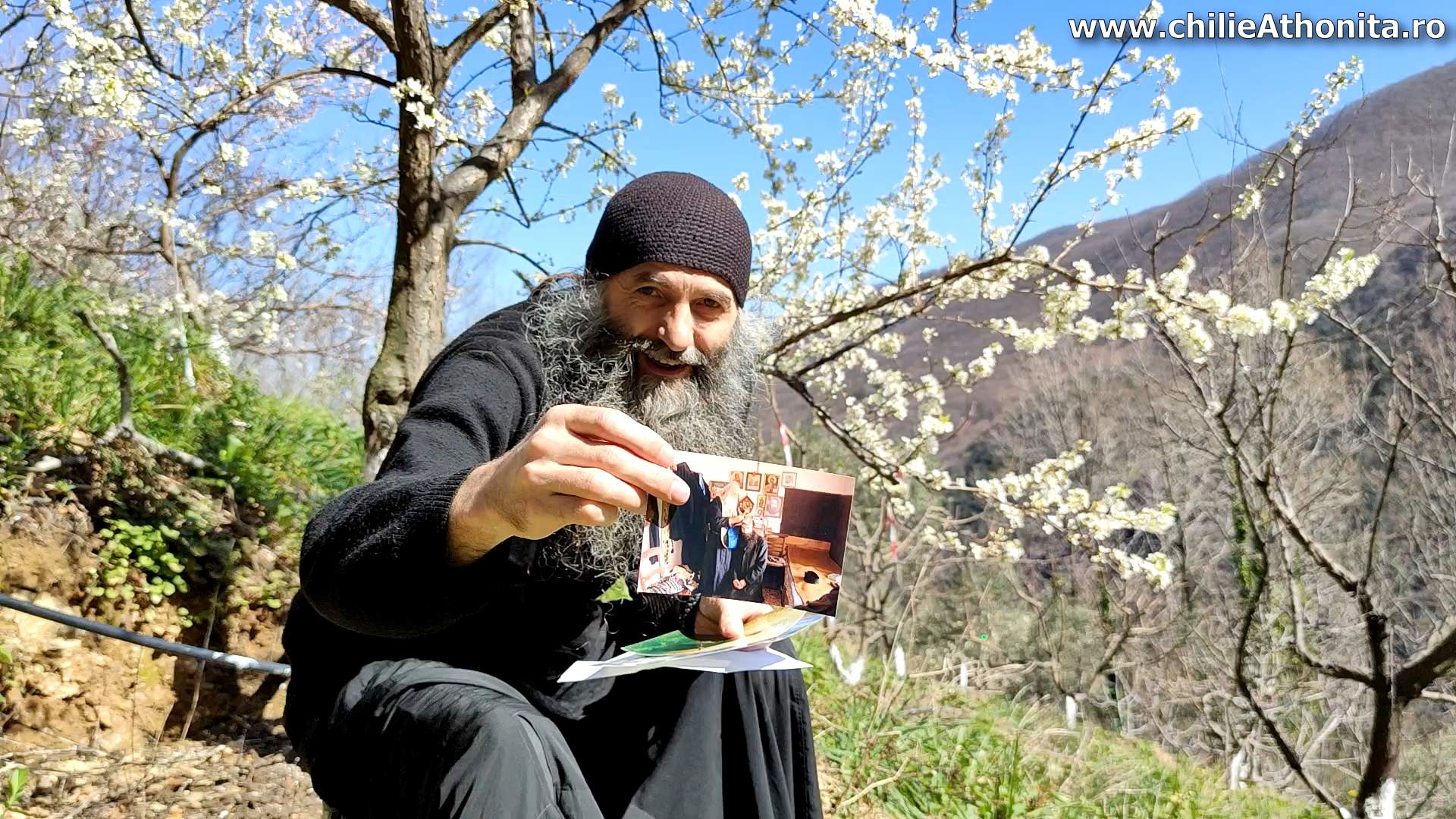
Memories of Father Iulian of Prodromos – Father Pimen Vlad
23 March 2023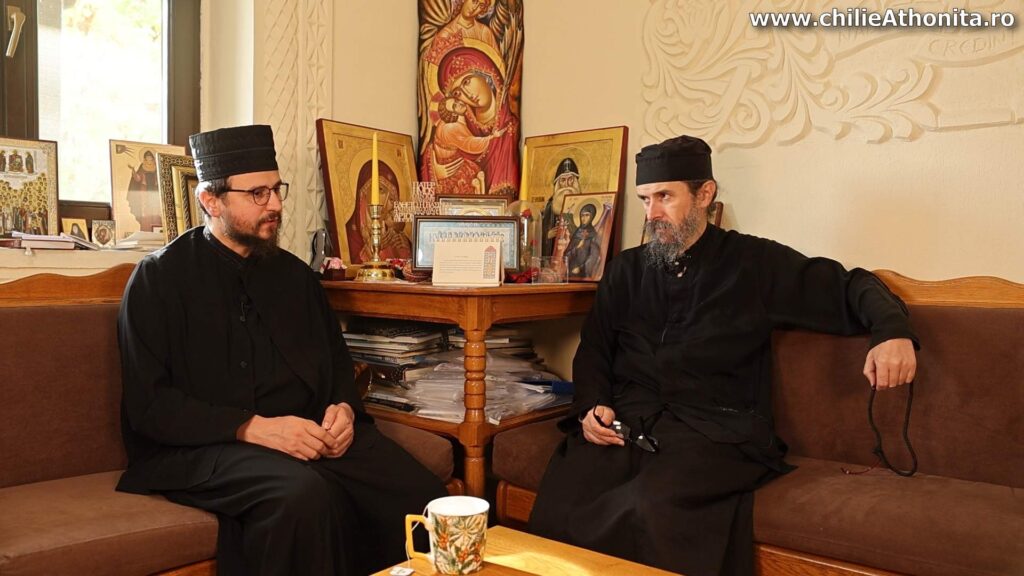
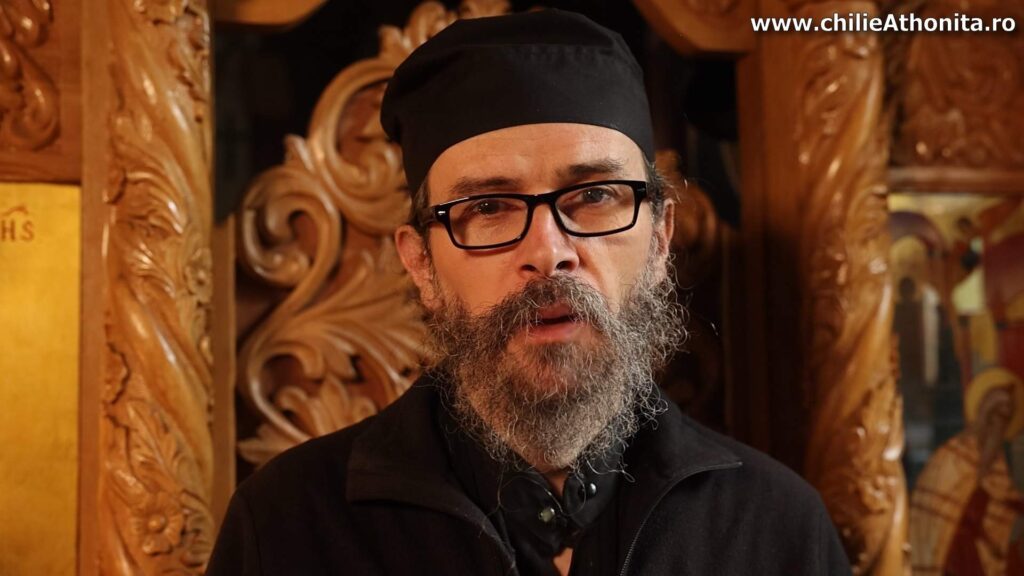
One of the greatest problems today is anxiety and panic attacks. To learn about the causes and ways of healing, watch this material.
Enjoy!
Fr. Theologos: Glory to the Father, and to the Son, and to the Holy Spirit, now and forever and unto the ages of ages. Amen. Through the prayers of our Holy Fathers, Lord Jesus Christ, Son of God, have mercy on us! Amen. Father, bless! Bless, your reverence, say a prayer, since you are a priest!
Fr. Athanasie Ulea: “God is with us, with His grace and with His love for mankind, always, now and ever, and unto the ages of ages. Amen.”
Fr. T.: We are back with Fr. Athanasie. This time we will discuss a topic that, sadly, is very present in our daily lives, and I have heard many people, mainly young people, tell me that they have panic attacks. They have panic attacks and anxiety. What are the causes, what can we do, what is the spiritual basis, and how is it healed?
Fr. A.: Just like that, everything very simple!
Fr. T.: Yes, the question is simple, the answer is, I believe… the causes…
Fr. A.: Yes, anxiety disorders are very complex because fear is generally very complex. I would say that fear is a fundamental feeling that we have, and in fact, it entered the world through sin, and through death it was perfected, so to speak, and [fear] is actually the cause of all sins. And every sin stems from a fear of not being in God’s love, [a fear] of not existing. Romanides beautifully comments on the text from the Holy Apostle Paul, if I remember correctly, from the [Epistle to the] Romans: “Therefore, just as through one man sin entered the world, and death through sin, and thus death spread to all men, because all sinned—” That is our translation. The correct translation would be: “…because all sinned through death” through the fear of death, we commit every sin, and fear is precisely… it is that wooden coat, those feelings that protect us from death. We are afraid of anything that would prevent us from living, from living as we know how, anything that would actually prevent us from love.
A great American psychiatrist, Irvin Yalom, an existentialist, atheist, Jewish, like most, but very intelligent, somehow concludes and says that our fundamental fear is the fear of death. And I would say that, because death for us actually means the absence of God, it means the absence of a relationship with God, it is the fear of not being loved. Yes? Because love keeps us alive and death is actually a fall from this love.
Fr. T.: And God is love.
Fr. A.: Precisely; because Adam fell from paradise when he thought that God did not love him as much as Himself, that God was keeping something for Himself away from Adam and would not give it to him. And this mistaken belief, this fear of an imperfect love of God towards him, was what actually caused him to fall. This fear has spread throughout the world and, as I said, it is normally natural in this fallen world and prevents us from dying. Fear is then instilled in us to prevent us from doing anything that would bring about our death. Death is a tiger in the jungle or a creature that frightens us, but, as I said, it is especially the lack of love, the fear of being alone, of not being appreciated, of not being loved, of being nothing in the eyes of others.
Fr. T.: Of being useless, yes.
Fr. A.: Yes, and this fear helps us, if we use it well, to correct ourselves, to protect ourselves from what would bring us death, to protect ourselves from what we do wrong in our relationships. It also manifests itself in feelings of guilt or shame, and we use these feelings precisely to avoid repeating embarrassing situations, situations that put us in a bad light. Fear urges us to protect ourselves, to think about the future, about what keeps us alive, and to work towards that goal.
To show how fear works, or as a small example, a study was conducted at one point with guppy fish—if you know, they are those small, colorful fish. A group of normal fish and a group of fish whose fear center, or one of the important fear centers, in the brain – the amygdala – had been destroyed, were placed in an aquarium, (very brave, fearless ones) and finally some fish with a highly developed fear center were introduced into the same aquarium. In the end, a predatory fish was introduced, and the first to die were, of course, those who were fearless, whose fear center was inhibited, and, of course, the last to die were those who were very fearful. Now, you know, those who are fearless, the brave ones, to put it jokingly, are people who lack imagination. The fearful person somehow sees danger everywhere.
Fear can be a symptom of any psychiatric disorder, it can also be a symptom of dementia when a person no longer knows where they are, feels insecure, is no longer aware of the reality around them; it is a very important symptom in psychosis when a person believes himself to be followed, watched, and that everyone else wants to harm them; in depression, which we have also discussed; and as the main symptom in anxiety disorders. There are several types of anxiety disorders. There is a generalized objectless fear, and fear that has a specific object.
Fr. T.: Forgive me for interrupting you for a moment, just to summarize a bit, fear after the fall exists in humans, but we are now talking about distortions of this…
Fr. A.: Exactly, when it is pathological. And then, pathological fear, as I was saying, can be generalized or it can be directed toward a specific object. It can occur in specific situations or in particular situations for a short time or in situations without a specific trigger…
Fr. T.: A trigger. That is, there is a general fear, a state of fear, and there can be a fear that is triggered by something: a situation, a person, an object, and so on.
Fr. A.: Exactly. Fears in specific situations may relate to agoraphobia, for example, not necessarily in the agora, in crowded squares, but rather where there are many people or where there is no exit. Indeed, at concerts, in a store, in a crowded supermarket, but also on public transport or even in their own car, but on the highway, these people can no longer travel far from home, they have a very limited perimeter outside of which they go, their center of safety, so to speak, and they tend to isolate themselves.
Then there is social phobia, which occurs especially in social situations when a person is asked to speak, when a person is the center of attention. Typically, it is when someone feels like everyone is watching them at a restaurant, and that everyone can see their every mistake or how they eat, and they feel very, very anxious…
Fr. T.: It’s as if the person is taking an exam, so to speak, they feel like they are taking an exam, on stage, where the stage can even be an artistic stage or it could be a baccalaureate exam, for example.
Fr. A.: Exactly. Then there is the specific fear of certain objects or specific situations: such as agoraphobia, or there are all kinds of fears, of spiders—very well known—snakes, sharp objects. So, there are countless such fears.
Then there is objectless fear or generalized fear, this is generalized anxiety disorder— the person feels a certain anxiety all the time, as if they were constantly in danger. You can sense that when they enter the room, they somehow create tension because they are always thinking about what could go wrong. They are always thinking about their children, their parents, their close relatives, their loved ones, that an accident could happen at any time, a car… I remember there was a mother who, whenever she heard an ambulance, had to call her children thinking that something must have happened to them, and so on.
Then there is objectless fear, but which is acute in an unexpected way, and this is the panic attack. The panic attack is relatively the same or it can also change; there must be quite a few symptoms to diagnose a panic attack. Just because I got scared once doesn’t mean it was a panic attack. Usually, a panic attack comes as a fear without a trigger, without a triggering event, which in a few seconds up to one or two minutes reaches its peak, and the person feels… First of all, they feel afraid, they have palpitations, they feel as if they are in a corset or have pressure on their chest, a lump in their throat, they can no longer breathe or breathe very shallowly, they may have the sensation of vertigo, as if they were walking on cotton wool, unable to concentrate. They have a fear, an acute anxiety that they will die, that something will happen to them, and usually it refers to the fact that they will have a heart attack or stroke, that they will lose control, it seems to them that they no longer feel right or have a void in their stomach, they have to go quickly to the toilet either to defecate or urinate.
Fr. T.: Could it also be, for example, when they can no longer control situations? For example, someone is used to being in charge, to being the boss, and at some point they realize that they can no longer control everything, and then…
Fr. A.: That can be indirect. When faced with such a situation, the person doesn’t realize that it is due to that situation because, by definition, a panic attack has no trigger, at least not consciously.
Fr. T.: Yes. Or maybe from thoughts. Isn’t it?
Fr. A.: No. That’s what’s interesting about panic attacks: everything happens subconsciously, and precisely because the person is unaware of this, they are attacked unexpectedly, when they least expect it.
Fr. T.: I understand. Oh, so it just happens suddenly…
Fr. A.: Exactly.
Fr. T.: And what are the causes?
Fr. A.: Often, as you said, father, there are situations that people cannot control, cannot manage, and then… It depends now on which anxiety disorder we are referring to, rather, because there are several models or several patterns, scenarios through which people can develop these problems. They always have a component that is…
Fr. T.: Spiritual?
Fr. A.: Yes, that is more or less at the end, I would say. So, a genetic component, a family component, and then there are also triggering factors: both positive and negative stress. Even if someone wins a large amount of money in the lottery, they may develop an anxiety disorder because they don’t know what to do with so much money. Or they may worry that they will be robbed or something else.
It’s very complicated because you have to discuss each case individually. The problem is, or what is often said that… the most important factor would be that these people did not have a safe haven in their parents. When a person grows up, the child—this is a very beautiful image that I always repeat, which I like—in the womb, the child is like God, they receive everything without asking, they don’t have to ask, they have everything they want and when they want it. When they are expelled into this world, they are nothing— the smallest, ugliest, such-and-such, and what do they do? They start to cry. The parents try to help this little king, right, to live in this world. They do everything for him, he doesn’t have to do anything except just suckle, and little by little he grows. And he grows in this protective, loving atmosphere of the parents. When the parents manage to provide this protective atmosphere, he feels safe; we are talking about a primordial safety that a person has in this, let’s say, earthly paradise…
Fr. T.: By hypothesis, a priori, as it’s said in Latin. So a safety with which one is born, with which one begins to feel the self, so to speak.
Fr. A.: Not necessarily born with it, it is developed in the family.
Fr. T.: Yes, yes, yes.
Fr. A.: Parents – mother and father – when they manage to satisfy the needs when and how they should…
Fr. T.: That’s what I mean. So, when one begins to remember themselves, they remember safety. Right?
Fr. A.: They can’t actually remember this safety because until the age of 2 or 3, the hippocampus, which is the center of memory, is not developed, and so all memory before the age of 2 or 3 is actually implicit memory. It is encoded throughout our brain and body, and so we don’t have conscious access to it.
Fr. T.: Yes, yes, a feeling.
Fr. A.: Exactly.
Fr. T.: That’s what I mean, not that they remember specific facts, no, but a feeling of safety.
Fr. A.: Exactly. And when the child has this sense of security, and you can see it—those of you who have children— at around 1 or 2 years old, when they start walking, but also when they crawl, they move away a little from their mother or father, look back, see that they are there, smiling at them, protecting them, and then they move on. If the child doesn’t see the mother or father, immediately insecurity and fear set in, and they turn back because they don’t know what’s happening. But if they have this “safe haven,” as it’s called in English, then they can explore the unknown waters of the world, of their life. And if the person has not known this fundamental sense of security in their upbringing, if their parents, for various reasons, failed to provide it, then it is very difficult, and somehow, throughout their entire life, they will experience a certain insecurity and fear.
In a spiritual way… or in terms of treatment… in anxiety disorders, perhaps it is less about medication and more about psychotherapy. Through a relationship with a psychotherapist, desensitization can be achieved, or awareness of inner conflicts or perhaps older problems, again, from childhood can be achieved and the person can figure out how to react in certain situations.
Fr. T.: Before we go any further, what you say is very important and very interesting. Could it be that this security provided by parents, this safe haven, this shelter, this home, is being destroyed today by the fact that both parents and children no longer have interpersonal relationships and are glued to their cell phones?
Fr. A.: Yes. I find this appalling—when children are given technology, parents somehow substitute themselves or provide a surrogate. They don’t have time, they have to work or do something else, so they provide a surrogate for what they themselves should be. Or at least a person—in the past, there was at least a nanny with whom the child could interact. Now they are given a tablet or a phone, and then the child receives all the garbage that is transmitted there and is somehow raised by it. An adult can filter things, although most people are unaware of this and say that they are very free when choosing what to watch, but they don’t realize the manipulation that exists. But the problem is that these children… nothing can replace a person, only a person can offer you security.
By using these tablets, children are actually anesthetized, are somehow drugged, simply so they don’t cry, simply so they don’t feel the absence of the person. Now, I don’t know what will become of these children in the future, but I don’t think it’s something healthy.
Fr. T.: Yes, yes. Let’s go back to medication. You said that if they don’t have this… and I think one of the main causes of panic attacks and anxiety today are tablets, cell phones, all this technology, all these electronics, because people no longer have that security provided, produced by the love of another person. How do we heal?
Fr. A.: It would be very easy with medication. They are tranquilizing drugs that calm you down for a certain period of time. However, they act like drugs, must be taken constantly, many become addicted to them, and then they are not recommended. In fact, lately, they are no longer recommended even for panic attacks, even though theoretically they help. If it is a panic attack so severe that the person calls the on-call doctor or emergency doctor, then that doctor may give that medication, but it is not recommended to be prescribed, to be taken at home.
When panic attacks, for example, are very frequent or in cases of anxiety disorders or agoraphobia, antidepressants are also recommended because they work on the same system of somehow calming the person’s very anxious state. Antidepressants give you a feeling at some point, or they can give you a feeling— in German it’s called “somehow equal,” that everything is… yes, the worries are there, the problems are there, but they don’t affect you like that anymore…
Fr. T.: A kind of indifference.
Fr. A.: A kind of indifference in a positive way. Some people feel it in a negative way because they have lived with this anxiety and when they no longer feel it, something feels wrong. This anxiety somehow keeps them alive and makes them feel alive, but sometimes they end up in a vicious circle. I sometimes tell patients that they are like junkies when it comes to this fear and cannot live without it.
Fr. T.: Yes, they are intoxicated with this fear. They are addicted to this adrenaline rush.
Fr. A.: Exactly. And then, very important, or perhaps even more important in most anxiety disorders, is psychotherapy, when a person, through a relationship with another person, recreates a safe haven from which they can explore the world, [and] through which they can change their way of thinking.
In a spiritual sense, of course, it’s very simple in theory: it is about surrendering ourselves to God’s will, correcting our mistaken beliefs, and completing everything with God. In fact, any sinful thought, any anxious thought is fulfilled or perfected if you put Christ there. Because, as I said, anxious people are people with a lot of imagination.
Fr. T.: Yes, yes.
Fr. A.: They’re always finding problems…
Fr. T.: They find a problem with every solution.
Fr. A.: Exactly, and they always find dangers.
Fr. T.: Yes, dangers and situations where things won’t work, yes.
Fr. A.: Exactly. And then it’s good to be aware of the dangers that exist, but always put God there.
Fr. T.: Faith, that the good Lord helps!
Fr. A.: Exactly. As Holy Apostle James says, he speaks of the rich who say, “We will do this and that, and so-and-so,” but the anxious are rich in fears.
Fr. T.: Oh, I understand…
Fr. A.: And Holy Apostle James corrects them and says: If God wills it, it will be so if God allows it, but when I am with God, what can be against me? And so, in fact, training in faith in God is necessary because faith in God actually means love, it means relationship, yes, a normal, natural relationship, it actually means safety. There was a father, I believe in the Patericon, who said: “Well, I would even go to hell, if I were to be with Christ there.”
Fr. T.: So, it is clear that we must give love to others, love in general, and especially, in this case, we must give time to others, we must have a relationship with them, we must be careful.
Fr. A.: Yes. The problem is that for those around them, anxious people often… I haven’t talked about anxiety that manifests itself mainly as obsessive-compulsive disorder, where people always want to be in control and, because of their fears, always have to clean, check, or to perform certain rituals, but there it is exacerbated. But even in situations… and with anxious people, these individuals often do not necessarily see this as negative. They say these things can happen—there could always be an economic crisis, or now with the power outages or whatever.
Fr. T.: Or that we might get sick, yes, or lose control, or lose power.
Fr. A.: Exactly. However, these fears are not proportional to reality, but precisely because they do not recognize that it is an illness, that it’s something exaggerated, they attract those around them and somehow force them to submit to their fears. And then it gets a little more complicated because the person around them is put in the position of choosing or telling the person they love, “See, this is a problem and I shouldn’t do that because then I’m supporting your wrong way of acting or thinking.”
People often say, “Well, I have panic attacks from time to time, I’m afraid to use public transportation,” and they are content with that and don’t understand that these anxiety disorders are like cancer. They tend to and want to take over more and more areas of life.
Fr. T.: I understand.
Fr. A.: I know people who no longer leave the house.
Fr. T.: God forbid! So, a way of thinking that has progressed and leads to very serious things.
Fr. A.: Exactly. Precisely because, as we discussed last time, these mental illnesses need to be cured, and if a person only wants to dull them, to calm them down, to sedate them, so to speak, he will not resolve anything.
Fr. T.: So, medication doesn’t solve the problem.
Fr. A.: Sedative medications [don’t]. Antidepressants help, but the person still needs to undergo psychotherapy.
Fr. T.: Yes, meaning they need to solve the cause?
Fr. A.: Exactly.
Fr. T.: And I believe that confession helps enormously here, as does obedience to one’s spiritual father. That is, when the spiritual father says it is not so, you must listen!
Fr. A.: Yes, it’s harder to do that.
Fr. T.: I know…
Fr. A.: But I believe that these people can rather do or work in this direction, even through simple prostrations. What do we do through prostrations? We give ourselves entirely to God. We know that the fall can come and does come, but we practice it and are always lifted up by God. Prayer – we become familiar with God, with His way of thinking, with the fact that…
Fr. T.: The experience of God…
Fr. A.: Exactly, we say that God is love, but we do not feel that, we do not believe that. We don’t understand that God always wants what is best for us and that we simply need practice, training. Just as muscles are trained, so too are faith and love for any person. When we are in a loving relationship, we train it—with gifts, flowers, chocolates, and touch. Everything is for the purpose of growing this love and strengthening the relationship, and the same applies to our relationship with God.
When we strengthen our relationship with God precisely through these small gifts of love towards Him, we grow in love towards God.
Fr. T.: Glory to God! And now I wonder what would happen if these anxiety disorders, these mental illnesses, and panic attacks happened to someone in leadership. That is, in the leadership of a country or in leadership of a continent or in the leadership of a monastery, and so on. I think it’s very difficult…
Fr. A.: Anxiety disorders are generally very common. One out of three people has at least some form of anxiety disorder, and there are several people here in this room; and because [anxiety disorders] are very common, they can be kept under control, and they are only actually defeated when we overcome our fear of death.
Fr. T.: Yes, that is, when we reach that state of illumination, that state of… let’s not say theosis, but of knowing God.
Fr. A.: Exactly.
Fr. T.: So only through the fear of death. That is, only through Orthodoxy. Paradoxically.
Fr. A.: Exactly.
Fr. T.: Thank you very much, it was very enlightening and very good, and what impresses me enormously is the fact that science finds certain phenomena and defines them, but cannot provide the answer or the solution. Because the solution lies in this Orthodox therapy.
Fr. A.: Yes. Now, science works… it cannot explain the beginning and the end, so it works only with the middle period, so to speak, and tries to give the answers it can, but in fact, it is only in faith that we find the true answers.
Fr. T.: Death—our great enemy, and glory to God for what Christ has brought us: He has brought us victory over death, the overcoming of death. Thank you very much! May the good Lord help us!
Fr. A.: With great affection!
Fr. T.: Through the prayers of our Holy Fathers, Lord Jesus Christ, Son of God, have mercy on us! Amen.
Online commemoration lists and donations
May the Lord help us!
Online Commemoration Lists and Donations
May the Lord help us!
If you have a bank card and wish to send commemoration lists and donations online using your card, and/or to support our philanthropic activity, including this site, please fill out the form below to make a small donation. The form is secure – we use Stripe for payment processing – a world leader in this field. We do not collect your personal data.
If you do not have a card, or do not wish to use it, visit the webpage for Online Donations and Commemoration Lists.
We will pray for your loved ones! (Please do not include inessential details like wishes, degree of kinship, introductions etc. JUST the name!)
Especially for recurring commemoration lists, we ask that you please keep them to under 20 names long. If you include a member of the family, we add “and for their families.”