

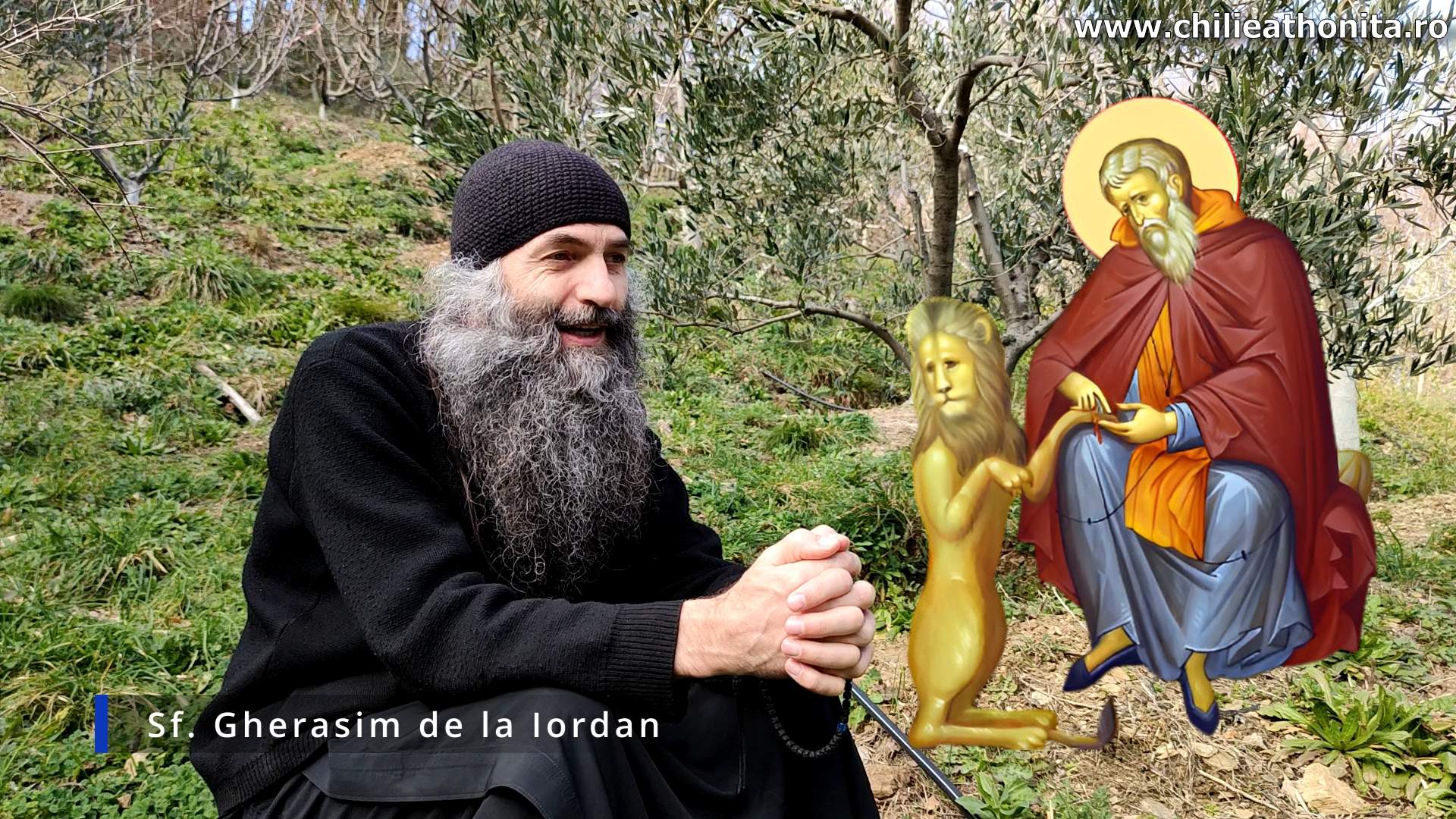
Saint Gerasimus of the Jordan: The Simplicity of the Sinless Man – Father Pimen Vlad
2 March 2023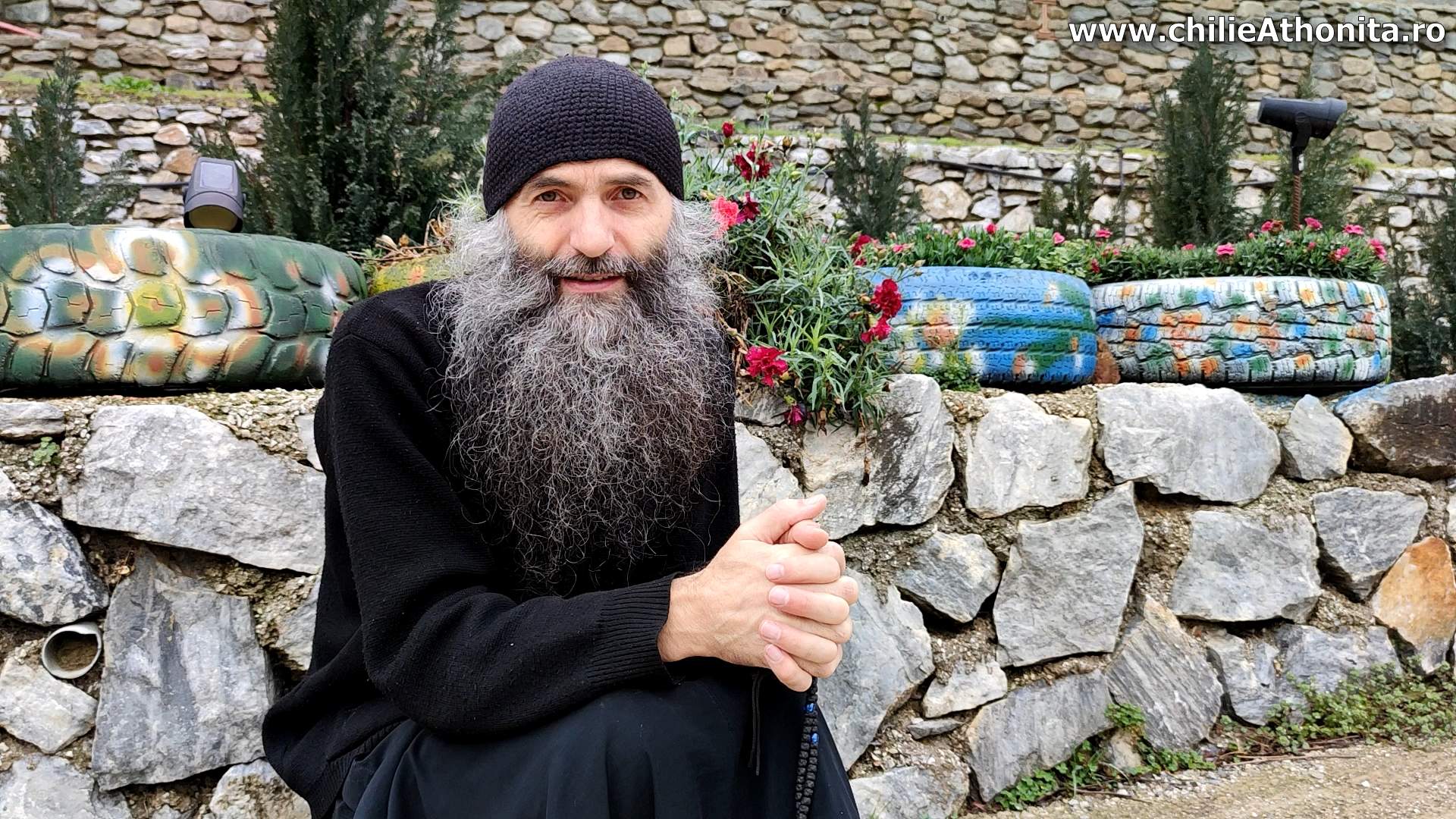
The Joy of Fasting – Father Pimen Vlad
9 March 2023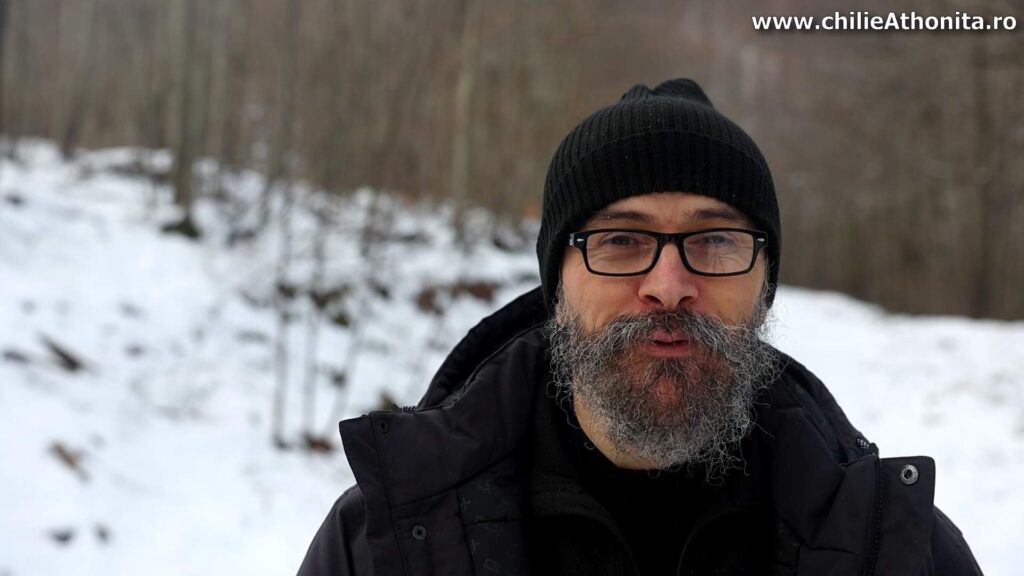
What was the greatest confrontation between reason and experience in the history of the Church? What importance does the teaching of Saint Gregory Palamas have for our sanctification? How did the saint come to be so influential in history? Are there major differences between Catholicism and Orthodoxy?
Watch this material to find out.
Enjoy!
Glory to the Father, and to the Son, and to the Holy Spirit, now and forever and unto the ages of ages. Amen. Through the prayers of our Holy Fathers, Lord Jesus Christ, Son of God, have mercy on us! Amen.
In one of the previous episodes, we spoke about what Orthodoxy is. I said that Orthodoxy is the true medical science aimed at healing the soul. It is the correct GPS guiding us to health—that is, the illumination of the mind, the union with God, to theosis. That’s what Orthodoxy is, brethren.
So, the health of the soul, salvation, and above this, holiness, is the union with God in light. Communion with God in His uncreated light. Be very careful, brethren! True light comes from God! The wavelength range of electromagnetic radiation that we call light is, first of all, an image, an icon, of the true light that comes from God, the loving and understanding One, Whose understanding and wisdom surpasses all wisdom.
As much as the eternal soul is more important than the body, likewise the light that comes from God and that we experience with the soul is greater than the light we experience with our body, more precisely with our eyes. Just as the physical light—let’s call it that—allows us to navigate the space around us, likewise the spiritual, divine, uncreated light which comes from the uncreated God, allows us to navigate spiritually, toward God, toward perfection.
Here, however, we face a major problem with this comparison: while the physical light receptors—our eyes—function better or worse depending on our eye health, when it comes to the receptor of divine light—our mind— we have a great problem. That is because, for most of us, this receptor is clouded by passions, displaced from its rightful place, and pulled in every direction by the force of attraction of the passions.
For this reason, we must distance ourselves from centers of pleasure, from centers of attraction, in order to have a clear mind and feel God, because otherwise we do not know Who God is, what He is like, and how to reach Him. A great problem here is that some believe they can reach God through logic—by thinking about Him and through reasoning, deductions, and sophisms—believing this will lead them to God.
No, brethren, this is not the way to reach God because God is above everything and everyone. One reaches God through the purity of the mind, because God is loving beyond logic. And I said that we feel God and we unite with Him through the mind. By saying that God is loving that means that God is “unjust,” but not in His favor, rather in ours. God is beyond logic, suprarational. That’s what it means that God is loving.
In this race of logic and rationality, many of us stumble—some more, some less. This is the hallmark of Catholic scholastic thought, which, through Protestantism and neo-Protestantism, has influenced us even more. At first, we were influenced by Catholics, especially in Transylvania, then, in recent days, by neo-Protestantism, Protestantism. Unfortunately, brethren, you must know that this is our great problem: separation from God and, on the basis of our freedom, the partial or almost absolute idolization of our logic, or, let’s say, of our mind, as we don’t really make that distinction today, unfortunately.
Pure, rational knowledge which opposes, and the divine knowledge, which is the knowledge from God – which is in accordance with God’s will – these two types of knowledge are contrary to one another. What is sad here is the fact that this divine knowledge is not irrational, but suprarational, meaning it has a rational aspect and uses reason in rational matters, in the created, while in the uncreated – that is, in the case of God and His energies – it uses suprarational faith and experience as the main modes of knowledge.
This conflict between the rational, scientific, fumbling knowledge – which, however, seems very attractive because of logic – and the suprarational experience – which is very difficult for our fallen, sin-distorted logic to accept – broke out in a totally representative, extraordinary, and a very prominent way for our modern history, in the 14th century.
It concerns the conflict between Saint Gregory Palamas and Barlaam. Saint Gregory Palamas lived a holy life from early childhood, becoming holy while still in his mother’s womb. He was born into a family of saints, especially his father, Constantine Palamas, an imperial advisor, who was known for his holiness. The emperor, although he greatly valued his advice, would let him pray behind a column in a corner of the palace hall. Because little Gregory was somewhat slow, Saint Constantine, his father, told him to go to the icon of the Mother of God every morning and make three prostrations, so that the Mother of God would enlighten him at school. When the future saint Gregory obeyed his father, he was the first in school; when he forgot to make the prostrations to the Mother of God, he fell behind; he was among the last.
I even know of a case today, people still living, who did the same, and when their little one went to the Mother of God and made prostrations, he was first in class and got high grades. When he didn’t, he fell behind. Brethren, do this! But let us return to Saint Gregory Palamas. When he was only 7 years old, Saint Gregory along with his four siblings, were orphaned of their father. Nevertheless, he received a distinguished education, being under the protection of Emperor Andronicus II Palaiologos.
Coming from a family of saints, Saint Gregory led an ascetic life from a young age with fasting, vigils, prayers, and many ties with monks. The best among them, who also shaped him and was his elder from childhood, was the Athonite monk Theoleptos, who later became the bishop of Philadelphia. St. Theoleptos of Philadelphia (since it is he we are talking about) introduced him to the mysteries of watchfulness and initiated him into the Jesus Prayer. The basis of hesychasm is the Jesus Prayer, considered the most powerful prayer because it is cyclical, frees us from thoughts, it’s one thought, and contains the divine name within it, the name of Christ.
Later, Saint Gregory also said another prayer: “Lord, enlighten my darkness!” But primarily, “Lord Jesus Christ, have mercy on me!” At 21 years old, young Gregory came to Mount Athos and goes under the obedience of elder Nicodemus. He tonsured him a monk in a Cell near the Vatopedi Monastery, where he stayed for 3 years in obedience to Saint Nicodemus the Hesychast until the elder’s death, after which he went to the Great Lavra. He stayed at the Lavra for another 3 years before retreating into the desert, leading an intense hesychastic life together with other ascetics.
After another 2 years, due to the incursions of the Turks into the Holy Mountain, he moved to Thessaloniki along with the monastic community he was part of. In Thessaloniki, he was ordained a priest and then went to Veria, a mountainous region inhabited by Aromanians. Due to Serbian invasions, after 5 years he again returned to the Holy Mountain. In this way, around the age of 35, in the Holy Mountain, he began to preach and write.
At that age, he already had the experience of spiritual life because he had renounced all the worldly cares that could prevent him from knowing God, and the first care, brethren, that we fallen ones have, is the care of doing our own will. For this reason, Saint Gregory always sought someone to lead him, to tell him what to do, and this was not necessarily because he was slow, brethren, but to have a free mind to attend to what is truly important, that is, the eternal things. To reach true knowledge, to the true light of God.
The uncreated light is a loving knowledge that gives a person an all-wise and spherical vision – that is, how can I say it, a person sees everything, like a full 360-degree view around him. The mind is unmoved by any worldly care, by any thought in the heart. He stays in the heart, that is, in the existential center of the person – because that’s what the spiritual heart is – and there, the heart waits humbly in the Jesus prayer, like a completely open window, for the rays of the loving divine light. The mind knows as much as can fit within it and then it knows that these are the rays, the energies of God and God Himself. This light can be seen when the Lord wills it, and as a light much stronger than the sun, but its main dimension is the spiritual, understanding, and loving dimension. It is an experience that is both completely calming and overwhelming at the same time, restful and dynamic.
This, brethren, does not come by thinking about these things, but through zeal, humility, obedience, and lack of worldly cares, as I said. I believe the most characteristic case that can be briefly told is that of St. Simeon the New Theologian who, at one point, went in the evening to his elder, St. Simeon the Pious, and said to him, “Father, I have a great zeal to pray; I could stay the whole night in prayer!” And then his Abba answered him: “Really? Good! Say the beginning prayers — that is, ‘Holy God…,’ ‘All Holy Trinity…,’ the Lord’s prayer and go to bed!” Saint Simeon the New Theologian, then very young, cut off his will directly, obeyed, and in this state of obedience and sacrifice towards his elder, he had not finished the Lord’s prayer when he was flooded by an extraordinary, boundless light, so much that the young obedient one could only say “Lord have mercy! Lord have mercy! Lord have mercy!” This was Saint Simeon the New Theologian’s first experience in the Holy Spirit of the uncreated light.
To explain this to someone who has no experience is like trying to explain what honey is to someone who has neither tasted nor seen it, or, since we are talking about light, explaining green light to a person who’s blind from birth, to someone who has no experience of light. For example, if you tell a blind person that light is the wavelength spectrum of electromagnetic radiation to which the human eye is sensitive, and when this wavelength is between 500 and 565-570 nm, it appears green, the blind person will exclaim, “Glory to God, I understand what green light is!” Do you understand? The definition is correct, but the experience of green light is something entirely different. Even more so in spiritual matters – in the case of the uncreated light.
It cannot be explained, brethren, but it can be lived. When Barlaam came and said that logically it should be something created, the monks of the Holy Mountain, led by Saint Gregory Palamas, said, “Stop! It’s not like that because we have had that experience!” and they explained based on the Holy Gospel passages mainly from the Transfiguration, that due to the fact that the light came out of Christ and this light is not a property of His human nature (since no human can shine like that), it is shown that this light is a property of His divine nature, meaning it is uncreated, because God is uncreated. You might tell me that this is also a reasoning like Barlaam’s. It is not so because, in Barlaam’s case, it was a product of his mind, and he got entangled in labyrinths without exit, trapped and confined by human logic that could not experience a reality beyond the everyday. In contrast, in the case of Saint Gregory Palamas and the Athonite hesychasts, it is only a validation through reasoning of a supernatural experience in the Holy Spirit, the Comforter and Giver of Life, the giver of this experience.
Barlaam was a smart man, but his mind was darkened. Be very careful, for logical thinking ability and erudition are one thing, and the illumination of the mind is another. Since we are talking about St. Gregory Palamas, you should know that there are several rational parts of the soul – which St. Gregory Palamas highlighted. The most evident are logic and the mind (nous). Logic acts in steps, tends to divide things, and is suitable for managing things in this world. Logic says first this, then that, and therefore the other, and so on. The mind, however, does not act in steps. The mind feels; it is a sense organ; it is the ultimate attention, the smoothest attention, the human focus; the eye of the soul. It is where the person is concentrated. This is the mind.
The mind tends to see things as a whole and must attend to the heavenly, to the spiritual, to the divine. The mind should feel and see and make the distinction between good and evil and thus lead the person, with the help of divine light, to salvation. Barlaam had a high logical work – he was smart and that’s it. And from there come the problems. Saint Gregory Palamas, however – beyond his high logical work – also had a very high mental work, meaning he was wise, he was holy, he was illuminated by God. He could distinguish between good and evil based on his spiritual experience. Do you understand? You need to know that when Barlaam appeared in Thessaloniki, in the Orthodox space, he appeared as a reconciler, as someone well-intentioned, trying, through theological acrobatics, to reconcile the Orthodox and Catholic positions regarding the most thorny issue that separates them, namely the Filioque.
Perhaps it would be good to briefly explain what Filioque means and why it is so important. We Orthodox say that the Holy Spirit proceeds ONLY from the Father, as it is also stated in Scripture (John 15, 26), whereas Catholics say that He proceeds from both the Father and the Son (filioque in Latin) and that this is implied in Scripture, although it’s not stated. So where is the problem?
In short, if the Holy Spirit had two origins, He would have an inferior position in the Holy Trinity and thereby the perfection of the Holy Trinity, the equality among Its Persons, the equilibrium, would be broken. Likewise, since the Persons of the Holy Trinity are perfect (we are talking about God here), if the Holy Spirit proceeded also from the Son, the Persons would disappear from Their absoluteness, because then the Father would not be a unique and absolute Father, because the Son would be, to a small extent, father, and again, since the Son is partly Father, it means that He is not a perfect Son – 100%, let’s say – and therefore the Persons of the Holy Trinity as Perfect Persons disappear, having a diffuse, ambiguous character. And with the loss of personal presence, love disappears, life fades, the presence of God in everyday life disappears, because only the person is alive and capable of true love, that is, of communion, of union. Do you understand?
That is why, in Catholicism things are much colder, more rational, more devoid of love, people are lonelier, more orphaned because for them God is withdrawn somewhere above, detached from the world, inaccessible in His astral spheres. Now, of course, Barlaam acted wrongly, but it was expected because his only means of knowledge was through reason, being severed from God. And the reasoning of this world fails in divine matters. You know, it is somewhat similar to how the reasoning of this physical world applies to quantum physics; in most cases it does not apply. You know that the laws are entirely different in quantum physics. Something like this happens, I give it as an example.
Returning to Barlaam, as I was saying, he tried to reconcile Filioque with Orthodoxy – it does not matter now what he said – what is important, however, is the fact that after St. Gregory Palamas responded in writing, at the request of his friends, Barlaam, instead of humbling himself and admitting that he was wrong, he got irritated and responded aggressively, attacking the entire hesychast movement. Brethren, now we must understand that, yes, hesychast means one who finds stillness, but this stillness is not sluggish, like a large, fussy walrus, as I have mentioned a few times before.
Hesychia, the stillness, is a very active, very alert state, in which the ascetic guards his mind, he is watchful over his thoughts as they come so as to render evil inoperative and to manage the outer world and, more importantly, the inner one – the senses, feelings, the heart, and everything else. This makes a person deeply knowledgeable, filled with God’s grace, very illumined. The answer, the answers – as there were several treatises by Saint Gregory – were fitting, and Barlaam, seized by fear, began to retreat and to somewhat revise the writings, making them more cautious, so to speak, yet without diminishing his intentions. Things escalated, and the whole Holy Mountain was also involved, issuing the famous Hagiorite Tome in support of Saint Gregory Palamas, and thus, it goes as far as a synod, of course, on the essential issue: the experience of communion with God versus the reasoning of the isolated man, away from God.
Barlaam and his followers, among whom were many Orthodox, could not understand how man could unite with God and even see Him. The main stumbling block was the Taboric light, so vividly described in the Holy Scripture in the verses that speak of the moment of the Transfiguration, a light that the hesychasts claimed to see and about which they said was uncreated. I spoke about this at the beginning of the word. The rationalists tended to accept rationally what the hesychasts said because it was rooted in Scripture, yet, on the other hand, they were blocked by the fact that Scripture also says that God is totally immaterial, perfectly simple, and beyond human reach. How can this be? Meaning, to be both fully communicable and utterly inaccessible? Impossible. It was a contradiction that, of course, only someone who has the experience of it could resolve.
They could not conceive of a communicable God because they never experienced such a God—only One that is unreachable, through their reasoning. In fact, the truth is that in God we distinguish Who God is and what He does. Regarding “Who He is,” God is a single undivided being, indivisible, perfectly simple, Who manifests in three distinct Persons, without this distinction causing rupture or division in His Being. He is perfect unity.
Now, regarding “What He does,” the Fathers called these activities of God “energies,” and because they belong to God, inseparable from Him, they are more precisely called “uncreated energies.” The uncreated energies are not separate from God, they are nothing else but God Himself, but they rather describe what God does, His outward expression toward Creation, and not Who God is in His essence. These energies – in Greek “ενέργεια” (energhia) means “work” – are also generally called grace or charisms. Since they are given as a gift by God, they are also called gifts of God or fruits of the Holy Spirit.
How should I put it so that you can imagine it? Imagine that the sun is a vast globe of light – we do not know what is in its core, we cannot get there, but we see the effects of its energies, we see the light that reaches us. So, as we see and understand, God is utterly inaccessible in His being and perfectly communicable in His energies without this meaning that God is composed or divided in Himself. This also allows us, humans, to communicate with God and, with His help, to become like Him. This is the greatest proof of God’s love!
This teaching, crystallized after a heated dispute involving many people from both sides, was ratified by a great synod held in 1341. After this triumph of Orthodoxy, which in fact changed the history of the Church, what was the reward for the athlete and confessor of Christ, St. Gregory Palamas? His reward was that he was thrown into prison for four years alongside six other hierarchs who stood with him. Yes, brethren, and he was imprisoned by his own people, by Emperor John Palaiologos, who suspected him of siding with his rival, John Kantakouzenos.
The Turks, who were enemies and non-Christians, later hold him captive only for one year, in a far gentler captivity, brethren. Yes, brethren, why does this happen? Because all who desire to live piously will be persecuted. It must be stamped (approved) by God’s grace. St. Isaac the Syrian says that if you do something good and no temptation comes afterward, it means you haven’t done it properly. Brethren, let’s not say that we are also persecuted because we are pious. Let’s live piously and leave the rest in God’s hands. And if a temptation comes, let us bear it, for it is ours!
St. Gregory lived a remarkable life; I won’t even mention that after he was released from prison, the struggle persisted; other synods on the same topic also took place. He was ordained Archbishop of Thessaloniki when the city was the empire’s second capital after Constantinople. Nevertheless, he waited to take his seat, pushed and pressured by various theological and political factions of the time, from both inside and outside the empire. In fact, he ended up shepherding his flock, that is, effectively being archbishop for only about two years in total, with interruptions.
Actually, the first official canonization in the history of the Universal Church was for Saint Gregory Palamas. You should know that all the saints from ancient times do not have formal canonizations, neither does the Mother of God, St. John the Baptist, or the twelve apostles. Also, Saint George, Saint Demetrius, and all the other great ancient saints were not formally canonized. The first act of canonization was issued by a council held by St. Philotheus Kokkinos, the Patriarch of Constantinople, who was an Athonite monk, disciple, and biographer of St. Gregory Palamas, who issued this act proclaiming St. Gregory Palamas a saint. Why is that? Because the Saint was greatly fought against even within Orthodoxy by those who did not have the experience of spiritual matters, only of worldly logic, and he was especially contested by the Catholic way of thinking, and this official act was necessary to proclaim the holiness of this titan of experience in Christ.
Yes, it is true that today in the West St. Gregory Palamas is better regarded in certain Catholic circles, but there is still a long way to go, generally speaking, before reaching the experience described by the saint in his writings. Brethren, only experience in Christ assures us victory in the face of life’s vicissitudes. Nothing else. No matter how many plans we make, it is all in vain. Restlessness will conquer us. Stress will bring us down. Cut down on worldly cares, good people, let us pray more with “Lord Jesus…,” let’s love Christ more, and let’s have a constant and simple schedule in our lives, and seek to have experienced spiritual leaders who can pull us out of the mire of this daily life in which we have sunk, so that we can see the gentle light of the loving Christ. Yes, brethren, I know people today who have seen the uncreated light of the loving Christ.
May the Good Lord help us! Thank you for being together with me! Through the prayers of our Holy Fathers, Lord Jesus Christ, Son of God, have mercy on us! Amen.
Online commemoration lists and donations
May the Lord help us!
Online Commemoration Lists and Donations
May the Lord help us!
If you have a bank card and wish to send commemoration lists and donations online using your card, and/or to support our philanthropic activity, including this site, please fill out the form below to make a small donation. The form is secure – we use Stripe for payment processing – a world leader in this field. We do not collect your personal data.
If you do not have a card, or do not wish to use it, visit the webpage for Online Donations and Commemoration Lists.
We will pray for your loved ones! (Please do not include inessential details like wishes, degree of kinship, introductions etc. JUST the name!)
Especially for recurring commemoration lists, we ask that you please keep them to under 20 names long. If you include a member of the family, we add “and for their families.”



1 Comment
Sa avem și noi rugaciunile Sfatului Grigore Palama. Sa va răsplătească Sfântul Grigore Palama pentru ca ne împărtășiți despre viata Lui.