

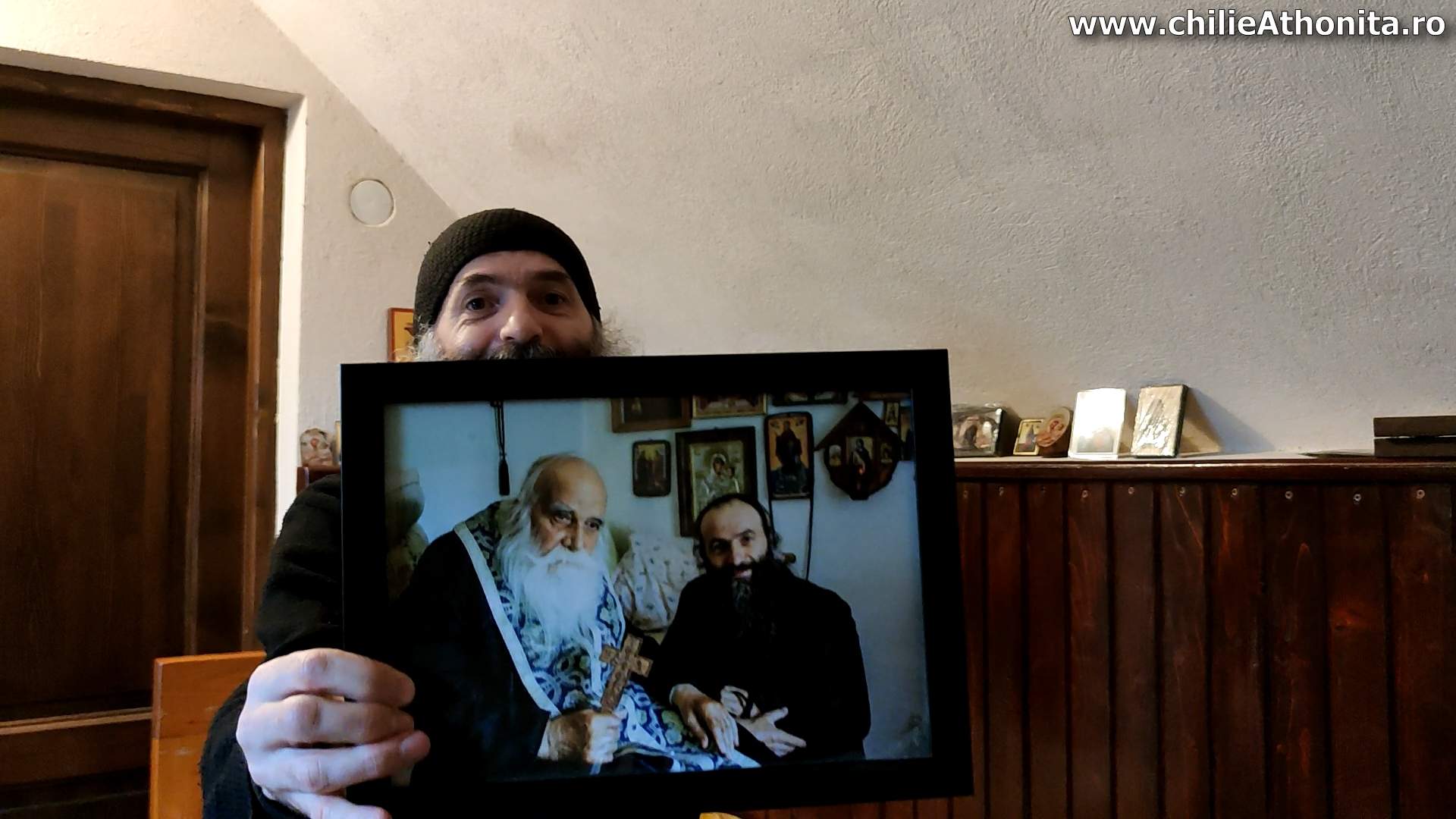
My Spiritual Father, Father Iulian – Father Pimen Vlad
13 March 2023
The Anxieties of People Today – Father Pimen Vlad
16 March 2023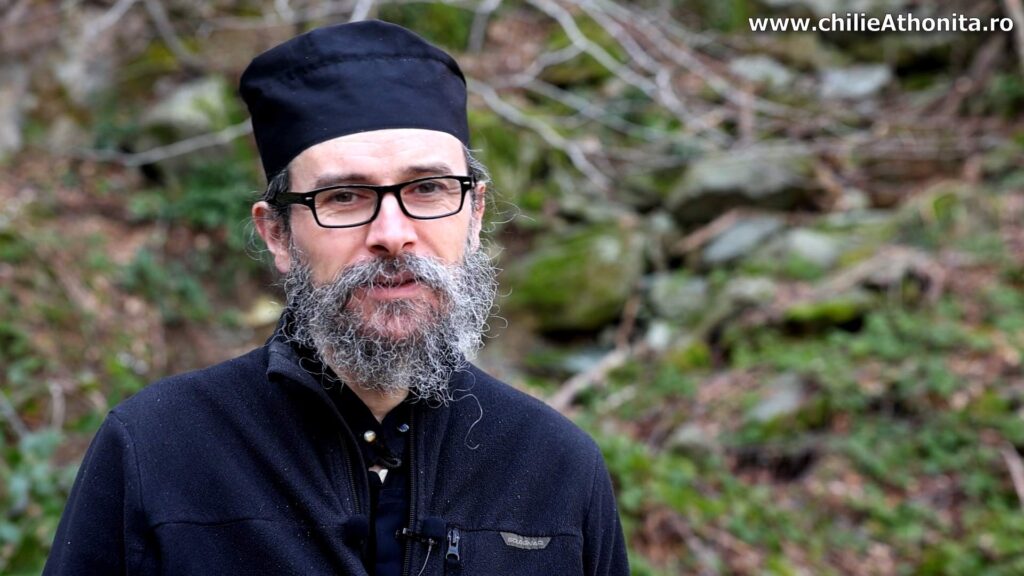
What is the Cross? Why is the Cross holy? Why do we have the Cross in our lives? What is the role of the Cross in our lives? What should our attitude toward the Cross be?
The answers to all these questions can be found in this material.
Enjoy!
Glory to the Father, and to the Son, and to the Holy Spirit, now and forever and unto the ages of ages. Amen. Through the prayers of our Holy Fathers, Lord Jesus Christ, Son of God, have mercy on us! Amen.
The cross. You see, without the cross, it is not possible. In the last episode, we talked about St. Gregory Palamas, this beacon of Orthodoxy who changed the entire history of the Church through the dogmatic crystallization he offered it. Well, and the reward? The cross. As I said in the last episode – four years in prison, together with several bishops. And, brethren, his own people put him in prison. The Greeks put him in prison, not the Turks or other foreigners. As Abba Isaac said—I have said it before: “If you have done something and are not tempted afterwards, know that you have not done it properly!”
Now, brethren, we honor Saint Gregory and all the saints, and we worship our Lord Jesus Christ and say that He is our example – especially our Lord – but we forget that their lives were a continuous cross. This is one of the Orthodox paradoxes: we all desire the Resurrection and victory, but none of us desire the path of the Cross that leads there.
Now you will ask me if Christ wanted [the cross]? To answer this question, we need to explain a little more clearly what the cross is. The cross, brethren, is the overcoming of sin, it is the destruction of sin. Sin is pleasure, it is self-love, and hence the fear of something that, in our view, could harm us. So, the cross is overcoming pleasures through pain and overcoming self-love, the flesh, and fears. How? Through the courage of loving God and our fellow human beings. The absolute cross is absolute pain for the sake of God, to the extent that someone can bear it, of course, and it is overcoming our deepest fears, the deepest conditionings within us for the love of God, in order to be completely free in Christ.
Christ also had a cross, and not because He needed it, like us, because He was and is sinless. Christ bore the entire cross of Adam, the universal man; all the sin of humanity fell upon Him. You see, in the Garden of Gethsemane, the Lord said, “O My Father, if it is possible, let this cup pass from Me; nevertheless, not as I will, but as You will.” Why did He say that? Because He was about to experience the absolute cross, that is, He was about to feel within Himself all the sin of humanity, without being in the least bit guilty of it. This sin that was about to be poured out upon Him like a huge cascade of garbage, filth, and existential impurity – upon the completely pure person of the Lord – was about to separate Him from God, from the Father, because sin separates from God. How could the Son be separated from the Father? He could not—yet He experienced this; for the first time in His life, He experienced, in an indescribable way, being forsaken by God. That is why He cried out on the Cross, “My God, My God, why have You forsaken me?” Because He was experiencing this abandonment without having done anything to cause it. This was something the Lord wanted to avoid with all His might – His fear, so to speak. It is impossible to apply our human language to Christ.
You see, He totally wanted the cross, on the one hand, because He knew that this was the key to Heaven and the Salvation of people—through this we will be saved—and on the other hand, He totally wanted to avoid the cross because of the sin He was about to take upon Himself. This, brethren, in Christ, was a state of perfect mastery and clarity of peace above any tension that only our Lord Jesus Christ can achieve, and probably His most pure Mother, by the grace of God.
You might ask now – couldn’t it have been otherwise? You see, the Lord said, “…if it is possible…” Well, if it is possible, let’s see what happened and we see that it couldn’t have been otherwise. Why? Because, you see, when He went to pray in the Garden of Gethsemane, the Lord took with Him the best of the Apostles, among whom, of course, was Saint Peter, the one who shortly before had told the Lord, “If I have to die with You, I will not deny You!” Meaning, the Lord. Well, and when Christ told them not to lay down their lives for Him, as Peter had boasted, but to watch and pray together with Him, then they all fell asleep. They were not battling with all their might, aware that at that very moment the fate of all humanity was at stake – that’s what was happening.
Brethren, if there had been a single man who had stayed awake with the Lord in body and soul in prayer then, in Gethsemane, there would have been no need for the Cross. But for there not to be a Cross, it would have meant that we are not fallen, which sadly is totally false, brethren, as we can clearly see well in each of us, if, of course, we have the courage to look within ourselves and be honest with ourselves. Brethren, since it is not possible without the cross, without pain, we must embrace it. Believe me, we cannot be [saved] without it; if it had been possible, Christ would not have been crucified, as I said.
Grumbling against the cross, trying to seek sinful pleasure, comfort, escaping from the will of God – these things exponentially make the cross heavier. Sadly, I know many cases, on this topic. Why does this happen? Because God is an all-loving Father Who wants what is best for us, He is constantly reconfiguring the entire universe to maximize the good of human beings, who are the crown of His creation. It is a great tragedy to see God’s beloved sons by grace, those destined to become gods with God’s help, for whom God created this entire universe – to see them apostatize and turn against Him, especially when you know that the reasons are completely false and that this whole campaign to crucify God is totally destructive for the attackers—meaning, for us. But what can we do? People are free.
However, this freedom of human beings does not diminish God’s love, and God, as I said, tries to lessen the suffering of human beings caused by the existential distortions into which they plunge, that is, He tries to lessen their cross, to give them the lightest cross and not the heaviest cross. Brethren, God does not punish anyone; people punish themselves through the deviations they commit based on the darkness of their minds, by departing from God’s will.
Brethren, do not believe that if you flee from the cross, from toil, from rising, you will stay where you are. No! Man never stays in place. Holy Apostle Paul says, “let him who thinks he stands take heed lest he fall.” Because, in fact, we are constantly bombarded by pleasures that drag us down, especially today. Because of this, brethren, those who try to flee from the cross based on faith in themselves, in their own mind, become even more entangled. Temptations are met with obedience, patience, prayer, and the simplicity of hope, as Avva Mark says. Those who tried otherwise, brethren, have gotten even more entangled.
Unfortunately, a very common case is when we hide when we make mistakes from those who can correct us—from the abbot, the boss, our parents, our spouse, our family—because we want to escape the pain of correction, of humility, as that too is a form of the cross, isn’t it? When we want to hide from our spiritual leader—as I said, from those who can correct us— from our boss or family, not only do we fail to humble ourselves, but we also become hardened. Do you understand? It’s a great tragedy! Yes, brothers, at first glance it seems more pleasant this way, like we have escaped, but in the long run it is destructive. We grow hardened, we become more callous. It is like a stop in the middle of the wormhole, between the hell of the Cross and the heaven of the Resurrection.
Not taking up the Cross is like crashing on takeoff. Let me put it more simply: if we are cunning and avoid the cross, the effort, the struggle, learning, humility, sacrifice, love, all these things, we are cheating ourselves, brethren. We will remain dead, dead all our lives. Do you understand? Here, regarding the reliance in our own mind, in our own reality, a big problem arises, brethren. I said at the beginning of my speech that through the cross we reach the Resurrection. And how does this happen? Through the power of God for whom we crucify ourselves – we crucify ourselves to this world – we detach from everything, we are abandoned by everyone and everything—we feel that we are abandoned even by God, brethren—remember that I told you: “My God, My God, why have You forsaken me?” – and once we reach the depths of hell and prove that even there we have undiminished love for God – as much as we can of course – then God will take us out of there and resurrect us. We will pass through by the power of God, of course, beyond, through the wormhole.
This is the way of the cross that leads to the Resurrection, and there is no other way to the Resurrection. Good, then what’s the problem? Well, in the reliance in our mind, brethren. The confidence in our mind about where the cross is. The problem is significant because if we do not have the necessary spiritual measure, then the god in whom our mind believes is not the true God. He’s an idol. Meaning, it is a person of the opposite sex, a relationship, a social position, wealth, a thing, an idol—generally speaking. Anything that we absolutize is an idol. Sometimes these can even be spiritual, brethren, good in appearance, very difficult to detect. However, if they become absolute, they become very dangerous.
Absolutizing any entity, any thing in our mind, transforms it into an idol, and when it disappears – because it will disappear at the moment of the Cross, then beyond this, there will be no moment of Resurrection unless we have the flexibility of humility to detach ourselves from the idol. Resurrection, brethren, comes only from the Living God. If we don’t let go, we can have a nervous breakdown. I know so many cases, there are so many people who had nervous breakdowns because they broke up with their pseudo-god, their idol, their absolute love for a person of the opposite sex, a social position, because beyond this pseudo-cross there is no resurrection through the renunciation of passions, but freezing, getting bogged down into their abyss.
We sit in a corner of our mind and have thoughts that give rise to thoughts, thoughts, thoughts, thoughts… in a spiral of decadence, instead of a spiral of detachment from the world, in a high flight towards detachment from the passions that diminish our love for God. Do you understand? Yes, brethren—this is resurrection. It is the spiral in a flight toward God. The cross is the ultimate death, the worst death, in order to destroy everything that is dead within us. As I was saying, overcoming all constraints, freeing oneself from everything—trampling down death by death.
We will all reach our final conditioning, our final fears, our fear of death. To reach the uncreated God, we need to reach our created the limits and there come into contact with the love of the Uncreated. We have to reach the limit, brethren. The cross is the ultimate love, the ultimate embrace. You see, Christ could have – since He was God – chosen to die beheaded or pierced with a spear or poisoned or by various other deaths, as He was God, as I said, the Almighty. But no! He chose the cross. Why? First of all, because the cross is an embrace. With open arms, Christ embraced and embraces the entire Universe, being mocked by us, stripped naked. If we love to the utmost, then others will lift us up on the cross, and on the cross we will be above them, waiting for the resurrection, which will come—it will surely come, brethren, if we endure with patience in the love of our obedience and do not come down from the cross. The cross is an ascent, a takeoff. If we come down from the cross, it is a failed ascent, a failed takeoff. Do you understand? A crash on takeoff, as I said.
You know, brethren, whoever loves more is greater, but only Christ went all the way. He became a curse for our love. I don’t know if you know, but the Jews chose the cross for Christ because it was the most terrible death, it was the only death that involved a curse, as it is said in the Old Testament that “Cursed is everyone who hangs on a tree.” Christ did everything possible with all the power of His omnipotence to escape the curse, because the curse is separation from God, something that His absolute holiness completely rejected. But He submitted even to death, and death on the Cross, for our love. Christ cried out, “My God, My God, why have You forsaken Me?” You see, no one else can say that. We must all say, “My God, My God, why have I forsaken You?” Because we sin and abandon Christ. Whereas Christ did nothing to deserve it, yet He had to go through it. We all have to go through it, brethren.
Christ cried out on the Cross like a warrior going into battle because He needed all His strength as a man to face the death of hatred that they had prepared for Him and to remain steadfast in His divine love for them and for us—because we are the same, brethren, you should know that – so that He may defeat the hatred of disobedience and opposition with love, with the love of obedience. This is how death was conquered, brethren. We too can conquer it, but only through Christ, through the Cross of Christ. It requires much prayer and faith in Him. Why? Because although throughout the history of humanity, man has been concerned with conquering death, no one has been able to achieve this victory except Christ, because no one could imagine that it is obtained through the cross of love and no one could put this into practice. Understand?
So what is resurrection, in our discussion? It is the loving heart, the tender heart, the heart open to all. For this reason, I said that Christ was on the Cross in a state of maximum love, in a state of maximum embrace, as vast as the entire universe. The greater the love, the greater the cross, and there is no other way to life. Do not attempt [another way]. We must love to the fullest and take responsibility and enter through the immense cross that opens before us like a portal to the heaven of Resurrection. I know there are great dramas that tear you apart, but I am addressing young people and monks first of all: children, this is how we mature, you know—this is how we know Christ the crucified and risen One. This is how we rise! Have courage! Because, sadly, almost none of us wants to sacrifice ourselves willingly, [none of us] wants to love others willingly, because we all sin and close ourselves off. Because of this, we all need the cross, meaning, troubles to soften our hearts so that we can understand others and love them.
Yes, brethren, the spiritual cross is connected to love, while the physical cross is connected to physical troubles, illnesses, and weaknesses. So, we must always accept everything that comes our way. Theoretically and practically, yes— but discernment is needed because not all of us have the same measure as Christ. This imperfection of ours manifests itself both on a personal and community level: on a personal level, if we see that love is diminishing within us and bitterness and hatred are appearing, that we can no longer pray—that we can no longer resist— then we must avoid the temptation.
In fact, for this reason monks withdraw to silence and everyone should withdraw – of course, not to the degree that we do, but each as they can. We withdraw to silence and we must withdraw to silence to minimize temptations, to quiet ourselves, but silence means that we must strive in prayer and in love in order to have the cross from the loving God and not the temptations from the hateful devil. Laziness is the mother of all evil. I didn’t say that. Saint John Climacus said it. However, if God allows it, then we must bear our cross with patience, prayer, and the simplicity of hope – Abba Mark.
As a community, brethren, we cannot accept that our loved ones suffer. That is, if God allows us to be slapped, we must turn the other cheek, as commanded by the Lord, of course, each according to their ability. However, at the community level, if a physical, military, and especially ideological aggressor comes along—let us not forget that a country is only defeated if it is defeated ideologically—I remind you now of Afghanistan, where they were destroyed for 20 years, but in the end they still withdrew after leaving the country in ruins, of course. Why? They withdrew because they did not defeat them ideologically.
Returning to the topic, if an aggressor comes, we cannot turn the other cheek because if we take up the cross, we cannot impose the same cross on our loved ones, on our nation; we must oppose them with all our strength and wisdom. This is especially true in the case of ideology, because if we accept an ideology that distances us from God, then there is no longer the Cross of Christ, so the Resurrection is not hidden behind it, love is not hidden through suffering, unless the suffering comes from the confession of love for God in the unity of the Church, in the unity between us.
Now, why do we have the cross? Why does God allow it? The first answer is for sins, but our Lord was without sin. This shows us that there are multiple reasons. We have mentioned them before, but it does not hurt to repeat them so that we remember them and to not judge others by saying that so-and-so is suffering because they are a sinner. That’s not always the case. We don’t know!
The first reason is indeed for our sins. I said that sin is pleasure; sinful, distorted, carnal pleasure that keeps us stuck here on earth. If we do not induce a similar pain ourselves, as a counteracting force, that is, a pain that will remove us from there and be at least equal in intensity to the pleasure felt, then we will not escape, and the spiritual law permitted by God’s loving justice will intervene through the Cross. This pain is caused by obedience, repentance, fasting, confession first and foremost—we must confess. We must also ask for forgiveness if we have wronged someone and, of course, ask for forgiveness from God. But if we do not repent, if we do not have pain in our hearts on our own, then the corresponding – greater – trouble will come, the corresponding pain, in order to restore balance, according to spiritual law, a great trouble. Because of this, it is much better for us to repent, brethren, to induce upon ourselves a pain analogous to the sin we have committed. Do you understand?
The second cause of troubles are barrier troubles. Barrier troubles a clear expression of God’s love, but also of our short-sightedness (not to say blindness). That is, we, being blinded by the confidence we have in ourselves, set out on a path that—without us noticing—hides a precipice ahead. God sees it and sends us signals in our conscience and/or through the people He validates before us, but we do not pay attention. Well, then, to stop us from our sinful pleasure, from the abyss that opens up before us, the loving God allows a temptation to stop us in our tracks. A trial. Do you understand? That is why Saint Paisios tells us, “If God closes a door, let’s not break the handle, for we’ll regret it later.” Do you understand?
Thirdly, there are the temptations of advancement. That is, when person is a great vessel and has the capacity to advance in love and in the knowledge of God, but does not know how, or does not want to, or cannot, because they are pinned down by various minor reasons on a lower existential plane. Then God allows a cross to detach that person from the place where they are stuck. That’s why Mr. Petre Țuțea said that perhaps God will have mercy on the Romanian people and give them a kick into action from time to time. Do you understand?
Brethren, without the cross we cannot move forward, because it is the cross that keeps us humble. See that God did not trust Saint Paul, and so that he would not boast about the greatness of the revelations – as he himself says – He gave him a thorn in the flesh, a messenger of Satan to slap him across the cheek, across the eyes. If God humbled Saint Paul in this way, what can we say? Do you understand?
And the last reason why God allows the cross is the temptation [of example], the cross of example, like the Cross of our Lord Jesus Christ was, above all else, and with Him, that of the saints of the past and of times closer to us. In the Old Testament, we have the classic case of Job, to which we can add Abraham, Joseph, and Moses, and in the Christian period, the holy apostles, among whom Saint Paul stands out, as I said, who also had a great physical cross, we do not know exactly what it was, but it is very likely that the thorn in his flesh was a serious eye condition, as is implied in several places in Scripture.
All martyrs had crosses, and not only them – in the previous episode, we mentioned Saint Gregory Palamas – going all the way to today’s great Romanian saints of the prisons, whom may God grant us not only to honor properly but also to follow their example of sacrifice, of the cross, so that we too may share in the Resurrection of true love in God and in all people. May the Good Lord help us! Thank you for sacrificing your time for me!
Through the prayers of our Holy Fathers, Lord Jesus Christ, Son of God, have mercy on us! Amen.
Online commemoration lists and donations
May the Lord help us!
Online Commemoration Lists and Donations
May the Lord help us!
If you have a bank card and wish to send commemoration lists and donations online using your card, and/or to support our philanthropic activity, including this site, please fill out the form below to make a small donation. The form is secure – we use Stripe for payment processing – a world leader in this field. We do not collect your personal data.
If you do not have a card, or do not wish to use it, visit the webpage for Online Donations and Commemoration Lists.
We will pray for your loved ones! (Please do not include inessential details like wishes, degree of kinship, introductions etc. JUST the name!)
Especially for recurring commemoration lists, we ask that you please keep them to under 20 names long. If you include a member of the family, we add “and for their families.”