

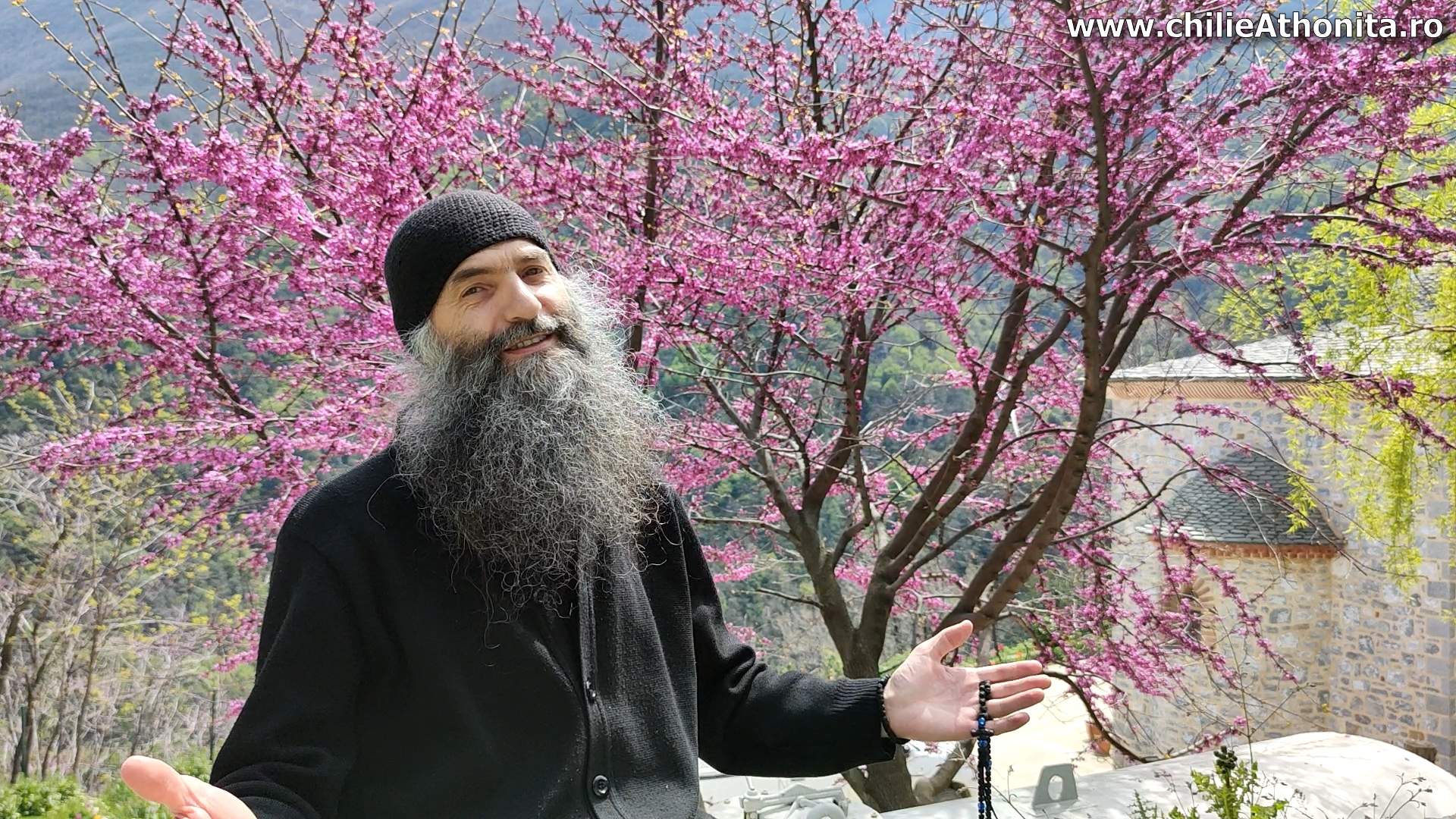
The Life-Giving Spring and Bright Week – Father Pimen
21 April 2023
Faith in the Entrepreneurial Setting – Ionuț Nistor, Fr. Theologos
23 April 2023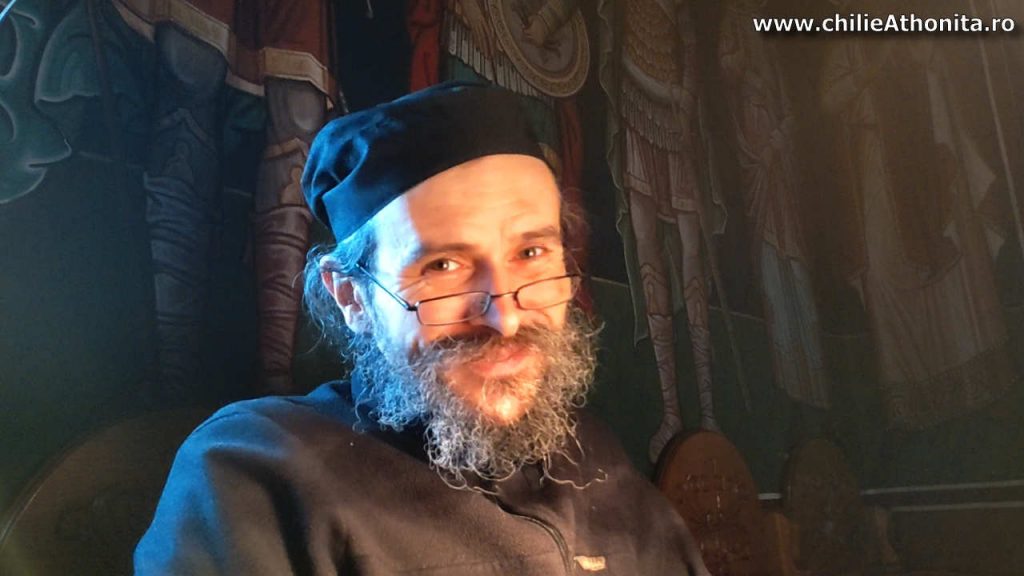
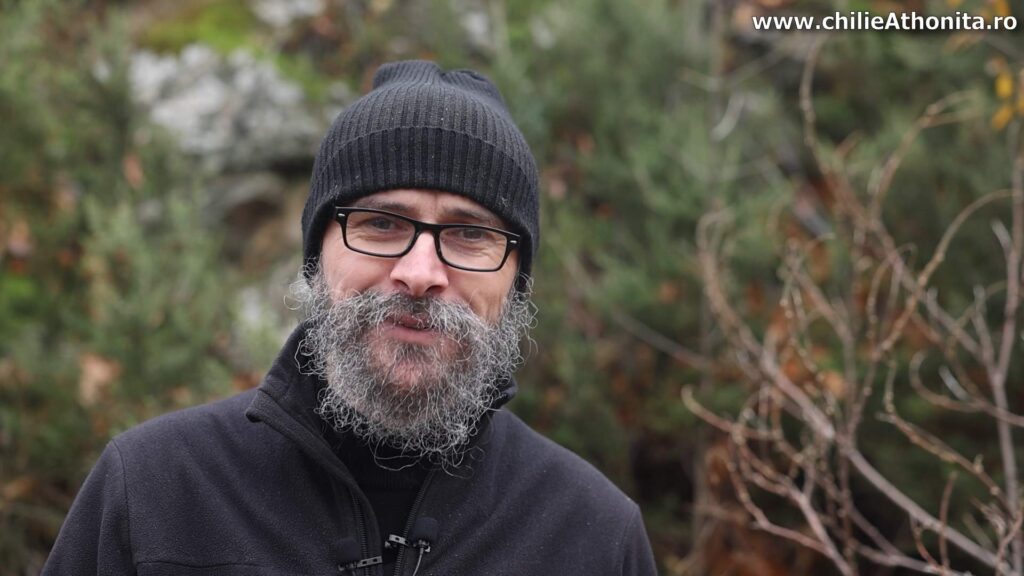
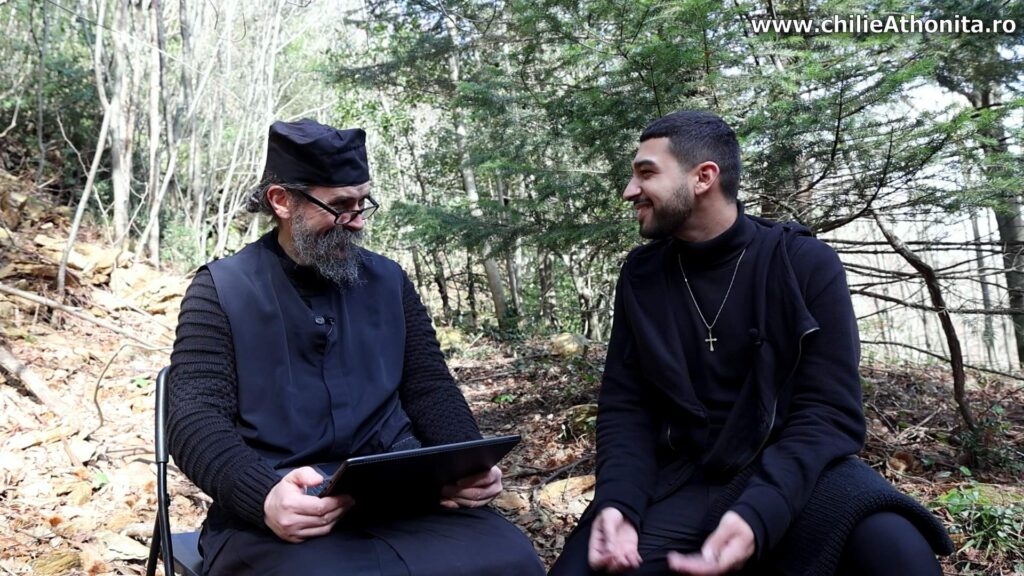
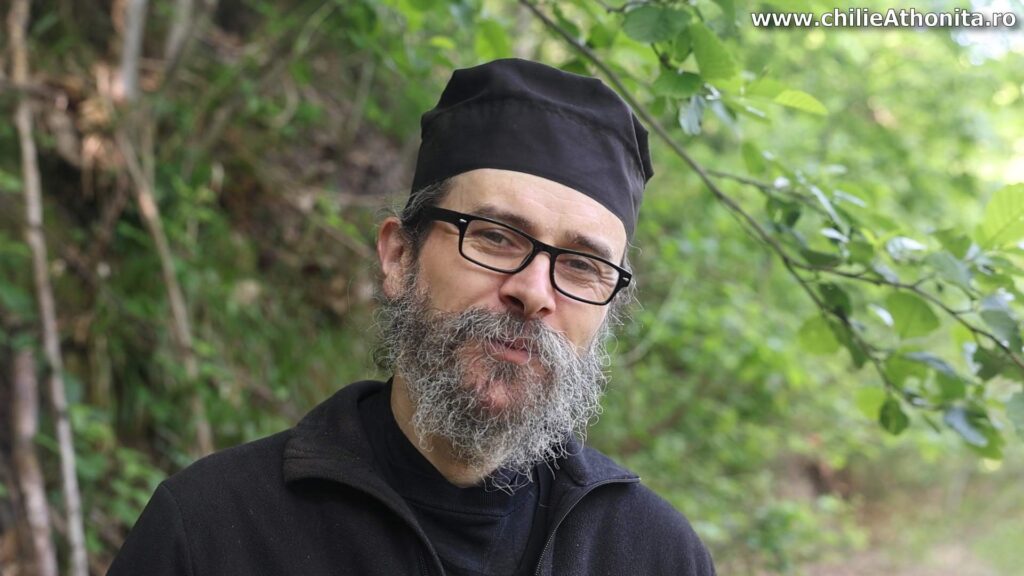
Euronews Romania journalist Cristian Citre met him on Mount Athos. A former IT programmer, Father searched for existential answers in science and technology, but ultimately found them… in faith.
He has remained a user of modern technology, compelled by reality, but also because he understood that it is a tool that can help him convey Christian teachings to as many people as possible.
Cristian Citre: With the advent of the internet a few decades ago, the world wondered how much it would change our daily lives. But we could not even have imagined the scale of the change at that time. Today, with our lives exposed on social platforms, shopping online, and paying with our phones in stores, we ask ourselves again: what does the future look like? What will our lives be like when artificial intelligence becomes commonplace? And what about spirituality, traditions, and the beliefs of humanity of thousands of years? How do we relate to divinity today? Can the two dimensions of our existence coexist? Is this symbiosis possible?
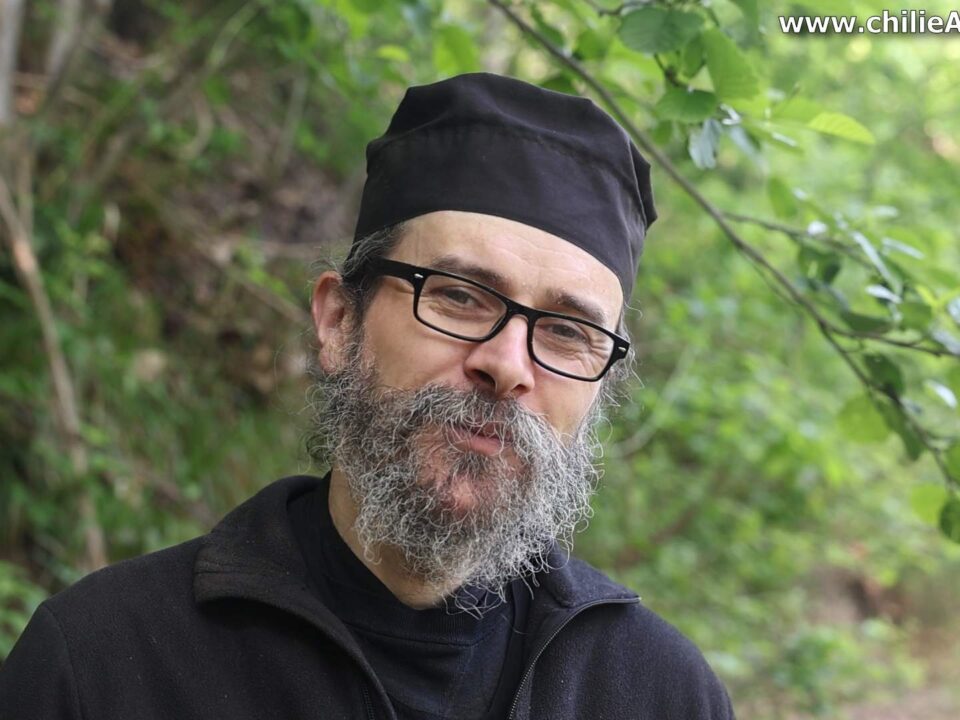
Father Theologos – the one who speaks about God – is one of the people who has tried to unravel the truth. I met him on Mount Athos. A former IT programmer, Father sought answers to life’s big questions in science and technology, but ended up finding them in faith. He remains a user of modern technology, compelled by reality, but also because he understands that it is a tool that can serve him in conveying Christian teachings to as many people as possible.
Fr. Theologos: I have observed that people are reading less over time. It is a great tragedy; I would not want to carry out missionary work online and visually. I would prefer to write, for many reasons: writing is much more concentrated, it can generate a much deeper way of thinking because reading is a much slower process and, therefore, a person can concentrate much better. However, sadly, today this is the case—people no longer read. It’s a great tragedy. So, because of this, we humble ourselves, adapt to the times, and carry out this missionary activity online, visually, through multimedia.
C. C.: The YouTube channel he manages has 85,000 subscribers and over 14 million views. Father is convinced that this is due to the primary purpose of the Orthodox Church. Can this therapy of the Church be applied or is it successfully applied to the problems of contemporary people that you mentioned?
Fr. Theologos: Of course. The purpose of the Church is a therapeutic one. The Church, let’s be clear, is not a governing structure. We have the utmost respect for the patriarch, for the Holy Synod, for the hierarchs, and we bow before the hierarchs, but the Church is a hospital for sinners.
The writings of the Holy Fathers, the teaching of the Church, are, as I said, therapeutic, and Orthodoxy is a branch of medicine. A branch of medicine that aims to heal the human soul. This is what Orthodoxy deals with. So, Orthodoxy is not concerned with lighting candles in church and bringing braided bread and koliva, although, of course, this is also done at the appropriate time. Orthodoxy is concerned with the healing of the human soul and, therefore, the attainment of eternal happiness. Because man is eternal.
C. C.: But man, by his very nature, is subject to sin, as the writings of the Church tell us, and man’s most important struggle is to stay away from temptations, whether they be of the flesh or of the soul. If we view technology as an addiction, then we are also committing a sin.
Fr. Theologos: Sin is a magnetic force that draws man in that specific direction. This magnetic force is felt by the brain as pleasure. So, sin is a form of distorted pleasure that has, first of all, a chemical component, a chemical plan; it is about a chemical reaction. For example, dopamine is the best known, it’s not the only one, but mainly that. Okay, and so, for someone who knows—well, not me, since I do not know very well—someone who knows the Holy Fathers knows, very well, that sin is a form of distorted pleasure that keeps man there, generates addiction, and sin is all the greater the more it generates a greater addiction. And so, in this definition we have: drugs as sin, computer games as sin, addiction to screens, to cell phones as sin, addiction to the internet as sin, and so on. And then, based on this principle, the appropriate therapy can be applied.
C. C.: Do you need to have a lot of faith, or does a person need to have a lot of faith in God in order to overcome these magnetic forces you were talking about?
Fr. Theologos: Yes, because… A lot of faith, a faith… So, we are talking about magnetic force, which is a very good analogy because it resonates in everyday life. A force of at least equal value and in opposite direction is required. Meaning, it is someone else who pulls, and that can be none other than faith in God, that is, living this purpose, as I said, this personal and eternal perfection, meaning, God. That, yes, indeed, it makes sense for me to fight drug addiction, computer game addiction, internet addiction, right? It makes sense for me to fight because, indeed, a goal awaits me, and I believe I can reach that goal because I have felt God in my life, I have felt Him, and so I can get out of there.
C. C.: I know that before coming to the Holy Mountain and embracing monasticism, you worked in technology and were involved with the peak of technology. Technology is evolving; it has evolved significantly since then, and practically, it continues to evolve significantly everyday. You even use it to promote faith and religion. How do you think our relationship, as humans, with technology should be, considering that, I repeat, at least these days it has reached heights that frighten some of us? Even great scientists and financially powerful people have called for a little restraint, because things have already gotten out of hand.
Fr. Theologos: Yes, you are most likely referring to artificial intelligence here.
C. C.: First of all.
Fr. Theologos: Yes, that is right. Sadly, technology is an expression of ourselves—that is, of the sin within us, of the distortion within us. And technology is an amplifier. So, if it were an amplifier of faith, of good deeds, of good examples, and so on, then yes, I would be totally in favor of technology. However, due to the fact that technology is rather an amplifier of passions and magic, and especially artificial intelligence is, in fact, a potentiation of the magical, of a distorted human personality.
Man is important, why? Because of his capacity for love. Not so much for the information he possesses. Artificial intelligence mimics human responsiveness and cognition, but it has no love. That is destructive. I know people who, after an initial enthusiasm in the world of artificial intelligence, became very depressed. Why? Because that enthusiasm generated a “wow” reaction, that it responds to us like a human being and gives us a lot of information. Yes, but the problem with humans is not information, but, as I said, the capacity for love, which is not visible there.
Beyond that, as I was saying, all of today’s technology has long surpassed the threshold of utility and entered the realm of pleasure. We see this on all social networks, mainly TikTok, which is the most aggressive of them all. The recommendation algorithms behind them, which are based on artificial intelligence, are designed to maximize pleasure. I mean, on TikTok you have a 30-second video, what content does that offer you? It doesn’t offer you content, but it offers you a lot of pleasure. And, it is known that TikTok takes your cell phone data not so much to steal it— what would they do with it? —but to profile you. And these algorithms are very well trained to profile you and keep you enslaved there. And then you scroll for hours on end, you swipe on that cell phone, you are stuck there. And especially due to the fact that, chemically speaking, it is the same chemical reaction that occurs in the brain as with drugs— it is exactly the same dopamine rush—the young person, the individual is actually drugged by this, and, therefore, they lose their ability to concentrate, they think in a massively parallel and chaotic way, they have an attention-deficit, and can no longer do anything in life because they are stuck there.
So, the technology itself is good, or, let’s say, neutral. The way it is used is very, very debatable, if not very bad. Once again, due to passions, the sin of those who design the technology, especially the user interfaces, and also due to us, the ones who use the technology. The therapy here, while we’re on the subject, is, as I said, love, turning towards God. Or directly, which is difficult but must be done, through prayer, through a daily spiritual program, through fasting, fasting from cell phones, fasting from technology, and especially through the person.
C. C.: You mentioned several methods, including prayer. Is prayer important? And can it be adapted, since we are talking about modern times, to everyday life, which is perhaps more dynamic than ever before?
Fr. Theologos: That is true. Prayer is paramount. Why? Because prayer is the mind talking to God. I have said and insisted, and I continue to insist, also on the website, on chilieathonita.ro, I insist many times on the fact that God is personal. What does it mean that God is personal? In short, it means that He can also respond. And He does respond! That is, prayer is a dialogue, it is a conversation, not so much a monologue, even if it seems that way. It is a dialogue. And so, the moment God responds, man is freed from loneliness, freed from anxiety, freed from the unease about the day to come. And then, the person begins to find balance and, as I was saying, to break free from these addictions.
C. C.: It is impossible to predict whether we will succeed in this dialogue with God. Or, for those who do not believe in a divine force, what would be the solution to preserve their individuality in the era of technology? And to conclude, father, if you were to give a piece of advice to those at home, to those who are watching us now, or more than one piece of advice, what do you think would be the most important one or ones?
Fr. Theologos: Yes… God made people to be loved and things to be used. Our drama today is that we use people and love things. We must reverse this, that is, we must love people, give time to people, and, above all, to the supreme Persons, that is, to God, the Holy Trinity. And let us not forget to love. Let us not forget to love. Let’s pause for a moment in this mad, mad, mad rush. Let’s stop the verb “to do” and focus more on the verb “to be.” Even Shakespeare, through the mouth of one of his famous characters, Hamlet, said: “To be or not to be? That is the question!” To be or not to be loving, that is the question. Because hell, as Dostoevsky said, is eternal loneliness, the impossibility of loving.
Brethren, no matter what, whatever the sacrifice, you must love. You must love!
Christ is Risen!
Online commemoration lists and donations
May the Lord help us!
Online Commemoration Lists and Donations
May the Lord help us!
If you have a bank card and wish to send commemoration lists and donations online using your card, and/or to support our philanthropic activity, including this site, please fill out the form below to make a small donation. The form is secure – we use Stripe for payment processing – a world leader in this field. We do not collect your personal data.
If you do not have a card, or do not wish to use it, visit the webpage for Online Donations and Commemoration Lists.
We will pray for your loved ones! (Please do not include inessential details like wishes, degree of kinship, introductions etc. JUST the name!)
Especially for recurring commemoration lists, we ask that you please keep them to under 20 names long. If you include a member of the family, we add “and for their families.”