

Worldy and spiritual education and the samaritan women – Fr. Theologos
18 June 2026
The paralytics of the 21st century – Fr. Theologos
1 July 2026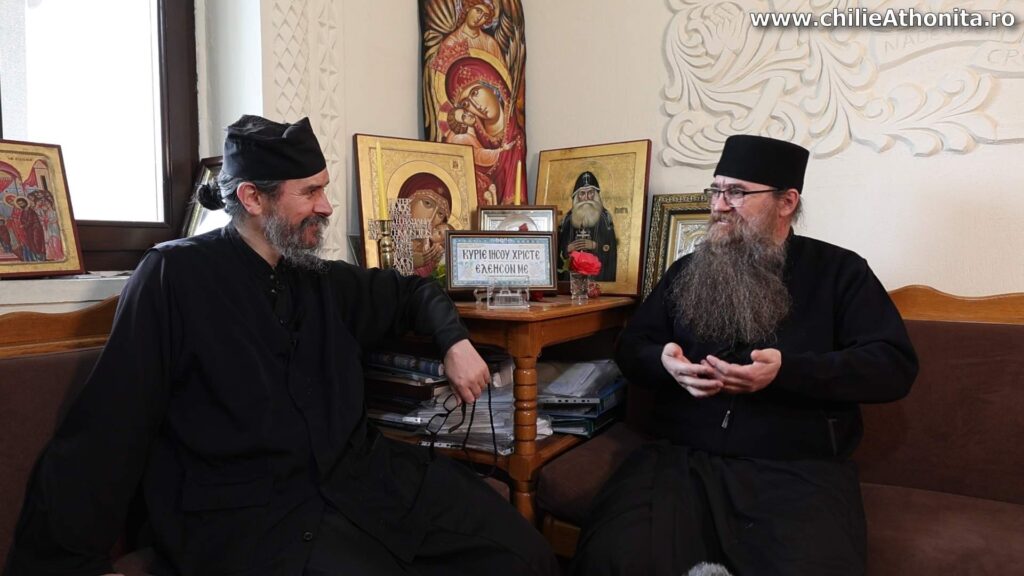
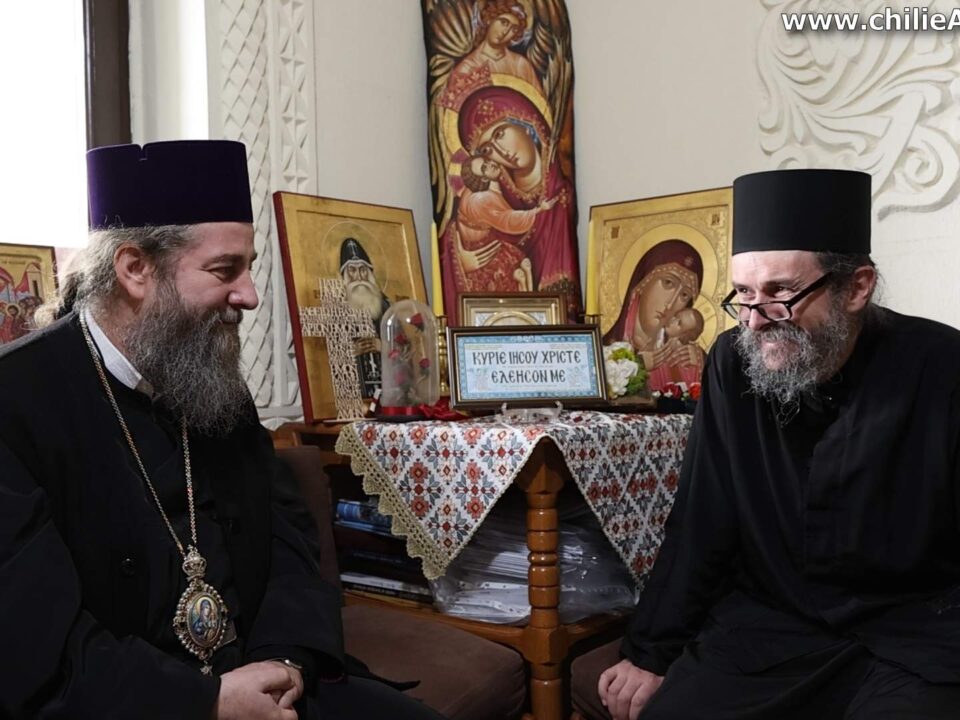
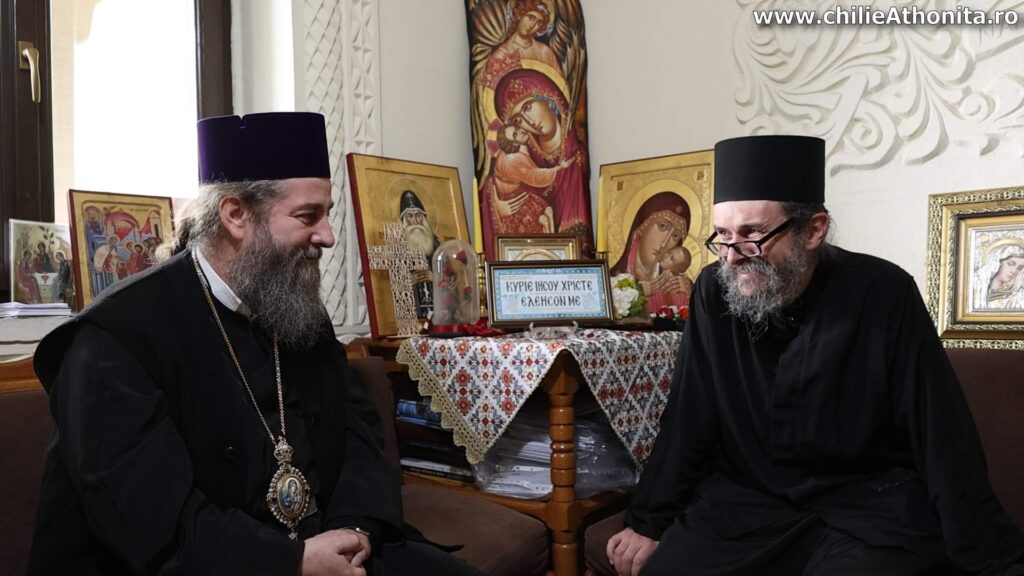
Listen to Father Cosma Giosanu, a well-known author of spiritual books and abbot of the first monastery dedicated to St. Neagoe Basarab, who tells us wonderful stories about the great spiritual fathers of the Sihăstria monastery, spiritual fathers he met during the time he was living at the Sihăstria monastery.
Enjoy watching!
Fr. Theologos: Glory to the Father, and to the Son, and to the Holy Spirit, now and ever and unto ages of ages. Amen. Through the prayers of our Holy Fathers, O Lord Jesus Christ, Son of God, have mercy on us! Amen. Father, say Heavenly King, please!
Fr. Cosma: O Heavenly King, the Comforter, the Spirit of Truth, Who art everywhere and fillest all things; Treasury of Blessings, and Giver of Life, come and abide in us, and cleanse us from every impurity, and save our souls, O Good One.
Fr. T.: Amen. Our dears, we are here with Fr. Cosma from Sihăstria. Perhaps many of you know him; I love him very, very much, you know. I love him greatly for many reasons and as a person – because he connects the tradition of the Romanian fathers with the tradition of Mount Athos, he comes to Mount Athos very often. And now, he’s building a new monastery – with a blessing, of course – dedicated to – I was so happy when I heard – Saint Neagoe Basarab, right?
Fr. C.: Yes.
Fr. T.: Saint Neagoe Basarab. We will definitely talk a little about this monastery. Why a little? Because I really want father to tell us about his vast life experience and, especially, to speak to us about the great spiritual fathers he has known: namely, Saint Cleopa, Saint Ioanichie, Saint Paisie Olaru, and other fathers from Sihăstria whom he had the blessing to know. Very briefly, where is the monastery located? Very, very briefly, and what is it like?
Fr. C.: The monastery is located in the village of Vlădești, in Argeș, within the Archdiocese of Argeș and Muscel. Currently, it is at the stage where we are trying to obtain all the legal approvals from the authorities to start this project. We have received a wholehearted blessing from His Eminence Calinic.
Fr. T.: I understand that he supports you.
Fr. C.: He fully supports us. Essentially, this project was devised by the fathers at the Lacu Hermitage, at the Cell of the Annunciation, who in turn were inspired by several Romanian laypeople who came here to Mount Athos and wished to have a monastery somewhere in their country that would follow a spiritual tradition closer to that of Athos.
Fr. T.: Yes.
Fr. C.: Over time, Geronda Ștefan did not accept this invitation or this request, but during the pandemic, when some of our Romanian pilgrim brothers came here to Athos they faced difficulties. Sometimes they were turned back at Ouranopolis because they had tested positive or were asked for this green certificate. Then, the fathers accepted the invitation, they said yes.
Fr. T.: There is a need for something Athonite in Romania.
Fr. C.: Athonite… An Athonite profile. We cannot say that it is an Athonite monastery because Athos is unique.
Fr. T.: Yes.
Fr. C.: It’s unique, we can’t… but we try to have an Athonite spiritual profile, and I was even asked by different people from a newspaper how many Athonite monasteries we have in Romania, and especially regarding this issue with the Monastery of Frăsinei. I said that we do not have Athonite monasteries in Romania, but monasteries with an Athonite profile–
Fr. T.: That is right.
Fr. C.: Or that try to follow this profile to some extent. And indeed, there we envisioned this monastery to have two enclosures: one for laypeople regardless – men, women, children, everyone, and the second enclosure will be exclusively for monks, only for monks.
Fr. T.: Very well!
Fr. C.: We will try to hold services according to the Athonite typikon, mostly at night, with vigils. In the church we should have no electricity and only by candlelight. Not eating meat… Like that.
Fr. T.: More akriveia.
Fr. C.: More akriveia. We will try. Let’s see to what extent we will succeed. The idea is…
Fr. T.: May Good God help you! I am extremely glad about this. Father, Saint Cleopa.
Fr. C.: Yes… Father Cleopa… I don’t know, I feel so emotional just saying his name, calling Father Cleopa “Saint” – it’s as if I can’t even believe that I was contemporary of a saint. But it really is true. It was Father Cleopa who motivated me to embrace the monastic life. I was only 16 years old when I met Father Cleopa. I came to the Sihăstria Monastery from Bistrița Monastery because there I used to go more often to Father Justin, whom I had known since childhood, but I arrived at Sihăstria to meet some of my friends, colleagues, fellow villagers who were there at Sihăstria Monastery – basically, I went for them, not for Father Cleopa. I didn’t know much. It was in the communist period before the Revolution around 1988-1989, but I was fascinated by his word – a word with power.
Fr. T.: How was it?
Fr. C.: I remember that I was absorbing his words, and there were many people gathered there, in front of the cell, and what he said I memorized so well that when I went home, I told everyone. To my mother… since I have been there with a sister, she tried to say something too, but I said, “No, leave it, I know better.” And indeed, I had a good memory so I could fully recount everything Father Cleopa was telling, all his anecdotes. I had just finished the tenth grade then. I was still undecided about which path to take; I had graduated from Mihai Eminescu High School in Iași. At that time, before ’89, it was a sports-profile high school, and I had done sports. And I was a little confused by the meeting with Fr. Cleopa. And indeed, having these fathers as well – father David with a younger brother who had been my classmate – I decided nevertheless to go to the monastery.
Fr. T.: How would you characterize Father Cleopa, Saint Cleopa? Your personal characterization. How did you feel about him? His main traits.
Fr. C.: He was a very open and straightforward man, and a very merciful man, unlike anyone I have ever met. Perhaps in Father Iustin I saw the same traits. After I entered the monastery, we often had to go on a journey, to a hospital; we went to Jerusalem in 1996, and that’s what all the fathers did: they would go to Father Cleopa to receive his blessing. But Father Cleopa’s blessing, beyond the word of encouragement, also included something material.
Fr. T.: Oh, really?
Fr. C.: I mean, whenever we were setting out on a journey and we stopped by to see him, he’d give us a little money, even though we hadn’t asked for it. Many times, I didn’t go. I went only for the blessing, not to ask for money. And he would say – father David was his cell disciple – and he would tell him, “Come on, David, bring that bag!” For all the commemoration lists he received, he would put the money in a bag, and it was that bag he would reach into and give us money. He never looked at how much he took. He took as much as his hand could grasp… As much as his hand could grasp, that much he took and gave to you. And we would say, “Reverend father, you don’t have to.” He would say, “Leave it, take it there, because I know that this abbot is stingy and won’t give you anything.”
Fr. T.: Was that what father David said? Father David was the one telling him not to give you that much, right?
Fr. C.: No. Father David wouldn’t say anything. Father Cleopa would say this: “Come on, I know that this abbot gives you nothing.” And indeed, he was very merciful, selfless. Even with people, when someone came to him with trouble, he was always very merciful. And I remember a story that Father Cleopa told told at one point, I believe in 1977 at Athos. I heard this story from father Gavriil Nichiforidis, who is in Kerkyra, an abbot there, he told me this story. At one point, when Father Cleopa was abbot at Sihăstria – he served as abbot there from 1944 to 1949 – the monastery was undergoing reconstruction. The monastery had gone through a fire in ’41. That was during the war. After the war, it was a very difficult time because there was a band of robbers – a sort of band of outlaws – in the area, known as “Baltă,” who robbed wealthy people, but they also often went to monasteries to plunder and steal.
Fr. T.: God forbid!
Fr. C.: You can imagine, the church was burned, the war was over, and during the war there were people at Sihăstria who had taken refuge from the fighting because the front line had passed through there, near Neamț Monastery and Târgu Neamț.
Fr. T.: Oh, really?
Fr. C.: It was a very difficult time, and people sought refuge in the monasteries – bringing their children, their troubles, and all their problems – and it was during that very period that Father Cleopa began building a house.
Fr. T.: Glory to God!
Fr. C.: I remember that old house. It was where the refectory and kitchen are now. There was the old house. I actually lived there. That house was built by Father Cleopa. He had started building it, and during that postwar period – the famine of ’47 – many people came because of the famine and the postwar hardships. And winter was fast approaching. The house wasn’t finished, so Father Cleopa gathered the monks who were at the monastery at the time into a few cells and gave most of the house to the people, saying, “Finish this up – the roof is done – take it and plaster it with clay, and figure out how each of you will stay here this winter.”
Fr. T.: Glory to God!
Fr. C.: And father Macarie from the Skete of Prodromos – father Macarie Tănase, who passed away in 2014 – told me, “Father, there was a famine; there was great need in the country, and there were families there with children, even tiny little ones… and when it was time for the meal, when the meal bell rang, he said they would prepare a large pot of food for everyone – monks and laypeople.” During Father Cleopa’s time as abbot. And whenever the bell rang, he said that everyone would line up with a small bowl in hand.
Fr. T.: The poor souls…
Fr. C.: And people would come, and everyone would receive a ladle of that sour soup, and Father Cleopa was very… he shared everything he had with the people. And many times, he said, “Father, we didn’t have anything either; there were those extreme situations.” He said that many times – this was told to me by father Iulian – he said that when we had nothing, Father Cleopa would order three days of strict fasting, and each monk to read the Psalter. And he said that always on the second or third day, a cartload of flour, potatoes, beans, and everything else would always come through the monastery gate…
Fr. T.: Glory to God!
Fr. C.: He says there was never a time to set this order without those things coming… And Father Nichiforidis, I return to the main point after a longer digression, told me a story probably heard from Father Cleopa. It is also recorded in this book that I published: “The Spiritual Fathers of Sihăstria Under Communist Censorship.” He said that during this period of famine, a woman whose husband had died came to Sihăstria, she had three little children, and she complained to Father Cleopa, “Father Cleopa, we have nothing to eat, we have nothing, and I need a little cow from you so I can raise my children.” And when Father Cleopa was talking with her, the monastery cashier passed by and he called him, saying, “Father, how much money do you have left in the cash register?” “Father Cleopa, we have 300 lei left, but on Monday we have to go to Târgu Neamț to pay for the metal sheets for the church” – because the chapel of the Holy Righteous Ancestors of God, Joachim and Anna, painted by Protcenco, was under construction. He said, “Alright, 200 lei, bring it here and give it to this woman!” “Father Cleopa, but understand a little that this is the situation, we promised these people!”
Fr. T.: Glory to God!
Fr. C.: And then, Father Cleopa scolded this father and said to him, “But what do you believe? Don’t we believe in God, aren’t we in the monastery of the Mother of God? What are we here for?” And then the father, grumbling, went, came, gave him the money. When they were talking there, the father from the stable passed by and Father Cleopa said, “Father, come here! How many cows with milk do we still have?” He replied, “Father abbot, we have two cows with milk and two calves.” “Go and take a cow and bring it here so we can give it as alms to this woman because she has nothing to feed her children with.” He said, “Father abbot, it is famine there, there is nothing. We have so many old fathers here and this is our only source. How can we give this? It’s not possible!” And Father Cleopa replied in the same way, “Hey, do you believe in the cow or in God?” “Go and obey and bring it!” “Father… so-and-so… bless and forgive!” And he came to Father Cleopa with the cow tied with a rope. He recounted, “When those little kids saw the cow, they went over and grabbed it by the muzzle like this, kissed it, and played around it happily because they had a cow and milk.”
Fr. T.: Phenomenal, touching…
Fr. C.: Touching, you know… And the woman took the cow, took the money and went downhill. And now, Father Cleopa still thought about it, there was famine, this tense situation, the fathers were thinking too, there were also people in the monastery who came and helped, and so he really thought about it. He said, “Well, did I really do the right thing…?” Or maybe… I don’t know what was on his mind. And he says that he took the prayer rope and started walking down the road leading to Secu; it was towards evening, and he was holding the prayer rope in his hand and praying—he was saying the Jesus Prayer— and his thoughts were on the whole situation with the monastery’s reconstruction and the famine. It was that period, if you think about it, right after the war when the communists had come to power; the whole country was in turmoil, the Russians were in the country and… No one knew what would happen or how things would turn out. And probably with his thoughts and the Jesus prayer, he was walking down the path toward Secu Monastery. Since it was towards evening, at one point, he saw two cows coming along with a woman and began to make the sign of the cross. He thought it was some kind of… apparition, a temptation, a vision from the evil one, whatever he was thinking… And just as he was approaching, an old woman came along with two cows; she was leading them by a rope and said, “Bless, Father!” She asked, “Is this Sihăstria Monastery?” He replied, “Yes.” She said, “My husband, my old man died last week, and we have two or three goats and two cows. Now that I am alone, I can no longer keep the cows, and God gave me the thought to bring these cows to give them to Sihăstria Monastery because I know there is a hermitage here, far from the world, and I came here. Here you go!” She gave him the rope in his hand – “Take these cows!”
Fr. T.: Glory to God!
Fr. C.: She made the sign of the cross and said, “In the name of the Lord, please take these cows!” Father Cleopa was left speechless, and then he took the ropes and went to the monastery, called the father from the stable and said, “See, you doubted! You gave one cow, and God sent you two cows instead.”
Fr. T.: Glory to God!
Fr. C.: And I look at how God worked in his life. Indeed, he had a troubled life, but you see, God’s work is evident in these critical moments.
Fr. T.: Yes…
Fr. C.: In ’49 he was sent… When I arrived at the monastery, I was just a child, and I don’t know if you’re aware, Sihăstria, following Decree 410 or around that time, was turned into a nursing home for the monasteries that had closed in Moldavia.
Fr. T.: Oh, I didn’t know that.
Fr. C.: And all the elderly monks over 55 years old were gathered at Sihăstria Monastery, but this was thanks to Father Paisie Olaru. Let me make a few parenthetical remarks.
Fr. T.: Yes, yes, please also tell us about father…
Fr. C.: There is a lot of information, and I would like to… What happened? At that time, with the decree– and later, I will come back to tell you about Father Cleopa. Then, under a decree issued in November 1959, all monks under the age of 55 and nuns under the age of 50 were ordered to leave the monastery, and those who were retired had to give up their pensions.
Fr. T.: Oh…
Fr. C.: And if they didn’t give up their pension, they had to leave the monastery, and then all the monasteries… several monasteries were decided to remain open and Sihăstria was one of the monasteries proposed for closure. Because I understood from the elder fathers that the communists wanted to make a sanatorium there – it was in the forest, a beautiful place, secluded from the world – and so the communist authorities gave the order to sell all the…
Fr. T.: The properties, so to speak.
Fr. C.: Yes, the monastery’s animals, because the monastery had sheep, had cows, and people from the CAP (Agricultural Production Cooperative) came to take the cows and sheep, and at one point, after the decree, someone from the Cults came there, from…
Fr. T.: From the party…
Fr. C.: From the party, yes, to see how many monks were still there and to discuss with the abbot what the situation was. The abbot was father Caliopie Apetrei, an exceptional man. Then, while both of them were talking in front of the church somewhere on a porch, he saw Father Paisie, who had a beard, coming out of his cell; he went to the chapel, his cell was somewhere in this row of cells that was an extension of the chapel of the Holy Righteous Ancestors of God, Joachim and Anna, painted by Protcenco. It was the old house, now renovated, it is a different building. Father Paisie came out of the cell, went to the chapel, and then went back inside, and this communist saw the father – he had great authority. And he asked, “Who is that monk?” He said, “An old father.” “Is he old enough to stay or…?” He said, “Go and talk to him!” He went to Father Paisie, entered the cell, it was a cell with a single door and no hallway, you entered directly into his cell, and when he entered, Father Paisie had a bed made from two benches. During the day, he would lift one bench and make a kind of chair, and at night he would put it back… Really simple, a single blanket, a bucket of water, a cup, a few icons, the Horologion, and a Psalter. That was all there was.
Fr. T.: Glory to God!
Fr. C.: And when this man entered there, he was a bit shocked because he did not expect it. He saw so much austerity, so much simplicity, and he said, “Father, who are you?” “Well, this is the situation.” “And how do you live here?” “Well, what do I need? I am a monk.” And he asked him a few more things that moved him very much.
Fr. T.: They impressed him, yes.
Fr. C.: And Fr. Paisie felt that he was… and then Father Paisie began to cry. And he said to him, “Sir,” or however he addressed him, “Look, you are taking us, the monks out of the monastery” – because practically, Sihăstria was supposed to be closed and all the elderly were to be moved elsewhere. The plan was to move them to Neamț, and Father Paisie was already attached to Sihăstria; he had been there for several years since coming from Cozancea, from Slatina with Father Cleopa. And he was over 60 years old; it was a difficult situation… An old man having to pack his things again and move somewhere else, to another community where he knew no one. And then he began to cry and said, “Look, you are taking us out of the monastery. I entered the monastery in 1920 and I have so many years of monastic life, I have a white beard, where am I supposed to go? To go out into the world? To whom should I go? I no longer have a home, a table, I have no children, I have no one. Maybe I have some grandchildren somewhere, but I have never seen them. Will those take care of me? Think about it! An old man with a white beard, with so many years of monastic life, and now you are taking me out on the roads!” And Father Paisie began to cry. This man, this communist, also began to cry.
Fr. T.: Glory to God!
Fr. C.: He was so deeply affected. Then he asked him a few more questions, and at one point he went outside onto the porch. The abbot was watching him from the other porch, in front of the church, and he said that he paced back and forth twice, very troubled, very agitated in spirit. He was still thinking about this situation. That is, these old monks, you move many of them from one place to another. And then he went to the abbot and said, “Father abbot, we will not close this monastery anymore. This monastery will remain, and that’s where we will make the nursing home for the elderly. We will not make it somewhere else. We will bring monks from elsewhere, and this old man, I felt pity for him. Indeed, where else would you take them? Where would you take them, sir? Because if you take them into the world now, would anyone look after them? After so many years… Poor them, some old people, where would you take them?”
Fr. T.: Phenomenal, Saint Paisie!
Fr. C.: And the abbot was a man of God, father Caliopie, he was clever enough to say, “You know, we will do as you say, but listen, who will take care of these elders? I, as abbot, if you bring me 40-50 elders here, how am I supposed to care for them alone?” He said, “Please, allow me to let in some young monks… to cook for them, to wash them, to chop wood, to do the chores here.” This one, a bit confused, doesn’t know what to do. He says, “Alright, just don’t mix them up, don’t dress them in black clothes.” And that’s what I was talking about… I gathered data for my work with Decree 410 and I conducted a few interviews with some of these elderly fathers who told me, “Father – this father Calioplie was such a wise man – Sihăstria was full of young monks and nuns.”
Fr. T.: Glory to God!
Fr. C.: But all civilians, they all came to Father Paisie. He comforted them, encouraged them, gave them a little money because people came to him to confess and he always had some. And abbot Caliopie was always very attentive, meaning he gave them food, helped them with clothes or something, and gave them work there. The garden was full. So at one point, Antonie Plămădeală who was taken out of the monastery, was working in Bucharest at a brick factory or something like that.
Fr. T.: God forbid! The Metropolitan…
Fr. C.: The Metropolitan… Here is a different story. Practically, father Caliopie Apetrei brought Antonie Plămădeală back to the monastery and to the Church, as he was a layman.
Fr. T.: He had been expelled by decree.
Fr. C.: He had also done time in prison before the decree, when in his youth he had some Legionary sympathies, and because of this, the secret police caught him and he was imprisoned. He served years in prison. Fr. Cleopa hid him for a while at Slatina [Monastery]. This history is just fascinating…
Fr. T.: Another story…
Fr. C.: Father Macarie from Prodromu, who entered the Sihăstria [Monastery] in 1942 at the age of 13-14, told me many of these things. And when I was at Prodromu at one point in ’96, for half a year, he told me stories for hours. I talked with him, but at the time it didn’t occur to me to write all these down. Returning to Antonie Plămădeală, although he was released, he would still take a few days off and come to Sihăstria because he had stayed in Slatina, in Fr. Cleopa’s community, with many fathers who, after the decree, had returned and settled near Father Paisie, who had been a spiritual father in Slatina; they had come and stayed as civilians, working around there.
Fr. T.: In Slatina?
Fr. C.: In Sihăstria. They had stayed in Slatina together.
Fr. T.: I see… The core.
Fr. C.: The core, yes, they had become friends, worked together, lived together for a number of years, and now, you know, they would visit each other.
Fr. T.: That is right.
Fr. C.: And then he often came to Sihăstria and… he said that once he came to Sihăstria and the church in the center was full of monks and nuns – all young – they were young, in their 20s and 30s.
Fr. T.: Glory to God!
Fr. C.: And they were there in the monastery, attending the service and afterwards, in the garden, wherever the abbot would send them. Because the abbot had a contact at the secret police in Târgu Neamț, and when he came – when there was a secret police inspection – he was always warned a day before, and then the abbot would say, “Hey, run into the forest, go because the secret police is coming for inspection!” They were there in the church, and once he came to Sihăstria. Seeing so many monks and nuns there, all young, gathered in the church for the Divine Liturgy, he said to father Macarie, who was about his age and a well-read, a noble man, “Well, Macarie, this Sihăstria Monastery of yours is more mixed than mystical.”
Fr. T.: Glory to God!
Fr. C.: Yes, that’s how it is… He was a man who also made a kind of humor out of adversity.
Fr. T.: Yes, gentle… But you spoke about Saint Cleopa, you spoke about His Eminence Antonie Plămădeală. About Fr. Ioanichie?
Fr. C.: Well, Father Ioanichie was my spiritual father for the longest period because, generally, when I came to Sihăstria, Father Cleopa had many people coming to him for confession, including monks, since he was quite old at the time and no longer served the Liturgy. I never saw Fr. Cleopa serving. I heard that the last Divine Liturgy he served was at Christmas in ’88. After that, he no longer served. And the abbot at that time – because Fr. Cleopa no longer accepted the young brothers for confession – sent us to the younger fathers. Father Ioanichie was not at Sihăstria when I arrived in ’89; he was at Bistrița because he had been taken out of Sihăstria and sent away. Because the secret police wanted to break this connection between spiritual fathers. From what I saw in the files at CNSAS (National Council for the Study of the Secret Police Archives), it struck me how diabolical it was… They always wanted to break this bond, to create discord and distrust among them, having various pieces of information and forging documents—that was the term.
Fr. T.: Really?
Fr. C.: They imitated their handwriting and wrote certain information they had about them.
Fr. T.: Yes, as if I had written something about you.
Fr. C.: Exactly. And they tried to do this, to create discord between Father Cleopa and Father Paisie, between Father Ioanichie and Father Cleopa, between father Caliopie and Father Ioanichie. You know, even when there was a core group there – Fr. Ioanichie, Fr. Cleopa, Fr. Paisie, fr. Ioil Gheorghiu, fr. Ambrozie, fr. Varsanufie, fr. Macarie – they wanted to create discord, but they did not succeed.
Fr. T.: Glory to God!
Fr. C.: Although the fathers saw each other’s writings, they had this inner conviction that the other father could not do such a thing. And they never fell into this trap. And Father Ioanichie was a man with education. He had finished a commercial high school by ’48, ’49, practically he handled all the administration of the Sihăstria Monastery. He took care of it, he was secretary, accountant, did the shopping in the period after Father Cleopa left for Slatina. Father Cleopa left for Slatina in ’49, Father Ioanichie came around that time, but he was a novice brother and they did not take him to Slatina, but very interestingly, he recorded this moment. I found all sorts of notes about how the community left Sihăstria for Slatina. I captured this in these books…
Fr. T.: Why did they leave?
Fr. C.: Practically, the communists wanted to take the Slatina Monastery from the Church and turn it into an asylum. And Patriarch Justinian anticipated this, so they asked Father Cleopa – I found all the documentation, all the letters, correspondence between the Patriarchate and the Sihăstria Monastery – and they asked Father Cleopa, they even called him to the Patriarchate and asked him. Because Father Cleopa had this gift of gathering people around him. He took over Sihăstria from Ioanichie Moroi after he died, with about 15, maybe 20 monks, and from ’44 to ’49, the Sihăstria Monastery had 50-60 monks.
Fr. T.: Glory to God!
Fr. C.: That’s why in ’49, at the insistence of Patriarch Justinian, he left for Slatina with 27 monks.
Fr. T.: Glory to God!
Fr. C.: And about 30 remained at Sihăstria. The abbot who remained at Sihăstria was father Ioil Gheorghiu, who was the cell disciple of father Ioanichie Moroi. And then, from ’49 to ’52, when he left the head of the monastery, when he withdrew from its leadership, he practically fled into the wilderness, where he also formed 50–60 monks.
Fr. T.: Glory to God!
Fr. C.: He had this gift, he was like a magnet, he gathered people. That’s why father Macarie, who died at Prodromu, used to say, “Father, I have so many years of monastic life, I have been in Mount Athos for so many years…” As he came to Athos in ’84. “And I wandered even during the decree, going through monasteries, but I never met a man like Father Cleopa.”
Fr. T.: Glory to God!
Fr. C.: That’s why, shortly before he died, he told me with some regret, as he was old and could no longer travel, he said, “I would really like to see once again the grave of my abbot and the Sihăstria Monastery.”
Fr. T.: May Good God help! Glory to God!
Fr. C.: Yes, and returning to Fr. Ioanichie. Father Ioanichie Bălan was a prepared man, a clever man, he wrote everything down, he had this gift to take notes. If you look in his journal, at his poems… he was a very sensitive man and very devoted to the monastery. It was during that period in the 1950s when he would go shopping by cart and he told us that after ’90 he ran a monastic school, he gave some courses, there were many young people.
Fr. T.: School courses?
Fr. C.: Yes, monastery courses, and he ran a monastic school during that period.
Fr. T.: With Romanian language, mathematics, things like that… Right?
Fr. C.: No, no, it was something like those synaxes of St. Paisius Velichkovsky.
Fr. T.: How beautiful! So it was really a monastic school!
Fr. C.: A monastic school. We were there every day from Monday to Friday, studying the New Testament, the Old Testament, Liturgics, Typikon…
Fr. T.: How beautiful!
Fr. C.: History of the Romanian Church, History of the Universal Church, catechism.
Fr. T.: Glory to God!
Fr. C.: And Father Ioanichie had several subjects, Father Cleopa also came sometimes, but usually Father Ioanichie and a few fathers from the community who had finished college. Because there was a lot of youth. It was that period after ’90. Sometimes we were 13-14 in a cell…
Fr. T.: God forbid!
Fr. C.: Because the monastery was under reconstruction, many cells were damaged, and many had gathered around Father Cleopa, Father Paisie, and Father Ioanichie. These books by Father Ioanichie brought many monks and nuns to the monastery. “Spiritual Conversations,” “The Romanian Patericon,” “Hearths of Romanian Hesychasm” – they simply nourished and sparked something like a movement. In all the monasteries, if you look at the monks who entered after ’90, it was thanks to these books.
Fr. T.: Yes…
Fr. C.: And Father Ioanichie, during these monastic courses, would also tell us memories from his life as a monk, which elders he knew, how he prayed. And he told us that when he went to Târgu Neamț to do shopping or came from Târgu Neamț, he said that from Gura Secului, about 6-7 km away, he always walked behind the cart and had memorized the Paraklesis to the Mother of God, the Akathist of the Annunciation, and whenever he walked on foot, he recited everything by heart.
Fr. T.: Glory to God!
Fr. C.: And he said that was the most beautiful period of his monastic life, because after that the hardships came, the decree came, and then he was constantly being watched – I found his file at the CNSAS, the surveillance file. How he was monitored. Everything he did… it was an extremely difficult period. The secret police knew that he took notes, that he wrote. Whenever he left somewhere, he was followed, a secret police officer would pick him up, take him to the station, from there another would take over to Bucharest, from Bucharest to a certain street another would take him, from there another…
Fr. T.: Seriously? And he knew that?
Fr. C.: At one point, he realized that every time he left the monastery, when he was at Bistrița, someone would come in – a secret police agent – who had a key and would enter and search the cell to see what books he had, what he was writing, and would note everything down. At one point, when he realized this, Father Ioanichie did something interesting – he stopped numbering the pages, so they no longer knew which page he was on. And he also made a joke; I found an informative note saying that the father was also quite humorous. Father Ioanichie said, “Well, I’ll give those secret police guys some reading material so they can read something too, since they don’t really have much of an education anyway…” To cultivate themselves a bit more, and “on this occasion, since they are following me, I’ll give them something to read – spiritual books, since they are interested in what I write.”
Fr. T.: Glory to God!
Fr. C.: This information was given by an informant who, I don’t know exactly who he was, but he was close to Father Ioanichie, and Father Ioanichie would joke around. He probably knew that this one…
Fr. T.: Passed it on. Yes. Glory to God! Very endearing!
Fr. C.: Yes, and I was saying that I confessed to Father Ioanichie after 1990, when he returned from Bistrița Monastery. I was simply impressed that he had a word with great power, a strong and effective word. Simply, Father Cleopa spoke a lot from the Holy Fathers, and Father Cleopa didn’t get involved in these everyday issues, especially political ones, no. Father Cleopa spoke very much about spiritual life, about prayer, about… I remember that every Sunday evening, he would come to the refectory and hold a synaxis. Well, after listening to Father Cleopa’s word, you would receive such zeal for prayer, for reading, for practicing asceticism, for making prostrations, for fasting. It was extraordinary! You would be charged. For several days, you would be thinking only about what Father Cleopa said. And indeed, we struggled, maybe it was even the most beautiful period because we tried to say the prayer of the mind as Father Cleopa taught us. To say it at night until you fall asleep in prayer. Wherever we were going… there was a period of nearly a few months, almost a year, spent at the sheepfold, praying with prostrations, and you really began to feel that prayer taking effect at night, even in your sleep. It was extraordinary! This word of Father Cleopa. Well, at church, Father Ioanichie spoke more often; Father Cleopa was already quite old and only spoke on major feast days.
Fr. T.: Yes, he couldn’t anymore…
Fr. C.: He couldn’t. Usually, when he came and gave a sermon at church, they would put a chair in front of the Holy Doors and he would speak there because he couldn’t stand anymore, you know. Meanwhile, Father Ioanichie, being younger, almost always spoke. He was the only one who preached freely. If it wasn’t Father Ioanichie, we would read the homily at the pew. But Father Ioanichie, came also from the spiritual side, but he also addressed societal issues. He attacked all these problems… That’s why, at one point we – I was already ordained as a deacon and serving there and discussing – we were young and it seemed to us that Father Ioanichie was somewhat exaggerating. “Hey, it seems Father Ioanichie is doing too much politics.” You know? But now, listening to Father Ioanichie’s sermons, I realized they were prophetic sermons. Exactly what Father Ioanichie said, we now see coming true.
Fr. T.: Glory to God! God forbid!
Fr. C.: He was also a man of prayer, but he was very well informed, had a vast amount of knowledge, connections with people, corresponded with people from America, from the West, had many… and he was prepared, well-read, a cultured man… and a man of experience.
Fr. T.: And sharp-minded.
Fr. C.: And a decisive man. If you look at some interviews he gave during that period with Sorin Dumitrescu, especially when Romania joined NATO, you can see how firmly he was against Romania entering those structures and he knew what he was talking about, which is very interesting. Now, if we reevaluate what he said then, we realize how right he was and probably that is where his death and illness stemmed from. When the cathedral was consecrated in ’97, a group came then – the prime minister at the time and a few ministers – they stayed overnight with us. There were a lot of people, the Ecumenical Patriarch was at this consecration with His Beatitude Daniel, he first consecrated Neamț, then Sihăstria, and, you can imagine, there were a lot of people, such an event with a very large crowd.
Fr. T.: Very official.
Fr. C.: There were lots of officials and a huge crowd, and Father Ioanichie was – you know how he was? Surrounded by people. You couldn’t get into his cell, that’s how many people were waiting to receive his blessing, a word of advice. And the prime minister at that time came to Father Ioanichie, he cleared everyone out of the hallway, the SPS (Security and Protection Service) agents stood at the door, and he stayed for over 20 minutes, half an hour talking with Father Ioanichie in his cell. And after that moment, I noticed that Father Ioanichie began to lose his memory, but immediately, just two or three Sundays later, while we were serving, I knew – I was a deacon at the time, I was serving alongside him – I saw that Fr. Ioanichie didn’t know what he had to say anymore.
Fr. T.: God forbid!
Fr. C.: “What do I have to say now?” “Fr. Ioanichie, you have to say this ekphonisis.” At one point, he entered the Holy Altar carrying the Holy Chalice and the deacon with the Disks, then he turned back and closed the Holy Doors, and all the servants remained outside. And we had to enter through the side doors. I realized that something was happening to Father Ioanichie, but not suddenly, little by little I saw that he was losing his memory. And at a certain point, over a period of three or four years, Father Ioanichie had already fallen into a vegetative state.
Fr. T.: God forbid!
Fr. C.: He didn’t remember anymore, but recalling it like this, I realized that this was the moment when something happened to Fr. Ioanichie… I can’t say, maybe it was something natural, maybe it was, but…
Fr. T.: These are the facts.
Fr. C.: But thinking back, after that moment, I saw a change in Father Ioanichie’s life. Yes, he was a pillar of the monastery for all of us. I used to confess to him, and our monastery was large, with many trials, there were many temptations, challenges, work – we worked in the stable, in the kitchen, in the refectory, and sometimes I would go to Fr. Ioanichie feeling completely broken. I was a child, I didn’t realize it, and you needed encouragement, so I would go feeling really down. We went to confession every week – that was our rule – and I’d go feeling, well, sad.
Fr. T.: Collapsed…
Fr. C.: And Father Ioanichie, when he saw me, very interestingly, did not try to say words of advice, you know. “But how is your mother doing?”
Fr. T.: Glory to God!
Fr. C.: “When was your mother last here at Sihăstria? And when were your sisters here last? How are they? How is school going?” Because he knew that my sisters had helped him with proofreading his books and he knew them. Even before 1990, they would go to Bistrița, to Fr. Iustin there, and back then, they would borrow books from him because books were hard to come by before the 1990s. When I entered the monastery, I wrote by hand the morning and evening prayers, the Paraklesis to the Mother of God, the Akathist of the Annunciation, because we didn’t have books, and I was eagerly waiting for a father to die so we could take the Psalter.
Fr. T.: God forbid…
Fr. C.: And the Horologion. It was a rarity. There were no books. There were many of us in the monastery. And this technique of Father Ioanichie was very interesting because, when I came very sad and burdened, he would ask me about things that were dear to me – about my mother, my sisters, about close matters, and while discussing what my mother was doing, when she had last been here, and how the sisters were doing, what they were working on and so on, at one point, when I was about to tell him about the temptations I was facing, I forgot, I no longer knew why I was upset and why I was sad. This inner state changed. At that time, I did not realize it. It’s only now that I’m a spiritual father and hear more confessions – having heard people’s confessions – that I’ve come to realize this. Because one must change a person’s inner state, the heart.
Fr. T.: The heart. Yes.
Fr. C.: When I served as a spiritual father at several women’s monasteries, I often noticed, well, there were temptations and trials, and I often had many people coming to me for confession, I was downhearted, sad, downcast, but by hearing confessions for three or four hours and encouraging people, and trying to give them, to offer them a word from Holy Scripture, from the Holy Fathers, to find a solution and to encourage them – basically, I was encouraging myself.
Fr. T.: Yes.
Fr. C.: And many times, after three or four hours of hearing confessions, I felt like I was flying.
Fr. T.: Glory to God!
Fr. C.: And I stayed and said, “Look, this is what the Savior’s word means, when you help another, you actually help yourself.” And by encouraging another, you encourage yourself. And that was Father Ioanichie – he was a pillar and a decisive man. If Sihăstria has become so well-known and has come to be such a symbol, it is thanks to these great Fathers: Paisie, Cleopa, Ioanichie. Well, they were not the only ones; there were other fathers as well. There was father Clement – an exceptional man, a man of zeal, and a very upright man who did not compromise on anything. For a few years, I was somewhat like his apprentice; he sent me to learn tailoring and was close to me. One father told me a very interesting thing about him and about Father Paisie Olaru. Around the 1950s, after he returned from Slatina, after Father Cleopa left Slatina around ’52, gradually all the fathers from Sihăstria who had left with Father Cleopa began to return. And Father Paisie, I think, returned around ’53-’54 as well. At that time, Sihăstria Monastery owned a vineyard in Cotnari, a sort of dependency. It had a house there and a few hectares of vineyard, I don’t know exactly how much. Father Paisie was sent there with a few brothers, and they worked in the vineyard. Many people came to him there for confession; he would read prayers for them. Even a father from Athos – who is now here in Athos – told me a story: “Father, my grandmother used to go to Father [Paisie]…” – the father is from that area, from the nearby villages – “She went to Father Paisie at Cotnari, and Father Paisie taught her how to say the Jesus Prayer, and my grandmother had acquired the prayer of the heart.”
Fr. T.: Glory to God!
Fr. C.: “And my grandmother taught me how to say the Jesus Prayer, how she would say it all night while sleeping, the prayer going into the heart, with great tears during prayer, and how the prayer is said by itself. And that is what my grandmother taught me.” And so, I was thinking about how the grace of God works when her grandson becomes an Athonite monk in the homeland of hesychasm.
Fr. T.: Yes, truly.
Fr. C.: Father Paisie, being there at Cotnari, at one point in the autumn when the grapes were ripe, thieves would come to steal from the vineyard, and the fathers had to stay overnight to guard it. The situation was difficult, people were poor, it was during the period of collectivization. And someone who came to Father Paisie said, “Father Paisie, look, now after the war there are many of these weapons — let’s take a weapon, and when you hear them coming, fire a shot into the air to scare them off.” Now, maybe it was also a trap set up, I don’t know exactly. And Fr. Paisie didn’t think much and did this, giving it to a brother – “Look, someone brought me a weapon, take it and when you hear something, shoot.” And indeed, when they heard the gun, they ran away and didn’t come back. But they went and reported him to the secret police.
Fr. T.: Oh…
Fr. C.: “The monks, the fathers from Cotnari who are from Sihăstria, have these kinds of weapons.” And you can imagine. The secret police at that time…
Fr. T.: God forbid!
Fr. C.: There were these groups in the mountains fighting against [the communists] – the partisans, you can imagine what that meant. The secret police came and started an investigation. This father, Clement Hotnog, about whom I am telling you, was a brother. He had only been in the monastery for a few months then, but he was in his twenties and realized what could happen. He confessed to Father Paisie and he said to him, “Please, don’t admit to anything, I will take the blame for everything because I am young, and if they interrogate and beat me, I can endure it, but if they lock you up and beat you, you won’t survive.” And so he did. Father Paisie, with a heavy heart, accepted, and they beat this father for several months. He was interrogated until he revealed where and how; he said that he did it… I don’t know what he invented there, but he was left with some lifelong aftereffects. He had some nervous tics, was very irritable, a very good man, but he lost his patience very quickly. But afterwards, he felt sorry.
Fr. T.: Poor man, yes…
Fr. C.: He was the monastery’s cashier, in charge of the storeroom and the library, and when a father would upset him with something, he was quite difficult, but afterwards, he felt sorry. He would look for you all over the monastery to ask for forgiveness, not knowing what to bring you to make you feel better. And I was a disciple of father Clement.
Fr. T.: Glory to God!
Fr. C.: Yes, he is a father about whom – only when I think about him – there are quite a lot of stories. Now, if God wills, I would like to write down some of them.
Fr. T.: Write them down, write them down.
Fr. C.: And what’s interesting is that after things calmed down a bit and the security services started turning a blind eye, especially after 1965 when political prisoners were released from prisons, the security began to be more lenient towards the monastery, things softened, especially after Ceaușescu came in around ’67 or ’68, ’67 I think. Things have — you had to go see a doctor and get a paper saying you were suffering from some illness, and basically, you could stay in the monastery. But Decree 410 of 1959 remained in effect until 2002 or 2003. It was repealed then.
Fr. T.: God forbid!
Fr. C.: Very interesting.
Fr. T.: Yes, yes, God forbid! And despite all these adverse conditions, we had these luminaries, these guiding stars.
Fr. C.: Yes. And I have the impression that father Clement stayed at the monastery during that period as a worker, and after ’64-’65 he returned to the monastery, was dressed, and I believe around ’70-’71 he was tonsured. And Fr. Paisie insisted in the monastery council that father Clement be ordained a priest.
Fr. T.: Glory to God!
Fr. C.: Although he had no formal studies, but well, at that time that was not taken into account, and after he was ordained, he insisted on being a spiritual father as well, and he went to confess to him.
Fr. T.: Glory to God!
Fr. C.: He confessed to him because he knew he was very strict both with himself and with those around him. And Father Paisie would go and confess, and father Clement, for any matter, would give him a lecture. “So-and-so…” “You are the great spiritual father of Romania, and you do such a thing?” Because the abbot at that time – father Victorin – kept quiet since Father Paisie was blind, was old, and he would bring him a glass of good wine to strengthen him a bit. And Father Paisie would confess – “The father gave me a glass of wine…” “How can you, the spiritual father, do such a thing?” And the father would say — The fathers would be amused… Father Clement was very simple, but also very strict; he followed the letter of the law, keeping a close eye on every detail.
Fr. T.: Glory to God!
Fr. C.: And Father Paisie, thinking about the sacrifice that father Clement made for him… Yes, they were truly extraordinary people. When I think about them now – and that is why my departure now from Sihăstria breaks something in my soul, because I know what fathers I met there, what exceptional people. I was a child, I didn’t realize then, but now when I walk through the cemetery and think of each one, what kind of fathers they were.
Fr. T.: Now you must carry it forward and teach the young people who will come to your monastery all this tradition of the great spiritual fathers.
Fr. C.: May God help… Well, what can I do? What we have received, we must pass on. It’s just that these times we live in are how they are…
Fr. T.: Good God helps.
Fr. C.: The challenges that are now… but I think that God never abandons us, even in these extreme situations, just as our parents went through, you realize. Did they really think it would just pass? In fact, I remember spending several periods of time at Simonos Petra – two or three weeks at a time, for a month or three – and at one point I was even talking with father Tihon there. I was expressing some dissatisfaction after those great elders had passed away; I was unhappy with my own monastery, Sihăstria, with certain things, and I was talking with him about how, well, it didn’t seem to me that the spiritual life was… And I was somehow idealizing this spiritual life here on Athos. And he said to me, “Father, it’s not really like that.” He said, “How many monks were there in Sihăstria when the communist period ended?” I said there were almost 70, because I was there. “How many nuns were there at Agapia [Monastery]?” Well, there were about 300-something. At Văratec, 400. “Well, father, if at the end of the communist period, these monasteries had so many monks, it means that there was spiritual life there. God would not have allowed them to remain under an atheist regime that fought against this, He would not have allowed there to be so many if there was no spiritual life.”
Fr. T.: Obviously.
Fr. C.: And then, I realized that it really is like that. That is, God works even when there is little spiritual life, struggle. People pray, live like that, God works.
Fr. T.: Yes, and He will work, He will work because God is great. If He kept the Romanian people during the communist era, all the more He will keep them from now on. I know the times are hard, but I have great, great hope, you know. Through the prayers of the great spiritual fathers. Through the prayers of our Holy Fathers, O Lord Jesus Christ, Son of God, have mercy on us!
Fr. C.: Amen.
Fr. T.: Thank you very much, father, you should know, thank you very much!
Fr. C.: Forgive me, father! I just put some pieces together, you know, from here and there. There is much to be said about these great Fathers, who were truly the pillars of the Church and of society.
Fr. T.: Of the nation.
Fr. C.: The nation. People from all walks of life would come to them. Just recently, a doctor from Piatra Neamț was telling a story about the doctor from the communist period, about the poet Ioan Alexandru coming to Sihăstria, coming to Father Ioanichie Bălan. At one point, he was in Piatra Neamț for a while, he had been to Fr. Ioanichie and afterwards he went and gave a speech in Piatra Neamț, at the House of Culture, so much so that – it was Ioan Alexandru, the great professor – it was full of secret police force, communists. When he started his speech, those in the front rows stood up and walked out.
Fr. T.: Glory to God! God forbid! Different times…
Fr. C.: Different times, but people… this man was a man of culture, but behind him were Father Cleopa, Paisie, he confessed to Father Paisie. He was with Father Cleopa, there are even some recordings with them.
Fr. T.: Yes, thank you very much! Bless!
Fr. C.: Forgive me!
Fr. T.: Thank you very much! May God bless you!
Online commemoration lists and donations
May the Lord help us!
Online Commemoration Lists and Donations
May the Lord help us!
If you have a bank card and wish to send commemoration lists and donations online using your card, and/or to support our philanthropic activity, including this site, please fill out the form below to make a small donation. The form is secure – we use Stripe for payment processing – a world leader in this field. We do not collect your personal data.
If you do not have a card, or do not wish to use it, visit the webpage for Online Donations and Commemoration Lists.
We will pray for your loved ones! (Please do not include inessential details like wishes, degree of kinship, introductions etc. JUST the name!)
Especially for recurring commemoration lists, we ask that you please keep them to under 20 names long. If you include a member of the family, we add “and for their families.”