

Where Is Home? – Fr. Pimen Vlad
13 August 2026
Family, Children, Books, Education – Fr. Pimen Vlad
26 August 2026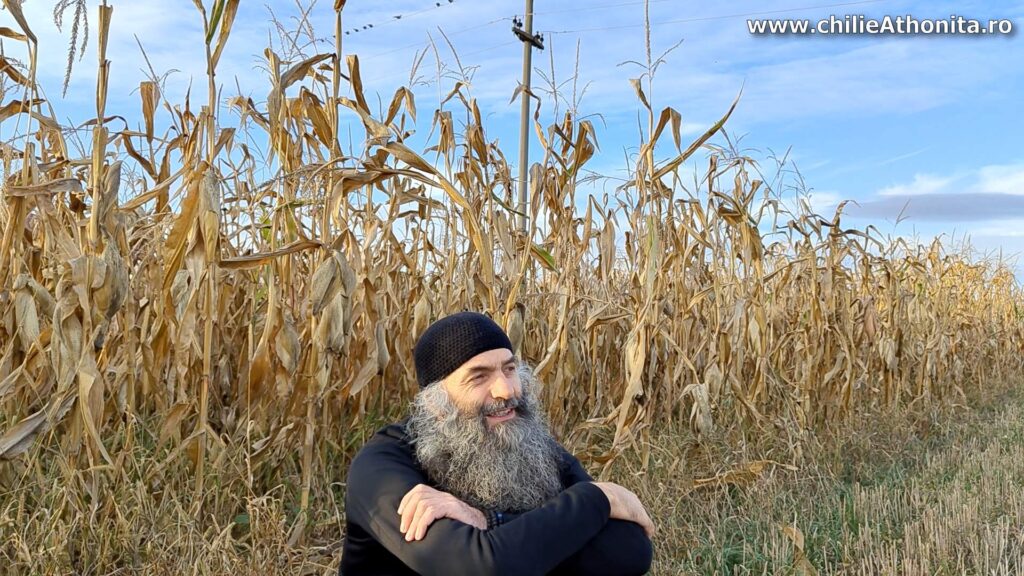
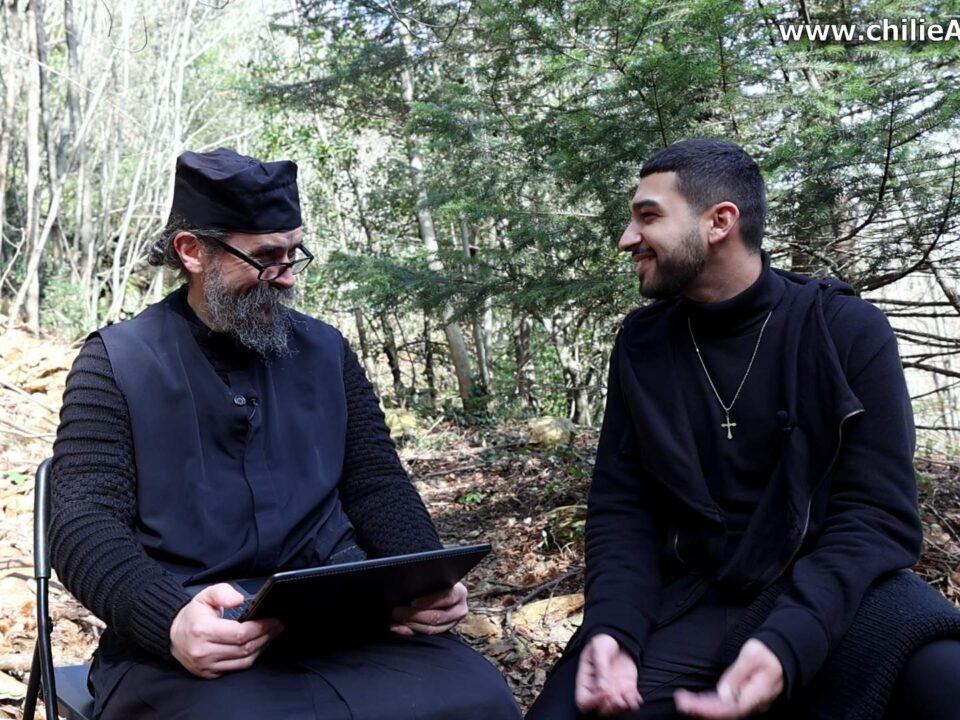
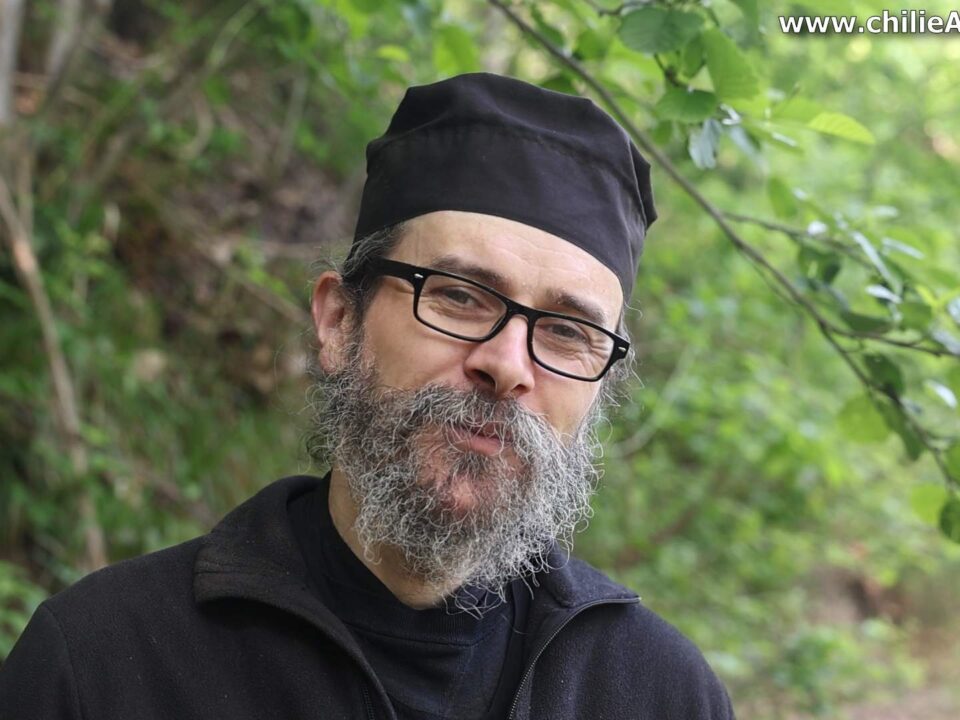
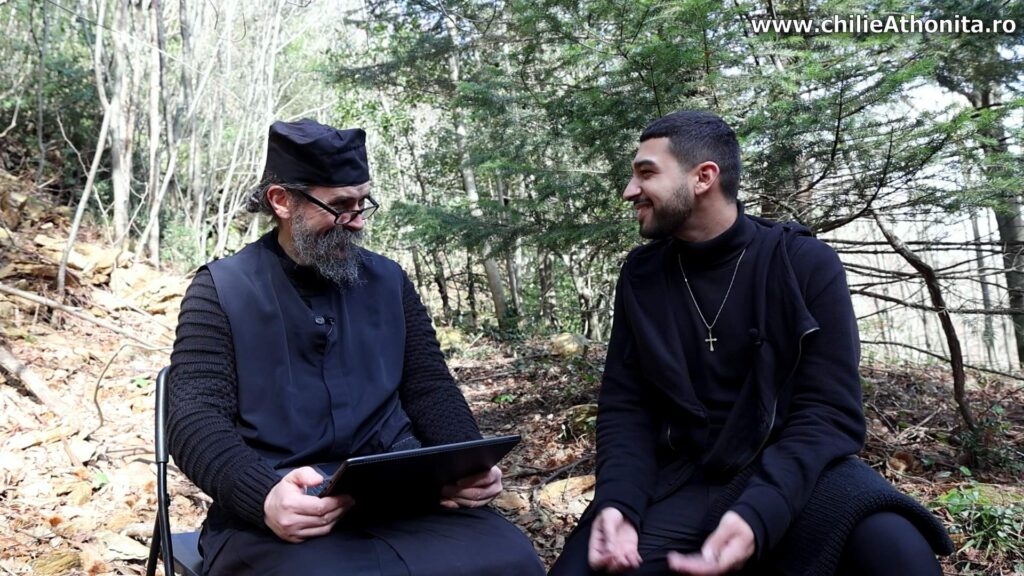
In a warm and humble video, Fr. Pimen Vlad shares with us his impressions from meeting the faithful who were present at the conference in Iași. In connection with this, Father also speaks to us about St. Paraskeva.
Enjoy!
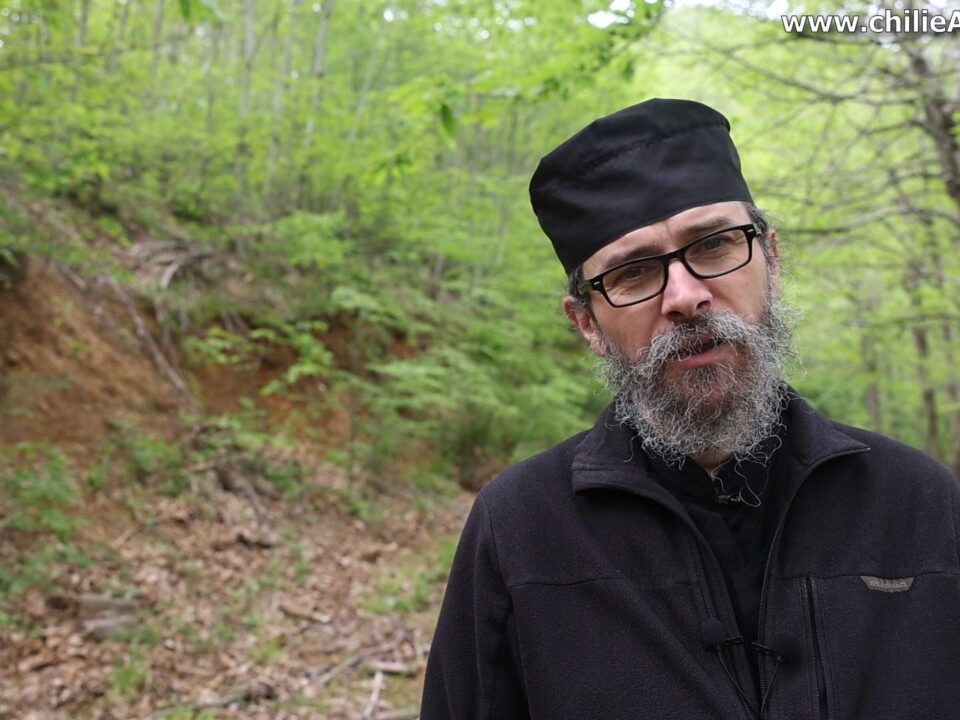
Look, my dear ones, we meet again, somewhere in the fields of Bukovina, here, near my family home. What can I tell you? There are just a few days left until the feast day of Saint Paraskeva. That is why now I will refer more to the Iași area, to St. Paraskeva.
As you know, a few days ago I was in Iași for a spiritual talk on faith, hope, and love. I know some of you were there because, roughly speaking, there were over 2,000 people. I could say a few words about this: it was an event held under the patronage of Saint Paraskeva and, above all, the Mother of God, because Fr. Radu Brânză from Pro Vita Iași had been asking me for a long time to come for an evening, and in the end I agreed—as they say—compelled by his pleas.
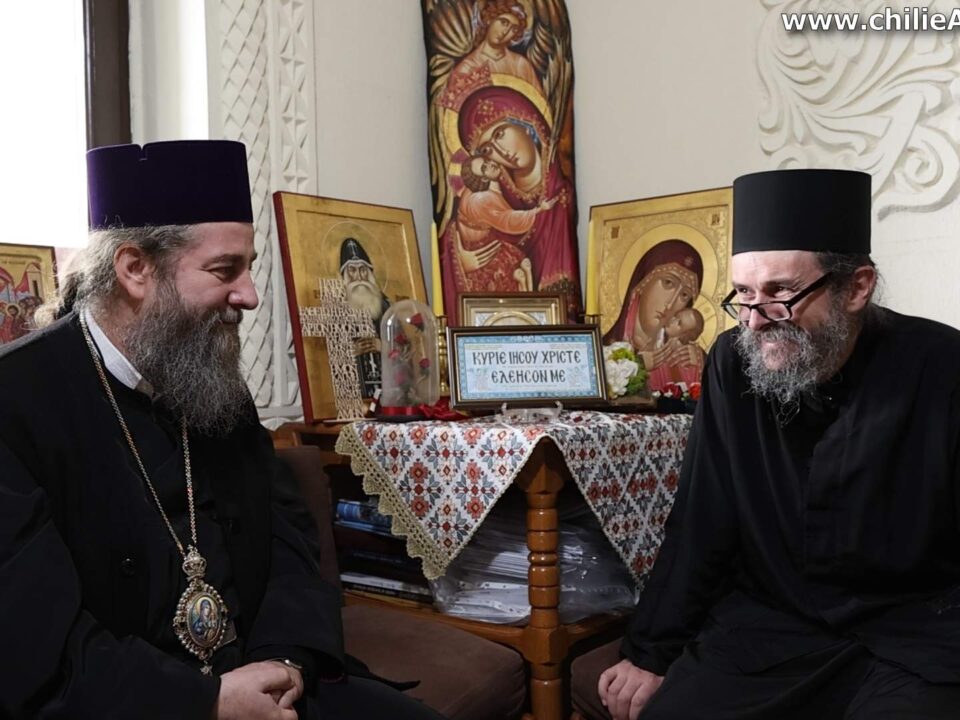
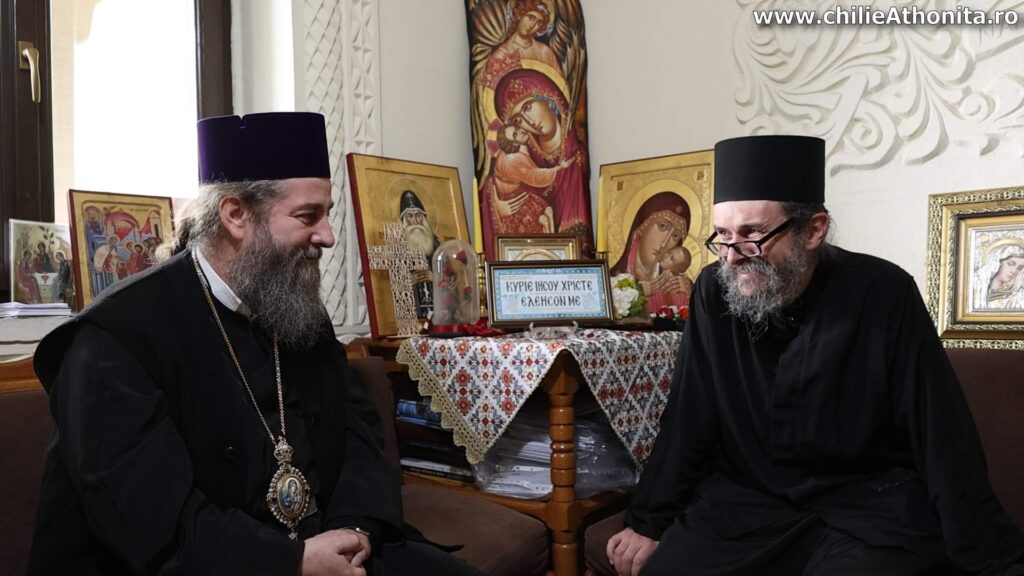
And that very morning—since I had gone to Iași the night before— at 9:00 a.m., I went together with Fr. Radu Brânză to see His Eminence our Metropolitan, Teofan, who is the shepherd of Moldavia, as they say, of Iași, and I was very happy to meet with His Eminence. We talked for about half an hour. He’s a good metropolitan—quiet and calm—a true shepherd, and he really encouraged me. I told him that, up until now, I’ve spoken at a church or so, but I’ve never taken part in something like this, I had refused until now, and I said, I know a lot of people will come, I asked him to pray for me and to bless me. He was very encouraging: “Don’t worry, just go there, say as much as you can, take a break, have a glass of water, and then get back to it. Do what you can, however you can—God and the Mother of God will take care of the rest!”
And the Mother of God truly did take care—those of you who were there, or who watched it live on Doxologia and Pro Vita—the Mother of God helped us; there were good, faithful people there, full of love. And just before we started, that gentleman from Iași—who had driven me there so I wouldn’t have to drive and could be at ease—said, “Father, I have a lot on my plate; I won’t be able to stay. I’ll stay for a few minutes at the beginning, and then I’ll have to leave because I have a lot of things I need to attend to.” He’s got his own business to run. And just a few minutes before it started, I stepped into a room to quiet down a bit, and I saw that a priest from Iași had also come—he’s a neighbor from my village; we grew up together and went to school together from first through eighth grade. He went his way and ended up in Iași, while I went my way. I saw him through a window of the hall coming slowly, as he has quite serious health problems. He saw me too, came over and said: “I knew you would be here, so I came just to greet you, to exchange a few words, and I’ll stay two or three minutes tonight, just at the beginning, and then I’ll leave. Due to my health problems, I won’t be able to last long.”
The Mother of God arranged it, and we started talking. It was a little over three hours; in front was that man I told you about, and behind him was this father. For three hours, neither of them moved from their seats. The one with his business told me afterwards that he quickly sent two or three messages and canceled all his meetings, and the father, with all his illnesses, didn’t move from his chair for three hours. And I was actually looking at the people—the Agora Hall was packed, with 1,000 seats, plus everyone else who could fit standing. In other words, several hundred people were standing until the hall was full. I understood afterwards that there were also people in two other halls and outside, where big monitors had been set up.
What I meant to say was: here I saw the love of the people, who didn’t move for three hours—they all stood there— and there was complete silence. I was actually thinking that there are still good Christians with a lot of love. I was thinking that I saw their love—how they came there after hearing I was coming to speak— and I actually thought I didn’t deserve people’s love, because they have so much love, and I am a simple man, with my own things… my weaknesses, my battles, trying to stay the course I set out on—to be close to God, to the Mother of God—but like any human being, we are tossed by the waves of the world, of the sea, of everything that arises around us, in front of us, and we all struggle. And sometimes I even wonder what I will answer before God, when I have received so much love from people, so much respect, so much… and I have done nothing. But I hope that maybe, for their prayers, the Benevolent God will have mercy on me too, and the Mother of God will take care of me as she knows best.
I wanted to bring these things up again because, even though at first I was reluctant to come and speak at this spiritual gathering, I later realized that it was the will of the Mother of God. It had to be done; people needed it. They came with love and are truly thirsty. It means they long for God, they long for salvation, they care about their souls, and God will never forsake them. Yes, I had a wonderful time there in Iași.
What else can I tell you? There is a lot to say about this, and since I’ve already told you a few things about it, I’ll also tell you a few things about St. Paraskeva. That very morning, after I had visited His Eminence—and since I’m on the subject, I’d like to thank His Eminence Teofan for the blessing he gave us and for his love. He had so much love and kindness, he blessed me, and since I’m speaking now and everyone can hear me, I want him to know that we will always welcome him with open arms, whenever he wants to come to Athos, we gladly await him there.
That very morning, after I had gone to receive the blessing, as I was leaving, there were several TV crews there, including the team from Radio Trinitas, with whom I spoke for quarter of an hour; then there was Doxologia, and also a local TV station. I think Antena 1 was there too. I talked to each of them for about ten minutes. That’s why I said it was a full day; from morning until noon, I was followed by them, so to speak, while I was over at the Metropolis, and in the end I agreed and told each of them a few things about Saint Paraskeva. Because, since Saint Paraskeva has performed many miracles in my life and there in Athos, at our little church, I said that since these people had come for me to speak to them, I agreed to spend a few minutes with each of them talking about Iași and the Venerable Paraskeva, who is, in fact, the patron saint of Iași and a helper to all who ask for her help.
And I’m going to tell you a few things about Saint Paraskeva, even though everyone already knows them. I have spoken about this other times, but just so we can see the level of holiness a young girl has reached. We all know that she was born in Epivata, near Constantinople, during the time of the Byzantine Empire, around the 11th century, and that she came from a fairly well-to-do, pious family.
She even had a brother, who later became a bishop and led a holy life— Euthymius of Tarnovo. It is said that from a young age, whenever Saint Paraskeva went to church and saw the poor, just as she had heard in the Gospel, she would take off her own clothes, give them to the poor person, and put on the poor person’s clothes herself. She was scolded by her parents, but she tried to live according to the Gospel as best she could according to her age. That’s how she grew up, close to the Church.
At a young age, she gave away to the poor everything she had received from her parents and went to a monastery. As a young girl she went and stayed for a while at a monastery, and then spent some time in Constantinople at a monastery dedicated to the Mother of God; then, after a few years, she went to Jerusalem. She spent several years there as well; she went right into the desert, somewhere along the banks of the Jordan River, in that area, in various places, and she labored there.
And by the time she reached the age of 25—so just think, if by that age she had already labored ascetically in both Constantinople and Jerusalem, that means she left home as a child, perhaps around the age of 15, and began this spiritual life, a harsher one, so to speak, involving great labor—and at 25 years old, she received a revelation from God, who told her to return to her homeland. And she started back, first returning to Constantinople, lived there again for a period, in a monastery, and after some time, slowly, she withdrew to her homeland, to Epivata, but as a stranger, without telling anyone who she was. And she lived there in asceticism— often she may not have had anything to eat—in prayer, she lived there for a while, until God allowed it—still young as she was, she lived maybe about a year in her homeland—and then it was time for her to depart to the Lord, like a stranger. And she was buried there somewhere, like a stranger, with no one knowing her life and holiness.
Not long after, God ordained that someone should die—a sailor, let’s say—who was thrown into the sea, and at some point the sea washed his body ashore, which was already beginning to smell bad, and someone said: “Take this Christian and bury him—who knows how he died!” And they dug at the spot where the ground was easier to dig, where St. Paraskeva had been buried at some point. They came upon her body, whole, incorrupt, and fragrant. But those who dug did not realize this, they placed him there beside her and threw earth on top.
That night, in a dream, this man, whose name was George, saw an empress on a throne, surrounded by angels, and an angel said to him: “George, how could you have placed that foul-smelling body next to the body of St. Paraskeva, whom God has glorified and who is highly honored in heaven?!” And he saw Saint Paraskeva on a throne, as she was there in glory, and the next day, when that man woke up, he told others about the dream he had. And another woman from there had the same dream; they met, and then several people went, of course with the local priest, to dig there. And then they carried the saint’s body out with great reverence, accompanied by lit candles and incense, and brought it into the church, whereupon the saint began to work miracles. Her relics were kept there for a while. They say a church was built there in her honor, and little by little, her relics were moved from place to place, since it was a time of war.
They had been in Bulgaria for quite some time, in the Bulgarian region, sort of being moved from one place to another. Later, as the Turks kept coming and conquering, they were constantly moved from one place to another, and eventually ended up in Constantinople. It was the period following the fall of Constantinople, and the patriarch had given some gifts to the Turks at that time, and the relics ended up at the Patriarchate, in Constantinople. And of course, they were in many churches there in Constantinople until around 1600, when Vasile Lupu, the Voivode of Moldavia, was our ruler. It is said that he was very merciful and helped many people; even on Mount Athos, there are many monasteries that received gifts from him. I actually know that there’s a painting of him and his family at Xenofont, because he built the old church there. And being a devout man, when he saw the state the Patriarchate of Constantinople was in—heavily in debt to the Turks, to the point that the sultan had threatened to destroy the Patriarchate if they did not pay their debts…
And so, the patriarch at the time sought help from Vasile Lupu, and he, the ruler of Moldavia, paid off all the Patriarchate’s debts. It is said that the debt amounted to about 300 bags of gold coins. And after that, the patriarch wanted to reward him in some way, since both they and the Patriarchate had been saved, and [he asked Vasile Lupu]: “What shall we give you?” And Vasile Lupu said, “What can you give me? Something holy.” “We have the relics of St. Paraskeva.” “We want them!”
And so, the patriarch gifted the relics of Saint Paraskeva to Vasile Lupu. However, Turkey had a law stating that a body that had been dead for more than three days could not be moved from one place to another. So, Vasile Lupu, who was on somewhat good terms with the sultan, spoke with him and said, “How much do you want to change this law so that I can bring the relics back to [my] country?” “I want…” and he said something around 300 bags of gold coins. And so, he gave him what he had asked for; the law was changed by the sultan through which the Holy Relics were then able to be moved, even escorted by a Turkish retinue, which ensured their safety until they reached our borders. There, Vasile Lupu was waiting for them and welcomed them with great honor, together with the metropolitans of the time, with an assembly of priests, with the faithful; and the relics of Saint Paraskeva were brought to Iași.
And after that, of course, here in Iași as well—apart from the fact that they were received with honor and worked many miracles—they had to go through certain trials over time. In fact, the church there once burned down—and just think, the reliquary and everything else burned too— but the relics remained intact and untouched, so they weren’t affected by the fire at all. The Venerable [Paraskeva] showed her holiness, how God has glorified her. Later, the relics were also kept at the Church of the Three Holy Hierarchs and in other places, and now they are in the great Cathedral.
If you want more details, read about her life. I have tried to sketch out her life in a few words. We have her there, in the cathedral, and every time I’ve been, I’ve seen that the line of people waiting to venerate the Saint never ends. I don’t think there is anywhere else that has as many people coming as there come to St. Paraskeva. At least, not here in our country. You can see the honor people give her, and more than that, you can see how the Saint helps them, because otherwise people wouldn’t come if they didn’t receive help. Yes, dear ones, those of you who haven’t been, go to the Venerable Paraskeva with love and venerate her, ask for her help, thank her, for she is a great Saint and it is a great honor for our country to have her.
I went too—since I was in Iași these days. As I told you, I stayed for two days in Iași, I went a few times to the Saint, I venerated her with love, because even at our place [in Athos], if you look in the older videos, I told how she worked miracles for us as well. We have an icon of her standing on the wall, and she has a faint smile on her face—as if she’s lovingly right there with us, helping us.
That’s pretty much what I wanted to say about Iași, about St. Paraskeva, and about the moments I experienced in Iași—beautiful moments. May St. Paraskeva help us all and watch over us. And I’ll say it again: go to her whenever you have the chance, because she helps us so much! I have been speaking mainly about the Saint, but of course the Mother of God is always our Lady, and we must never forget her, for she is our link to Heaven; she is the Queen of all. Yet it is also good to have the Saints as intercessors, for they too are friends of God.
May Benevolent God and the Mother of God help us and watch over us always! Amen.
May the Lord help us!
Online commemoration lists and donations
May the Lord help us!
Online Commemoration Lists and Donations
May the Lord help us!
If you have a bank card and wish to send commemoration lists and donations online using your card, and/or to support our philanthropic activity, including this site, please fill out the form below to make a small donation. The form is secure – we use Stripe for payment processing – a world leader in this field. We do not collect your personal data.
If you do not have a card, or do not wish to use it, visit the webpage for Online Donations and Commemoration Lists.
We will pray for your loved ones! (Please do not include inessential details like wishes, degree of kinship, introductions etc. JUST the name!)
Especially for recurring commemoration lists, we ask that you please keep them to under 20 names long. If you include a member of the family, we add “and for their families.”