

The Joy of Fasting – Father Pimen Vlad
9 March 2023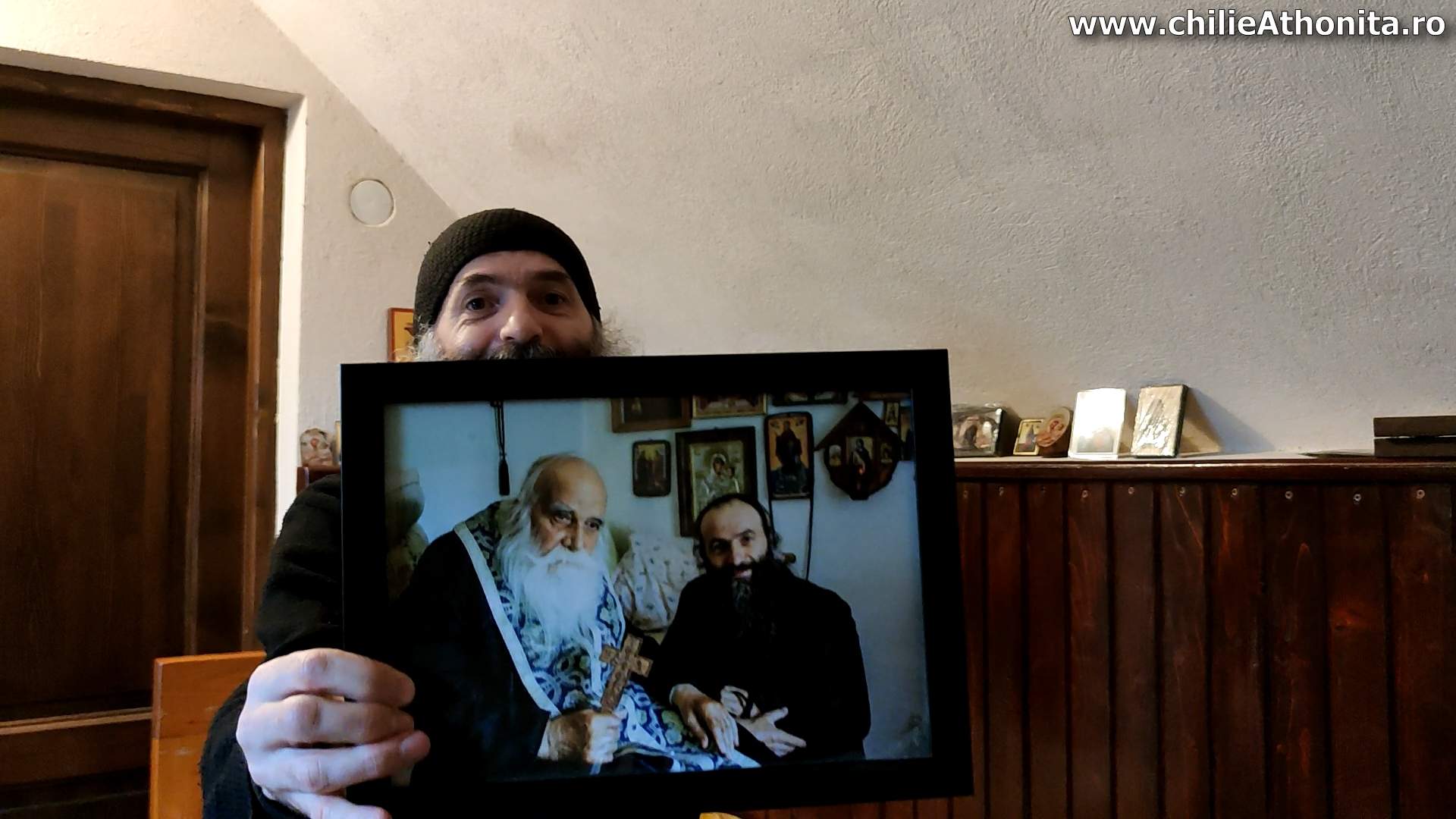
My Spiritual Father, Father Iulian – Father Pimen Vlad
13 March 2023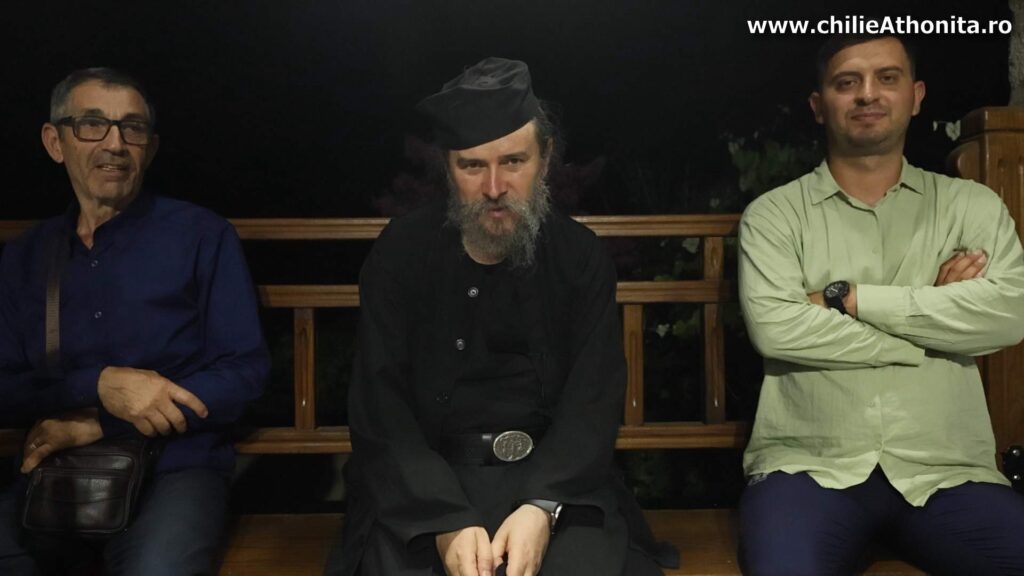
Listen to an extraordinary discussion sparked by two young Orthodox Christians from Italy, who raise questions about important issues for their age — such as what monasticism is, the relationship with other denominations and religious movements (Catholicism, yoga, etc.), as well as with music, sensitivity, and computer games.
It is an important and surprisingly helpful discussion.
Enjoy!
Fr. Theologos: Glory to the Father, and to the Son, and to the Holy Spirit, now and forever and unto the ages of ages. Amen. Through the prayers of our Holy Fathers, O Lord Jesus Christ, Son of God, have mercy on us! Amen.
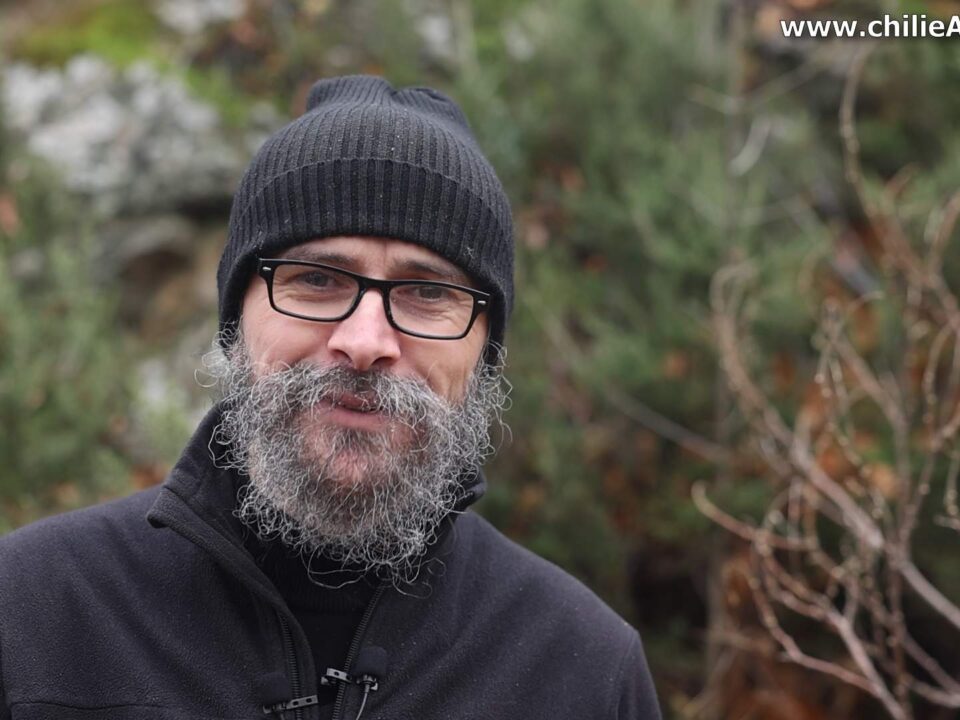
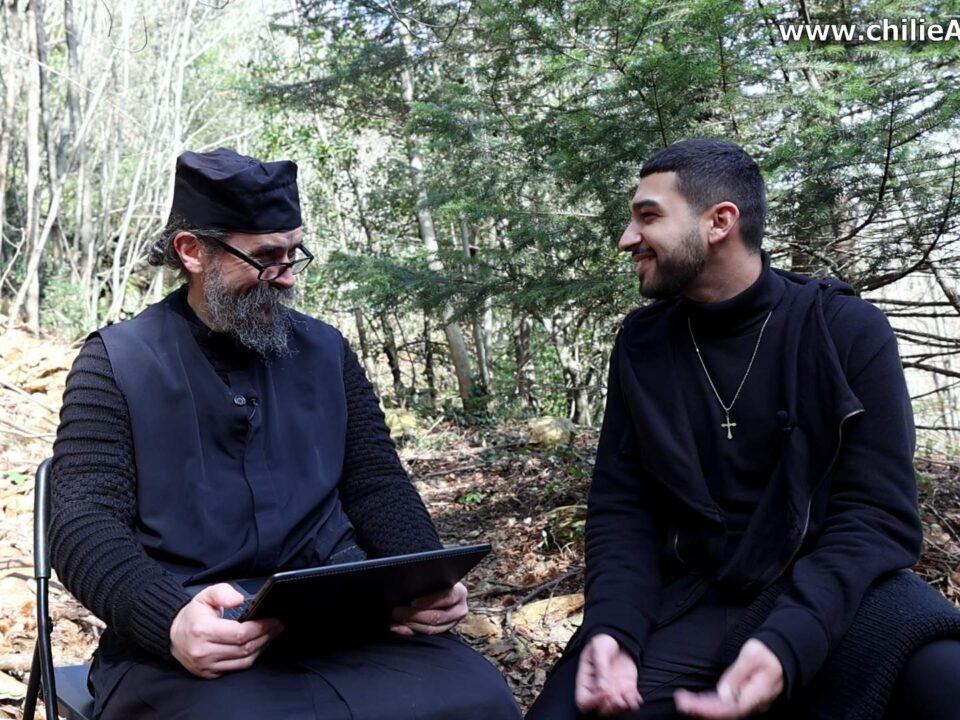
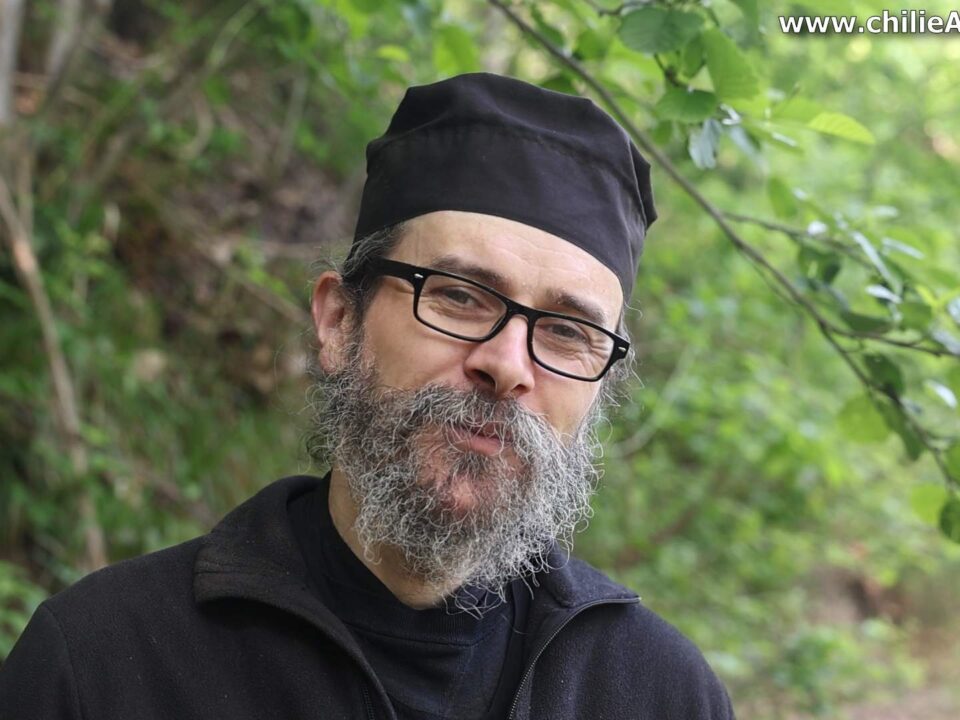
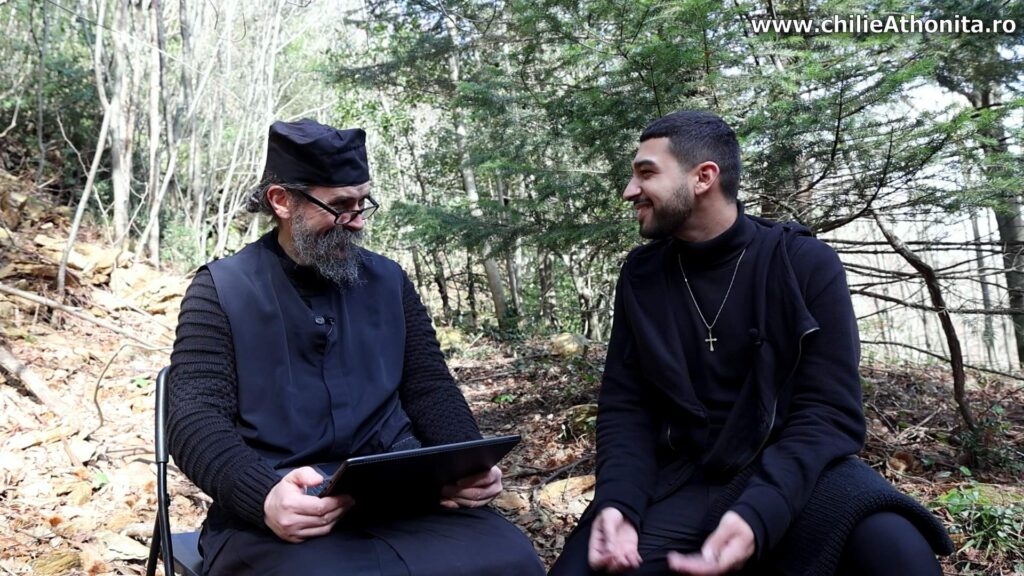
Dear ones, we are here with two extraordinary boys from Italy – George and Florin, who came especially from Italy. It was quite an adventure until they got here, including their stay. I love them very much, and they love me very much too, and since they asked me some questions last night or when was it – the night before last, some very interesting questions, and they said they have more questions on this topic – we decided to make a small podcast, to ask the questions in public.
They will repeat the questions from the previous evening – three of them which are, well, the most interesting for you, and then they will also ask the other questions which I don’t know – I just saw them a little while ago, I didn’t prepare, it’s not something planned, so to speak.
Before I give them the floor; you should know, brethren, that things in Italy are very different. We love the people there very much. We actually have many visitors on the site from Italy, and because of that, we really wanted to make this podcast with two young men from Italy. The questions!
George Micu: I wanted to ask you, father, what does “schemamonk” mean and what are the stages of monastic life?
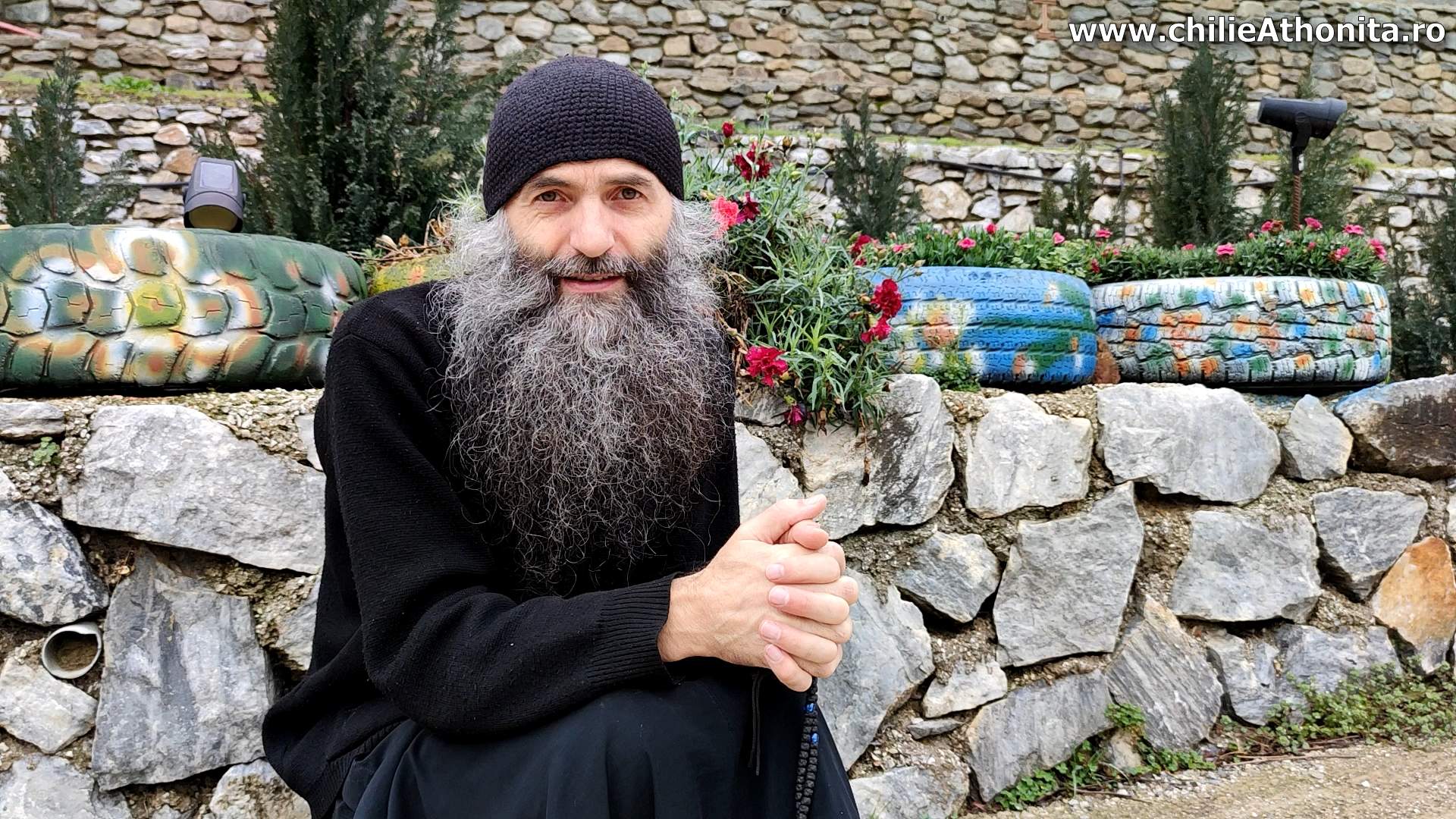
Fr. Theologos: Yes, that was the question that led me to make the podcast. The day before yesterday we discussed this topic, and that’s why I brought the schema here, behind me. I’ll show you a little bit. In short, the moment someone enters the monastery, they enter, no strings attached whatsoever. They simply come as you do, as worshippers, and say: “I want to stay or I am thinking about it.” And then, they are co-opted by the abbot, by the community, in the monastery’s program of obediences, of the cell, of the skete, and so on – depending on the monastic settlement we are talking about.
And then, they test themselves and the community, the community tests them, and they see if they fit in there. This is very important. And being in this obedience program of the monastery, they see if they are really suitable for monastic life or not. It is a trial period that lasts, I don’t know, it depends – a year, a year and a half. And during this period, what is very important is the fact that the young person can leave without even saying goodbye, meaning they are not bound by spiritual law.
Of course, yes, it would be good to say, yes, I am leaving because I don’t fit in, or the monastic life is not suitable for me, or I don’t fit in here, meaning in that particular place. But what is very clear is that they don’t have to leave then. To succeed in monastic life, one must always have a very good relationship with their spiritual leader, who is usually the abbot or the spiritual father, well, it depends. Sometimes it is very difficult with the abbot because the abbot has a large community and things are complex, but one must obey the spiritual father, their spiritual leader, and above all, one must practice obedience. Because very often, young people enter monastic life thinking they will have fun and they feel a sense of joy in the monastery because the fathers are loving, and they forget to practice obedience.
The key to success in monastic life is obedience – this is very important. And this is what young people today forget, especially those who have one or more natural gifts, meaning a certain intelligence – which is very dangerous – or a beautiful voice, or physical strength, and then they rely on these natural gifts they have, saying: if I am a very good chanter or I am smart I thus help the monastery or help the cell, and so on. No. Things are always resolved through obedience.
Through obedience, a person progresses spiritually and through obedience, one becomes holy. Of course, those charismatic gifts are useful, certainly, but without obedience, the atmosphere becomes very toxic, and that person excludes themselves not only from the monastery but also from wherever they work. If you even get employed somewhere or at home with your parents, if you do not practice obedience, God forbid! It is very important.
Let’s not go too deeply now into the dynamics of monastic life. After a year, a year and a half, well, it varies a little here, but generally, you receive this soft skufia that I have on my head now – this is the first thing you receive. Or some don’t give this skufia anymore, but this is the first sign. He is still wearing pants, and this is the first sign. And this is given either in the courtyard or sometimes the abbot gives it to you – here, take it.
The second sign, which is already official, is the moment when they become a rassaphore, meaning they are given the cassock. Unfortunately, I don’t have the cassock here, but it’s the one you see me with at church. And beyond the cassock, they’re given this exorasson which is called “zostikon” in Greek and the vest (kontorasson). So I won’t take it off now, but under this hoodie I have a vest. And a firm skufia hat – you’ve seen me with it. These are the novices, the brothers. I’m speaking now in the Athonite language. In Romania, it’s a bit different.
George Micu: And is a special day chosen or?
Fr. Theologos: Not necessarily, but usually yes, and this already usually happens in a festive setting. That is, the whole community gathers, they chant the troparion or kontakion of the respective monastery or place, the abbot blesses, and these items are given to them one by one, they dress with them in front of the community, and the whole community is chanting. And although there is no service, this is already being formalized and they should already discuss it with the abbot, meaning they should say: father abbot, I have thoughts of leaving, and then if the abbot says not to leave yet, it would be good for them to obey the abbot. Of course, at the Cell, this is done in a much more humble way, the way this usually happens.
And after that, if the brother remains in this obedience and continues the spiritual life, at some point he becomes a monk, I don’t even know how to call him. In Romania, as I said, there’s a different terminology. That is, he is given the klobuk, meaning that kalimavkion, and his name is changed – this is very important, that his name is changed. That is, a service is performed for him. This service lasts 10 minutes and several can be tonsured during the Liturgy or it can also be done at Vespers and so on. And his name is changed and then he becomes a monk and then it is not good to leave without obedience, he can no longer leave without it, without blessing, he must have the abbot’s blessing to leave. Because if he acts on his own, then the devil will strike him hard. It is not good. Of course, he is tonsured. I said his name is changed and he is tonsured and becomes a monk. Monachos.
George Micu: And why are they tonsured?
Fr. Theologos: Why are they tonsured? This dates back to the time of the Old Testament. It is about the vow of the Nazirites, that is, people devoted to God, dedicated to God, and the person receives grace through this. And I have seen, I have experienced it firsthand, I’ve seen that a lot of grace is received, the moment someone becomes a monk, and I have seen others, those who were and are younger than me, how they received a lot of grace the moment they were tonsured a monk. “Monachos” is what it is called in Greek. Simple monk. In Romania, I understand that they are still called brother or I don’t know how it is. Rassaphore, I don’t know how it is. In any case, after a period of X years, three years, sometimes even more because today young people are much more… I don’t want to… I really love you very much, but young people are more ignorant about monasticism, more immature, lacking maturity… after a period that the abbot decides, one becomes a schemamonk. Tonsured into great schema.
You should know that there is also the little schema, but the difference between the great schema and the little schema is only a difference in size due to some vicissitudes of history, mainly with the Russians, we won’t go into too many details. A distinction of grace was made between the little schema and the great schema, meaning two services were performed: the little schema is given somewhere at the beginning and the great schema at the end, on the deathbed – which does not exist in the patristic tradition, in the tradition of the Church.
Saint Pachomius, as we see in his life, received only one schema, a single sign – schema in Greek means “sign.” “Μέγα αγγελικό σχήμα” means “the great angelic sign.” And the angel said “in this sign,” that is, in this uniform, so to speak, in this way you will be saved because the angel was dressed in a single sign, in a single schema. So, there are no differences of grace, only of size, and this is also seen in the schema service in which many things are clearly said that are addressed to a young man, not to someone on their deathbed. “Meizones agones” means “greater struggles await you from now on.” If a person is on their deathbed, what greater struggles could await them?
Or one of the monastic vows, which is also the hardest to fulfill, is the vow of obedience. You are asked: “Do you obey the abbot and the community until death?” And you say: “Yes.” Well, if the person is on their deathbed, what obedience can they still perform? Even if they wanted to, the poor person can no longer perform any kind of obedience. All these things are addressed to a young man who has life ahead of him. Why the great schema and the small schema, then? Because the monk must always have the schema, the sign with him.
If I were to continuously wear this apron – this is the schema, I don’t know if it’s visible on the camera or on this one. This is the schema. If I were to wear this all the time, it would be very difficult, especially if I go to the garden, it’s very difficult. So that’s why we have the little schema which appeared for practical reasons. It is a square that the monk always carries with him. I won’t take it out now because it is under the clothes.
You should know that the schema, the sign, actually contains all the monastic garments and because of that the monk comes somewhat naked, so to speak, at the great schema service – I mean, in a t-shirt, a white undershirt, whatever it’s called, socks, pants, and he is dressed by the abbot, by the spiritual leader, by the avva, actually, he is dressed with all the garments among which the most visible, but not the only one, is this one which in Greek is called “soudario” (σουδάριο). Of course, due to the fact that it is the most visible, it is also called „schema”, meaning it takes its name from the whole ensemble. On this, several inscriptions are written, now I won’t go into too many details about what it says. “Ο Βασιλεύς της δόξης” – The God of glory. Jesus Christ NIKA – Jesus Christ the Conqueror. “Υστερον ρημασι δακρυων ροέσ” – Beyond words, rivers of tears. “Φως Χριστού Φαίνει Πάσι” – The light of Christ shines upon all. “Θεού Θέα Θείον Θαύμα” – The vision of God, the sight of God is a divine miracle. “Τούτο το Σχήμα Δαίμονες Φρίττουσι” – Before this schema demons tremble. And so on.
There are many inscriptions that help with spirituality, they are related to spirituality. These writings are generally the same, they vary slightly, but all are connected to spiritual life, to Christ. From a spiritual point of view, as I said, it is the perfection of the grace of the Holy Spirit that someone can have. This is my wedding ring. And the monk feels this, they feels that they are marrying God and from then on has a very beautiful life. Of course, they must pay attention to their spiritual life.
And this is called “polistavrion” in Greek. I understand that it is called “polistavro” in Romanian, I don’t know, but I believe that is what it’s called, which is another quite visible sign. It is called “polistavrion” because it is made up of many crosses. “Stavros” in Greek means “cross” and “poli” means “many.” As you can see, there are many crosses on it, stylized in a way that represents the many temptations, the many troubles that the monk will have in his life, but God sweetens them through His presence within the monk.
This is a brief explanation and, as I said, it is the perfection of the grace of the Holy Spirit that one can feel. It slightly increases the canon of the schemamonk compared to the canon of the monk, but it is a canon that anyone can bear. There’s no such thing, brethren, as five words a day or thousands of prostrations and so on because these, as I said, appeared among the Russians and are not part of the tradition. It is primarily about the effort that each one can make in getting on well, under the spiritual guidance of his abba, his spiritual father. This is the schemamonk.
Another thing that must be mentioned here – all my respect for priests, priesthood, deacons – for a monk this is to be avoided, meaning the knowledgeable monk, who has the grace of God, well, it’s not my case, they do not wish to be a priest, they do not wish to be a deacon unless the Church calls them. Why is that? Because it is an additional burden that diminishes him, hinders his experience of the grace of the Holy Spirit that he has inside and that he gains through his personal asceticism in which – let us not forget this – the central place is obedience. This is very briefly… I don’t know if I have answered…
Florin Popa: I have another question: what are the differences between Catholicism and Orthodoxy? Many friends ask me what the difference is between my religion and theirs.
Fr. Theologos: Yes, that’s right, sure, very well, Florin. Indeed, what is the difference? I have said it in other clips and now I will repeat, and it’s very important – Orthodoxy is not a religion. Orthodoxy is the correct medical science that aims to heal the soul. Orthodoxy is a branch of medicine. We must keep this very well in mind and live by this – that it is a medical branch. Yes. Medicine. And if it is a branch of medicine, it means it deals with healing human illnesses, which are first and foremost illnesses of the soul.
Just as the soul is more important than the human body, even though the body also has its importance, spiritual diseases are so much more important than physical diseases. Specifically, sins. Sin is seen as a spiritual disease – that is sin. Orthodoxy deals with healing spiritual illnesses and the attainment of happiness, that is, breaking free from suffering. That is Orthodoxy.
You see, the moment we have a physical illness, we feel that we are not well, that we are suffering, that something is wrong. And the moment we escape this torment, meaning we get well, we reach the normal physical state. Similarly, Orthodoxy from a spiritual point of view frees you from these spiritual illnesses, meaning, from sin, and you reach a state called “peace,” which is the natural state of the human soul.
Catholicism – I won’t go into theological details now about where this comes from – sees things from a legalistic perspective, legally, a power relationship, not a therapeutic one. That is, it sees sin as an offense against God, as the insolence of one rebelling against God, and God punishes them because they dared to break His commandments. This vision is so prevalent that even we are influenced by it, that “God punished you.” God does not punish anyone!
Speaking of illnesses, the moment I go outside into the cold, God doesn’t punish me, it’s my problem, do you understand? And that’s why, in Orthodoxy, the emphasis is not on punishing the one who has gone out, because he punished himself enough by going out into the cold, you know, but always on how we bring them back inside, how we heal them, what medicine we give them to make them well. Whereas in Catholicism, “You went outside? You get beat up,” you know? And this is seen throughout their theology and their entire approach, and because of this, you see this fear arise, that is, this terror towards God – like “I’m afraid God will punish me,” and so on.
Whereas in Orthodoxy, the fear of God – I don’t have a better term – is that fear of losing God’s love, it’s that fear of not hurting your mother, not hurting your father who loves you. That’s what it is. Whereas in Catholicism, it is just this vertical relationship – “Hey, I caught you, to the corner, I hit you.” You know? And because of this, in Catholicism, you see there is a lot of force – look at the Crusades in the past – and Catholicism generates atheism, that is, it generates the flight from Catholicism, leading people to protest due to this pressure. That’s how the Protestants appeared, new protests took place, neo-Protestants appeared, and to this day, people flee from Catholicism. Very sad, of course, I say this with much compassion towards them. That’s it… I don’t know if I answered…
Florin Popa: Yes, yes, you answered well.
George Micu: And regarding the Catholics – the Crusades stole many holy relics.
Fr. Theologos: Yes, of course.
George Micu: Can the saints allow this?
Fr. Theologos: How can the saints allow this? Why can they allow this? Because, you see, in Constantinople, there were great sins at that time, you know. So, I said that Orthodoxy is a medical science. Yes, good, I say I am Orthodox, okay, but you have to take this medicine, you have to take this treatment. In Constantinople, at that time, there were fierce fights for power. There was a dynasty called the Angelos dynasty – it doesn’t matter, anyway, there were some brothers with their father and so on, and they were fighting each other for power. And of course, one of them, because he did not want to give up the throne, went to the Catholics and said: come with your weapons to defend us.
Do you understand? This is not an Orthodox gesture. First of all, you humble yourself and say, “Well, if God has arranged it this way, so be it.” You don’t go to foreigners and you promise them… He promised them, I don’t know… 100,000 florins or ducats, a huge amount at that time. They came, helped him, put him on the throne, and said, “Give us the money.” And he said, “I won’t give you the money.” So, they started plundering all of Constantinople; it was a disaster, and all historians, including the Greeks, say that the fall of Byzantium, the fall of Constantinople, actually began in 1204.
So, through the enormous plunder that the Crusaders carried out. It was a great tragedy. But the causes were with the Greeks, the so-called Orthodox, because they were the ones that called them. And after that, in 1453, there was actually the de facto fall. So, the saints allowed this, and God allowed this, respecting people’s freedom of choice. Do you understand?
And in the case of Mehmed, that is, the conquest of Constantinople, there was the famous miracle that Mohamed had come – I have said this before – when the sultan was with his troops around the city, at one point he saw in the sky a huge sign, a large hand was there, and the sultan said: “Stop! No one advances, let’s see what this sign means! Look for a man who is said to be a man of God!” Because the sultan was Muslim, but he feared God. At that time, people feared God; they were not as sinful as they are today. They sent scouts and found a man named Gennady, whom everyone said was a man of God, and they brought him to the sultan, who asked: “What is this sign about?” And then Gennady said: “The Lord says this: ‘if I find five righteous men in Constantinople, you will not be able to take the city!’” And then the sultan said: “Aha, attack!” And they attacked and took the city. Do you understand? So, the causes are always spiritual.
Now, you might find in books that there was a betrayal with open doors, or whatever, that is human, but always know that the causes of great events in history and today are spiritual causes, causes of sin. There is always sin behind it, great sin. Because of this, always be careful not to sin! Let us all be careful not to sin! That is the problem. We are Orthodox, yes, we have this correct medical science, but we also have to apply it, meaning we have to take the pill, even if it’s bitter. What did you want to ask?
Florin Popa: I wanted to ask, what is the Holy Spirit?
Fr. Theologos: What is the Holy Spirit? Oh, well, okay, okay. Let me say since… I didn’t put him here intentionally, Saint Dumitru Stăniloae was here, let me say what he says and actually, all the Holy Fathers and Saint John Damascene. In the following way: God is One, yes, okay. But if He is One, He is alone, solitary, right? So, God cannot be just one Person and beyond that, man can give life, right? God must also be able to give life. So, there must be two Persons in God and this second Person must be One whom God created to give life in an ineffable way. So, we have God the Father and God the Son. Yes? Two. But when we have this relationship – Me-You – it is a limited relationship because there is only Me and You and I cannot offer a gift to You and I cannot tell anyone, “Look how beautiful my Son is!” And to be able to offer a gift to You, a gift to the Son, a gift worthy of the Son, what greater gift can be worthy of the Son than another God?! And to whom can I truly say, “Look how beautiful my Son is,” except to another God?! Yes? So, we have three Persons.
There is the Father, the Son, and the Holy Spirit. The Father, as the principle of unity in the Holy Trinity, begets the Son and from the Father the Holy Spirit proceeds. We do not know what the begetting of the Son means because God simply is; we don’t know what the procession of the Holy Spirit means. We only know that the Two come from One and that They are different, meaning They differ in origin. Because all Three are God, all are equal; the only thing that distinguishes Them is the source of origin. The Father is both unbegotten and unproceeded, meaning uncaused. The Son is begotten, and the Holy Spirit proceeds in a way that we do not know.
These Three are so united with Each Other, so interpenetrated, that They form One single God. Like three sounds or three rays of light that form a single light, or three sounds from three instruments that actually form one sound. Do you understand? There is no image from our world that can show what God is like, but so this is and the mind of a saint feels that this is so.
Speaking of Catholics, they say that the Holy Spirit proceeds from the Son as well. This is a big problem. Why? Because if the Holy Spirit comes from Two, a tearing appears in the Holy Trinity, and the Holy Spirit is inferior, right? And the moment the Holy Spirit is inferior, then you can no longer have a relationship of love, a relationship of equality among the Three, and a vertical relationship appears instead. The Holy Spirit is lower, and the Others are higher. And from here arises this whole legalistic character of power relations, of vertical relations, which we talked about, in Catholicism. This is the famous problem with the Filioque.
George Micu: And how can we acquire this Holy Spirit?
Fr. Theologos: You call Him! You call Him and He obeys, and then the Spirit comes and sits on you like that. Yes, like a broody hen.
George Micu: And if it is the Spirit, is there also the Trinity together?
Fr. Theologos: Yes, yes, obviously. I said there are Three in One, like the moment when you want to listen to the sound of a single instrument, but the three instruments make one sound and you hear the sounds from all the instruments. You know, do you understand what I mean? Or they are three suns that all emit the same light. So, the moment you want the light from a single sun, the light from the other two also comes. But indeed, sometimes we say that the Father or the Son or the Holy Spirit is working. Why is that? Because a certain sound or a certain light is more prominent, like on a monitor where you say it is made up of red, green, and blue. But at one point you see that there’s a more reddish light, a more bluish or greener light because one of the three is more prominent. But there are always all Three. Do you understand?
George Micu: Yes.
Fr. Theologos: Good, we do theology. Ask another question!
Florin Popa: How are angels born?
Fr. Theologos: I don’t know. They are created by God, there are many, there are billions. “Miria” in Greek means “tens of thousands,” “tens of thousands of tens of thousands,” that’s how it’s translated in the Bible. In any case, angels are types of minds, that’s what you need to remember. They are types of minds. When we say nine angelic orders, we mean nine types, nine species of minds. The human mind is another species, another type, but it is related to these angels and because of that, it comes into contact with angels.
Sadly, due to the fact that the human mind is fallen, it is rather influenced by fallen angels, by devils. Diavolos is not a description of a species. Some say it might be. However, it’s clear that “diavolos” (devil) is the description of a behavior. “Διαβάλλω” (Diavallo) in Greek means to sow discord, to take a dig at someone, to accuse someone, to slander someone. Iago from Shakespeare – if you have read Othello, I don’t know if you’ve read it – Iago is the one who continuously stirs trouble, continuously speaks ill of the other. That is the devil, you know? He divides, continuously. And you will recognize the thoughts that come from the devil because he always brings hatred, tearing apart, division. “Oh, did you see that one, look what he’s doing? Look.” It’s the evil one, you know? That is the devil, that’s his character. That is the Greek word. The Hebrew word is “satanas” – “the adversary.” “Satan” means “the adversary” in Hebrew, “the one who opposes.” Do you understand?
So, these words rather describe a behavior. And actually, “anghelos” – from which the Romanian word for “angel” comes – “anghelos,” “angel” in English, in Greek means “messenger,” because the angel type of mind brings news, thought, information, “the one who gives information.” “God sent His angel” – this is how it is translated in Romanian. In fact, “God sent His messenger,” meaning a mind to inform you about something. Do you understand? That’s what it is with angels.
George Micu: Can you also tell us about the Russian cross and what it is?
Fr. Theologos: Yes, sure, absolutely. The Russian cross. There is this cross that we see like this, and it is the cross that has an oblique or a horizontal plaque at its base. This is not the Russian cross, even though it is commonly known as such. It is a cross that Saint Constantine the Great made and which was actually at Vatopedi, where I also spent a long time.
So, one of the three crosses that Saint Constantine the Great made following the miracle he saw before the battle with Maxentius. And this cross has this thing at the bottom – this oblique plaque, this oblique bar, which the Russians took under very questionable circumstances, to say the least, and this cross ended up in Russia for a long time. And I found this in documents, the Russians were very proud of the cross of Saint Constantine the Great, and of course, they placed this cross, actually a copy of this cross, on all their churches and so on, along with the Christianization of the Russians, which happened much later, and that’s where the term “Russian cross” comes from. But it is not a Russian cross; it is the cross of Saint Constantine the Great, a Byzantine cross, so to speak.
Now, where does that little plaque at the bottom come from? Which is sometimes slanted and other times horizontal. It refers to the same thing. It refers to the fact that the Savior on the Cross, when He was crucified, was serene. To show that the Savior on the Cross was composed, meaning He accepted the crucifixion willingly. That is, He was not forced; He was not crucified because He couldn’t defend Himself. He could have defended Himself because He was God, He was almighty, but He was composed on the Cross, meaning He accepted the Cross willingly.
In reality, the Savior was on the Cross somehow like this, meaning He was, how should I say… hanging on the Cross, right? Because He had nails in the palms of His hands and He was hanging, He had some nails, one or two, I don’t know, I think just one nail, in the foot. And so, He was hanging in a very uncomfortable position. But to show that the Savior was hanging on the Cross, meaning in a position like that, that’s why the iconographers—those who painted icons—placed at His feet a plaque that in fact did not really exist there. But to show this spiritual reality, if you will, that God willingly accepted the Cross. They placed this plaque, and as I said, it also appeared in representations of the Cross as a piece of wood. That’s why it’s placed there. Do you understand?
Sometimes, it appears on the right, other times it appears in a somewhat simplistic, oblique type of perspective. So that’s why that plaque appears there. In any case, there was no such plaque, nor could it support the weight of, I don’t know, tens of kilos, or as much as the Savior would have weighed. Do you understand?
Florin Popa: I was thinking, how can you have zeal?
Fr. Theologos: Right, how can you have zeal? Good question. First of all, through obedience. You must listen to your spiritual leader, be consistent, and not have many worries because if you have many worries, this zeal breaks into many worries. “I have to do this and that.” No! Leave those aside, listen to what your spiritual leader says and be consistent in your spiritual program, especially in prayer! Because this zeal comes from God and so you must pray, saying “Lord, help me!” and the moment you pray, have a consistent program and keep in touch with your spiritual father, with your spiritual leader, then grace enters within you and gives you this zeal, gives you this flame. If it doesn’t come or comes and disappears because you are busy with that, that and that then it fades away. Then the zeal leaves.
That’s why the lack of material worries and the consistency are very important – so that you remember the eternity that awaits you and the beauty of God that you already taste here, on earth. I said that Orthodoxy is a medical science, and this healing of your soul you already see here on earth. That is, you won’t get well the moment you die, but here on earth, you begin to heal and feel that things are working inside. And then, this zeal grows. You progress. It’s true that after three or four years, grace hides and you have to struggle, but until then, if you obey, you gain this zeal and then you have your flame and move forward. But you need obedience, consistency and lack of worries, you need to mortify yourself – not to think about all kinds of things, what happened, or the news and so on. No.
Florin Popa: Obedience.
Fr. Theologos: Obedience, obedience…
George Micu: Just before I came to the Holy Mount Athos, I had spoken with a person who told me – “I don’t go to church.” “Why?” “I don’t feel anything, so I have no zeal.” How can they acquire it?
Fr. Theologos: Well, yes, they must go to church to have zeal! That’s part of faith. Meaning, our fallen mind says no, I don’t feel, I don’t want to, I can’t, and those before us – first of all, our Lord Jesus Christ and the saints – but also your mother, father, and spiritual fathers say: “No! You go, do what I say, have faith in what I say because I have the experience and you will see that over time it will appear!” Why is that? Because we are now mortified, that is, we are blind, and God says, “Take this pill and you will begin to see.” But you need to have a little faith in the one who guides you spiritually.
George Micu: So it’s impossible not to feel anything.
Fr. Theologos: Yes, it is impossible not to feel anything, but sometimes, you must be aware that you can reach a condition where you don’t feel anything, you can reach this condition when the demonic energy is very high in you and this, of course, also comes from our sins, from our past, but sometimes, it is also allowed by God so that you don’t take pride, to see who you are – that you are no good. Right? Other questions!
Florin Popa: What is death?
Fr. Theologos: What is death? Good question. From a spiritual point of view, death is stabilization. Stabilization. From a biological point of view, or I don’t know how to put it, it is the separation of the soul from the body. I mean, I said that man is sick, right? He has existential distortions, illnesses of the soul. And these illnesses, because they have demonic energy in them, cause separation, rupture. Sin is rupture. Well, and this rupture becomes so great that the two major components of man, namely the soul and the body – due to sin which increasingly enters human nature – can no longer withstand being together and at some point, they separate. In turn, the body decomposes into organic compounds, mineral salts which we know from anatomy. The soul continues its life, consciously.
The soul knows very well after death who it is, remembers everything, the phenomenon of forgetting disappears, the phenomenon of aging disappears, the subconscious disappears—all these things—and the soul is tormented by the sins, by the existential illnesses it had and did not confess, did not heal from, and thus still has. It has delighted in the virtues, in the good deeds, in its healing that it had acquired before death.
I said that death is stabilization, why? Because the body disappears and this flexibility disappears. I talk a lot about the flexibility of humility. After death, since you no longer know that you are limited – “Wait a minute, there is also the other one” – and you move at the maximum speed at which the human soul moves, then you say “This is it.” And you get stuck on the direction you’ve taken. If the direction is good, then the person has that flexibility, but of course, they do not change their direction because of joy. But if they are in the wrong, selfish direction, then they become stubborn in that position. Like “I won’t give up, that’s it, I know!”
Sadly, this can be seen in some people who are very stubborn in this life. I mean, you want to convince them of something, I think you have seen cases, I hope you haven’t, but I think you have, you want to convince them of something and no matter how hard you try, you still can’t convince that person. If that person dies in that situation, they remain continuously stubborn on that issue and they are alone. Hell is loneliness.
George Micu: Yes. How can we practice prayer during the service or how should we pray during the service?
Fr. Theologos: Good. Very well, yes. First of all, the service – just a moment, I put my prayer rope here – the service is not – pay close attention! – it is not a cultural event. We are not spectators there. We are worshippers, and not only during the service, but in general, man is a praying being who unites with God, with perfection, because God is perfection, communal perfection. I said that They are Three in One.
So first and foremost, at the service we must pray. The best prayer, the most powerful prayer is “Lord Jesus Christ, have mercy on me!” and this must be done; it’s best to do it with the prayer rope. Why is that? Because it uses the most powerful human sense, which is touch. So be very careful, boys, I hope you don’t know, but regretfully, due to the teachings you are exposed to, I think you do know, one thing is to see a girl and another is to touch her. These are two different things.
So, the most powerful human sense is touch. And so, using our sense of touch, with each bead we say a “Lord Jesus.” “Lord Jesus Christ, have mercy on me!”… And then you will see that the mind gathers very well and prays very well. Because if we don’t pray during the service, you will see that the mind starts to fly off everywhere. This is how we must pray. And the moment you can no longer pray with “Lord Jesus” on the prayer rope, then, from the height of prayer, the mind will fall like into a net, on the words of the troparia, on the icons on the walls, on what is happening at the service, and so on. And after the mind rests, then again, “Lord Jesus Christ, have mercy on me!”… Understood?
George Micu: Yes. Still on this subject, how can we, especially in our worldly concerns, especially when we go to school, maintain this inner peace within ourselves?
Fr. Theologos: Yes. Don’t add fuel to the fire. So, to keep the fire going, don’t add fuel to someone else’s fire. That is, be loving to everyone, but cut off useless relationships – the so-called idle talk. So, if someone asks you something, respond with much love and help, obviously, without burdening yourself with sin. But don’t get involved in circles where time is wasted, in circles where people talk endlessly about this and that, like who is the prime minister of Italy right now, what he should have done, football, and so on. It doesn’t help! And anyway, you cannot change anything. No one can.
I can’t change anything either. Do you understand? So go where it is useful to you, so that you can benefit from it! Do you understand? And if someone says something to you and it is not very important, do not argue with them. Like if someone says… what can I say, I don’t even know what to say… that, I don’t know what you have there, Alfa Romeo, Fiat is not the best car brand, but Ferrari is. Or it’s not Ferrari, but Fiat or it’s not Ferrari, but Lamborghini, because I know a thing or two… So, you will say: “Yes, you know, very well, that’s right.” Don’t argue with them! – “No, it’s not that, I know it’s Lancia,” or whatever else you have there. It’s not worth it! So what if it’s the Ferrari? Let it be the Ferrari, yes, it’s your business.
George Micu: So we should leave them alone.
Fr. Theologos: Leave them alone, yes. Don’t escalate conflicts. If it’s something really important, the issue changes, but 90% of the time it’s not that important, so leave the other person alone, let it be. Always seek unity and peace!
George Micu: And what if someone talks about Orthodoxy?
Fr. Theologos: If someone talks about Orthodoxy, you have to be discerning here – if you feel inside that you can say something, say it! But if you see that it escalates again, say “Yes, dear, leave it, let’s talk about something else!”. Because I see this, and I see people coming to me and asking – even though I am completely unworthy – certain things about Orthodoxy, but they are not really asking me, they want me to validate their position. And I say: “Brother, it’s not like that.” “Oh no, father, I know that such and such is true!” “Brother, it’s not like that.” “No, father…” Okay, leave it, let’s talk about something else. Rather than causing disturbance, it’s better to avoid it, attack by avoiding.
Florin Popa: What is sensitivity?
Fr. Theologos: Sensitivity, yes. I thought you were asking about simplicity. What is sensitivity? Sensitivity comes from the sense. “Sense,” in English. There is physical sensitivity, but you are actually asking about spiritual sensitivity, of the soul, okay. But let’s talk a little about physical sensitivity and from there I will extrapolate to the sensitivity of the soul. Physical sensitivity is when I come with a needle and prick you somewhere and you have the sense there and react to it. That is crude. There is also another kind of physical sensitivity. For example, when you see food, I don’t know, some octopus that is very good – “I’m going to eat that.” Or you see something – you see that, slowly, I am moving towards spirituality, towards the spiritual – you see something and say “Oh dear, me wearing that dress? Unacceptable!” You know? It’s an exaggerated sensitivity.
The same applies to the sensitivity of the soul. That is, the soul has a sensitivity that can also be in the right direction. So, you see a great composer or a poet and they have extraordinary sensitivity – “What that person can compose or what poems that person writes!” The Romanian saints in prisons had extraordinary sensitivity, but in the right direction, which God refined, made them sensitive, gave them a gentle heart, and they wrote phenomenal poems in prison.
For example, Saint Valeriu Gafencu was constantly writing about lilies. In prison, where they beat them and drenched them in blood every day, instead of saying “Boo, scoundrels and pigs,” he wrote poems about lilies or about angel wings, just like Vasile Voiculescu, another great poet, wrote. Or Radu Gyr. He was phenomenal.
George Micu: So, it can be a charismatic gift.
Fr. Theologos: Yes, a charismatic gift! And of course, this can be seen at a lower level in certain composers of music today, whom unfortunately you can count on one hand. On the other hand, there is another sensitivity in the opposite direction. That is, the moment someone says: “Oh no, don’t do this, don’t do that,” and so on. And then again, this Orthodox therapeutic method, this medical science, must intervene and tell them: “Dear human, there is an exaggerated sensitivity here! Don’t think so much about ‘Oh, what will they do to you, oh, how will it be at work,’ and so on!” Trust in God! Direct this sensitivity you have naturally – and usually this happens with women, with ladies – direct it towards God! Write a poem. Listen to music, but good music, brethren, I’m afraid to recommend music. Right now there is some anti-music, Mother of God!
George Micu: Especially among the young people…
Fr. Theologos: It’s terrible, brethren. I love you both, I tell you in front of the camera, I love the boys, but the kind of music you’re exposed to… God forbid!
George Micu: Are we born with charisms or do we acquire them?
Fr. Theologos: Yes, there are gifts you are born with and there are acquired gifts. There are natural charisms, as I was saying: a beautiful voice, Mother of God, when you hear some people sing… Such voices… I won’t give examples now because later some will say that… It’s very important that you asked me this. I would give examples of some people who have phenomenal voices, but I can’t give them as examples of singers. Why? Because they have used their natural gift from God in a negative way. That is, instead of composing something to the glory of God or to uplift people, to make people more spiritual, they use it to…
I know, for example, someone who raises… I can give an example: Lisa Gerrard. This woman has a phenomenal voice, Mother of God, what a voice this woman has. I can give her as an example because indeed she has a certain spirituality in what she sings and maintains a certain spiritualization, even though she, poor thing, is at a cultural level, so we are not talking about holiness here. We understand each other, yes. While others, how can I put it, God forbid, where they go with their voices and their compositional talent, which is evident, but they go… instead of pushing young people towards spirituality, towards the spiritual life, well, at the cultural level, if you wish, they push them in another direction.
These are the natural charisms. As I said: a beautiful voice, a capacity for thinking, physical beauty, physical strength in sports. Or a person, by the way, speaking of the ability to think, clearly there are people in business or politics who have the capacity for thinking, you see that the person is not stupid, but how they use it is a completely different story. Do you understand?
So, one thing is the natural gift and another is how you use it. You will give an account. Acquired charisms are those that God gives while a person advances in the spiritual life: the distinction between good and evil, discernment, they can even reach the point of knowing one’s thoughts, gentleness, all these.
Florin Popa: Many young people in Italy swear, but they do it…
Fr. Theologos: Harshly, terribly…
George Micu: Yes, unfortunately!
Florin Popa: And often, when you hear them, you feel like rushing at them and you don’t know how to…
Fr. Theologos: What should you do? Why? One, because the devil makes them do it – I said that the devil is a type of mind that comes into contact with our mind. So, it’s not their fault, brethren. Well, God judges them, of course, but the moment the devil pushes someone to do this thing, it contains a very strong demonic energy. And then the devil pushes you to do this thing too.
And as I was saying, since we’re talking about music, you see there are certain songs that make you say, “Hey, what’s with this music?” but you also feel like repeating it over and over, and you want to pray but can’t because that music comes to your mind. Well, that is demonic. So, at that moment you say: “Mother of God, help me!” So “Go away Satan, get out of here, I don’t want you!” You have to know that the devil can’t do anything; the devil can only tempt, offer you, that is, make you an offer: “Do this, take it from here, bite it!” If you bit it, you bit it. Do you understand? You must always say at that moment: “No, I don’t want this!” Don’t indulge, don’t nibble at it, don’t investigate that thing. Cut it off and move on, shift your mind elsewhere – “What’s with that light bulb up there?” “Who is there?” – I shifted my mind elsewhere. Do you understand?
So as soon as the thought comes, you shift your mind elsewhere. This is how you fight. And after that, “Lord Jesus Christ, have mercy on me!” With prayer, you get rid of it, it goes away from you. And if you see it persists, confession is necessary, because confession is the concrete act through which I renounce and unburden myself of this. “Father, please forgive me for cursing or for having this thought in my mind!” Blasphemy or whatever it may be. Especially in the case of blasphemy, it is not from you, it is from the devil, so do not be terrified about this. “Father, I have blasphemous thoughts.” And the priest says: “Don’t pay attention to them!” and you won’t pay attention, and you will see that they leave you, they disappear.
George Micu: Since we are talking about music, can you tell us about byzantine music? And can a person pray by singing?
Fr. Theologos: Yes. First of all, you should know that psaltic music is not music to listen to. Other music, secular music, is music to listen to, and because of that we have great hits, great composers, great singers, and so on. Psaltic music is a tool, an instrument to help you pray well. It is a form of prayer on notes so that it provokes a pleasant spiritual state, so that you say: “Glory to God!” That is what psaltic music is for, do you understand? And because of that, in the case of psaltic music, we don’t have… of course, there are choirs that sing beautifully or even byzantine music singers who sing beautifully, but it doesn’t compare to the other kind of music where you can hold concerts and so on. There are also concerts, but yes, okay… You hear psaltic music at church, and because of that, you see that all the pillars of byzantine music are saints and they received this from God. Saint Roman the Melodist, Saint John of Damascus, Saint John Koukouzeles. They are all saints. Saint Cosmas the Melodist. Do you understand?
Florin Popa: We have one more question, yes. Let’s talk about games.
Fr. Theologos: Oh, yes! We will make a separate post about that.
Florin Popa: Games nowadays are cruel and many are addicted.
Fr. Theologos: That’s true…
Florin Popa: And when I was little, I wouldn’t go to church and I wouldn’t say my evening prayers so I could play…
Fr. Theologos: It is a very powerful form of drug, and those who make the games know this and design the games to keep you addicted there, to keep you a slave there, they are much more powerful than apps. So, at one point I was saying that TikTok is the most powerful weapon on this earth, and it is, but the future in terms of destructive character belongs to games. Because there is a lot of violence, very attractive, why? Because you are an integral part of the game and you see that in the game you are not given the chance to do a good deed, almsgiving, and so on, but all the sins are put there, you know very well… All the sins, and you feel that immense pleasure of sin in the game without having even the slightest pain.
That is, in the moment when, how can I put it, in everyday life you go and steal something – which is a very big sin – still you have a certain “Hey, don’t get caught, don’t…” Yes, but that doesn’t mean you should steal, but in the game… you know very well that there are stealing games – GTA. Brethren, God forbid, don’t get involved in these, where you steal and not only are you afraid of the police catching you, but you get points for it, you advance in the game. For those who don’t know, please forgive me, on a side note, the game is called Grand Theft Auto – the great car theft. Ladies, who are watching and so on, don’t let your children play this game, may the Good and Holy God protect us! I know a man who fought with his son because of GTA, God forbid!
Go on! So, I want to say, forgive me, that it is destructive and the person is taught, the child, the young person is taught to do this because they receive a reward and at some point they no longer know how to behave with others except in this way from the game. Do you understand? And they no longer know how to interact with others except in the way they have seen in the game.
Florin Popa: And the adrenaline…
Fr. Theologos: Yes, your adrenaline rises and you are continuously excited about this and the reward centers in your brain are very strongly activated and you are set on this theme and the big problem is that the virtual reality in the game is so attractive, you confuse it with the actual reality and not only that – a child shot his parents over this, believing it was game over and that the parents would come back to life.
Not only do you confuse the game with the reality, Florin, but you see reality as duller, meaning less interesting than what happens in the game. That is, in the game you see something much more brilliant and in real reality you see that as boring. And then you continuously want to be in the game because there the adrenaline is at its maximum, while in reality you see your mother, your parents who raise you and you end up saying: “Who is that?” Terrible! This is what happens.
And so, children and people become addicted, and I know grown-ups who are addicted to games because they have this adrenaline rush and are addicted to adrenaline, they want games continuously and they don’t care – they don’t even wash their clothes, nor do they interact with their wives, their children, and so on.
Florin Popa: I have heard that Catholics want their religion to change, to become more “for young people.”
Fr. Theologos: To adapt, to be more pleasing to young people…
Florin Popa: Yes.
Fr. Theologos: Yes, okay…
Florin Popa: I also saw an icon with Spider-Man – they made it for children.
Fr. Theologos: Really?
Florin Popa: Yes, they put Spider-Man on the icon for the children, so that…
Fr. Theologos: Spider-Man at the Catholics…
Florin Popa: Not only at the Catholics, I think also at the Orthodox.
Fr. Theologos: At the Orthodox too?
Florin Popa: Yes.
Fr. Theologos: Good God forbid! Let’s be clear: we must speak the language of the youth without destroying or causing even the slightest harm to the therapeutic character. I said that Orthodoxy is therapeutic, it is healing, a recipe for healing the person. So, I have to describe this recipe, to describe these pills for the soul in today’s language. As you can see, we talk about games and so on, but without defiling or destroying this recipe for healing the person. I mean, clearly, I will talk about Spider-Man, but I will not put him on an icon, because Spider-Man is not for icons.
So, there are two things: we talk about Spider-Man and all these superheroes and say yes, okay, it is a distortion of man’s need for a savior, of man’s need for salvation, for resurrection, but it is a distortion that does not heal man because these are not gods, but products of the human mind and they are also products of the human mind based on brutality, on fists. Whereas the Savior comes and says: “through gentleness, through love.” And on top of that, the games/characters are also about cults and magic and all that.
George Micu: Can we talk about the Ascension – how the Lord ascended and in what way?
Fr. Theologos: We do not know how exactly, but we know that the Lord ascended to heaven, surpassing the space-time continuum, surpassing matter. So, at the moment you have matter – as we do now – we are bound by a force that is a property of matter, called gravity. So, if I jump up, I fall back down. The Savior conquered this, so this is what resurrection means, this is crucial in the case of the Savior’s Resurrection: that He conquered death, matter and also space and time, because space and time are connected.
George Micu: And can an ordinary person… do this?
Fr. Theologos: A saint. A saint can, but with the grace of God, with the energy of God they can do this and this is seen in miracles. Saint so-and-so appears, the Mother of God appears. Why? Because they have conquered matter, they have conquered the space-time continuum. This is the result of Orthodoxy – holiness. That is, the overcoming of death. We talked about medication – Orthodoxy as medicine. What is the healing of man? The overcoming of death and thus the overcoming of the space-time continuum and thus the overcoming of gravity, matter, and all these things. Do you understand?
George Micu: So heaven… Where is heaven?
Fr. Theologos: Heaven is everywhere. Paradise is in this entire universe of 93 billion light years. This is paradise. That means a person can go in a second from here to the Andromeda galaxy or the X nebula or to I don’t know what pulsar or somewhere else. They disappear here and appear there. This is surpassing the space-time continuum. We accept that surpassing… it’s much easier to accept surpassing the space-time continuum, that you disappear from here and appear 500 meters away or appear in Karyes or Ouranoupoli or Rome. Yes, but it’s not only that, because God is Almighty. So you disappear from here and appear I don’t know how many millions of light years away. This awaits us, this is what God offers us after death, brethren. God does not offer us after death an armchair to sit in a meadow like that, or to go to Saint Paul and not have to spend I don’t know how many hours to get there, like you did.
Florin Popa: What do you think about yoga?
Fr. Theologos: First of all, yoga is not gymnastics. It appears as gymnastics, but it goes as far as demonization and I even recommend you read on the chilieathonita.ro website about Klaus Kenneth who talks extensively about yoga and says that it is not gymnastics, because all the asanas, all the exercises in yoga, are actually worships to some deities, meaning to some demons who are in Asia and the moment someone is initiated they see this thing, that is, they are told this openly.
At the beginning, to lure them, they tell them it is just some gymnastics – stay like this, stay like that, stay in this lotus position, to calm yourself. The danger is that indeed these exercises do calm you, the person calms down, because they stretch their muscles to say the least. But from there further, all this demonic charge comes, this spiritual charge which is very, very dangerous. Do you understand? That’s how it is. So, if you want to calm down, you’d better do some normal exercise, without…
George Micu: Abba Ghelasie from Frăsinei spoke about the “yoga” of Christianity, what changes?
Fr. Theologos: Yes, I don’t know, I haven’t read much of Father Ghelasie’s works, to be very honest, but in general this topic is controversial because it comes very close to yoga and makes some parallels between the yoga there and Christianity. Certain parallels could be made but it is very dangerous! Why? Because it comes with the whole baggage. That’s the big problem. Do you understand? I think I’ve talked enough.
George Micu: We kiss your hand, father. Thank you!
Fr. Theologos: May God help you! May Good God bless you! I would like to discuss more with you, but we have already gone on for a long time and I think people won’t endure more. May the Good God help us! Through the prayers of our Holy Fathers, O Lord Jesus Christ, Son of God, have mercy on us! Amen.
Online commemoration lists and donations
May the Lord help us!
Online Commemoration Lists and Donations
May the Lord help us!
If you have a bank card and wish to send commemoration lists and donations online using your card, and/or to support our philanthropic activity, including this site, please fill out the form below to make a small donation. The form is secure – we use Stripe for payment processing – a world leader in this field. We do not collect your personal data.
If you do not have a card, or do not wish to use it, visit the webpage for Online Donations and Commemoration Lists.
We will pray for your loved ones! (Please do not include inessential details like wishes, degree of kinship, introductions etc. JUST the name!)
Especially for recurring commemoration lists, we ask that you please keep them to under 20 names long. If you include a member of the family, we add “and for their families.”