

Great Fathers From the Monastery of St. Paul – Father Pimen
11 May 2023
Saint Nektarios, Life, Miracles, Romanians – Fr. Pimen
18 May 2023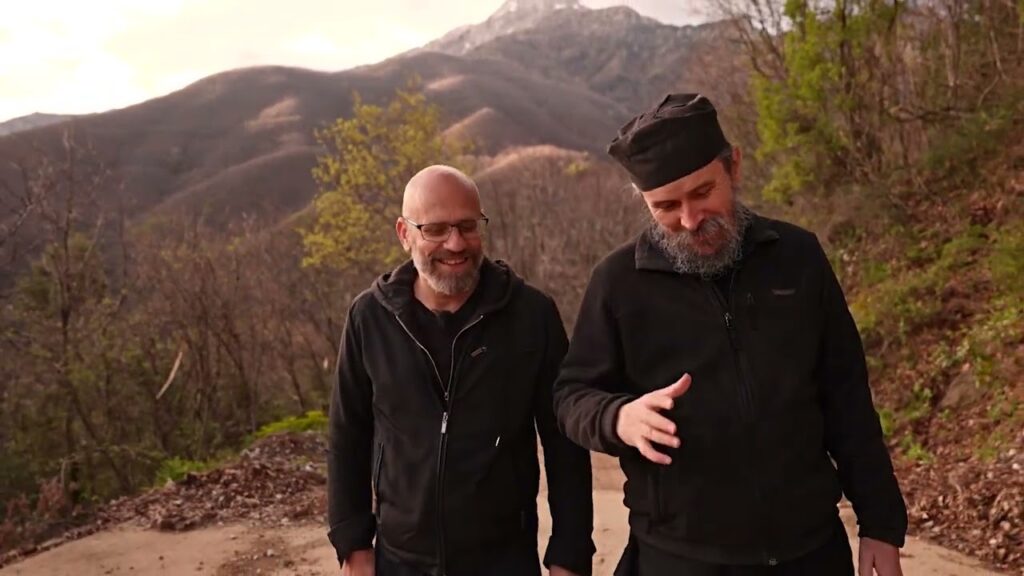
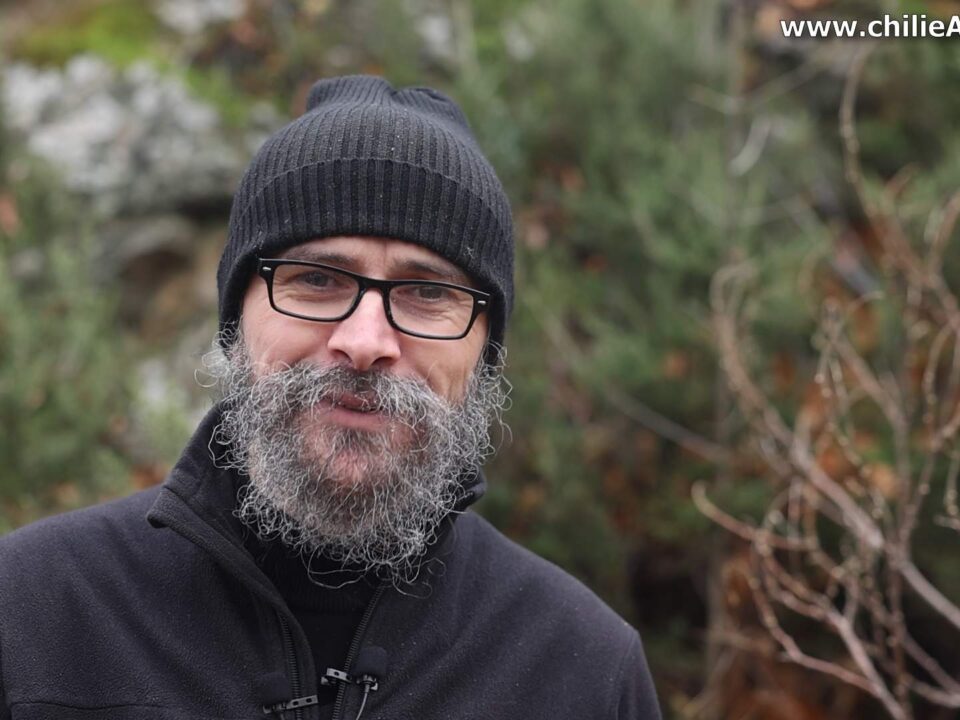
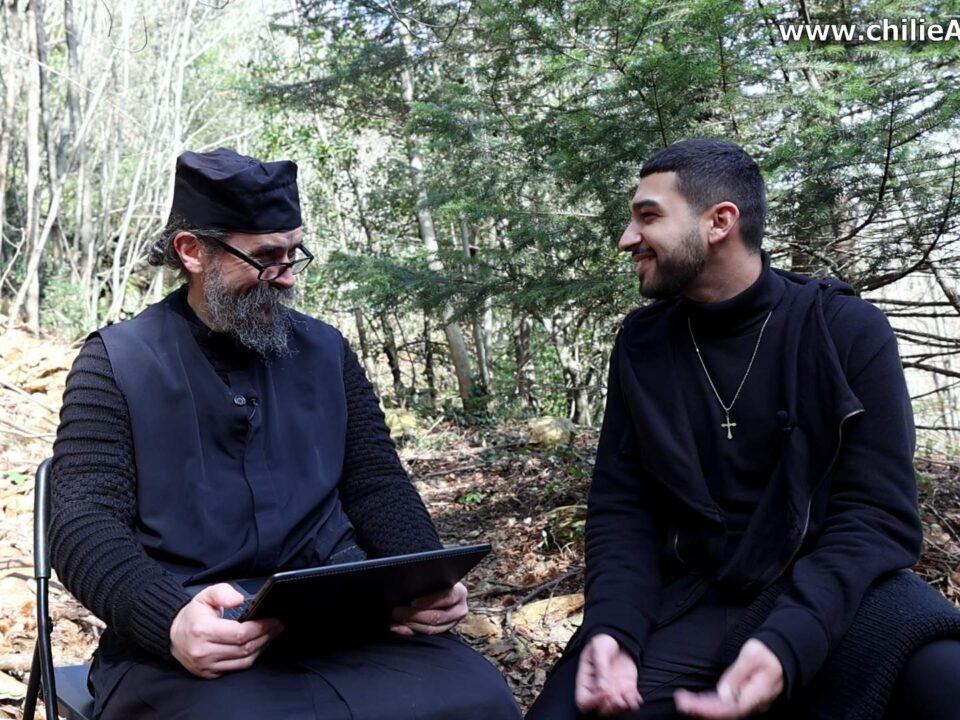
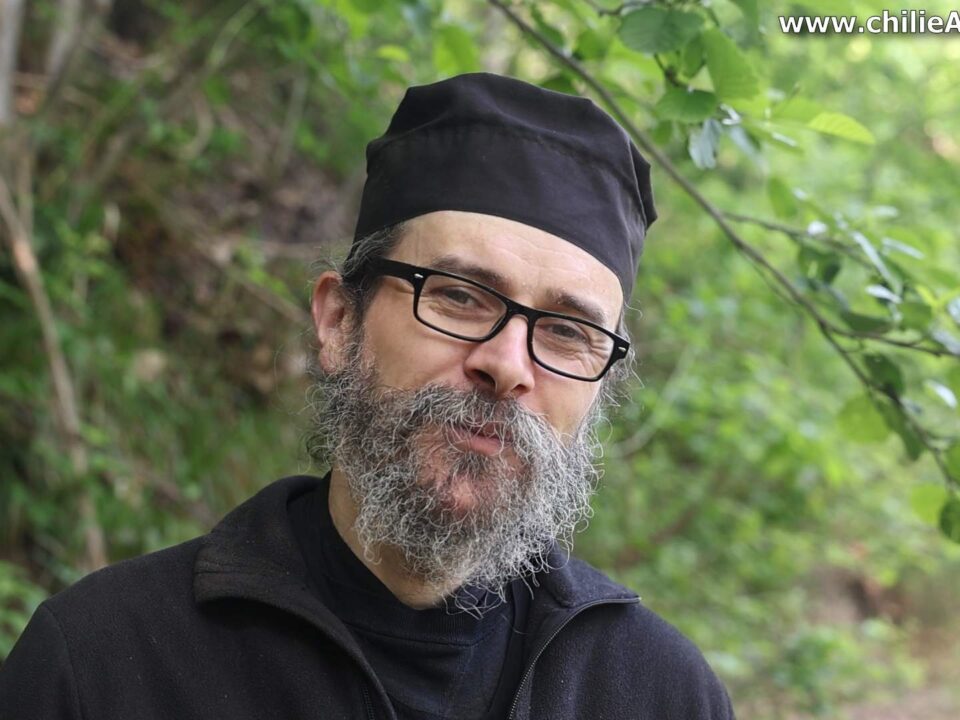
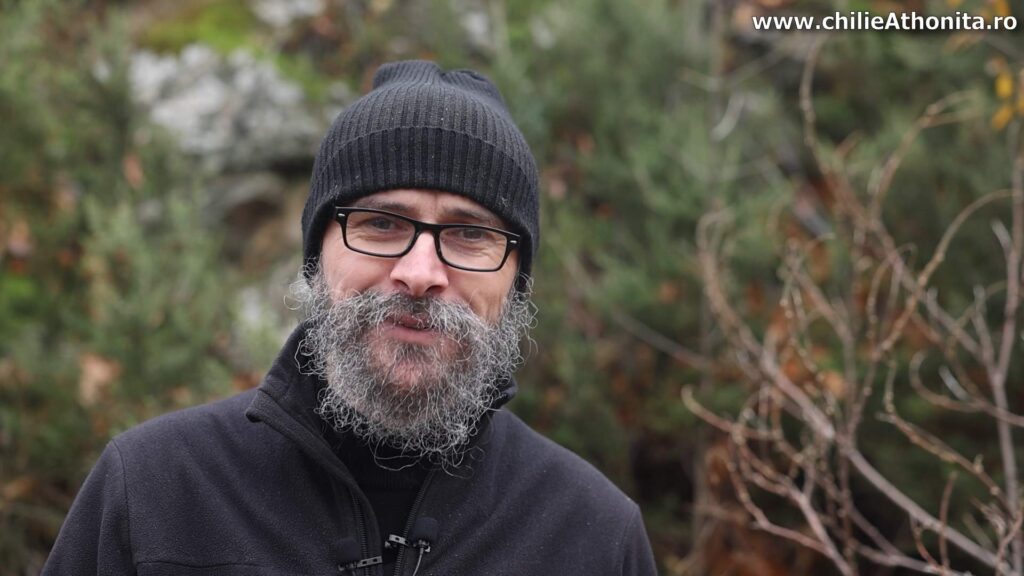
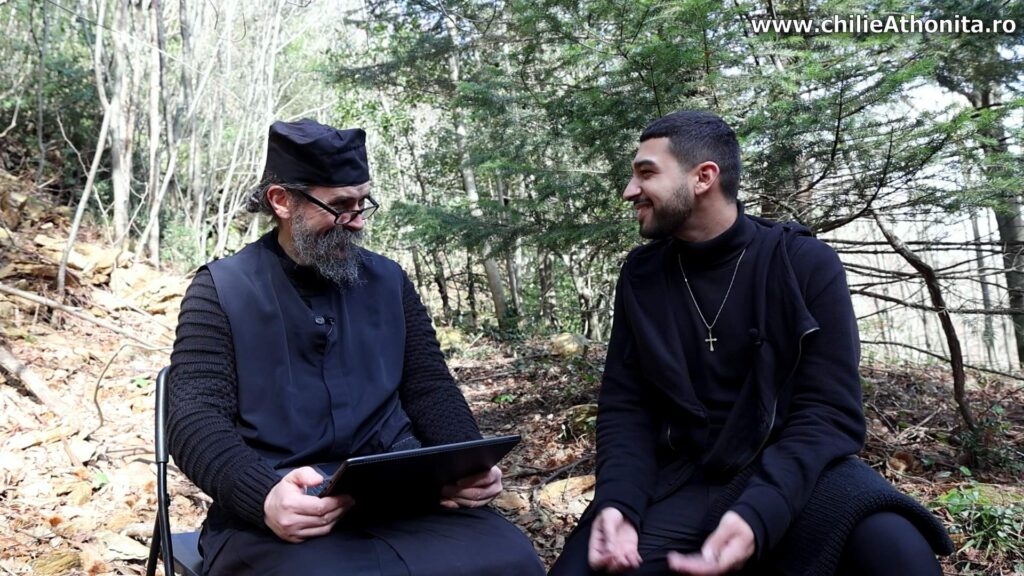
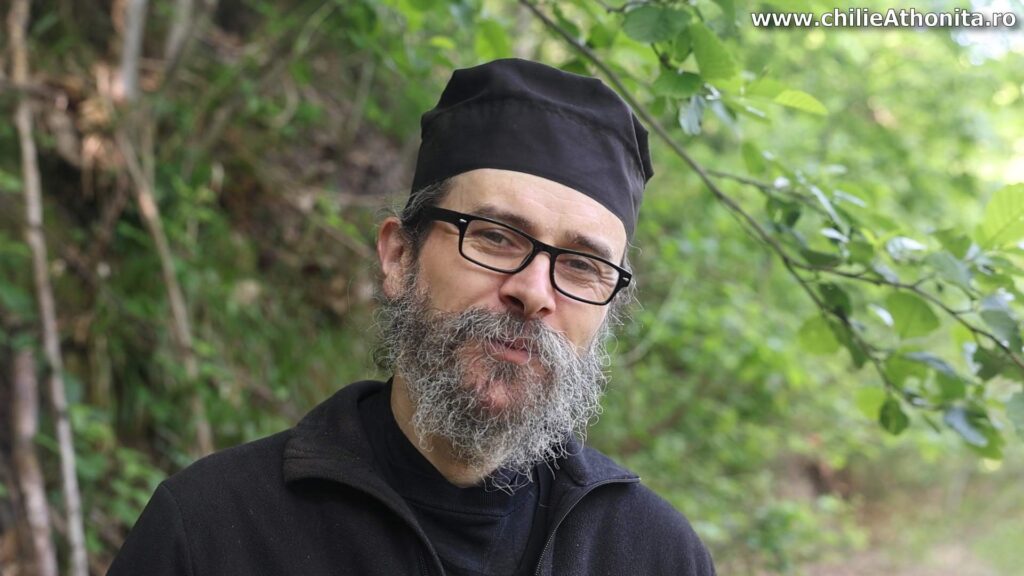
The team from Antena 1 spoke, among other things, with Father Theologos from Mount Athos about the influence of technology, about the relationship between Orthodoxy and technology, but also about monasticism, prayer, values, and Mount Athos itself.
Enjoy watching!
Marius Țurlea: I was surprised by how much the internet and technology have reached here. What do you think about that? How is it changing? How is Athos changing? How is monasticism changing?
Fr. Theologos: It is fundamentally different from what is happening in the world, because technology has made its way onto the Holy Mountain; technology exists here, but not in the sense that we are enslaved to it. In the world, people chase after technology, they cannot live without technology. And we even had some problems, some extraordinary incidents, in the sense that… I actually told this story in one of the videos. At one point, two young men came here, with great reverence, and so on, they stayed, they had a reservation for I don’t know how many days, and in the evening, I don’t remember what time at night, very late, I hear knocking at the door of the cell. What’s going on? It was the two young men, one of them had started to cry, “Father, I absolutely have to leave tomorrow, I must leave tomorrow, so please don’t hold me back.” And I, terrified, said, “Brother, seriously, I’m not keeping you, God forbid!” How? First of all, there is father abbot, and beyond that, yes, of course… Why? It was too quiet for him to bear. He could no longer bear so much silence, being dependent on technology, he had come face to face with his own loneliness, if you will.
M. Ț.: What do you think silence does to a person? Especially to a modern person, to a person from society, when they encounter it.
Fr. Theologos: Silence reveals who they really are. Not who they think they are.
M. Ț.: That’s tough.
Fr. Theologos: Who they are. Yes, because people today are no longer individuals with a distinct personality; instead, they end up becoming a “person-nulity.” And this nullity does not necessarily come from themselves, from their sins – God judges these and it is the spiritual father who helps them – but it comes from all this great pressure that the speed of society exerts, if you will, upon them. Do you understand? Well, and here Orthodoxy appears in a capital role, not because Orthodoxy is my party, because Orthodoxy is not a party, but it is capital, why? Because it is therapeutic. Orthodoxy is the branch of medicine aimed at ensuring human balance, healing the human soul—that is, it calms the mind, as we discussed before. It clears the mind, makes it crystal clear, and helps a person master technology or anything else, to be sovereign, free—not ruled by technology or other passions. Many times I did this with young people because they would come and be on their cell phones continuously, and here we have Wi-Fi, but we don’t give out the password precisely because they are young people in detox. And they were constantly on their phones, and I would ask them: “How much did you buy this phone for?” And they would say an amount, or whatever, then I would ask: “But how much did it buy you for?” And you see that they understood I was right, but they couldn’t break free from their addiction. They would enter a kind of withdrawal, like that young man who wanted to leave because he was going through withdrawal, since he no longer had the technology to fuel that very rapid dopamine circuit.
M. Ț.: What happened to the young man? Did he stay?
Fr. Theologos: He stayed, but I talked with him until who knows what hour of the night, and the first thing I said to him was: “You know that if you die now, you go to hell?” Because hell is not – let’s be clear – hell is not God’s punishment. First of all, God punishes no one. Hell is the eternal continuation of someone’s inner turmoil.
M. Ț.: So the calmer we are at that moment, the more…
Fr. Theologos: We’re more qualified for heaven, so to speak.
M. Ț.: I understand.
Fr. Theologos: Yes, so that young man was distraught and going through withdrawal. Well, and if he had died right then and there, he would have spent eternity in total agony over the fact that he didn’t have internet or God knows what else.
M. Ț.: Yes, yes, yes.
Fr. Theologos: I think it is very likely that this was the case.
Marius Țurlea: I’m curious. At our first meeting, you said about yourself that you are a bit unusual. And I’m curious how you got here, what you did before coming here, before devoting yourself to monastic life.
Fr. Theologos: Eh, we don’t say. Generally, monks do not talk about themselves. This is how it is with a monk. Everything comes from God. He must follow the path that God sets out for him, which is a purely personal path for every monk. That is, if we talk to each monk individually, we see that all these paths are purely personal, of course, all these paths fit into a current and there are some common factors, as they say. That is, for example, the very acute sense of the vanity of the world, the great love for God, dedication, determination, these things, the fire in the heart, if you wish, all these things are common and you see that the person is meant for monasticism. If a person is, how should I put it, a bit of a slacker, a bit… then it might a problem.
M. Ț.: So you mean that everything you’ve done up to this point led you to feel the need to turn towards this.
Fr. Theologos: Yes, it was very natural, especially since it wasn’t planned. I mean, I did not plan…
M. Ț.: Had you not thought before that this would happen?
Fr. Theologos: No, no, no. So if someone had told me, say, three years before becoming a monk, that I will become one, that I will enter monasticism, I don’t know, I don’t think I would have hit them—I’ve never hit anyone in my life—but it wouldn’t have been far off, do you understand? I wasn’t aggressive, but I would have said, “hey, you don’t know what you’re talking about,” that’s basically the idea.
M. Ț.: Let’s pause for a moment. I think I pressed something here, I turned it on and off. It’s okay, isn’t it? You’re alright.
M. Ț.: What do you think we find in silence? Here, there was a moment of silence.
Fr. Theologos: Yes, what do you think you find? You find yourself. It is very important for a person to be silent, because if the mouth does not close, the eyes will not open.
M. Ț.: Beautifully said. Yes, the Holy Fathers said it, I didn’t say it myself. Do you understand? A person must be silent and have peace. At one point, I had to go to Thessaloniki, well, my ID had expired, that was actually the issue. And I had to go to the consulate. I was terrified. May Saint Demetrius forgive me, a very beautiful city, obviously, Thessaloniki, an old city, but I was terrified, why? A continuous noise. A noise, there was no silence. There was no silence. There was this pressure of the world… Downward, Cristi. Yes, which pressed down on you and did not let you be with yourself.
M. Ț.: To be able to think clearly.
Fr. Theologos: Yes, to be able to think clearly and to be able to pray. That’s the idea. You must have a proper relationship with God, because God is your target. If you don’t have a proper relationship with God… Well, God is personal and perfect, as I said, and loving, but to simplify things a lot in order to understand, it’s like not having a proper relationship with the correct GPS. You don’t know where to go.
M. Ț.: Am I to understand that praying… Are you praying right now?
Fr. Theologos: Yes.
Marius Țurlea: It’s very interesting to me how this happens, that is, how you manage, and how you monks manage to pray at the same time, because that’s what I understood from you.
Fr. Theologos: It cannot be explained, it can only be experienced. You can experience this, you know? It’s like – by the way, thank you for the honey – trying to explain honey to someone from, I don’t know, Africa or somewhere, someone who has no experience with honey.
M. Ț.: Right.
Fr. Theologos: What will you tell them? That it is sweet, that it is yellow, transparent, but not quite, liquid, but not quite. You can’t. They need to experience it. Of course, you can write a book about certain properties of honey, but experience is needed so that…
M. Ț.: A personal experience.
Fr. Theologos: Personal, yes.
Marius Țurlea: And providence, to help you…
Fr. Theologos: Yes, God’s help. Once again, it is very important to know that God is a Person. What does it mean that God is a Person? It means He is alive. You can come into contact with Him. He is actually the Only One Who frees you from loneliness. The Only One. Because… what happens? If I were to hug you now, or hug any person, I would still remain outside of you.
M. Ț.: Right.
Fr. Theologos: But God has the power to enter inside you. And you feel it, I mean, a person feels it, just as a woman feels that she is pregnant. And if you tell her, “woman, you are not pregnant,” she says, “well, you’re crazy, you don’t know what you’re talking about.” So a person has this experience of God’s grace within them, and then, indeed, only then do they escape loneliness, regardless of who their friends are, whom, of course, they should have, and so on.
M. Ț.: My thoughts immediately turned to my own experience, coming here by ferry and how overwhelmed I was. Probably the closest thing I can imagine is that, how overwhelmed I was as I approached this place, where I was going to meet you.
Fr. Theologos: Yes, that is also a form of grace, that is, of energy. Although I would avoid the word “energy,” because usually Asians use this word a lot for something completely different, usually something very impersonal and devoid of love. But even God, as the Holy Fathers speak of energy, what does the energy of God mean? It means the way God acts upon His creation, primarily, of course, upon us, upon humans. And this energy is loving, as I said, and when a person feels this energy, as I said, they escape loneliness and, moreover, they are enlightened. I mean, just as we can now see where to go – and if you had walked this way last night, you wouldn’t have had a clue and would have gotten lost – so too, the moment a person is enlightened by God, they know which way to go. Or, to put it more simply, they know how to behave. But because this enlightenment is not complete – due to many causes, such as the consequences of Adam’s sin, his own imperfection, and so on, as well as personal sins – people make mistakes. We all make mistakes; we are all sinners, but an enlightened person makes far fewer mistakes and, above all, knows how to deal with them. They know how to deal with them and how to take action to heal themselves. As I was saying, Orthodoxy is therapeutic.
M. Ț.: And they access, so to speak, confession.
Fr. Theologos: Yes, yes, yes, confession. Well, that is one of the main therapeutic methods. And you see, in the West, things were so dire that the West—having strayed from the therapeutic influence of Orthodoxy by falling into heresy (which is essentially what we’re talking about here)—invented psychology out of sheer desperation, as a stopgap measure. This is how psychology emerged in the West, and, of course, it has made progress and uncovered certain truths, but it cannot solve the human equation, because the human equation is solved only when man, as the image of God, strives for personal perfection—as I was saying, for eternal personal perfection. So, no matter what a psychologist does, in the end he should send the person to a spiritual father. A priest who has, I don’t know, five years, three years of experience has heard it all. I mean…
M. Ț.: Really?
Fr. Theologos: Yes, yes, yes. It’s always the same sins, let’s not say them on camera now, but it’s always the same. So, confession is not a matter of providing information. The priest hears nothing new. It is an eminently spiritual act through which a person renounces their sins, grants God the right to intervene in their life, to cleanse them of these sins— and this is accomplished through the prayer of absolution, which any priest can recite. A well-known prayer is read at the end, the priest places his hands on the person’s head and absolves them, and the person feels this absolution of sins. They feel a huge burden lifted from them. And they feel that they are beginning to see, they feel that they are beginning to – “Wow, I need something like this!” – they are freed. That’s what’s important, not the advice. Of course, advice is also very important and must be given as well, as much as possible, and so on. The better the advice, the better, but the main thing, as I was saying, is the prayer of absolution. The mystery.
M. Ț.: Tell us a little about what life is like here, from morning to night every day. What are your rituals?
Fr. Theologos: Rituals, that’s a good one.
M. Ț.: Is it wrong to say “rituals”?
Fr. Theologos: Yes. Although right now, yes, of course, what matters most to us is our relationship with God, our encounter with God. That is the primary focus. The experience of God. So, the meal at 12 o’clock and the evening meal, if there is an evening meal, and so on, are not the primary focus. Of course, that too, meaning we tell the laymen this so they know the schedule. That is, morning service, midday meal, evening service again. But in the foreground is, as I said, the encounter with this eternal personal perfection. Person, that is very important.
M. Ț.: Which is permanent.
Fr. Theologos: Permanent, permanent. Since we have a body and the body is very important, we must take care of it. And because we have a body—though not only for that reason— we must take care of it. I mean, we need a place to live, we need a bed to sleep in, we need something to eat, and so on. These activities, called obediences, are secondary. These obediences have two roles, one more important than the other. The most important role is the spiritual one, through which someone cuts their own will in relation to the one who gave the command, and through this unity and love are ensured. That is, the moment the abbot tells me, “Father Theologos, do this!” and I say, “Yes,” at that moment I united with my abbot. This is a very concrete form of love. Because if you tell me you love me, then I say, “Do something,” and you say, “No,” where is your love? Do you understand? Concrete love is shown through obedience. And that is why, if you read the Scripture, you will see that before every miracle, Christ would ask, “What do you want Me to do?” to show that He was doing this out of obedience.
M. Ț.: Not out of His own will.
Fr. Theologos: Not out of His own will, yes, although He is God, let’s be clear, so He knows what you need. No, He asks, “What do you want me to do?” to show that what matters most is our unity. Our unity, and not so much technological or managerial performance or whatever. So what matters most is love—it is our unity—which restores the lonely, wounded people of our time.
M. Ț.: I’ve often thought about “turning the other cheek” and how we react when others come into our space. And where does “turning the other cheek” apply. And you’ve somehow helped me sort out this thought—in a personal context—of “turning the other cheek.” On a community level, it’s a bit different and more applicable to the reality we live in, because this seemed to me to be quite detached from reality.
Fr. Theologos: To turn the other cheek. See? That is the Church. On a personal level, you must also turn the other cheek so as to extinguish aggression. Find the peace you need to honor God and draw closer to perfection. Sometimes it is very difficult, other times it is easy. On a community level, however, you cannot impose this cross of aggression, of pain, on others. Because, of course, turning the other cheek is a pain you take on yourself in order to extinguish, as I said, this attack. If an armed force, a stranger, comes and wants to slap me, I must turn the other cheek to calm that person down. Because that is how you calm things, otherwise the conflict escalates. But if this foreign armed force comes against my nation, against the women, against the children, against those dear to me, well, I cannot turn the other cheek. In other words, I can’t force them to carry the cross—the cross that I have taken upon myself. There is a clear distinction between the personal level and the community level. While on a personal level we must, as much as possible, of course, turn the other cheek—because that leads us to the Cross and thus to the Resurrection—this does not apply on a communal level. And that is why the Church is the main supporter of the army. I don’t know if you’ve noticed this. And of the nation, of the people.
M. Ț.: Of identity.
Fr. Theologos: Of national identity, yes. The main source of love for one’s people is the Church. Why? Because it knows it has something to preserve. It has to preserve the souls of its people. It has to preserve a teaching. Because without the Church, people are like leaves blown about by the wind.
M. Ț.: What have people asked you for the most? What doubts do they have? What are they coming here to resolve – either in person or on the website – in your communication with them?
Fr. Theologos: Yes, yes, yes. Family problems and, mainly, problems with children.
M. Ț.: With young people.
Fr. Theologos: Yes, yes, yes. Family problems and problems with young people. It is a great drama today because we have these currents, foreign both to our people and to Orthodoxy, which are destructive. And when I say they’re destructive, I know what I’m talking about because I’ve seen it myself, and I have the experience – I’ve had very concrete contact with the West, you see – and I’m not saying this out of hatred for Westerners, really, how should I put it, really, don’t get me wrong, I actually love them as people, because they’re going through a huge ordeal there, because, as I was saying, Orthodoxy is therapeutic, they don’t have this therapeutic aspect and are going through a great tragedy; they’re depressed, they have nervous disorders, and so on.
M. Ț.: We’re talking about parents.
Fr. Theologos: What did you say?
Fr. Theologos: We’re talking about Westerners. Well, Romanian parents see these influences coming from outside and try to protect themselves, to protect their families and their children.
M. Ț.: These are values with which they do not necessarily resonate and…
Fr. Theologos: : Yes, and not only that they do not resonate, because, for example, what can I say, I do not resonate with – speaking of photography – I do not resonate with, what can I say, for example, a Sony that is filming us. I prefer the colors from Canon more, but that is a matter of choice, you understand? Here it is not about resonance, but about toxic values. I mean, like I was saying, I prefer Canon, but I’ll admit that Sony cameras are really good, and yes, okay, no problem. And we discuss – it’s a matter of choice, of preference. However, if you have certain values – a value system that pushes you, as I was saying, toward depression, toward loneliness, children toward closing themselves off – so that they no longer, how should I put it, no longer interact with their parents, no longer have friends, are addicted to cell phones, to all sorts of things, even drugs and so on, at very young ages, which used to be unthinkable – well, then this is a major problem, a problem of sin; it is no longer a matter of choice or resonance. The main issue is the problem of time and screens. Of screens: cell phones, tablets, laptops, and so on. Screens get in the way of… And business, money. Screens and money. Screens get in the way of interpersonal relationships between parents and children.
M. Ț.: More time with the children, then.
Fr. Theologos: Yes, we need to rediscover the beauty of the person. We need to rediscover love. Screens don’t love, parents do. And so, parents want what’s best for them, but screens don’t; screens want them to be as – how should I put it – as addicted to them as possible.
M. Ț.: I think many parents in Romania are going to highlight this part: “Screens don’t love, parents do,” and they’ll keep showing it over and over. They will send it to their kids on WhatsApp.
Fr. Theologos: Yes, yes and no – they shouldn’t do that, because, how should I put it… I mean, it’s their decision, but let’s not let that slap the love down, you know? Like, “look what the father said, there you go!”
M. Ț.: Yes, yes, it’s a delicate approach, it needs to be handled tactfully.
Fr. Theologos: Yes, but that is, how do you say, their responsibility, things must be said. Things must be said because that’s how they are, you understand? That’s exactly how it is, and kids need to know this because otherwise, as I was saying, they become addicted to screens. In fact, the entire field, known as User Experience, the entire field that deals with the development and design of user interfaces and applications – we’re talking about big companies here – aims to create screen addiction; their goal is to maximize screen time. Do you understand? It’s called Screen Time, which is a KPI – a Key Performance Indicator – a primary performance metric at Facebook, especially at TikTok, at Instagram, and so on, to keep young people hooked there.
M. Ț.: Yes, we are…
Fr. Theologos: Well, and then this needs to be eliminated. It must be eliminated because it destroys them…
M. Ț.: It’s very difficult.
Fr. Theologos: I know. Why? Because it is a very strong source of drugs. What’s going on? It is a very rapid dopamine mechanism. The artificial intelligence algorithms behind recommendation algorithms are dopamine-based, not content-based, meaning they give young people what they like, or rather, what they think will captivate them.
M. Ț.: And instantly.
Fr. Theologos: And instantly, that is, very quickly. I said the cycle is very fast, just a few seconds. So on TikTok, a short video is like, I don’t know, a few seconds long. And the moment that thing pops up – that dopamine rush, that pleasure, that high – every 15 seconds, 30 seconds, well, that young person is hooked, constantly. And then they can no longer connect with others, they can no longer think deeply, they can no longer listen, they have no patience, and of course, they have a very short attention span.
M. Ț.: How long do you think it will be before technology is at our service, even though there’s a lot of talk these days that the opposite is happening? Artificial intelligence is on the rise.
Fr. Theologos: Yes, the famous… That depends very much on us—that is, mainly, as I was saying, on Orthodoxy, on the therapeutic power of Orthodoxy in the Romanian context and in the… Well, now in the other Orthodox countries it’s a very complicated theme, especially in the Slavic region; it’s very complicated there – we won’t go into details. Outside our country’s borders, things are very unclear, very unclear.
M. Ț.: Are we privileged to be Romanian and Orthodox?
Fr. Theologos: Very, very, very much so. I don’t wear rose-colored glasses, I mean, don’t think I see the country as if it were surrounded by little pink clouds, but compared to other countries, things are very good, very good. People, however, must, as I was saying, pray; after prayer, they must think seriously, not fall into all sorts of extremes – I don’t know, pietism and shallow things – but become true individuals who can, as I was saying, think maturely and take from abroad only what is useful.
M. Ț.: So that they may preserve this privilege that has been given to them.
Fr. Theologos: Obviously, which is a privilege. Once again, we are not talking about something triumphalist, but rather about a successful teaching of faith that keeps a person balanced and enlightens them. And, of course, this ultimately leads to holiness, that is, to something far greater than the psychosomatic balance we generally see in Orthodoxy.
M. Ț.: In the end, did you go to Thessaloniki?
Fr. Theologos: I did, but only very rarely. I try to go as rarely as possible. And I only go for very specific reasons that cannot be resolved any other way. That is, for documents, an illness, if it is something like that. No. I am an athonite bear, I prefer to stay at Mount Athos. It is precisely because of the spirit that exists here. Not because of the landscape, which, of course, is also very beautiful, but first and foremost because of this spirit, which, thanks to the holiness of the fathers of Mount Athos, remains here.
M. Ț.: So somehow the Mountain works with the Saints and vice versa.
Fr. Theologos: Yes, yes, yes. Because I said that the proper way of human existence is union. I remember that at one point we talked about union, that is, the restoration of unity through Christ. Well, this union, which was destroyed by Adam’s fall, has nevertheless remained as a ruin. And this ruin of unity, original and primordial, can be felt. I mean, the moment you have people around you who are praying, you have holy people around you – you can feel it. Likewise, the moment you have people around you who are, how shall I put it, tense, nervous people, and so on, you can feel that too.
M. Ț.: We have to be careful about who we allow around us, or where we go, or what we surround ourselves with.
Fr. Theologos: Yes, what kind of environments we go to. Let me give you a crude example, one I hope you haven’t experienced, but it’s very likely that you have. For instance, you see two people arguing. They have nothing to do with you. They’re just arguing with each other. Don’t you get disturbed as well?
M. Ț.: Yes.
Fr. Theologos: Exactly. This stems from the shockwaves of negative energy, the demonic energy these people possess. That’s where it comes from. Or, for example, imagine you find yourself in the company of a very devout, very spiritual person. A person of grace, if you will. Don’t you feel very good around that person?
M. Ț.: Yes, I feel good around you.
Fr. Theologos: That’s not the case, anyway. That comes from the grace that the respective person has received and which reflects upon the other. Do you understand? Well, that will be at its peak in Heaven, it will be at its peak, there will be an intertwining of persons, a total unity. This is the joy of Heaven. God in us and us in God. Whereas in hell, there will be eternal loneliness. I mean, that man is going to be in torment there for billions and billions of years, as I told yesterday about that man who couldn’t forgive someone for what happened to him in his youth with so-and-so. Well, that is the torment of hell. Eternal loneliness and the inability to love. People need to come and keep coming back to Mount Athos. Of course, it’s difficult to enter Mount Athos, as there are certain restrictions regarding entry permits and so on, so that tourism is kept within limits. Why is that? Because the Holy Mountain is not a tourist destination, but a spiritual place. And in order to maintain this spirituality of the fathers, barriers must be imposed on tourism, and tourism is discouraged, pilgrimage is encouraged, but what I mean is that, even though I know these things, I say that people must come and keep coming back to Mount Athos. Why is that? Because the existential gap – the gulf between what happens out there and what happens at Mount Athos – is so vast that it is very difficult, if not impossible – I would say it is impossible, but let’s not be too absolute – for any mind in the world, including mine, yours, and so on, to truly understand what Mount Athos actually is. It cannot be understood. Everyone who comes here for the first time wants to go and see what we have here, what we have over there, yes, look over there, and so on, to go and venerate the icons, the relics. Okay, that’s to be expected. Of course, these are sources of grace, and we must venerate them with all reverence. The most important thing, however, at Mount Athos, the paramount importance of the Mount Athos, is the spirituality of the monks here. As long as the Holy Mountain had holy, great, and numerous monks, it was at its peak. When the number of monks dwindled for various reasons – the Turkish occupation and so on – at that moment, the Holy Mountain and all of Orthodoxy, in fact, declined. Why is that? Because Mount Athos is essentially, centrally concerned with, as I was saying, this therapy, this medicine of the soul. If we extinguish our capacity for love for various reasons, more or less justified, as we believe them to be, we lose our value.
Online commemoration lists and donations
May the Lord help us!
Online Commemoration Lists and Donations
May the Lord help us!
If you have a bank card and wish to send commemoration lists and donations online using your card, and/or to support our philanthropic activity, including this site, please fill out the form below to make a small donation. The form is secure – we use Stripe for payment processing – a world leader in this field. We do not collect your personal data.
If you do not have a card, or do not wish to use it, visit the webpage for Online Donations and Commemoration Lists.
We will pray for your loved ones! (Please do not include inessential details like wishes, degree of kinship, introductions etc. JUST the name!)
Especially for recurring commemoration lists, we ask that you please keep them to under 20 names long. If you include a member of the family, we add “and for their families.”