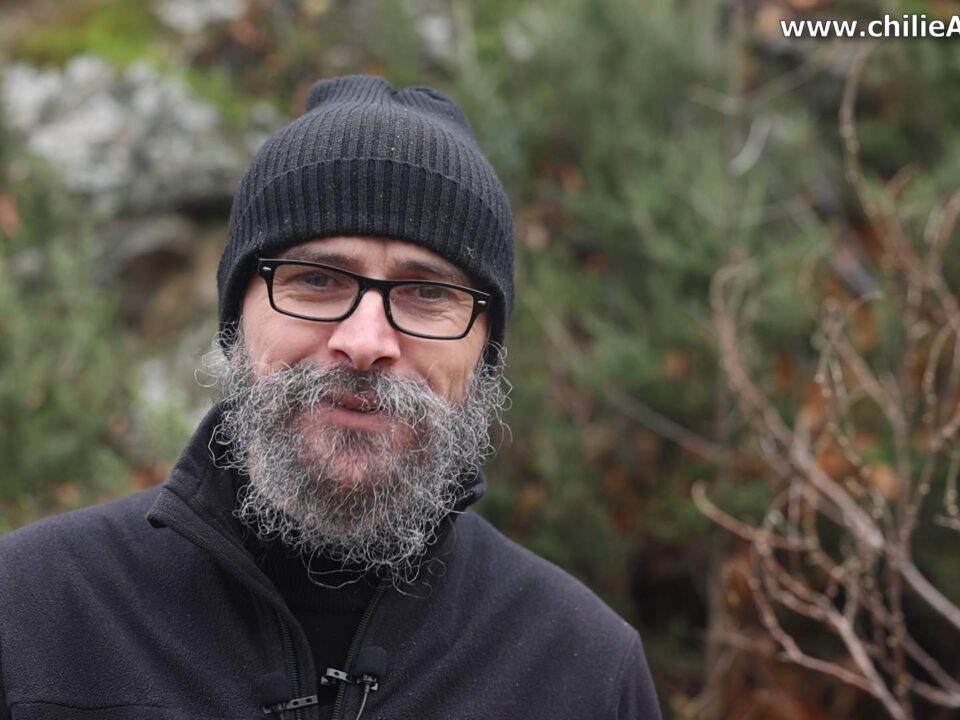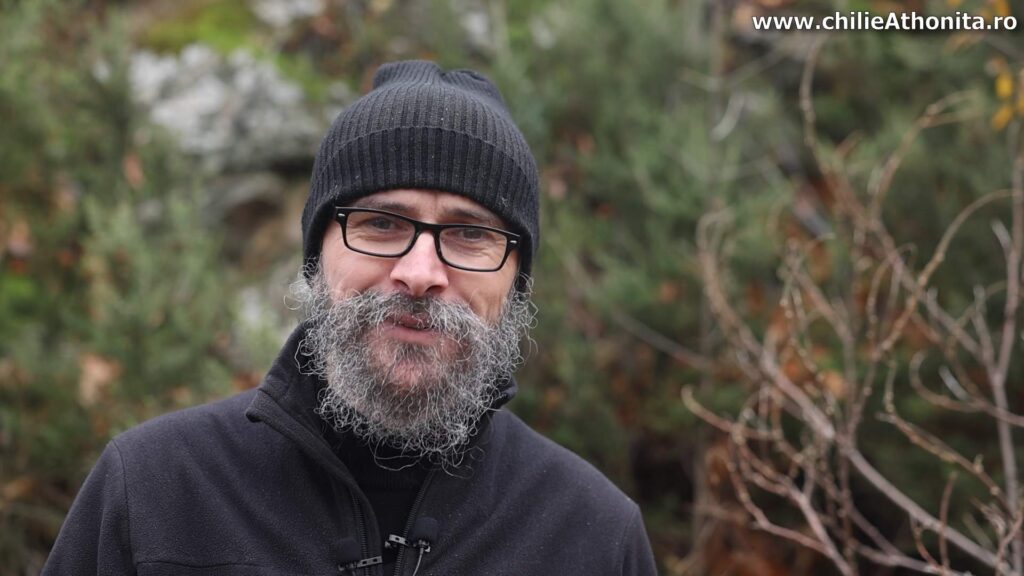


The Church in the Media – Remus Rădulescu, Fr. Theologos
11 November 2026
Watch a very interesting discussion with several pilgrims on some highly relevant topics for young people today and beyond: the relationship between computer games and the Jesus Prayer in family life.
Enjoy!
Fr. T.: Glory to the Father, and to the Son, and to the Holy Spirit, now and forever and unto the ages of ages. Amen. Through the prayers of our Holy Fathers, Lord Jesus Christ, Son of God, have mercy on us! Amen.
My dear ones, we are here with some pilgrims whom I love very much and who have been coming here for quite some time… Right, Tudor? So… there is no point in introducing them to you now because they are very important to us and to you, especially not because of the positions they hold at work. Although yes, maybe it would be good to talk about that at some point, but they are very important to you and to us because of the knowledge they have and especially because of some questions they asked me, and when I saw what questions they asked me, I said clearly – we have to film on this topic. I actually asked them to write them down on a piece of paper. Tudor has them written down there, but of course, other questions may arise during the discussion.
To keep this brief, the first two questions they asked me at the beginning – we went through a whole story, but it doesn’t matter how we got there – are about: 1. video game addiction, which is a major problem today. And I said that this has been growing significantly over time. At this moment there are some games, right, Tudor? Which ones did you mention?
Tudor Arseni: Assassin’s Creed, World of Warcraft…
Fr. Theologos: Yes… all of these, which due to their realism and the advancements in VR, cause a much greater addiction among young people, and the young person effectively transports themselves into that world. Meaning they lose sight of themselves and forget about reality. I know of cases where there were young people who were playing and their mothers were sick, the ambulance would come for them, and they would not react. Because they were completely immersed in that world, and when they came out of it, they were totally disconnected, meaning completely cut off from reality. So, the question arises: how can this young person function in daily life, socialize, and start a family? It’s a huge problem, a really, really huge problem. I don’t know what to say. I pray for them. Well, I know what to say, but who’s listening to me? How do we break free? It’s clear that they need to make very good use of the incensive part of their soul, that is, to say “Stop! I am stopping here! because I am ruining my whole future, that is, I am preparing myself for a reality that does not actually exist.” After that, they need to find something else to do, something concrete, something useful, something they can make a living from. If they are in the field of computers, they should work in the field of computers and stay away from those games. Because they can even lead to mental distortions, in other words, a person can go crazy, become very…
I actually remember a time when someone came to the Holy Mountain and told us that he had become so immersed in the character from that game, in Mortal Kombat, if I am not mistaken, something like that, that he actually felt the urge to torment his coworkers and beat them up at work. So, for no reason at all, simply because that’s how he’d learned to act in the game. That’s a huge problem! And on a related note, I think you were telling me about how one feels like having a knot in their stomach when they see something in VR, because of the very intense stimuli…
T.A.: Yes, when you have the headset on, the sound is very immersive, and visually, you are just 30 cm from the monitor, you’re right there, and your brain perceives the surrounding world, the one in the game, as if it were real. The graphics have evolved a great deal, graphics cards are very powerful and deliver those 60 frames per second, which mimic reality very closely and you forget about yourself, you forget about the character Teodor and you become that character. At that point, your brain somehow takes on the functions of that character.
Fr. T.: Aha…
T.A.: When he jumps, when he falls from a height, when he moves his hands into a certain position, then the brain functions as if I, the player, were moving my hands or legs or jumping…
Fr. T.: Oh, and I have actually seen some videos and I know some cases where the players, the people wearing headsets, were actually doing these things, and the others were laughing at them. I mean they were jumping around the room or… yes, so it seems like it’s a very, very powerful experience.
T.A.: It’s also somewhat easy to understand why young people are drawn to this. When I was in high school, I used to think how cool it would be to be able to teleport back in time, to the Middle Ages, to see what the monasteries looked like back then, to see how people lived back then, the atmosphere, how knights in armor and kings spoke, and look, now it is possible! It’s possible, yes, just a click away. You do not even need to spend a lot of money, you can pirate the games, meaning the industry makes them available – even if not officially – to everyone, because the more addicts there are, the more profitable the business becomes.
Fr. T.: Oh, right! So, at some point they will actually pay for…
T.A.: Yes… and it’s very easy to get sucked in and forget yourself.
Fr. T.: Yes, it’s a great affliction and I think they can even destroy their families over this, I mean…
T.A.: Yes, because, usually, young people do not spend two-three hours playing these games, but somewhere from six hours upwards daily.
Fr. T.: God forbid! And I struggle and I am even ashamed that I have to struggle to get people to pray for 10 minutes through these videos.
T.A.: Well, it’s even hard to get out once you’re in because you feel so good… These “worlds,” that are created in these games are very, very realistic. If you want to ride a horse 100 km, you ride for 100 km and cross rivers, go over bridges…
Fr. T.: Really?
T.A.: Through forests… you risk being attacked by bears and wolves.
Fr. T.: God forbid!
T.A.: You meet people whom you help or who attack you, and you attack them in turn…
Fr. T.: I understand that there are worlds that are endless, meaning very large worlds…
T.A.: They are endless, yes. There are games where, after you explore one planet, you move on to the next one, I mean…
Fr. T.: Glory to God! What did you want to ask?
T.A.: There are several questions… For example, regarding prayer, there’s a question about prayer, we change the subject a bit.
Fr. T.: Yes. We will return…
T.A.: If when we pray, when we sit down to pray and we do not feel a certain disposition for prayer, should we do it or not? Should we wait until we have a disposition or when we pray, if we feel a sense of joy or a connection with God, should we continue the prayer? Or if we feel like we’re not in the mood, that we’re tired, that we just don’t feel like praying, should we stop and…?
Fr. T.: Yes, you must know that if you wait for the right mood to pray, it will never come! And this is a very painful question, especially if we link it to the previous one. Because in these games, there is a pseudo-heaven.
T.A.: Yes.
Fr. T.: And so the moment a person finds their pseudo-heaven there, they no longer have a disposition to pray in this real world, which seems very dull and very boring to them.
T.A.: Yes, and that’s exactly how it is…
Fr. T.: Yes…
T.A.: And I don’t think I’m exaggerating when I say that we love those worlds.
Fr. T.: Of course, of course, because they are perfect, pseudo-perfect.
T.A.: We love them, and we come to the conclusion that contemporary man loves his passions, loves his sin, even though we know in theory that he must love God, and this is what I would like to ask you: how do we escape from this web, which we understand as a trap only on a mental, theoretical level? We love and seek to commit the very sin that gives us pleasure.
Fr. T.: Yes, because sin is pleasure. That is why, you see, when the Savior performed that great miracle for them and filled their bellies… Of course, the Savior’s greatest miracle was the Resurrection and other miracles connected to the Resurrection and so on, but for the Jews, who were carnal, and we, too, are carnal today, the greatest miracle is when we eat and stuff our bellies. They said, they all went to Christ and said, “What should we do?” And the Savior said, “Believe!” So it takes faith! So the moment your whole being says, “How great is this,” whether it’s Assassin’s Creed or any other massive multiplayer game, especially since you’re a superhero there, right? Because you have some really great powers.
T.A.: Yes, yes.
Fr. T.: And without any real danger, because you’re actually sitting in your chair. Right?
T.A.: Exactly.
Fr. T.: You’re sitting in your chair. Of course, because you’re stepping into the character’s shoes, you’re somewhat afraid of being killed, so to speak, in the game, but ultimately, you don’t feel the pain yourself. You don’t feel it, even if at some point you get a shock when you’re killed or lose points, and so on.
T.A.: Yes.
Fr. T.: Well, what I mean is that it’s such a huge temptation, a world so perfect, with such vast possibilities, and on top of that, in certain games, I don’t know about Assassin’s Creed since I’ve never played it, you even have magical, or rather occult, properties, with supernatural powers and so on, such that only faith can pull you out of there. I mean yes, you say “Okay, so all this is a chimera.” You say that, “Yes, God exists” – IF you say that God exists, because let us not forget that, yes, we believe God exists, but others don’t. You say that you are eternal, you say that you need other people, because it is the person who is the source of love, not the game. But ultimately, you have to have faith that if you get out of there and get through withdrawal, you’ll be better off. Because the big problem is that the people close to you, your wife, your children – I’m not referring to you – are better than that game, despite all their limitations. Because, as I was saying, we see a perfect world in the game. Whereas in everyday life, we come face-to-face with the humanity, the human nature, of others. And that is why 1. faith is needed. 2. a schedule is needed – that is, to say “Yes, at such and such a time I must absolutely pray; I will play the game afterward.” It would be good to cut out the game altogether, that would be even better! But I want to say “afterward.” And for all this, attention is needed, that is, to be attentive to myself, not to get carried away, so that I don’t say “Just five more minutes” and then two hours or six hours or however long you said go by. And it takes courage, that is, to say, “I’d rather die than go back there, I won’t look at that anymore.” And if the urge strikes – because at some point it comes on so compulsively, that compulsive desire – you actually have to get up, get moving, and go do something physical. Do some physical work. And then say the prayer with a sense of the necessity of prayer. That is, you don’t just say, “Lord Jesus Christ, have mercy on me!” But in that very moment, you say, “Lord Jesus Christ, have mercy on me! Lord, help me! Lord, help me to stop putting myself in this situation, to stop being dependent on this!” Do you understand?
T.A.: I think the idea of a daily schedule is very important.
Fr. T.: Yes, yes, yes.
T.A.: And sticking to it. And maybe even writing it down.
Fr. T.: Yes, it should be written down. That’s why, you see, excuse me for interrupting you! You see, in all monastic communities there’s a schedule: services at such-and-such a time, meals at such-and-such a time, and so on. Because you can’t do without a schedule.
T.A.: Yes, because the compulsion and the desire to derive pleasure from the game, since we were talking about them, come about chaotically.
Fr. T.: Yes…
T.A.: And a schedule can perhaps keep that compulsion under control.
Fr. T.: That is right.
T.A.: So, okay, maybe I’ll do that in three hours, but until then I have some steps to take, I have to pray, I have to…
Fr. T.: Yes, and that’s why there’s the prayer rule. You see that the spiritual father tells you “Do this prayer rule! Do this much.” So it’s not about that specific number, of course, neither five prostrations nor a million prostrations, nor anything else, can convince God. God is almighty, yes. The rule of prayer is the schedule for us, to ensure our escape from this chaos you mentioned, from addictions. A barrier! That’s what fasting is, actually. A barrier, and fasting is something active. Meaning that fasting does not only mean refraining from food – either physical food or, in this case, noetic food. Fasting is also something very active. It means you say, “I must be careful not to go in that direction, and again, very actively, I must do what is right, I must choose the other path.” This is what fasting is, since we are in the fasting period.
T.A.: Since we are on the subject of prayer, how should we pray the prayer of the heart or prayers from the horologion – akathists, paraklesis?
Fr. T.: Yes, all right, okay.
T.A.: Perhaps you can sense which way I’m leaning…
Fr. T.: Yes, I know, I have spoken I don’t know how many times on this topic, but it doesn’t matter, we will talk about it once more because in Romania there is a great need for it. I’ll put it very briefly. In our discussion, there are three forms of prayer. There is the confessional prayer – in our own words – where we say “Lord, help me to stop this game!” “Lord, help me!” and so on. Since we are talking about games… This confessional prayer is certainly heard by God because it comes from our heart. We are talking about sincere prayer. But we must be careful here not to confine God within the very narrow frames of our desires! When I say I want to stop playing the game, perhaps I want to win and come in first place, but perhaps God wants to give me the temptation to stop playing so that I’m no longer addicted to it. So let’s not try to pressure God on how to act, because He is wiser than we are, He knows better than we do.
The second form of prayer is linear prayer: akathists, paraklesis, horologions. This prayer, like the confessional prayer, has the drawback that there are many thoughts involved, yes… “Our Father who art in heaven, hallowed be Thy name… our daily bread”
P.: “Did I close the window? Hmm…”
Fr. T.: Yes, yes “Did I close the window?” By the “daily bread”… “Hey, I need some bread.” “Lord, help me finish the game… man, what great music it has, what a soundtrack… made by I don’t know who, Thomas Bergenson or whoever made it”… The mind wanders, the mind wanders. And that’s why the best form of prayer is the cyclical prayer consisting of a single thought: “Lord, Jesus Christ, have mercy on me!” “Lord, Jesus Christ, have mercy on me!” “Lord, Jesus Christ, have mercy on me!” This prayer is the most powerful – first, because it contains no thoughts, and the mind finds it much harder to wander. Second: it contains a divine name, the name of Jesus. Third: it’s very easy to start, and you can tell when it’s interrupted because your mind actually wanders elsewhere, in other words, it’s not something very complex.
And especially because, in the case of the Jesus Prayer, one can use the prayer rope. Meaning this, as I have many in my pocket. It has 100 [knots], and when [the sense of] touch is used, which is the strongest human sense, the sense that provokes the most intense sensations, at that very moment, the mind gathers itself much more effectively. Because of this, during the Jesus Prayer, the mind’s wandering is much shorter and much less frequent, and because of this, the prayer is much more powerful and much more effective. This is the Jesus Prayer.
This Jesus Prayer has several stages. If a person persists in the Jesus Prayer, saying it, at a certain point the prayer begins to be said (it’s not the person doing it but by the grace of God), ceaselessly in the rational parts of the soul. This is generally called the mind. A whole story. When the prayer is recited ceaselessly by grace in the rational parts of the soul, this is called the prayer of the mind. If a person continues with humility and a specific schedule, cutting off worries and severing these powerful centers of addiction, the prayer that is said ceaselessly in the mind, in the rational parts, is gradually brought down by grace into the irrational parts of the soul, which the Holy Fathers call the “heart,” that is, the existential core of the human being. This is the prayer of the heart. It is a special state of the unceasing Jesus Prayer that is said at the moment when the mind unites with the heart, that is, when the rational parts of the soul unite with the irrational parts, and is said within the existential core of the human being, that is, in the heart. You wanted to ask something.
P.: Yes, a thought just occurred to me, it’s interesting that we do something every day that resembles the Jesus Prayer, yet it’s an “anti-Jesus Prayer” when we use TikTok. We make the exact same “thumbs-up” gesture, and we do it constantly. Here, we’re offering a prayer to chaos, to that chaos.
Fr. T.: Exactly. Not to Christ, but to chaos.
P.: To chaos. I say chaos because the videos have no connection to one another, and your mind jumps from one topic to another, from all kinds of images, each one different from the next; sometimes you stop, but other times you keep going, and this scrolling, this gesture, is exactly like using a prayer rope.
Fr. T.: Yes, look!… Yes. Instead of worshipping Christ, you worship chaos, you worship the cell phone. I don’t know if you’re aware, but TikTok has actually been banned in both the United States and Europe on all work cell phones. Just now, someone sent me the news, as I don’t follow it myself, someone who works in the field. Why? Because of its destructive effects, both in terms of espionage and in terms of a destruction of the mind, because, really, what are we talking about here? A dopamine rush, in other words, a drug rush, in a very short and chaotic cycle, as you said. So, of course, a person can no longer…
P.: Yes, I speak from experience when I say that accessing your phone and TikTok is very easy in the morning, when you wake up and the first thing you do is check TikTok, or Facebook, if not TikTok, but Facebook is already for the older crowd. And in the evening before bed, when, I’ll admit, sometimes you just want to go to sleep because you’re tired, but you can’t bring yourself to do it. Because you keep scrolling, you say “Let me scroll one more time, maybe the next one is interesting, maybe I’ll miss out if I don’t scroll one more time” and you wake up realizing that from the 10 minutes you said you would stay with your head on the pillow, two hours have passed.
Fr. T.: Oh, Lord!… God forbid!
P.: And you reach such a state of mental exhaustion that you struggle to keep your eyes open, but you can’t. And yet, you struggle.
P.: And the worst part is that there’s no end to it.
Fr. T.: Yes, addiction.
P.: At first, with Facebook, back when it first came out, you’d scroll through that feed, and at some point you’d reach the end of Facebook; that is, it would end, there was nothing left, no more posts. Well, on TikTok, that doesn’t happen, no matter how many times you swipe or how long you keep swiping, something new keeps appearing.
Fr. T.: Yes. Why? Because the artificial intelligence algorithm behind it, the recommendation algorithm, profiles you, that is, it spies on your phone, profiles you, and constantly feeds you these little “drug hits” to keep you hooked. So, yes, you can become exhausted, but you stay awake because the adrenaline keeps you there. So, truly, brothers, it really is… That’s what I’ve read, and that’s what I’ve looked into, and I’ve seen that it is. But now, as I talk with you and others, I see that it really is a strategic weapon of the Chinese government, it’s destroying everyone; I mean, God forbid what it’s doing to them!
P.: I had two more questions regarding the Jesus Prayer.
Fr. T.: Of course.
P.: First: Can this transition from the Jesus Prayer to the prayer of the mind and the prayer of the heart be accomplished in a single prayer cycle? That is, in one, two, three, or five hours of saying the prayer continuously, or does it take more time to reach this, so to speak, stage? And the second question: whether the prayer of the heart, the prayer of the mind, or the Jesus Prayer, depending on what stage we’re at, could take the place of the first two types of prayer mentioned: the confessional prayer and the linear prayer.
Fr. T.: We will start with the second one. Yes! It can take their place, and indeed it does. On the Holy Mountain, it truly does. On the Holy Mountain, in general, the prayer rule consists of the Jesus Prayer, only the Jesus Prayer. We all must say the confessional prayers, that is – “Mother of God, help me to make the website!” Mother of God, help me to make this podcast!” May the Good Lord help us! But from then on, the prayer book and prayer books are never used, unless we are talking about prayer with a specific purpose. AND the only specific prayer for the ordinary monk, so to speak, is the Communion prayer. Yes. And in the case of the Communion prayer, if someone forgets to read them, then they can be replaced with the Jesus Prayer but in general, we have the Jesus Prayer rule of x number of prayers, however many there may be, (well, it’s a personal matter for each person), plus the Communion Prayer when it comes to Communion. So all the other services, that is, all the monk’s other prayers, are replaced with the Jesus Prayer. Including the services as well. For example, if someone is a night watchman in a large monastery and doesn’t go down in the morning for Matins, he prays the Jesus Prayer; he celebrates Matins with the Jesus Prayer. Or in the cell, as we are now, if something happens, the priest is sick or we don’t have a chanter, and so on, we conduct the service with the Jesus Prayer of course, because it is the most powerful prayer.
The first [question] – from stage to stage – depends very much on obedience, first and foremost. On cares. Because the main hindrance, the main obstacle to any prayer – but in the case of the Jesus Prayer it is very clear because it is the most powerful prayer, there is the greatest light, and it is seen in this light – are one’s own thoughts. And because of this, the main thing a spiritual father, an abba well-versed in the Jesus Prayer, tells you is: “Whatever thought comes to you, do not accept it!” I mean, what can I say? Even if Saint Elijah the Tishbite comes to mind, don’t accept him! Especially not! Because it could be a demonic deception.
Where do thoughts come from? From my own will, that is, from my plans. The moment you practice obedience or set aside your cares, at that moment your own will is greatly diminished. Why? Because you can tell the thought, “The abbot is taking care of it, the abba is taking care of it, so-and-so is taking care of it…” and so on. And then you have time to pray. So it depends very much, as I was saying, on obedience, on that blessed freedom from cares. Not on negligence! That is something else. [It depends] rather on that blessed freedom from cares. So if a person is in hesychia, that is, in stillness, brought about by obedience and the absence of cares, then they can make good progress. And this comes with time, you need to know that. At the beginning, it is said incessantly in pieces, and after that, it will become permanent, even in sleep. In the world, you too can say it ceaselessly in short bursts. That is, in the morning when you get behind the wheel or when you’re waiting for the tram and so on, or when you’re getting dressed: “Lord Jesus Christ, have mercy on me! Lord Jesus Christ, have mercy on me!…” So focus on those moments when it’s easier to say the prayer, usually in traffic or somewhere else, or when you’re waiting for something, just say it! And then, you’ll gain a foothold there. Then, here, here, and here…
P.: You’re building segments.
Fr. T.: You’re building segments.
P.: And is it better to say it out loud or to say it in my mind?
Fr. T.: It’s better to say it out loud, if you’re not bothering anyone, say it out loud! Because then, beyond the touching, that is, the prayer rope, you also hear yourself and hold it better in your mind. So on the Holy Mountain, it’s customary that during physical labor, whether we’re peeling potatoes or doing something else, we say the Jesus Prayer. Whenever we work together, we always say the Jesus Prayer. Whether we’re carrying something or walking somewhere on the mountain, we say the Jesus Prayer with the prayer rope. As I was saying, the duration depends very much on one’s zeal and on this stillness, which, as you can see, hesychia, is a very active, very active, state of being. It can last, I don’t know, a few months; it can be years, it can be decades. You must know that this doesn’t matter, and I’ll explain why. Because this path isn’t something like that, a 90-degree angle or a graph, but rather a very gentle ascent. And prayer always nourishes that person, that monk, and so on, and he will feel a great sweetness within himself and a sense of security that God is taking care of him.
P.: He builds stone by stone.
Fr. T.: Yes, yes, yes, and at some point, progress becomes visible, and then, the moment they attain unceasing prayer, they won’t… don’t get me wrong! Yes, they’ll rejoice, but they won’t rejoice in thinking, “How great I am! And how important I am!” Rather, it’s something gentle, like a crown from God, of God’s mercy, not of their own virtues! Because they see that it is a growth that God brings about. They see that, over time, this wandering of the mind, that is, the mind’s wandering, occurs less and less frequently over shorter and shorter distances until it stabilizes, and then the person reaches a state of stillness and finds peace. Of course, they also sees the devil’s temptations, the enemy comes and creates some terrible temptations right when you’re praying better, but you must not back down! Keep going no matter what happens! And of course, the ugliest, filthiest, most wicked thoughts will come to you the moment you pray. And all your problems will be solved then! Just so that the prayer stops. But you should keep going and say, “If it’s from God, let that thought come to me afterward.” Go ahead! What did you write there, right?
P.: His question.
P.: Yes, it is a question that, well, perhaps concerns all of us in a general way. It’s about managing – we’re talking about family – it’s about managing conflicts with family members: whether it’s a spouse, parents, or brothers and sisters. Who’s right, who’s wrong? How do we approach the issue so that everything is peaceful, so to speak, within the family? Your wife has one opinion, you have another. You believe your opinion is the correct one, and she feels the same way. Then you can’t reach a common ground so that…
Fr. T.: That is right. The main word is this: peace! Who is right so that there can be peace?
P.: Yes… well, that’s the rub.
Fr. T.: The other person is always right! There are very few cases where you have to assert yourself. It’s true that we have great respect for women, but it’s also true that men are more rational than women because women tend to be more emotional and sentimental by nature.
[Someone from behind the camera]: That’s right!
Fr. T.: Seriously? A voice from the gallery, brothers, I won’t say who it is. Well, then you need to know that in this case, the solution is peace. That is, a hug helps much more than arguing back and forth. It helps much more to say “Please forgive me!” And again, if you are angry, let that moment pass, do not open your mouth. Because at that moment, anger is an irrational part of the soul. The moment it erupts, and desire and emotion are also irrational parts of the soul, the moment these erupt, the rational parts can’t think clearly! In other words, they’re clouded, and nothing good will come of it. Let this dark wave pass, to put it simply, bow your head, “Yes, sir!” In other words, let it go, put it aside for now! Calm down, compose yourselves, assess the situation, seek advice, discuss it a bit, but you’ll see how things turn out later. Then you’ll say, “You know, I’ve sought advice, I’ve prayed, and I think it’s better this way.”
And what is very important, and I ask the ladies, is that if we’ve taken a stance, we shouldn’t cling to it with our teeth just because we’re the ones who took it. I mentioned at the beginning, before filming, a famous case that can do a lot of harm, right? I won’t name names now because it’s not appropriate. So the moment you take a stance, first of all, if you don’t have the expertise, don’t go around taking a hard line on that issue, that’s number one. Second: if you’ve taken a stance anyway, you need to have this flexibility of humility to say, “Hey, yes, I was wrong” or “Yes, I really do think it wasn’t right the way I did it.” I’ve always seen this in great managers, they had this approach, saying, “Strong opinions, but weakly held.” That is, a very strong, very well-researched opinion, but one they held very loosely. So, the moment someone else came along and proved that their well-researched position wasn’t good, they’d say, “Yeah, you’re right, I think it’s better this way; let’s do it this way; let’s pivot.” And because of that, when it comes to how I run the website, I always have an editorial plan with several options, and when something happens, I say, “Yes, let’s pivot.” That way, there’s no tension, and tensions don’t escalate.
P.: If I may, it seems to me that we’re somehow returning to our roots. More specifically, just as the man tries not to obey God’s command to make money, to earn his living by the sweat of his brow, and tries all sorts of easier shortcuts, so too does the woman, instead of seeking to obey the man, not blindly, tries to dominate him! This is the problem, and the man senses that she actually has no problem giving in to a conflict or having things her way. The man often senses something more than that, and this troubles him. He feels he must allow himself to be dominated, and this is where the problem arises!
Fr. T.: Yes, do you know where the problem lies? The problem is that the woman seeks attention. She’s always seeking attention; she’s the queen, she has to be the queen; she has to be the one and only. But unfortunately, we men… Well, I’m with the Mother of God right now. We men love our partners, but we don’t express it. Forgive me for saying this! This love we have for our partners doesn’t reach them because we don’t express it. We’re focused on our careers, on other things. You have to express it to her. She needs to be absolutely certain that you love her, and you have to tell her. Men assume things; women don’t. She needs to hear it because she needs that sense of security, for herself, for her children, for her home. Do you understand? And how do you do that? Flowers, you must definitely bring her flowers. Tell her “I love you.” It’s magic. Why? Because she needs to know that you are hers. She needs this, and also because she is weaker, she is the more delicate part of human nature.
Indeed, you must be obedient to her, but, as I was saying, you must divide the issues into two categories – there are tactical issues and strategic issues. Strategic issues are more rational – that is the man – involving complexities of time and space and so on. Whereas a woman, you see, a woman is more emotional, more sensitive, more delicate, that sort of thing. She has a special charisma, you see, when it comes to these issues, which, ironically, are more important: what we eat, what we wear, raising children, and so on. In other words, everyday life.
P.: She is sensitive.
Fr. T.: Sensitive, yes.
P.: Rearranging the furniture around the house…
Fr. T.: Yes, yes, yes. There. You have experience with that, don’t you?
P.: Yes, we all do.
Fr. T.: Everyone! That’s what I’m saying, in these matters of tact, you have to let her have her way.
P.: Always, whatever she says…
Fr. T.: You are right, “Yes, sir!”
P.: How do we proceed when she has understood such things, has understood that the man is not the head in the sense that he must dominate her like a tyrant, but rather that he must truly sacrifice himself? She understands this very well, and yet she still tends to speak before him.
Fr. T.: Because, as I said, a woman is very sensitive and very emotional. Why? Today she’s one way, tomorrow she’s another, then back again, and so on. And you have to be patient, you have to be patient with her. She’s delicate! Patience!
P.: And unpredictable!
Fr. T.: Yes, yes, yes, because I said that she judges with her heart. Much more beautifully, she judges with her heart. Do you understand? If I were to bring you flowers right now, you’d say, “Father, spare me the flowers, I need a motherboard, I need a graphics card.” That’s what you’d tell me: “What flowers? Flowers wilt in five days.” You can’t go to a woman and give her a graphics card or a hard drive. “Look, I brought you a hard drive for your birthday!” That won’t work! Do you understand? A spare tire. No! Flowers!
P.: Speaking of flowers and showing her that we love her, we believe that simply being by her side, having chosen her, and being there for her and for the family is enough to show her that we love her.
Fr. T.: No…
P.: But it seems that’s not the case.
Fr. T.: It’s not like that, because I said that she… You must know that God did this intentionally, because men are a bit more blunt that way, we’re tougher, and God does this intentionally so that we can express our love outwardly, so that we can express our love toward another person.
P.: To show it.
Fr. T.: To show it.
P.: That’s a little harder.
Fr. T.: Yes! We must! This is designed specifically so that you can do this. Because, you see, right now I’m meeting with you, “Guys, I love you,” and then we’ll meet again in a year, “Yes, father, we love you too.” That is between men. Whereas with women, you have to constantly express it outwardly, to say it, you know. That’s why all this stuff with lots of letters doesn’t solve the problem, because the harmonious relationship, the right relationship, and the natural relationship, which is the therapeutic relationship, first and foremost from a spiritual standpoint and then also a physical one, is the relationship between a man and a woman. That is the true relationship, not the others, which, well, you know. Because it is a presence that is completely and utterly complementary, and someone else, something far above us and incomparable to us, just as an oak tree cannot be compared to a lily. This is very important.
P.: Like a symbiosis.
Fr. T.: Yes, symbiosis, a very beautiful complementarity.
P.: And it’s natural.
Fr. T.: Yes, that’s what I’m saying, it’s natural, natural. Do you understand? Yes, that’s the thing with… it’s also about hugs, and the moment when, as I was saying, you’re angry, don’t open your mouth! Keep water in your mouth, as the abbot used to say; go to the bathroom and scream there, yell into a bag, something like that. Not then, because it causes harm, and afterward it’s very hard to fix.
P.: But in any case, the issue at hand needs to be resolved. Whether you resolve it then…
Fr. T.: No, no, let it calm down first. You don’t postpone it sine die, indefinitely, but after you see that you have calmed down and you also have an idea, you say: “My dear, my love.” “My love”, you must call her “my love!” Elder Joseph of Vatopedi told us a story about his grandfather, so you can imagine how long ago this was, and he said, “In my family, my grandfather, who was 80 years old, would constantly sing love songs to my grandmother in the yard.” There was never any question of arguments or anything like that. So if a woman needs the love necessary to live, it’s not a matter of her seeking attention, but that attention must be given to her. So we have to be gentlemen. Well, now I am speaking as someone who’s blunt, very blunt.
P.: I had a neighbor in the countryside whose wife would sometimes scold him, but he’d say, “But why are you upset, my dear one? He was always trying to…
Fr. T.: Yes, yes, to calm her down, and she’d soften, right?
P.: Yes. And in the end, things would settle down.
Fr. T.: Yes, that is right. You see, that’s the experience. So you shouldn’t confront her head-on; you shouldn’t yell, because if the woman yells back, and you know women are louder, I don’t mean to offend anyone, but they are. Yes… That’s it, but we started with games and ended up talking about family life, as usual.
P.: Yes, because games also have an influence on family life.
Fr. T.: Of course.
P.: And they throw things out of balance.
Fr. T.: Yes. Why? Because today’s games, almost all of them, please correct me if I’m wrong, and I’d really like you to correct me now, I believe that almost all of them are violent games, brutal games, games that foster this kind of behavior…
P.: They all contain elements of violence, but they can be avoided. There are also games that are more about exploration or… Everyone has their own preferences, yes…
P.: Can I tell you how I managed to break free from this potential addiction? Because I, too, went through a phase when computers first came out, I started playing for a few hours here and there, just little by little. I didn’t buy a high-performance computer.
Fr. T.: Glory to God!
P.: And I have nothing to play.
Fr. T.: Do not upgrade your computers!
P.: No matter what game I try to install, it doesn’t work, so I have no choice.
Fr. T.: Good, practical, practical! Yes, you see, it’s a way of putting your manhood, your incensive side, and your courage to good use. You say, “I’m not going to do that.” That’s very important. Did you want to say something?
P.: Others were helped more by God, as was the case with me, and it simply went away on its own, that is, sometime at the beginning of high school, when that was supposed to be the start, it just didn’t… There was an attraction to a sport, to something…
Fr. T.: Yes, it was something else. You went in a different direction. For me, it was books! It was books and God. That was it.
P.: For me, it was the feeling of camaraderie.
Fr. T.: Love. Friends.
P.: I feel really good when I meet up with friends and we have certain conversations in that setting.
Fr. T.: Glory to God!
P.: I was sort of accused of poaching people from nightclubs and bringing them home so we’d have guests for our discussions.
Fr. T.: You were doing the right thing!
P.: I mean, okay, we go there to have fun, but we can’t hear each other; we have to yell at one another. Do we want to be together or not?
Fr. T.: Yes, as you can see, love is always therapeutic. Love is always therapeutic! Virtue is therapeutic; that’s what heals, and that’s actually what the family teaches us. It should! That is why God established the family – as a hearth of love, as a nest in which love is to be learned! And you must teach your children… how to love, how to love. That’s it…
P.: The most important element: the family, like a beehive, when something goes wrong, the whole hive disappears. In society, when the family becomes sick…
Fr. T.: Yes, society disappears. That is right. The disappearance of the family is a great, great tragedy, a great tragedy, but I have hope in God that, well, look, things will be better in the future, that’s what I believe. And I see these seeds, the boys and others.
P.: May the Lord help us!
Fr. T.: May the Good Lord help us! Through the prayers of our Holy Fathers, Lord Jesus Christ, Son of God, have mercy on us! Amen.
Online commemoration lists and donations
May the Lord help us!
Online Commemoration Lists and Donations
May the Lord help us!
If you have a bank card and wish to send commemoration lists and donations online using your card, and/or to support our philanthropic activity, including this site, please fill out the form below to make a small donation. The form is secure – we use Stripe for payment processing – a world leader in this field. We do not collect your personal data.
If you do not have a card, or do not wish to use it, visit the webpage for Online Donations and Commemoration Lists.
We will pray for your loved ones! (Please do not include inessential details like wishes, degree of kinship, introductions etc. JUST the name!)
Especially for recurring commemoration lists, we ask that you please keep them to under 20 names long. If you include a member of the family, we add “and for their families.”