

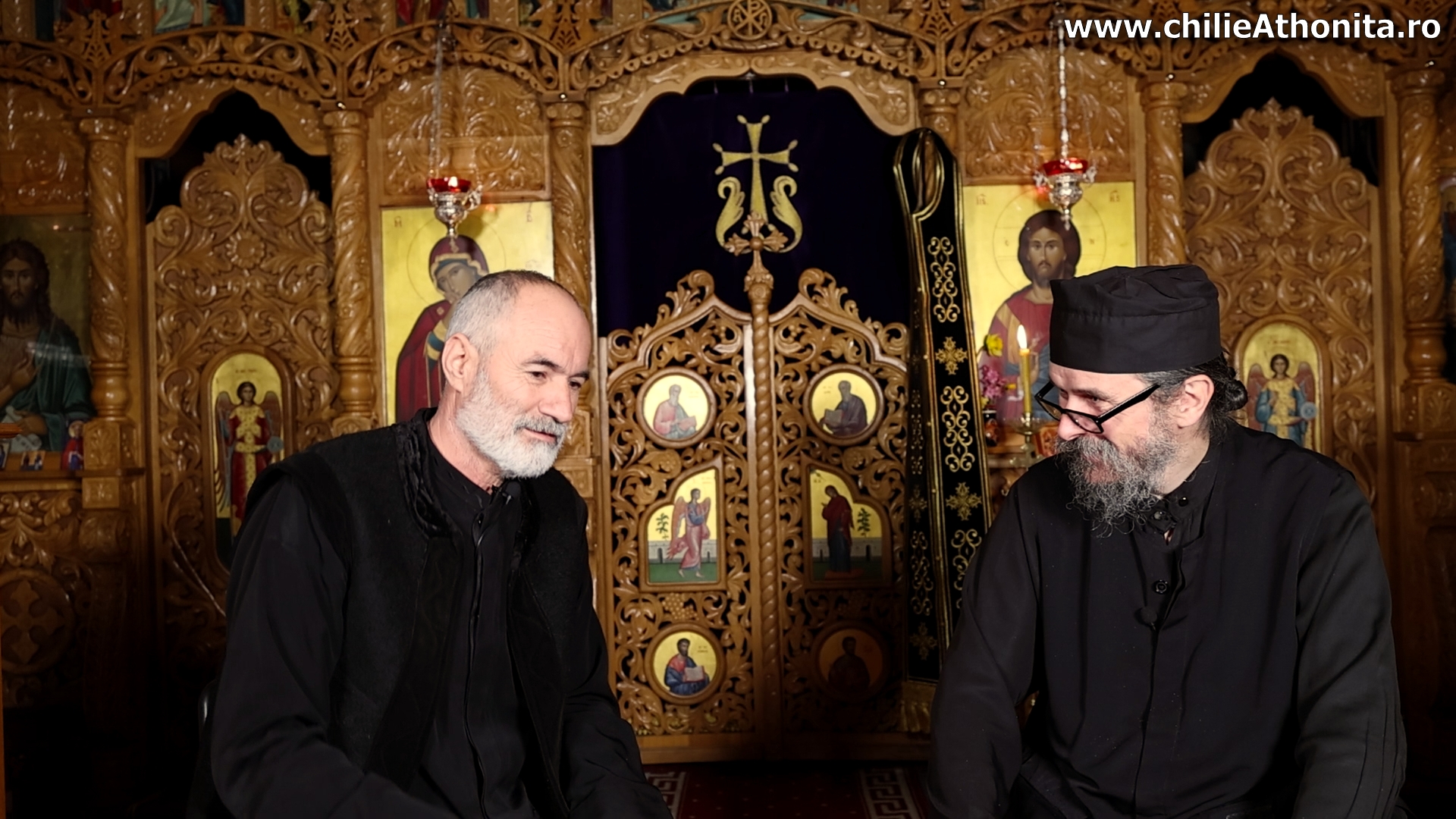
The Martyrs and Saints of the Prisons: Miracles, Stories – Gheorghe Axinte, Fr. Theologos
16 April 2023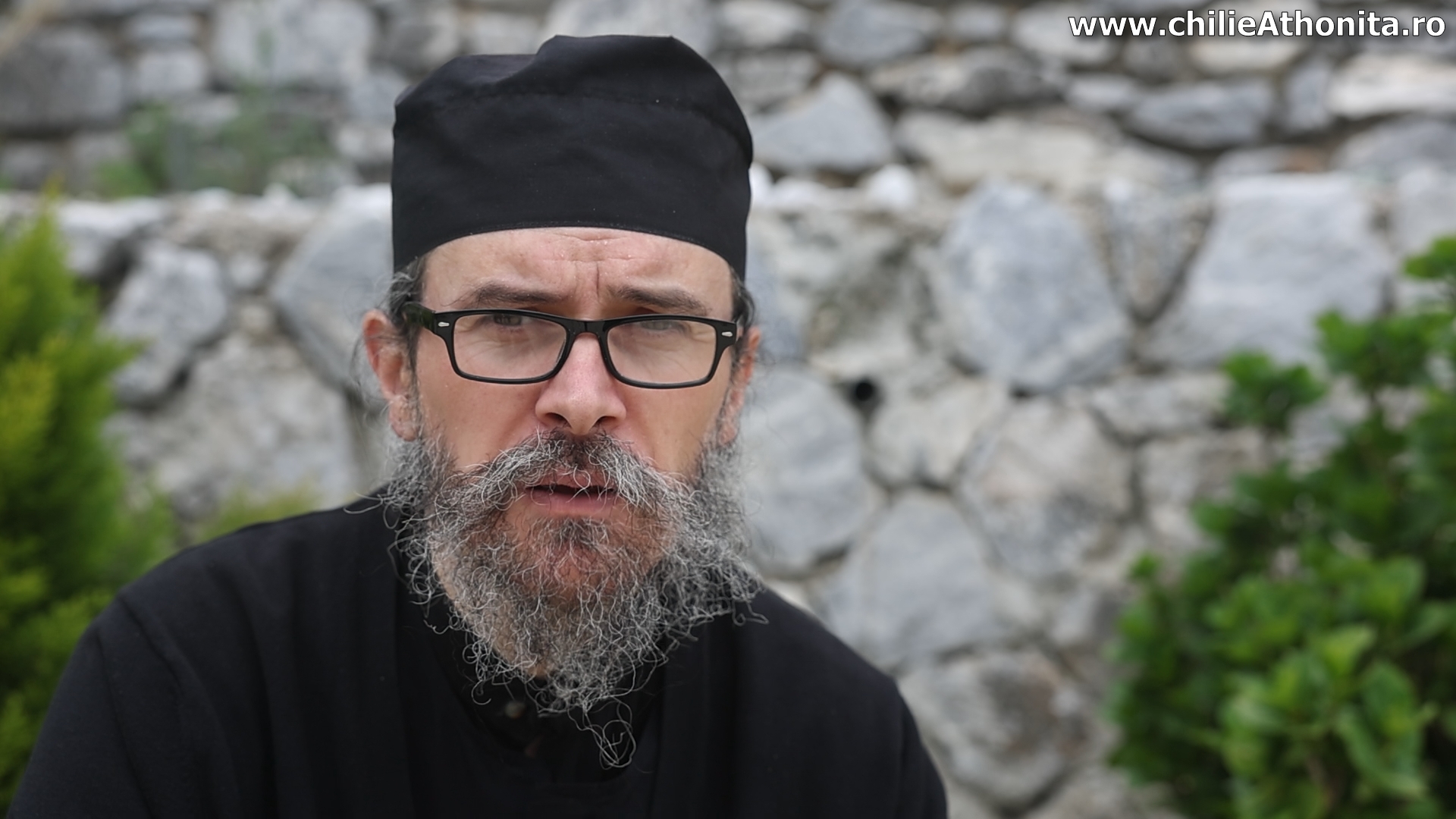
The Unbelief of Contemporary Man and St. Thomas the Apostle – Fr. Theologos
18 April 2023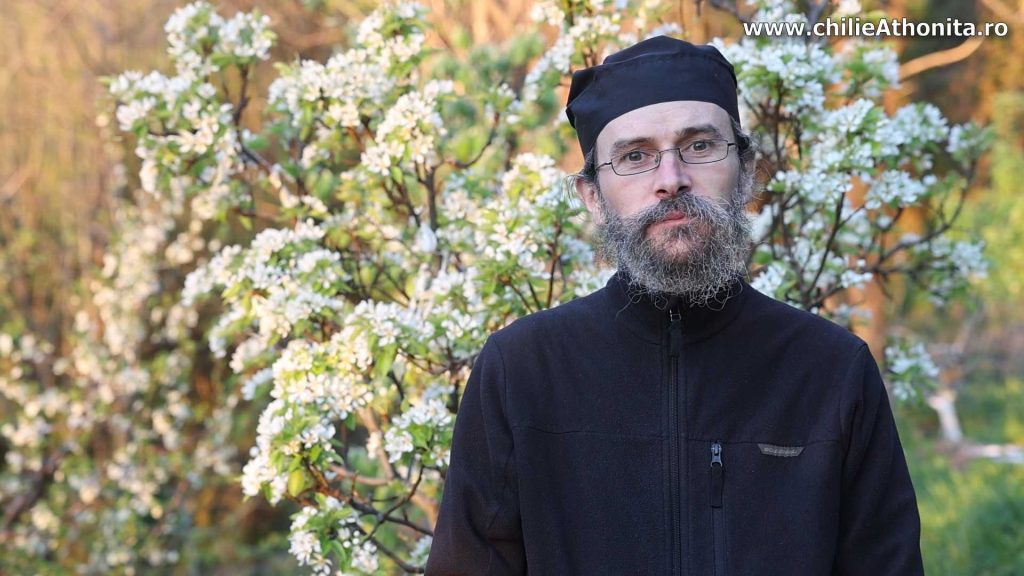
We are very accustomed to the state of sinful man; we have heard of several cases of people being raised from the dead—yet the Resurrection of Christ is something entirely different, beyond everything we know. The Resurrection of Christ is the state of man delivered from sin.
Listen to an interview that Remus Rădulescu from Trinitas conducted with Fr. Theologos, an interview centered on this theme.
Enjoy!
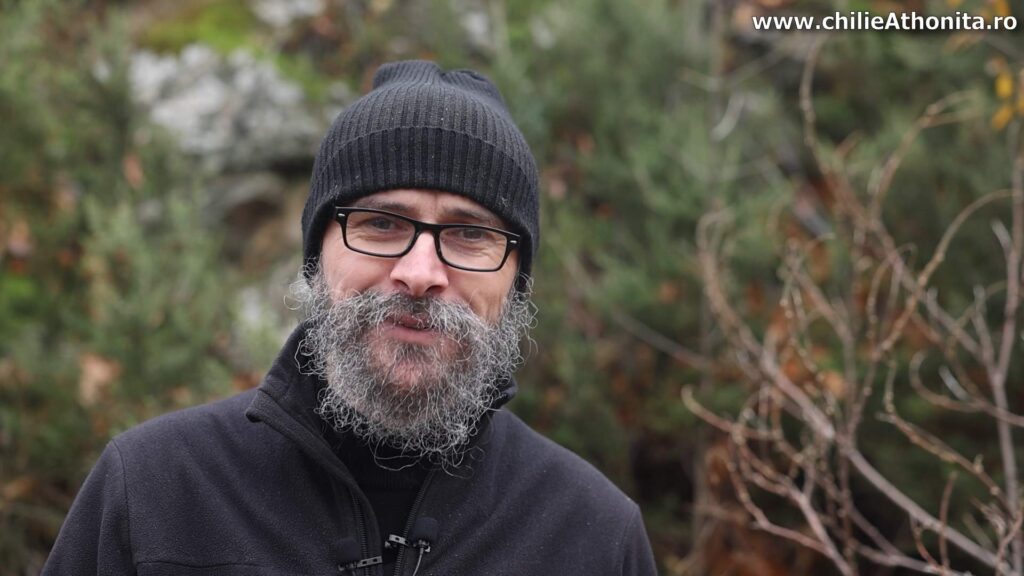
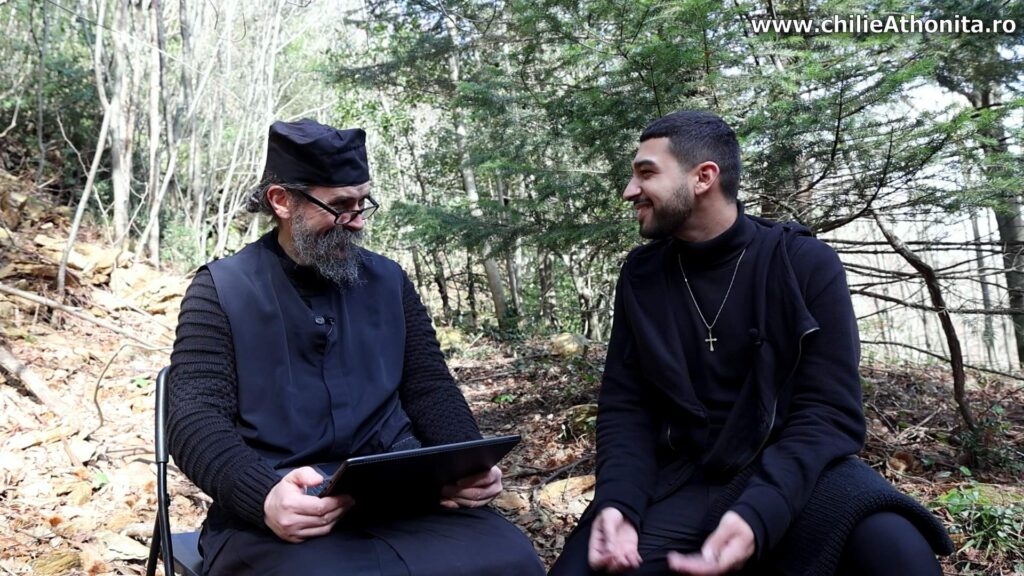
Remus Rădulescu: Greetings, ladies and gentlemen! Christ is Risen! We are in the light of the Resurrection, in a bright place. We are on Mount Athos, in the space of the Cell of the Entry of the Theotokos into the Temple, at Lacu Skete, a Romanian skete that brings together several cells.
We are at the cell which, we could say, is at the highest elevation here, physically speaking, perhaps also another kind of height, speaking more metaphorically, but we are up high, because all the cells of the Lacu Skete are located in a depression here between these slopes of Mount Athos. Behind me, at a distance, you can see the sea, but not from here, rather from another place. It is a place of light and of seeking the light, and that is why I want to invite you to meditate, to talk today about what it means to be people – children of the light – as we are urged in Scripture.
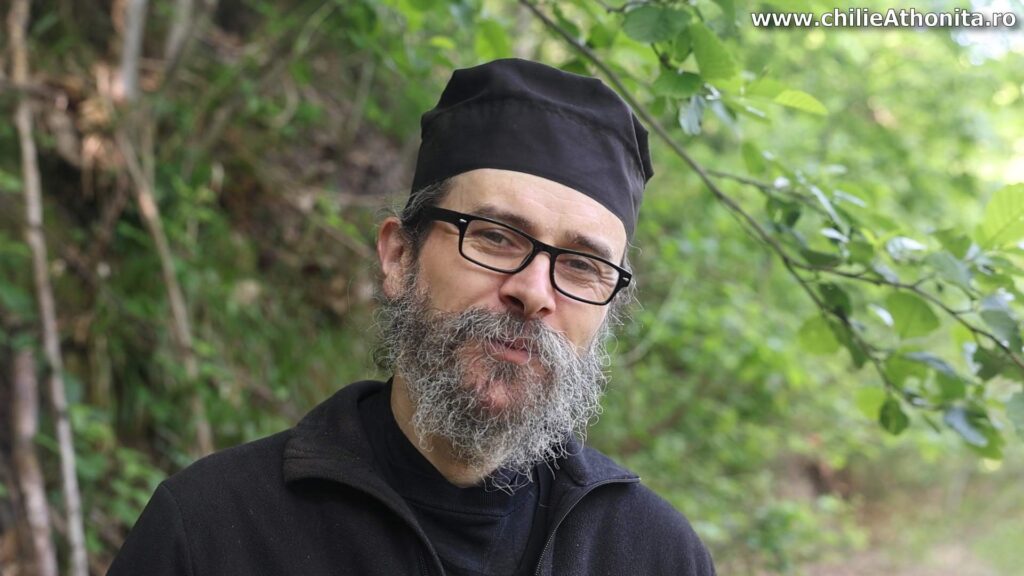
I invited Fr. Theologos to talk to us, to guide our thought and reflection, as he is a resident here, in this small monastic community at the Cell of the Entry of the Theotokos into the Temple. Christ is Risen, father!
Fr. Theologos: Truly He is Risen!
R.R.: And thank you for being with us in this space steeped in spirituality. We know that the feast of the Resurrection of the Lord brings light. All the liturgical texts speak about a light brought by the Resurrection of the Lord. Is it a natural light or a supernatural one in what is chanted and expressed in all the texts we hear in the services during this period?
Fr. T.: Do you have experience in these matters?
R.R.: Of the light… Of physical light, yes.
Fr. T.: Right. You see, this cannot be explained unless someone has experienced it. If someone has no experience of natural light, when we talk about natural light to someone who has been blind since birth, we would tell them that light is the wavelength range of electromagnetic radiation between… I don’t even remember exactly how much, about three hundred and something – 380 nanometers, somewhere around there, up to about 700-800 nanometers. That is the light. And the blind person would say, “Glory to God I understood what light is.” The definition is correct, and I hope I remember the wavelength ranges correctly, but the experience of natural light for a blind person is totally different from this definition. The same is true of the light of the Resurrection.
The Light of Resurrection… there are several things to consider here. First, it is about a loving knowledge, which is the uncreated light. And this cannot be explained in words, as I said. That is, the mind sees according to the image of this light, as I said, which is a range of electromagnetic radiation. This loving knowledge gives the mind the ability to orient itself, the ability to walk the right path and not wander aimlessly, not to bang its head against the walls of existence, because the fallen mind has multiple ends, because it is chaotic, and because of this, man is chaotic and man is contradictory, he is torn within himself. This is the fall of Adam, man broke away from God, broke away from creation, broke away from woman, broke within himself.
Beyond this purely spiritual, intelligent light, there also appears a light that can indeed be seen, as the Holy Apostles saw it on Mount Tabor. This light was also seen in the Lord’s tomb when the Lord had risen from the dead, right? Because, you see what it says there, that the Myrrh-bearing women entered the tomb and saw in the tomb that the linen cloths were laid aside and the face cloth was placed elsewhere. The Holy Sepulchre was a cave, yes.
R.R.: Dark.
Fr. T.: Yes, dark, and especially since it was early morning, nighttime. Well, how could the Myrrh-bearing Women see inside the tomb, and the Holy Apostles John and Peter? Simply put, there was light in the tomb. This light that comes from the divine grace, and which, as I said, although it has its main component, a spiritual, intelligible component, it also has – when good God wills it – a visual component, for the human eye, let’s call it electromagnetic, if you wish.
We can all experience this electromagnetic component, thanks be to God, Who has given us the gift of physical sight. The other light, the spiritual light, which grows over time, is experienced by those who have cleansed their spiritual eye and, once this eye has been cleansed, they begin to see the other light. It is a phenomenon somewhat similar to someone’s physical eyes being dirty with mud. When they begin to wash them little by little, or to clean the window little by little, then an ever-increasing light enters.
This is what the Church is concerned with, this is what Orthodoxy is concerned with: cleansing the eye of the soul. Orthodoxy is therapeutic; it is a medical science. I often talk about this on our website, chilieathonita.ro, about cleansing the mind, because the mind is the eye of the soul, the mind is something different from logic.
There are two rational parts of the soul that are distinct. And once the mind is cleansed, once the eye of the soul is cleansed, a person comes to see what is happening around him and ultimately manages to overcome this rupture inside him, this fragmentation inside him, and ultimately, to overcome death. Orthodoxy deals with the victory over death, that is, with resurrection.
Christ was not a fakir, He was not a scam artist. He said, “…he who believes in Me, the works that I do he will do also; and greater works than these he will do…” Do you understand? So, Christ’s Resurrection must be our resurrection, not in a poetic sense, but in a very practical, very concrete sense. And we must undergo this process of washing the eye of the soul, that is, of our mind and then our heart, because the heart is another component of the soul. Well, there is the heart of flesh, which is the blood pump, the organ, but there is also a spiritual heart of man, which is also a part, or rather, an assembly of parts of the soul. The heart defines the irrational parts of the soul. So, after the mind is cleansed, then the heart is cleansed, and then death is conquered. Man is restored; death is conquered. This is the resurrection of man.
R.R.: And in order for this whole ensemble you are talking about to be cleansed, I would like to talk a little about this cleansing because, after all, as you said, and as it actually happens, through cleansing, that inner eye that sees everything in a different light is also cleansed. What steps must a person take to acquire this ability to see beyond this solar light?
Fr. T.: Yes, so, Remus, dear one, that is the whole asceticism of the Church.
R.R.: Yes, let’s take it point by point…
Fr. T.: That is the whole asceticism of the Church.
R.R.: I am thinking of a person who would want to change, to be different, with the Easter feast approaching, we all go to the Easter feast, we receive light in that candle, we protect it as much as we can, we take it home, we make sure not to extinguish it. It’s a symbol, of course, but maybe we should ask ourselves: “Is there something happening inside me too? What should I do for something to happen?”
Fr. T.: What should I do for something to happen?” I must crucify my mind, change my life completely; God’s commandments, I cannot find a better term and I don’t think there is a better term, but we must clarify that God’s commandments are not the expression of a boss towards his subordinates, God’s commandments are the expression of a doctor and a father towards his beloved children and patients. It is a therapeutic relationship, as I said, and a parental one.
So, man must continuously live this asceticism, every day, live this asceticism that crucifies the mind, opens the mind towards others and towards God, and then man will truly live the resurrection. And the resurrection is not at all a sentimental Easter feeling, but rather a spiritual state, an existential state at Easter. And not only at Easter. The resurrection is continuous, as I discussed with the father who is at the Holy Sepulcher, who told us that the light of the Resurrection at the Holy Sepulcher does not come only at Easter. Of course, it comes in a very striking way at that time.
R.R.: Solemnly.
Fr. T.: Right. And impressive. The light of the Resurrection is always there and often it also lights up the vigil lamps on Golgotha or so on, at other times of the year, this happens. Thus, for a person to experience their resurrection at Easter through Christ’s entry within them, this entry must be prepared long in advance and be a continuous process. So that at Easter there is a leap, but before that, the landing strip, the trampoline, and everything else must have been prepared. And this must be done continuously.
So, you can’t live your whole life, how should I put it, totally spiritually empty like I do, and then suddenly at Easter expect to feel something. Okay, you might feel something sentimental with “Christ is Risen from the dead…” It’s not enough. That’s not enough, because man must understand what the resurrection is. The resurrection is overcoming death. That is why the Resurrection of Christ is capital and different from all the other resurrections – because there have been other resurrections: Lazarus, the daughter of Jairus, and so on. There were also resurrections in the Old Testament, but the main difference is that Christ conquered death, He transcended death, and that is what we must do too, through the asceticism of the Church.
And, so, to put it very briefly, since you asked me to concentrate it, let’s concentrate it. It is about our proper relationship with God, which is achieved through prayer, our proper relationship with others, which is achieved through obedience, sacrifice, cutting off the will, and a proper relationship with ourselves, which is a relationship of attentiveness. In short, through these proper relationships with our environment, that is, with God, with others, and with ourselves, we are able to rise.
R.R.: And the proper relationship with God means first of all seeing God as a Person.
Fr. T.: Yes and no.
R.R.: To see him, [I mean] to think of Him as a person. Why am I emphasizing this? I keep hearing many people say that they are faithful, that they believe in something, and when you ask them:
“What do you think God is like?”
“He’s like a force, an energy, something diffuse, with which I couldn’t have a relationship, right? Because, with something that I can’t…”
Only a personal reality enters into a relationship with another person, with us. We humans are persons. We don’t have the same relationship with a chair…
Fr. T.: Yes, of course.
R.R.: …as we do with another person, another human being, right? That is why, first of all, there must be the right perception of God, and we only have the correct perception in the Church, right? We cannot find it anywhere else.
Fr. T.: It can be found elsewhere.
R.R.: Really?
Fr. T.: Of course. It’s about human conscience. You see, before Moses, there was no Church. And yet, Abraham has done deeds pleasing to God and was a mountain of faith.
R.R.: He benefited from a direct revelation. He was privileged.
Fr. T.: Yes and no. Because he had this direct revelation after he was ready. Do you understand? And Holy Apostle Paul speaks on this subject in chapter II of the Epistle to the Romans, saying that Abraham, of himself, that is, people by nature did the things in the law, that is, according to their conscience. Man has this conscience within him, but this conscience is so blackened by sin, so twisted by sin, that, indeed, the Church is necessary.
If the cross had not been necessary, Christ would not have been crucified. But because the cross is essential, that is why Christ was crucified. And why is the cross essential? Because, as I said, the conscience, the mind, the eye of the soul is darkened and has failed to recognize Christ. So, let us not forget that Christ was crucified by people like us. So, most likely, if we had been there at that time, most likely we would have crucified Christ, let’s be clear about that, okay?
We are now two thousand years into Christianity and have a wealth of teachings on this subject. Well, at that time, it wasn’t like that. And most likely, personally, I am very afraid that I would have crucified Christ. And Fr. Seraphim Rose also says that “If Christ had come today, we would have crucified Him again.” Because Christ would not have come today with a sign saying “I am Christ” and who knows what else… He would have come as a simple a 33-year-old carpenter, who begins to say, “Brethren, love your enemies!” It’s a little too strong, you know?
And speaking of that, there is an extraordinary description, and I even spoke about it in my word on Easter, which is posted on the website, chilieathonita.ro. I spoke about Mr. Fyodor Dostoevsky and The Brothers Karamazov, in the famous chapter “The Grand Inquisitor,” which tells of a second hypothetical coming of Christ and his recognition by the Grand Inquisitor and what happens next, and about this suprarationality of Christ’s teaching that rationally led Him to crucifixion. That is, the Savior, as He would tell them… so think about it if a 33-year-old young man came to you and told you that you had to eat His Flesh and drink His Blood. And if He told you, as He said, to love your enemies, or told you to forgive someone you are currently quarreling with. And to say, above all, “the greatest madness,” that He is the Son of God. And to prove this through miracles. Well, it blows your mind. Do you understand?
The Savior potentiated people to the fullest. To the maximum. And in fact, in my entire talk about the Resurrection, I did exactly that; I brought Christ into everyday life. To show them that the Crucifixion and Resurrection were a necessity. And in fact, that is exactly what the word is called: “The Crucifixion and Resurrection: Why?” Why? So, things are very different from the armchair Christianity we are used to.
R.R.: A brief answer to the question “Why?”: Because man exists as the object of love or worthy of being loved by God.
Fr. T.: Yes, good, that’s an abstract answer, and it’s also true, of course, even though it’s abstract. The concrete answer is: because man cannot withstand divinity. Man cannot withstand the presence of Christ in everyday life. He cannot withstand it. And then he feels like…
R.R.: He can no longer withstand it.
Fr. T.: He can no longer withstand it.
R.R.: At one point, in a paradisiacal dimension, he did withstand it.
Fr. T.: Yes, until the moment Adam…. this is why Adam hid in the bush. He thought that if he hid in the bushes, he could escape from God. But he hid in the bushes, why? Because he could no longer withstand divinity. He could no longer withstand the grace-filled presence of God, if you will, and concrete [presence], of course, of God in Heaven.
R.R.: And yet, Fr. Theologos, there are still manifestations of God, His interventions in our reality through various signs and miracles that occur.
Fr. T.: That is true.
R.R.: We are in a place where miracles are at home, we could say, and yet people endure and are strengthened by this contact with the signs of God.
Fr. T.: That is true, but these signs are very soft. Very soft.
R.R.: Diffuse.
Fr. T.: Diffuse. You see, the Savior did not appear risen to — He could have gone to appear risen to Pilate or, especially, to the Pharisees and said: “Look!” No, because that would have been hell for them. And because of this, the Savior withdrew, speaking of the Ascension of the Lord. He said, “Okay, you don’t want me, I’ll withdraw.” He left. The Savior appeared to those who could withstand His divinity. And as we know very well about the Holy Apostles, well, apart from Matthew, who was erudite, and Judas, who was also erudite, who did not withstand, we see that the Savior does not appear to erudition.
The Savior appears to humility. He appears to humility, where the heart and mind open to His divinity, open to His suprarationality. Do you understand? That’s the way it is. And that is why miracles generally happen to the humble, to the simple, where the miracle does not destroy them, does not throw them into hell; either in the hell of pride or in the hell of depression, but usually it’s the hell of self-importance, like, “I am somebody.”
R.R.: Yes, “I’m great because I benefited from that sign,” right. Because, yes, that is also a problem. How do you receive a miracle when there is one? For you might receive a miracle and not believe it. That is, you might believe [the miracle] is not there.
Fr. T.: Of course, you might not believe it’s there.
R.R.: Fr. Theologos, you also said that one way to be in the light of resurrection and to be risen while alive, is through our relationship with other people.
Fr. T.: Of course. [That relationship] must necessarily exist.
R.R.: A relationship that is naturally enveloped in love, that’s how it should be. That’s natural, but it’s too often, we don’t seek it or we’re not natural, because we live in a world where love is not the watchword or the usual attitude, but other hostile attitudes. And because of that, it’s clear that we suffer. And at some point, we even ask ourselves: why does God allow so much suffering? And we answer ourselves….
Fr. T.: Why does God allow so much suffering? You said very well that God allows it. He allows it out of love for us. God, loving us perfectly, means that He perfectly respects our freedom, which is our tragedy and the greatest risk in history. The risk of human freedom. God said, “In order to give man the opportunity to be happy, to give man the opportunity to love Me, which constitutes his happiness, and to give man the possibility to become like Me, I take on the risk of freedom.”
R.R.: “To make him like Me, free.”
Fr. T.: Yes, yes. The risk of freedom, the risk of choosing hatred. And of course, we chose hatred. We chose distortion, existential distortion.
R.R.: And the cure for coming out of hatred… as you can’t come out of it all at once.
Fr. T.: Yes, once again, it is about the asceticism of the Church, it is about the therapeutics of the Church. The Church… at this moment there is an acute crisis of identity regarding what the Church is, who the Church is. Because the Church is a “who”, it is the Body of Christ. And well, this definition is very true, very concrete, but a bit strong. That is why I think we should define a little what the Church is, what Orthodoxy is for people. Once again, as I said, I talk about this topic quite often on the website, on chilieathonita.ro, because there is a great need for people to know what the Church and Orthodoxy are.
Orthodoxy is the branch of medicine that deals with healing of the soul. It is the correct medical science that aims to heal the soul and attain eternal happiness, theosis, resurrection. That is Orthodoxy. Orthodoxy is therapeutic and aims to heal illnesses of the soul, mainly death. In the illnesses of the soul, I mainly include spiritual illnesses, because some make a distinction between illnesses of the soul and spiritual illnesses. But I am referring mainly to spiritual illnesses, [which are] the passions, and the illnesses of the soul fall under the domain of, psychology so to speak, and so on; those are also healed, and from there on, physical illnesses are also healed through the healing of illnesses of the soul, you should know.
Physical illnesses can be healed, as their imprint on the human soul. For example, someone may be very, very ill, but as an imprint on the human soul, it has a positive imprint. That is, the person may be on their deathbed—I have seen such people on their deathbed—but they have a soul like a diamond, saying, “Glory to God that I am going to God, I am very well,” and so on, and they went like a child.
R.R.: Serene.
Fr. T.: Serene, very serene.
R.R.: Not terrified of death.
Fr. T.: So that is Orthodoxy. Orthodoxy is, as I said, a medical science, the Church is the keeper of this science, and the Church is the collaboration between God and man in history, under time, for the application of this medical science. That is what the Church deals with.
R.R.: And this medical science, this therapy, you say, heals man from death.
Fr. T.: Obviously.
R.R.: They seem like metaphorical words, because, after all, we all die, everyone. I mean, you know, you said it yourself, I heard you talking to some pilgrims, the most certain thing in our life…
Fr. T.: The only certain thing in our lives is death. Of course.
R.R.: We are all heading towards it. So how do we heal from death?
Fr. T.: Yes, we heal from death as I said, but, regretfully, no one takes this treatment to the end. Here lies the great tragedy of man, that no one takes this treatment, do you understand? We prefer death, unfortunately, we prefer self-love rather than love for God and others. We prefer pleasure, we prefer attachment to physical things. We prefer this rupture. We often know it’s not right, but we do it anyway. That’s the great drama of humanity.
R.R.: But there are also holy people, and here I guess you have known some. I will ask you at some point to give me a few examples of luminous people you have met, who, although they have overcome this obstacle…
Fr. T.: No!
R.R.: They haven’t overcome it either?
Fr. T.: Only the Mother of God!
R.R.: Really?
Fr. T.: The Mother of God was…. well, first our Lord Jesus Christ, Who is something else, meaning…
R.R.: He is the God-Man.
Fr. T.: The God-Man, yes. From then on, the only perfect being, the only perfect person on earth was the Mother of God, who died not because of her sin, which did not exist, but because of her love and solidarity with the global Adam, just like the Savior. The Savior died because He took upon Himself all of Adam’s sin. That is why the Savior died, and that is why the Savior has risen, because death, as a reverberation of the global Adam upon Him, as a disease, as gangrene that set in upon His perfect Person, could not hold Him because He was healed. Well, healed in the context of our discussion because He was never ill, right? So, similarly in the case of the Mother of God, you see that the Mother of God fell asleep, we do not say that the Mother of God died, the Mother of God fell asleep, because of her solidarity, her union with the global Adam and after that the Mother of God was translated with her body to heaven.
And there were other saints as well, St. John the Theologian, for example – there is a somewhat special economy (oikonomia) in the case of St. John the Theologian, and there was also, for example, St. Cosmas of Zographou, who also reposed and after that, when they exhumed him, his relics were no longer there; there were other saints too. They didn’t find anything, yes, yes. Such cases exist, but they are very rare. From the point of view of perfection, there is only our Lord Jesus Christ, of course, and the Mother of God. From there on, there are other saints who have reached great heights, who have crossed this threshold. And for them, death is, as I said, only the ivy, the climbing plant, the disease that comes and clings to them because they are united, as I said, with the other persons of the global Adam.
R.R.: And so, the Resurrection of Christ is for me, as a person who believes in Him, who tries to draw closer to Him and live together with Him, a chance to rise in a different way than He has risen.
Fr. T.: It is the human purpose, it gives me meaning. The Resurrection of Christ gives me meaning.
R.R.: Meaning, hope, faith.
Fr. T.: Yes, like, what am I doing now? Well, I go to work every day from some hour in the morning until some hour in the evening. No, no, no. My purpose in life is not to make money or to do whatever. My purpose in life is to overcome death. That is salvation, in fact. Salvation is a Church term, of course, but it is…
R.R.: Death, which can be an everyday occurrence.
Fr. T.: Yes, obviously, man is struck by death every day. And when the soul approaches separation from the body, man moves toward total separation from God or toward resurrection, toward union with God. And then, at the moment when the soul separates from the body, the soul goes to God and overcomes death.
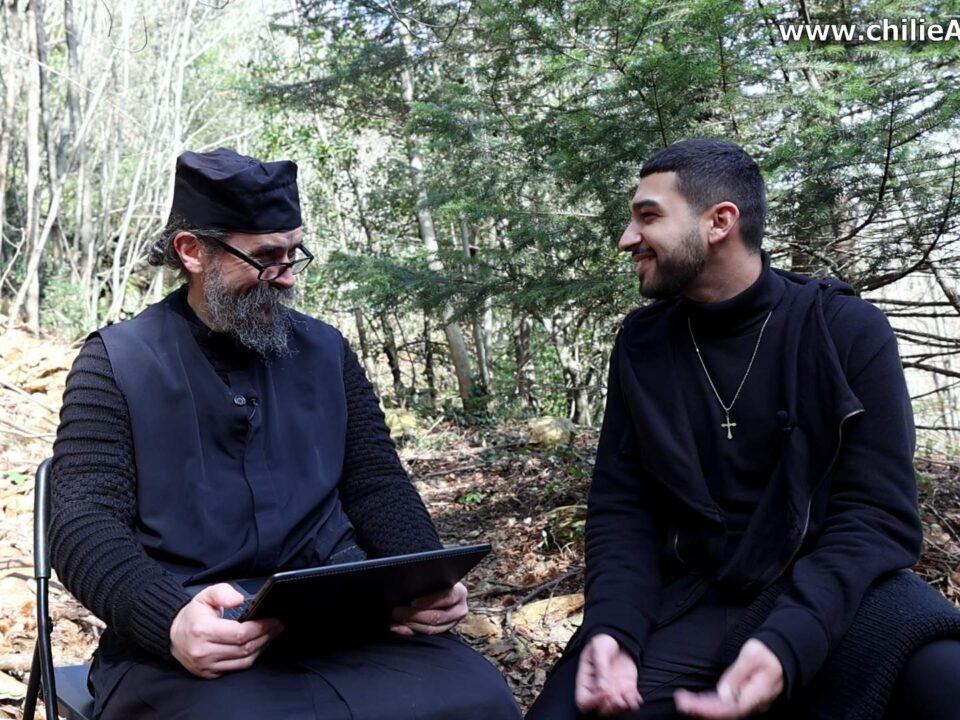
R.R.: We have switched the place of our dialogue with Fr. Theologos from here at the Cell of the Entry of the Theotokos into the Temple, to somewhere sheltered, because the rain has forced us to make this change, but we are continuing our conversation, Fr. Theologos.
Fr. T.: Yes, I want to say something, forgive me, about that, and about the resurrection. You see, this is a practical example of resurrection, of resurrection to a certain point. Death is the absence of omnipotence; it is limitation.
R.R.: Vulnerability.
Fr. T.: Right. Resurrection is overcoming any limits. If we had despaired now, if we would have cried, “Oh, what has happened,” so-and-so, “Oh, woe is me…”
R.R.: As it often happens in crisis situations, lamenting is the first reaction, right?
Fr. T.: Of course. That is a sign of death. If a person has the flexibility of humility, that is, yes, okay, fine, it happened, the rain caught us, we left that place, we came here, and in the meantime, I went to church while you were setting up, I prayed – speaking of the purpose of man, which is resurrection, which gives meaning to man’s life. The moment you manage to overcome any limitation, at that moment you are completely risen.
If something holds you back and stops you on your way, that point is a death for you, it is your separation from your goal. Because our goal now is, I believe, a goal blessed by God, we were, as I said, flexible in our humility and came from there to here. So, this is a first form of resurrection. It is a natural resurrection, in which man is natural, the tension disappears.
The other form of resurrection would have been for me to look up the moment the rain started, to have done [the sign of the cross] and for the rain to stop. Regretfully, I have not reached that. There are certain people who have reached that.
R.R.: People who have reached that… Father, as I was saying, I wanted you to tell us if you have met luminous people at a stage of illumination where they have transcended some of these physical limitations, with the power of God, of course. Have you ever met any living saints?
Fr. T.: Yes, St. Dionysius of Colciu.
R.R.: Really?
Fr. T.: Yes, of course, I met him. A miracle I experienced with St. Dionysius, because I know of others from the account of the fathers and so on, but a miracle that I experienced with St. Dionysius happened after the Saint’s passing. His cell was very poor and was actually a stable, a former stable, before it became the father’s cell, the cell where the father stayed until he fell asleep in the Lord, because, as I said, death becomes a kind of falling asleep, a passing.
R.R.: When you refer to the cell, so that those who are familiar with monastic cells in [Romania] can understand, are you referring to the small room where the father stayed or to the dwelling, as it were here, the Cell?
Fr. T.: Yes, that’s right, no, I mean the small room, the room where he stayed was a former stable. The cell is a larger complex, as it is here, from the point of view of the monastic settlement, of the form of monastic organization, but I am talking about the room where he stayed, which was very low, you had to bend down to get inside, since only animals used to go in there.
So, there was a pious father who, well, had great reverence, and still has great reverence to St. Dionysius, he is also no longer there at the monastery, he has gone elsewhere. And he, this father, went to the saint’s cell and asked the community to give him a blessing, something from the cell, from the saint’s small room. The fathers, because they knew each other very well and the father was close to St. Dionysius, gave him their blessing, and he went and took a small icon, something very small, [because] on one hand, it would have been shameful to take something big, and beyond that, the father didn’t even have anything big in his cell. And he took a very small, very inexpensive icon of St. Panteleimon and he returned to the monastery. I, of course, was not present when this whole thing happened.
He came to the monastery, and word spread throughout the monastery that father so-and-so had this icon from St. Dionysius, and all the fathers would venerate this icon during the service, somewhat, unofficially, if you will. And at the end of the service, I also went to the father and said, “Father, let me venerate it, too.” And he told me, he refused, he said, “It’s not possible, because now we have to go to dinner, and we are in the courtyard, if I take it out in the courtyard, everyone will look at us and there will be a commotion,” and all that. I insisted, and, in the end, the father took out the icon for me, and I venerated it, and the moment I did, such an extraordinarily strong fragrance spread throughout the entire courtyard. Throughout the entire courtyard. And then, all the lay people who were there, all the pilgrims who were there turned towards that father, and that father immediately wrapped himself in his cassock, put the icon inside so that it wouldn’t be felt, and hurried off to the refectory. That was my personal experience with St. Dionysius.
There are other experiences too, but you must know that spiritual people, beyond miracles, which are luminous interventions in the grayness of our lives, first of all, the atmosphere around them is one of continuous joy. Of continuous joy. That’s the way it is. As we discussed yesterday evening at one point, it’s about that parable from the Patericon, where three brothers went to Abba Antony and two kept asking questions continuously while one did not ask anything, for many years. Eventually Abba Anthony said to him: “Well, brother, I see you’ve been coming here for many years, don’t you want to ask anything?” and he says: “Abba, it’s enough for me just to see you.” That’s it. And this cannot be explained, but it can be lived. And then you are sure that there is the resurrection. You are certain that the resurrection exists.
And sometimes things can happen, how can I put it, some very delicate miracles. By the way, I remember a father who came to the monastery when he was very old, he didn’t upset anyone, he didn’t bother anyone, he became a schemamonk and in a very short period, he passed away. They literally found him, in his room, on the floor, dead. As I said, he didn’t burden anyone. And we took him to the cemetery, a very discreet presence, and at the cemetery, the weather was very gloomy, and the moment the father said, “For You are the Resurrection, the Life, and the Repose of Your departed servants,” at that moment a hole appeared in the clouds, the sun came out and a light shone on his grave. Very beautiful, very beautiful. That is, some very delicate things that God does to show that there is a reality beyond the grayness of this life, as I was saying.
R.R.: But you also need to have an eye for these signs that God sends, because in our suprarational world, you can dismiss something as a coincidence and fail to recognize the miracle, or we may not… And I would like us to come a little bit to this side where people are troubled by many worries and much anxiety, we could say, where we humans seek sources of light, of brightness, of beautiful things, of things that make us feel good, right?
Fr. T.: Of values.
R.R.: And the most accessible object of our search today is this device called a phone, which has a bright screen, right?
Fr. T.: Yes, yes, yes.
R.R.: Do we find light there, father?
Fr. T.: There’s a big problem with screens because, first of all, people tend to do their own will when it comes to screens. And man’s will, in general, is a fallen will.
R.R.: A will that seeks pleasure.
Fr. T.: Yes, one that seeks pleasure. Exactly, that’s what I mean. A fallen will, meaning physical pleasure. And when I say physical pleasure, I am not necessarily referring to sexual pleasures, yes, those too, obviously, God forbid, but I am referring to all these sensations that generate this dopamine rush, all these forms of drugs. This chase for pleasure can be seen starting from the design of user interfaces in iOS and Android, where you always get that “ah!” feeling from the animations, speed, and the sensation of speed, right? We have WhatsApp, and we [scroll] on the screen and we see how fast it goes. So this is a dopamine rush, a source of excitement that makes people glued to it, to like it.
Even Steve Jobs said, when he created iOS and Mac OS X, “I’m going to give you an operating system that you’ll want to lick.” That is, for the first time in history, pleasure was being discussed centrally. Beyond the user interface…
R.R.: This pleasure felt with the senses…
Fr. T.: Yes, sensual, not spiritual pleasure, as we talk about that one elsewhere. So, beyond this sensual pleasure from user interfaces, we obviously have content that is destructive both in the way it is delivered and in the way it is designed by the platforms. Because the platform, i.e. the environment, changes the content. It changes the content itself and it also changes the creator through the pressure it exerts, because the creator, if he is not risen, that is, free from any constraint, will naturally begin to submit to the rules of the environment. And then, the creator being influenced by the environment…
R.R.: Couldn’t they do otherwise as users of certain systems, without submitting to their rules?
Fr. T.: If they are risen, to a greater or lesser extent, they say: “No! I rely on God’s grace, even if I have five views, I’m still doing that.” And if God validates them and gives them a great grace, for example, a great composer or a great spiritual person, then, even if they don’t obey the rules of the environment, they can still have an impact. They can have an impact, right? And I also know such people who have an impact, despite the fact that they don’t… I know, for example, composers who don’t do concerts, or perform very rarely, and so on, but they have, how shall I put it, huge sales figures, even though they do not seek that. These are people with a very natural charisma, but gifted by God in that particular field; I am not saying that they are also elders in the Church. And the composers I know are not even Orthodox, but thanks to their charisma and the fact that they have no constraints or limitations in this regard, they do not chase the vain glory. They lead very simple lives and, based on their charisma, their greatest joy is that they can offer their listeners a wave of immense love.
R.R.: You have to look hard to find those in this environment.
Fr. T.: Of course, that’s true.
R.R.: Usually, many others who obey these rules for attracting views come to the front.
Fr. T.: Exactly. And because of that, today we have a new category of sins, electronic sins, a new death that comes from…
R.R.: The electronic sin.
Fr. T.: Yes, of course, caused by electronics, so that we don’t understand otherwise… Of course. They are addictions.
R.R.: And then the ascetic principles must be applied here as well.
Fr. T.: Absolutely, absolutely.
R.R.: Renunciation.
Fr. T.: Yes, fasting.
R.R.: From everything?
Fr. T.: As much as possible. As much as possible, because, as I told you yesterday in the podcast I made with you, I am very restrictive with my exposure to media. I mean, yes, we have a Facebook account, we have a Twitter account, Pinterest account, and so on, but I go there, I post, and I’m gone. And once again, I want to ask forgiveness from people who might want to contact me on Facebook and so on. I’m not there, brethren. And I’m not on YouTube either. I mean, I spend very little time on YouTube, I upload videos. That’s it.
R.R.: You have the courage not to be.
Fr. T.: Yes, I have the courage not to be.
R.R.: You know how it is. If you’re not on Facebook, don’t have a Gmail or any email account, you don’t exist.
Fr. T.: Yes, you do not exist for this world, because this world is a dead world, that is, limited, separated from God. As you can see, death is something universal, which applies to all areas. And the moment a person is separated from God, limited to their email, WhatsApp, TikTok, especially, which is destructive, to some other addictive platform, to Instagram, for example, the person is dead, that is, their are limited, in their loneliness.
Hell is eternal loneliness, let’s be clear about that. That’s what hell is. Hell is not… sure, hell is also a place, but it is not primarily a place, it is first and foremost a state, a state of separation, a state of death, right? Because Heaven is complete unity in God, and hell is complete loneliness. The impossibility of existing, as far as an eternal soul can, outside of God. That is, a soul lost in its loneliness, the devil. Just like the devil, right.
R.R.: In fact, the term “resurrection” teaches us something, to be inside the life, not just anyhow, but in a real, natural way, because we sometimes have the illusion that we are, and technology creates many illusions for us. The idea is to escape from illusion into reality.
Fr. T.: That’s right, and that’s why, since it’s a big problem today, I talk about this a lot on the website, so I always do the opposite, that is, I present the spiritual therapeutic part first and at the end I talk a little about everyday problems, as I said, related to electronics, addiction, and so on.
Reality is God, didn’t God say: “I AM WHO I AM”? So, the source of reality, the source of life, is God. Man does not exist of himself; man draws his existence from elsewhere; he draws his life from elsewhere. The moment he breaks away from God, he breaks away from the fountain of life, as it is said in the Church, how can I put it, by the way, speaking of electronics, like a computer that unplugs itself, or like a monitor that unplugs itself and, to top it all off, tries to plug itself into itself. That is to say, to claim that it is the fountain of life, the fountain of light. What happens to that monitor? It turns black, breaks, and is completely useless.
So, we must know that life always comes from somewhere else. It comes from somewhere else, from a Person, or rather from a perfect communion between Persons, between three Persons, which is the Holy Trinity. So that’s why we need to know what reality is, that reality is above these walls and this railing that surrounds us, first of all. And second, the furthest environment from reality is hell, virtual reality, the hell of our thoughts. Because in hell, in fact, the person will be bent in on himself, he will be alone in his mind, in his thoughts. That eye of the soul that we discussed before the rain began will be completely darkened and turned completely inward toward their own selfishness.
R.R.: Closed off in themselves and darkened, because one of the characteristics of darkness is that it does not open.
Fr. T.: That’s right.
R.R.: And light is the opposite, it is an enclosure of photons, we could say, to use the terms you started with, given your technical, ultra-technical background. So, a closure of photons, but one that opens toward others. That’s the light.
Fr. T.: Yes, light is unity.
R.R.: And it is the most fitting synonym for life.
Fr. T.: Of course, it is unity, whereas, as I said, hell is eternal loneliness, the impossibility of loving, darkness.
R.R.: Dark selfishness.
Fr. T.: Exactly.
R.R.: Yes, so we try and we are on the path to becoming light if we take steps toward renouncing selfishness.
Fr. T.: To renounce selfishness and unite with God, as I said, with others, and ultimately with ourselves, but a proper union with ourselves, that is, putting all the parts of the soul in order so that these parts do not fall apart inside us. That is, a person right now is broken because, you see: “I love something that my mind tells me I shouldn’t love. I hate what my mind tells me I shouldn’t hate. Today I love something, tomorrow I hate the same thing.” There is a rupture between these parts of the soul. So, a person must unite within themselves, but not in the sense of closing off; rather, they must unite within themselves, unite with God, unite with others. This is the great union, the global Adam, in the image and according to the likeness of God.
R.R.: Fr. Theologos, we are nearing the end of our dialogue, and I would like to ask you, as you have experienced many Easter celebrations here at Athos, not very many here where we are now, since you come from another monastery, a large monastery in Athos. Everyone has heard of Vatopedi, right?
Fr. T.: Yes.
R.R.: You have been living here for some time now, in a Romanian community.
Fr. T.: That’s right.
R.R.: How is Easter in Athos?
Fr. T.: Easter in Athos is primarily an inner experience. An inner experience. I remember that I had just arrived at Vatopedi and a father there, who is no longer at Vatopedi either, asked me after Easter: “Has Christ risen?” And I had prepared myself, as a very fresh theologian, to deliver a full argument…
R.R.: Did you sense a hint of doubt in the question?
Fr. T.: …A theological argument, you know, with evidence from the Holy Scriptures and so on. And while I was rushing towards him, he said: “No, no, no! Has Christ risen?” [pointing to my heart]. Meaning, has Christ risen in me? That’s everything.
So, the resurrection, as I said at the beginning, must be a personal experience. Why? Because Christ, as I said, is not a scam artist, a fakir, or anything like that, but He came to do all these as a gift for us. That is, to offer us the resurrection, to offer us the source of resurrection, which is Himself. The union with Christ.
R.R.: So, this question is fitting for the end of our dialogue. All those who have watched us should ask themselves: “Has Christ risen in me this Easter?” And in fact, every day, father.
Fr. T.: Of course.
R.R.: Because, after all, Easter is a continuous transition. Physical life is a transition towards decay, but in our other dimension, since we are also souls, we can reverse this, we can change the direction of the transition from evil to good.
Fr. T.: That’s right, and that’s why we always say: Christ is Risen!
R.R.: Truly He is Risen! Thank you for watching us! Thank you, Fr. Theologos, for this itinerant dialogue, we might say, because of the rain that… behold…
Fr. T.: It started raining again.
R.R.: It is a blessing.
Fr. T.: Yes, a great, great one. We thank the Mother of God, the dear one!
R.R.: Thank you for watching, may your holidays be good! Christ is Risen!
Online commemoration lists and donations
May the Lord help us!
Online Commemoration Lists and Donations
May the Lord help us!
If you have a bank card and wish to send commemoration lists and donations online using your card, and/or to support our philanthropic activity, including this site, please fill out the form below to make a small donation. The form is secure – we use Stripe for payment processing – a world leader in this field. We do not collect your personal data.
If you do not have a card, or do not wish to use it, visit the webpage for Online Donations and Commemoration Lists.
We will pray for your loved ones! (Please do not include inessential details like wishes, degree of kinship, introductions etc. JUST the name!)
Especially for recurring commemoration lists, we ask that you please keep them to under 20 names long. If you include a member of the family, we add “and for their families.”